VulnCheck tracks vulnerability exploitation rather than vulnerabilities. Exploit and vulnerability intelligence gives early access to enriched CVE data, initial access intelligence ships in-house proof-of-concepts, packet captures and Suricata signatures, canary intelligence reads internet sensors for early exploitation signals, and target intelligence identifies which hosts on the internet are actually vulnerable to a given CVE.
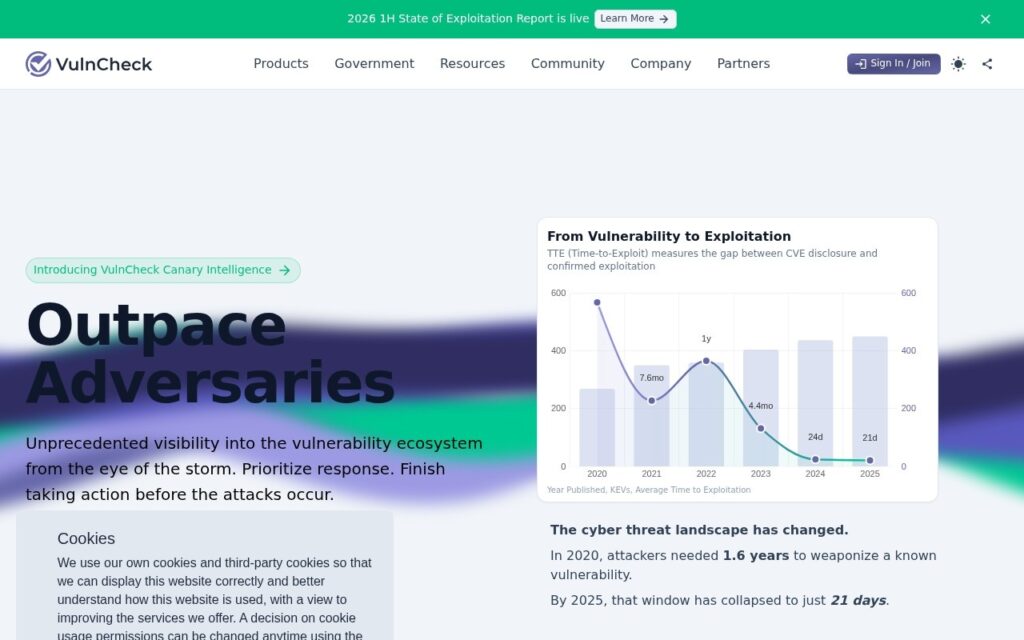
The company’s own headline number is the argument: attackers needed 1.6 years to weaponise a vulnerability in 2020 and 21 days by 2025. A patch cycle built around the old timeline is now structurally too slow, and prioritising by what is being exploited today rather than by CVSS score is the only response that fits.
It serves security teams and government, with a dedicated government product. No pricing is published. Target intelligence identifying vulnerable internet hosts is dual-use information by definition, canary sensor coverage determines what can be seen, and exploit intelligence tells you what is being attacked without telling you whether you are exposed.