
Entity recognition, a fundamental task in natural language processing (NLP), involves identifying and classifying named entities within text. These entities can include names of people, organizations, locations, dates, times, and more. AI-powered entity recognition tools have revolutionized how we process and understand textual data. This article delves into the intricacies of AI entity recognition, exploring its techniques, benefits, challenges, and future trends.
AI-Powered Tutoring Tools can leverage entity recognition to personalize learning experiences. AI tutors can provide targeted explanations and exercises by identifying key concepts and terms within educational materials, ensuring students grasp the most important information. Additionally, risk management professionals can utilize entity recognition to identify and track potential risks mentioned in news articles, social media posts, and other sources of information. This can help organizations proactively mitigate potential threats and make informed decisions.
What is Entity Recognition?
Entity recognition is identifying and classifying named entities within a given text. It is a crucial step in many NLP applications, including information extraction, text summarization, and machine translation. By accurately identifying entities, we can gain valuable insights from textual data and build more intelligent applications.
How AI Powers Entity Recognition
AI techniques, particularly machine learning and deep learning have significantly advanced the field of entity recognition. Here are some key approaches:
Rule-based Systems:
These systems use predefined rules and patterns to identify entities.
Machine Learning:
Machine learning algorithms, such as Support Vector Machines (SVMs) and Hidden Markov Models (HMMs), can be trained on large datasets to learn patterns and identify entities.
Deep Learning:
Deep learning models, especially neural networks, have achieved state-of-the-art performance in entity recognition. Techniques like Recurrent Neural Networks (RNNs) and Transformers are particularly effective in capturing contextual information.
Key Techniques in AI Entity Recognition
AI entity recognition relies on several key techniques to accurately identify and classify entities within text:
Named Entity Recognition (NER):
- Identifies and classifies named entities such as persons, organizations, locations, dates, and times.
- It uses machine learning models to learn patterns in text and assign labels to entities.
Part-of-Speech Tagging:
- Assign grammatical tags to words in a sentence (e.g., noun, verb, adjective).
- It helps identify potential entities based on their syntactic role.
Dependency Parsing:
- Analyzes the grammatical structure of sentences to identify relationships between words.
- It helps to disambiguate entities and resolve coreference.
Contextual Understanding:
Word Embeddings:
- Represents words as vectors in a high-dimensional space, capturing semantic and syntactic relationships.
Contextual Language Models:
- Models like BERT and GPT-3 can understand the context of words and sentences, improving entity recognition accuracy.
Benefits of AI Entity Recognition
AI entity recognition offers numerous benefits across various applications:
Enhanced Information Extraction:
Key Information Extraction:
- Accurately identifies and extracts crucial information from text, such as names, dates, locations, and organizations.
Knowledge Graph Creation:
- Facilitates the creation of knowledge graphs by linking entities and their relationships.
Improved Search and Information Retrieval:
Semantic Search:
- Enables more precise and relevant search results by understanding the meaning of queries.
Information Retrieval:
- Improves the accuracy of information retrieval systems by identifying relevant documents and articles.
Advanced Text Analysis:
Sentiment Analysis:
Analyze the sentiment expressed in the text, identifying positive, negative, or neutral opinions.
Topic Modeling:
Identifies the main topics and themes within a document.
Text Summarization:
Generates concise summaries of long texts.
Automated Data Labeling:
Efficient Data Preparation:
Automates the process of labeling large datasets, reducing manual effort and time.
Improved Data Quality:
Ensures consistent and accurate labeling of data.
Personalized Experiences:
Tailored Recommendations:
Enables personalized recommendations based on user preferences and behavior.
Targeted Advertising:
Delivers targeted advertisements to relevant audiences.
Content Personalization:
Customizes content to individual users’ interests.
Top Tools for Entity Recognition
SpaCy
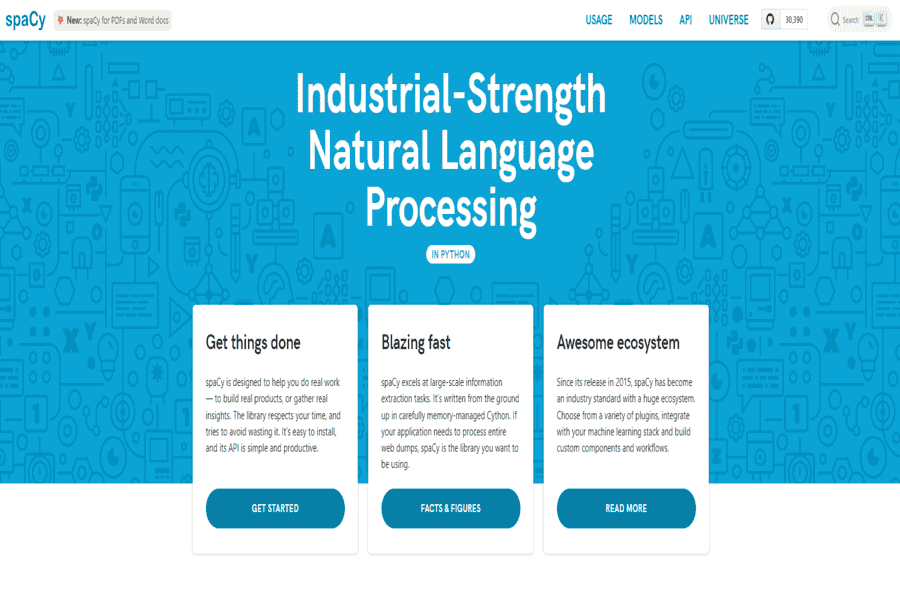
SpaCy is a popular open-source natural language processing (NLP) library for advanced text analytics, including Named Entity Recognition (NER). It is highly efficient and supports multiple languages.
Pros:
- Open-source and free.
- Pre-trained models for various languages.
- Easily customizable with pipelines.
Cons:
- Requires programming skills to use effectively.
- Limited GUI for non-technical users.
Pricing Package:
- Free and open-source.
Social Media:
- Twitter: SpaCy Twitter
Contact Information:
- Email ID: [email protected]
Stanford NLP

Stanford NLP is a suite of NLP tools developed by Stanford University, offering robust entity recognition capabilities. It includes pre-trained models for multiple languages.
Pros:
- Academic-grade accuracy.
- Supports multiple languages and domains.
- Free and open-source.
Cons:
- It is slower than other modern frameworks.
- Complex to set up and use.
Pricing Package:
- Free and open-source.
Contact Information:
- Email ID: [email protected]
AWS Comprehend
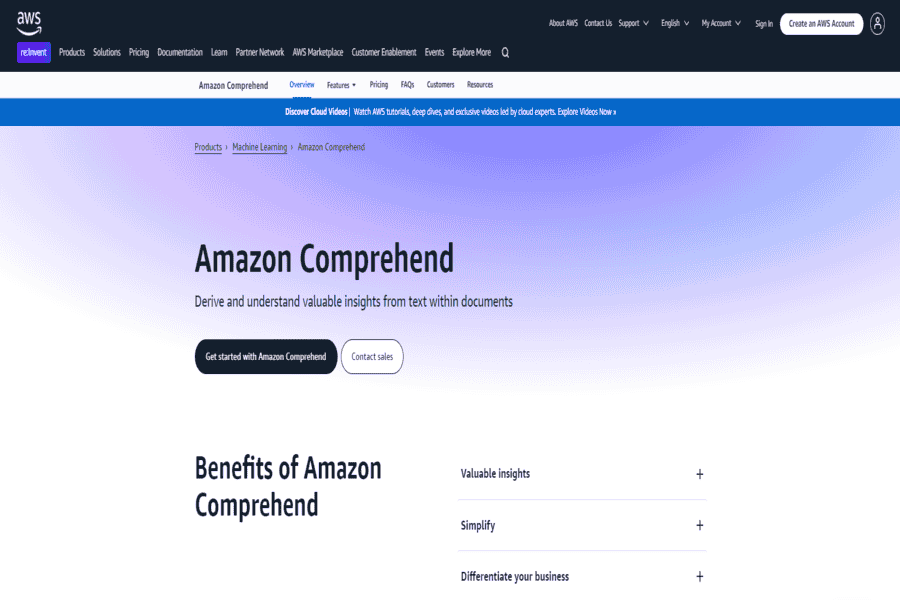
AWS Comprehend is a fully managed NLP service that uses machine learning to find entities, key phrases, and sentiments in text. It integrates seamlessly with AWS cloud infrastructure.
Pros:
- Scalable and easy to integrate with AWS services.
- Supports custom entity recognition.
- No setup is required; it works out of the box.
Cons:
- Usage-based pricing can become expensive.
- Limited customization without AWS knowledge.
Pricing Package:
- Pay-as-you-go: $0.0001 per unit (one unit = 100 characters).
Social Media:
- Facebook: AWS Facebook
- Instagram: AWS Instagram
- Twitter: AWS Twitter
- LinkedIn: AWS LinkedIn
- YouTube: AWS YouTube
Contact Information:
- Email ID: [email protected]
Google Cloud Natural Language
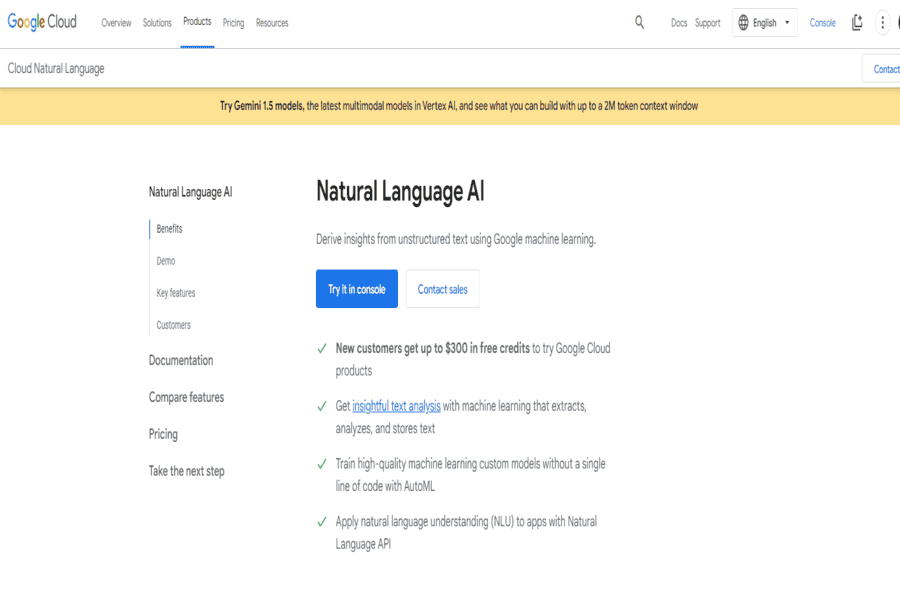
Using powerful AI models, Google Cloud Natural Language API extracts entities, sentiment, and syntax from text. It is ideal for developers working in the Google Cloud ecosystem.
Pros:
- Highly accurate and scalable.
- Supports custom entity types.
- Integrated with the Google Cloud platform.
Cons:
- Requires technical expertise to set up.
- Costs can escalate for high-volume use.
Pricing Package:
- $1.00 per 1,000 text records processed.
Social Media:
- Facebook: Google Cloud Facebook
- Instagram: Google Cloud Instagram
- Twitter: Google Cloud Twitter
- LinkedIn: Google Cloud LinkedIn
- YouTube: Google Cloud YouTube
Contact Information:
- Email ID: [email protected]
Microsoft Azure Text Analytics
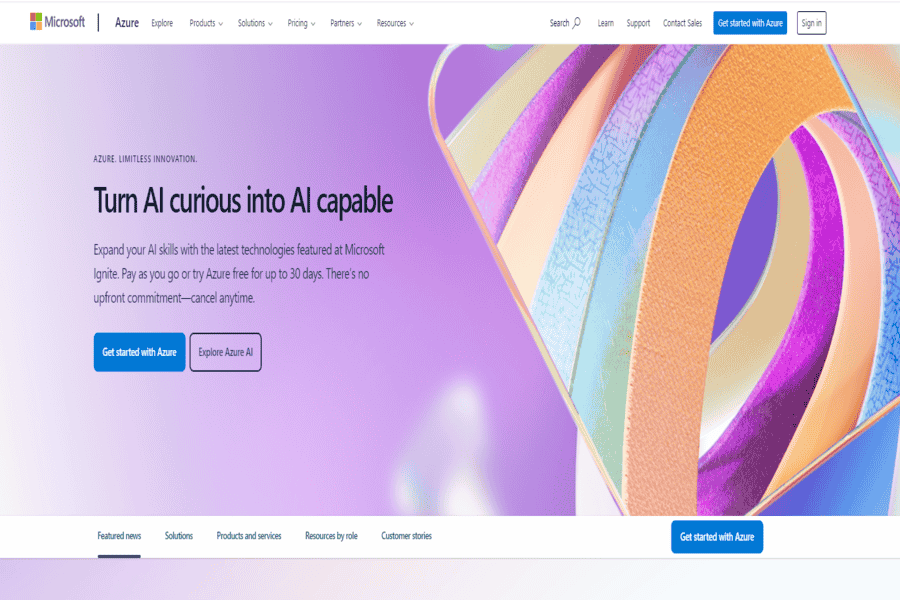
Microsoft Azure Text Analytics is part of the Cognitive Services suite, providing NER capabilities to identify entities in unstructured text data. It supports multiple languages and integrates seamlessly with other Azure tools.
Pros:
- Easy integration with Azure ecosystem.
- Highly scalable for enterprise use.
- Real-time entity recognition.
Cons:
- Subscription-based pricing.
- Limited offline capabilities.
Pricing Package:
- Free Tier: Up to 5,000 text records per month.
- Standard Tier: $1.00 per 1,000 records.
Social Media:
- Facebook: Microsoft Azure Facebook
- Instagram: Microsoft Azure Instagram
- Twitter: Microsoft Azure Twitter
- LinkedIn: Microsoft Azure LinkedIn
- YouTube: Microsoft Azure YouTube
Contact Information:
- Email ID: [email protected]
Hugging Face Transformers
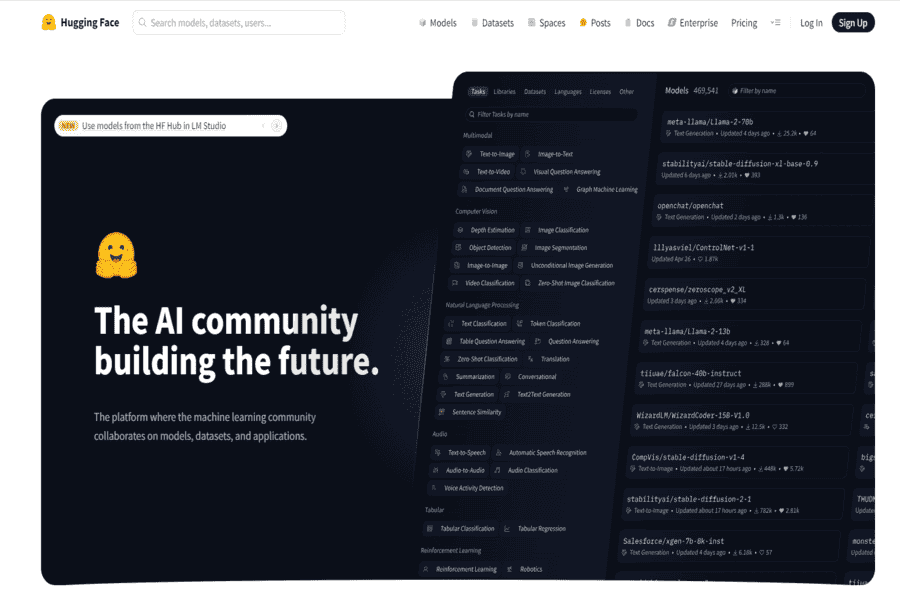
Hugging Face provides pre-trained transformer models for various NLP tasks, including NER. It supports various languages and domains and is known for its user-friendly libraries.
Pros:
- Extensive collection of pre-trained models.
- Open-source and highly customizable.
- Active community and detailed documentation.
Cons:
- Requires programming knowledge.
- Processing large datasets can be resource-intensive.
Pricing Package:
- Free (open-source models).
- Paid options are available for hosted inference APIs.
Social Media:
- Instagram: Hugging Face Instagram
- Twitter: Hugging Face Twitter
- LinkedIn: Hugging Face LinkedIn
Contact Information:
- Email ID: [email protected]
NER Suite (MIT Information Extraction)
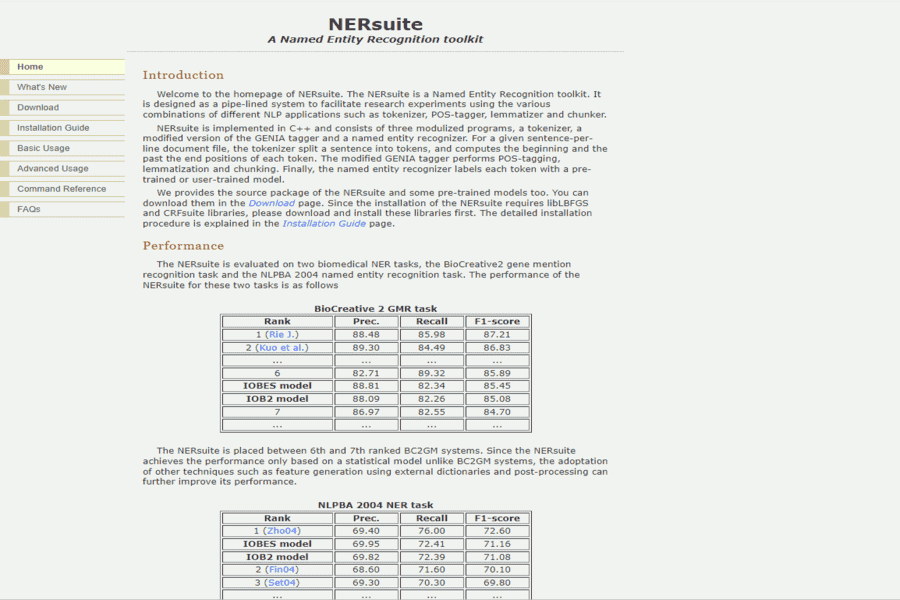
NER Suite is an open-source named entity recognition software built by the MIT NLP Lab. It is based on Conditional Random Fields (CRFs) and supports biomedical text processing.
Pros:
- Specializes in biomedical entity recognition.
- Open-source and customizable.
- Accurate for domain-specific applications.
Cons:
- Limited use cases outside biomedical domains.
- Requires technical expertise to implement.
Pricing Package:
- Free and open-source.
Contact Information:
- Email ID: [email protected]
Rasa NLU
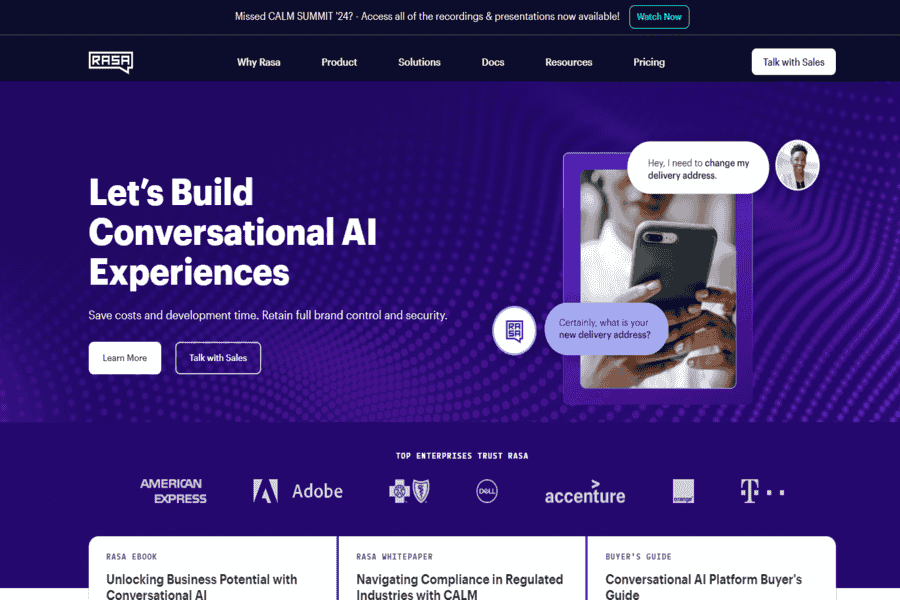
Rasa NLU is an open-source framework for building conversational AI. It includes robust entity recognition tools for identifying intents and entities in text for chatbot applications.
Pros:
- Open-source with active community support.
- Highly customizable for intent and entity recognition.
- Integrates well with chatbot frameworks.
Cons:
- Requires programming knowledge.
- Limited pre-trained models compared to other platforms.
Pricing Package:
- Free and open-source.
- Enterprise plan available (custom pricing).
Social Media:
- Facebook: Rasa Facebook
- Twitter: Rasa Twitter
- LinkedIn: Rasa LinkedIn
- YouTube: Rasa YouTube
Contact Information:
- Email ID: [email protected]
IBM Watson Natural Language Understanding
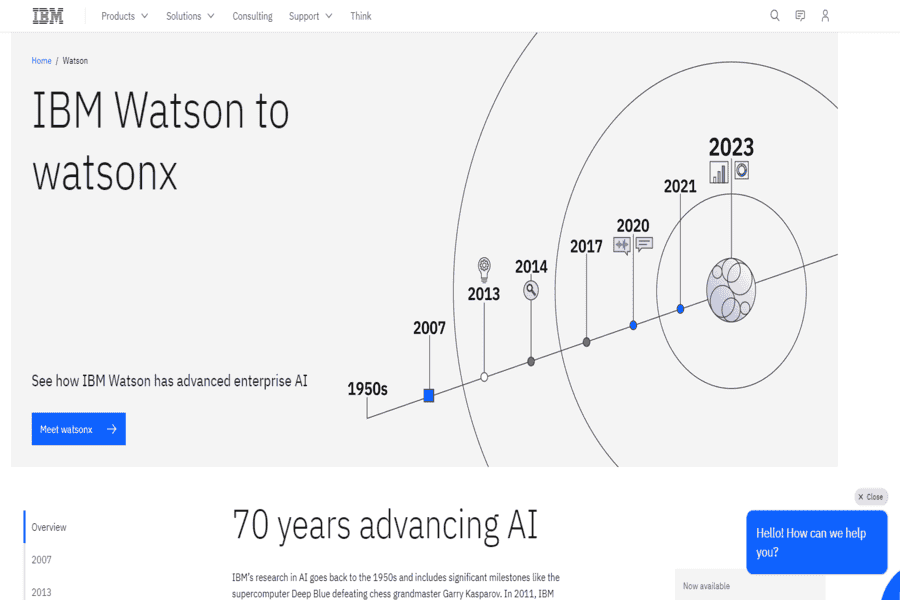
IBM Watson Natural Language Understanding offers AI-driven tools for extracting entities, sentiment, and keywords from text. It supports advanced analytics and multi-language capabilities.
Pros:
- Enterprise-grade accuracy and scalability.
- Supports industry-specific use cases.
- Easy integration with IBM Cloud.
Cons:
- Higher pricing for advanced features.
- Requires a learning curve for customization.
Pricing Package:
- Lite Plan: Free with limited API calls.
- Standard Plan: $0.003 per unit (1,000 units free per month).
Social Media:
- Facebook: IBM Watson Facebook
- Instagram: IBM Instagram
- Twitter: IBM Watson Twitter
- LinkedIn: IBM Watson LinkedIn
- YouTube: IBM YouTube
Contact Information:
- Email ID: [email protected].
Polyglot
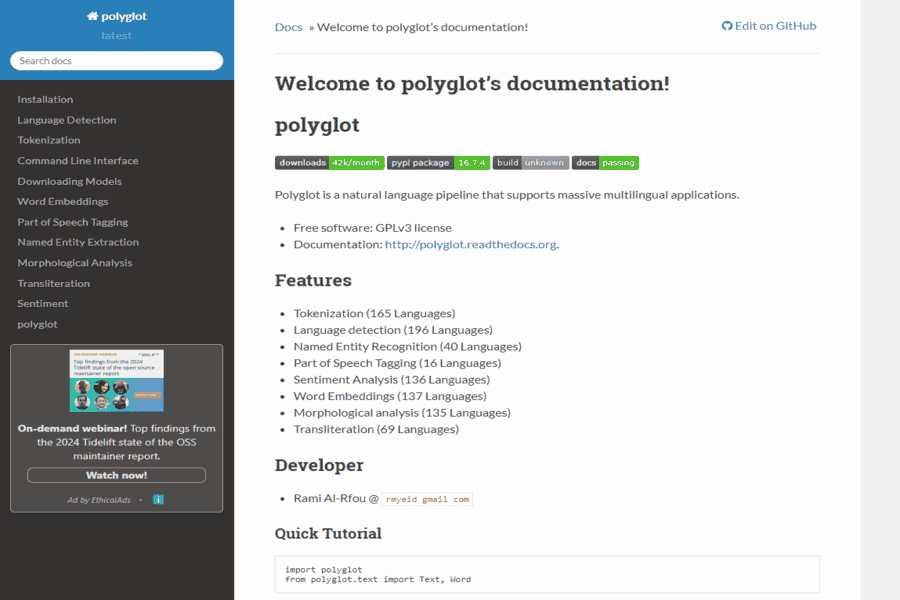
Polyglot is a Python-based NLP library that supports multilingual entity recognition. It provides pre-trained models for over 40 languages, making it ideal for global applications.
Pros:
- Supports a wide range of languages.
- Easy to integrate into Python-based workflows.
- Open-source and free.
Cons:
- Limited community support compared to larger libraries.
- No GUI for non-technical users.
Pricing Package:
- Free and open-source.
NERD (Named Entity Recognition for Digital Humanities)
NERD is a specialized NER tool designed for digital humanities. It provides entity recognition services for analyzing historical texts and social science data.
Pros:
- Focused on the digital humanities domain.
- Provides detailed metadata for identified entities.
- Free for academic use.
Cons:
- Limited use outside digital humanities.
- Requires data preprocessing for optimal results.
Pricing Package:
- Free for academic use.
Contact Information:
- Email ID: [email protected]
OpenNLP
Apache OpenNLP is an open-source machine learning-based toolkit for processing natural language text. It includes features like entity recognition, part-of-speech tagging, and parsing.
Pros:
- Open-source and highly customizable.
- Includes a variety of NLP tools beyond entity recognition.
- Lightweight and integrates well with Java applications.
Cons:
- No graphical user interface.
- Requires advanced knowledge for customization.
Pricing Package:
- Free and open-source.
Social Media:
- Twitter: Apache Twitter
- LinkedIn: Apache LinkedIn
AllenNLP
AllenNLP is an open-source library built on PyTorch, offering tools for deep learning in NLP. It supports customizable pipelines for named entity recognition and other NLP tasks.
Pros:
- Open-source and flexible for developers.
- Built on PyTorch for easy integration with deep learning workflows.
- Comprehensive documentation and tutorials.
Cons:
- The steep learning curve for non-developers.
- Requires a robust computational environment.
Pricing Package:
- Free and open-source.
Social Media:
- Twitter: AllenAI Twitter
- LinkedIn: AllenAI LinkedIn
- YouTube: AllenAI YouTube
Contact Information:
- Email ID: [email protected]
TextRazor
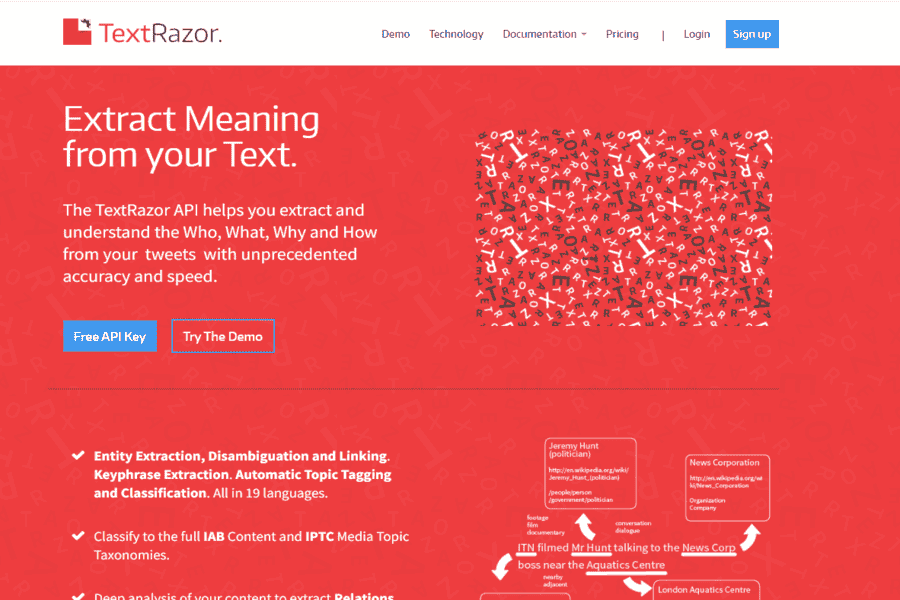
TextRazor is a powerful text analytics API for entity recognition, sentiment analysis, and content categorization. It’s ideal for developers looking to integrate NLP into their applications.
Pros:
- Supports custom entity dictionaries.
- Offers additional features like keyword extraction and sentiment analysis.
- Easy API integration.
Cons:
- Limited free tier.
- Subscription required for high-volume usage.
Pricing Package:
- Free Tier: 5,000 requests/month.
- Premium Plan: Starts at $79/month.
Social Media:
- LinkedIn: TextRazor LinkedIn
Contact Information:
- Email ID: [email protected]
Cogito API by Expert.ai

Cogito by Expert.ai is an advanced AI-based natural language understanding platform. It includes named entity recognition and provides insights from unstructured text.
Pros:
- Enterprise-grade analytics and entity recognition.
- Offers integration with multiple data sources.
- Industry-specific models for legal, finance, and healthcare.
Cons:
- High cost for enterprise features.
- The steep learning curve for customization.
Pricing Package:
- Free trial available.
- Custom pricing for enterprise plans.
Social Media:
- Facebook: Expert.ai Facebook
- Twitter: Expert.ai Twitter
- LinkedIn: Expert.ai LinkedIn
- YouTube: Expert.ai YouTube
Contact Information:
- Email ID: [email protected]
MonkeyLearn
MonkeyLearn is an AI-powered text analysis tool that offers customizable entity recognition models. It’s designed for businesses to extract valuable insights from customer feedback and other text data.
Pros:
- User-friendly interface with drag-and-drop tools.
- Customizable machine learning models.
- Offers integrations with platforms like Zendesk and Slack.
Cons:
- Limited features in the free plan.
- Pricing can be high for large-scale use.
Pricing Package:
- Free Tier: Up to 300 queries/month.
- Premium Plans: Start at $299/month.
Social Media:
- Facebook: MonkeyLearn Facebook
- Instagram: MonkeyLearn Instagram
- Twitter: MonkeyLearn Twitter
- LinkedIn: MonkeyLearn LinkedIn
Contact Information:
- Email ID: [email protected]
Challenges and Limitations
While AI entity recognition has made significant strides, it still faces several challenges:
Ambiguity and Contextual Challenges:
Polysemy:
Words can have multiple meanings depending on the context.
Coreference Resolution:
She was identifying the correct reference for pronouns and other ambiguous terms.
Named Entity Disambiguation:
Distinguishing between entities with similar names.
Data Quality and Quantity:
Data Bias:
Biased training data can lead to biased models.
Data Sparsity:
Lack of sufficient training data for specific domains or languages.
Data Noise:
Noisy or incorrect data can negatively impact model performance.
Evolving Language and Terminology:
New Entities:
Emerging entities, such as new organizations or products, may not be recognized by existing models.
Language Evolution:
Changes in language usage and the emergence of new slang or jargon can affect model accuracy.
Computational Cost:
Training and Inference Costs:
Training large-scale deep learning models requires significant computational resources.
Real-time Processing:
Real-time entity recognition in large-scale applications can be computationally demanding.
Future Trends in AI Entity Recognition
AI entity recognition is a rapidly evolving field with several promising trends:
Advanced Deep Learning Models:
Transformer-based Models:
These models have demonstrated state-of-the-art performance in various NLP tasks, including entity recognition.
Multi-task Learning:
Models that jointly learn multiple tasks, such as entity recognition and sentiment analysis, can improve overall performance.
Multi-lingual Entity Recognition:
Cross-lingual Transfer Learning:
We are leveraging knowledge from one language to improve entity recognition in another.
Multilingual Models:
Developing models that can recognize entities in multiple languages simultaneously.
Real-time Entity Recognition:
Stream Processing:
Processing text streams in real-time to identify entities as they are generated.
Low-Latency Inference:
Optimizing models for fast inference to enable real-time applications.
Contextual Understanding:
Contextualized Embeddings:
I am using contextualized word embeddings to capture the meaning of words in context.
World Knowledge Integration:
They are incorporating knowledge graphs and external knowledge sources to improve entity recognition.
Ethical Considerations:
Bias Mitigation:
Developing techniques to mitigate biases in training data and models.
Fairness and Transparency:
Ensuring that entity recognition systems are fair and transparent.
Privacy and Security:
Protecting sensitive information and privacy.
Conclusion
AI entity recognition has become indispensable in various applications, from information extraction to sentiment analysis. As AI advances, we can expect even more sophisticated and accurate entity recognition systems that will revolutionize how we interact with information.