Organizations face constant cyberattacks in today’s threat landscape, and AI has become a core part of how security teams keep up — analyzing volumes of data no human team could review manually, spotting patterns across phishing, malware, and network anomalies, and predicting emerging threats before they hit. This guide covers what AI actually does in threat intelligence and risk assessment, and the 10 platforms worth knowing. For a broader view of the category, see our risk management software guide.
How AI Is Used in Threat Intelligence and Risk Assessment
The core applications split into four areas. Threat detection uses pattern recognition and anomaly detection to catch phishing, malware, and unusual network behavior, including zero-day threats traditional tools miss. Intelligence gathering automates pulling and correlating data from threat feeds, dark web forums, and other sources, then uses predictive analytics to flag emerging trends. Risk assessment scores threats by severity and potential impact, identifies vulnerabilities, and recommends specific mitigation steps. And incident response automates detection, root-cause investigation, and routine remediation — isolating infected systems, deploying patches — so analysts spend less time on triage and more on judgment calls.
Advantages and Risks
The advantages are real: faster analysis of larger data volumes than human teams can cover, real-time monitoring, automated threat hunting, and more consistent risk prioritization. But the risks are real too, not just theoretical. Model output is only as good as the training data — biased or low-quality data produces biased or wrong threat assessments. False positives and false negatives both carry cost, one in wasted analyst time, the other in missed threats. Adversarial actors actively try to manipulate AI detection models to evade them. And running these tools well takes specialized skill that many security teams are still building.
Top Tools for Threat Intelligence and Risk Assessment
Recorded Future
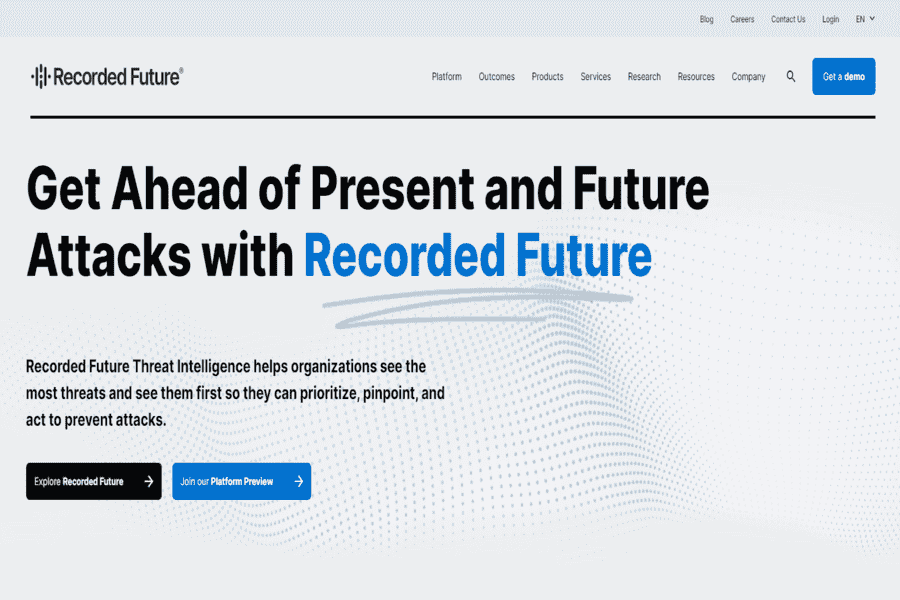
A comprehensive platform offering real-time threat intelligence by analyzing vast data sets from open, technical, and dark web sources.
Pros:
- Automated threat analysis.
- Extensive integration options.
- High-quality reports.
Cons:
- It is expensive for smaller organizations.
Pricing Package:
Contact for custom pricing.
Social Media Accounts:
- Facebook: Recorded Future
- Twitter: @RecordedFuture
- LinkedIn: Recorded Future
- Email: [email protected]
- Phone Number: +1 617-553-6400
Anomali
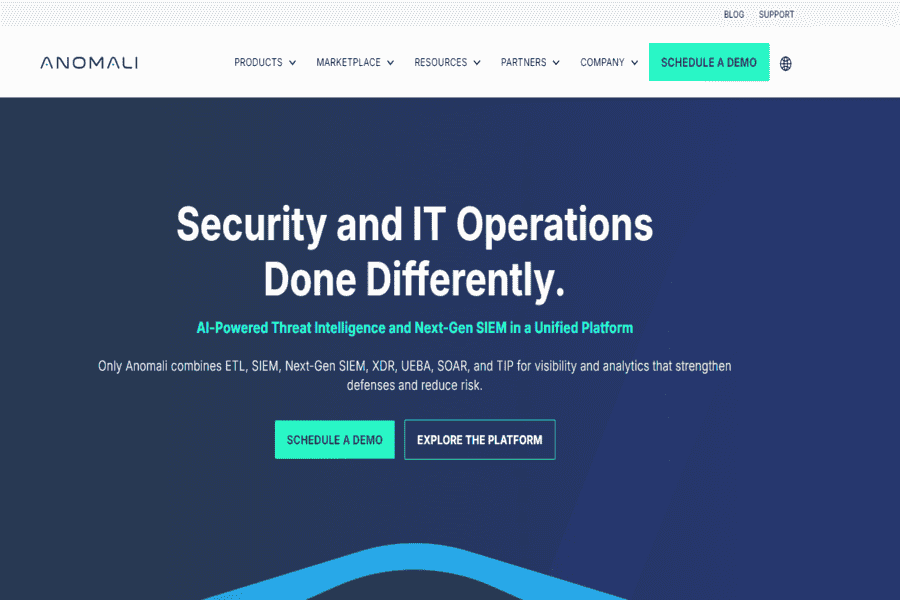
Provides threat intelligence solutions to identify, investigate, and respond to cyber threats in real-time.
Pros:
- Strong threat detection.
- Seamless integration with SIEM tools.
Cons:
- The steeper learning curve for beginners.
Pricing Package:
Based on organization size, contact sales.
Social Media Accounts:
- Facebook: Anomali
- Twitter: @Anomali
- LinkedIn: Anomali
- Email: [email protected]
- Phone Number: +1 844-438-7662
ThreatConnect

Offers a threat intelligence platform combining analytics, automation, and collaboration.
Pros:
- Highly customizable workflows.
- Strong analytics capabilities.
Cons:
- Pricing may be prohibitive for small companies.
Pricing Package:
Custom pricing based on needs.
Social Media Accounts:
- Facebook: Not available.
- Twitter: @ThreatConnect
- LinkedIn: ThreatConnect
- Email: [email protected]
- Phone Number: +1 800-965-2708
Mandiant Advantage
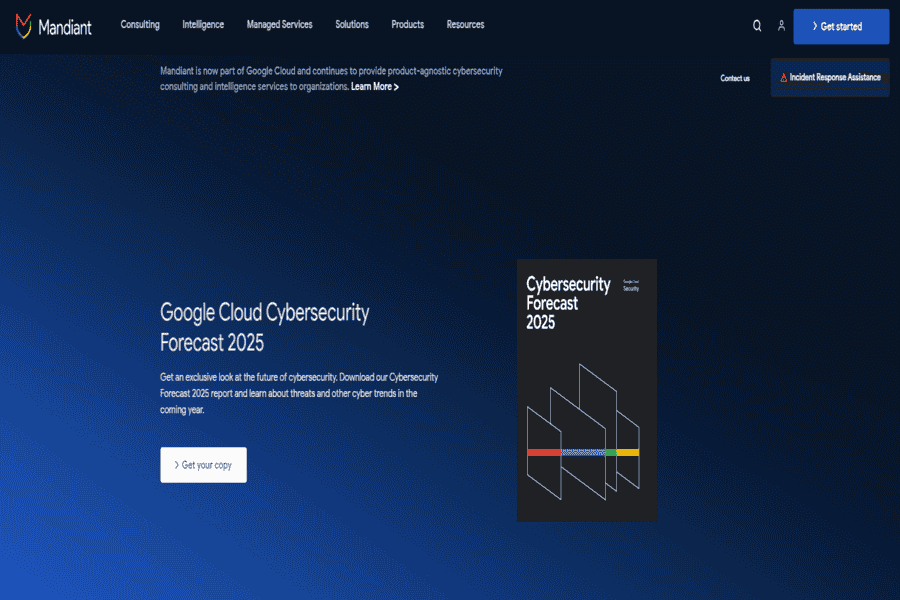
A cloud-native platform providing threat intelligence services powered by Mandiant’s expertise.
Pros:
- Industry-leading insights.
- Expert-backed investigations.
Cons:
Higher cost compared to competitors.
Pricing Package:
Subscription-based; contact for pricing.
Social Media Accounts:
- Facebook: Mandiant
- Twitter: @Mandiant
- LinkedIn: Mandiant
- Email: [email protected]
- Phone Number: +1 703-454-8000
IBM X-Force Exchange
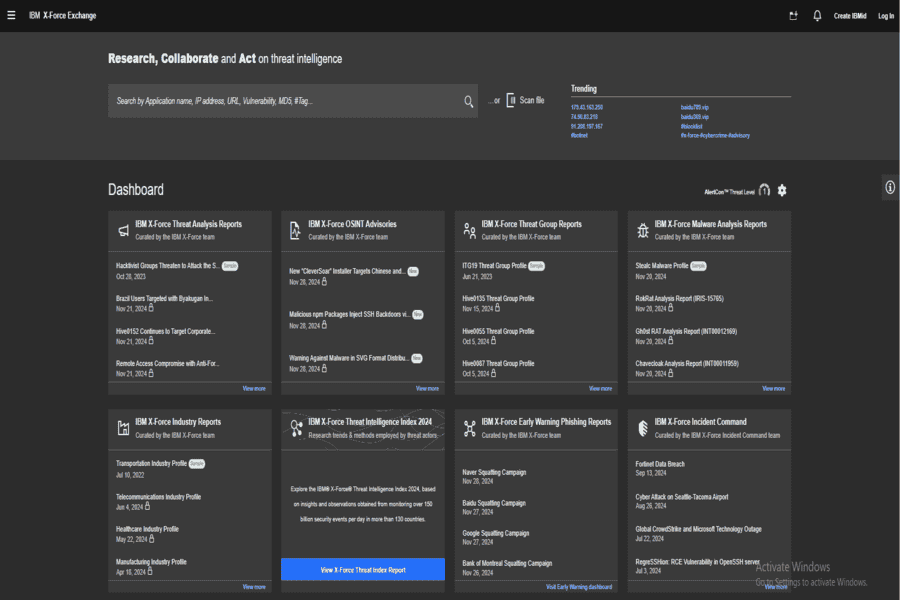
A threat intelligence sharing platform that enables organizations to research, share, and act on threat data.
Pros:
- Reliable insights from IBM’s extensive database.
- User-friendly interface for collaboration.
Cons:
- Requires integration with IBM products for full benefits.
Pricing Package:
Free tier available; advanced features require payment.
Social Media Accounts:
- Facebook: IBM Security
- Twitter: @IBMSecurity
- LinkedIn: IBM Security.
- Email: [email protected]
- Phone Number: +1 866-426-4252
Cisco Talos
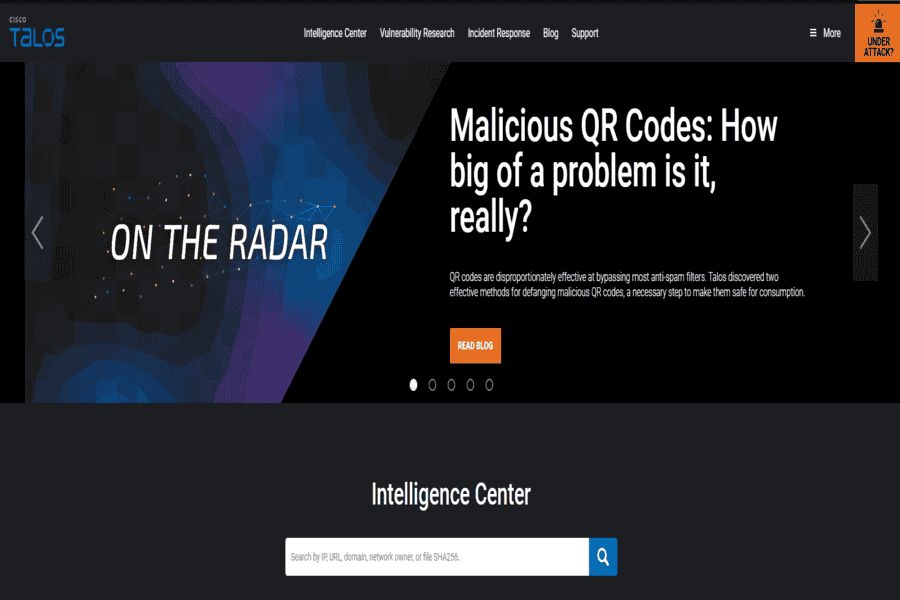
Provides threat intelligence services, delivering insights into vulnerabilities, malware, and emerging threats.
Pros:
- Free threat analysis reports.
- Deep integration with Cisco products.
Cons:
- Limited features outside the Cisco ecosystem.
Pricing Package:
Free for basic access.
Social Media Accounts:
- Twitter: @TalosSecurity
Palo Alto Networks Unit 42
Palo Alto Networks’ threat intelligence and incident response arm — replaces AutoFocus in this list, which Palo Alto discontinued (support ended September 30, 2025) in favor of Unit 42 and Cortex XSOAR Threat Intel Management.
Pros:
- Backed by one of the largest threat research teams in the industry.
- Integrates directly with Palo Alto’s Cortex and Prisma product lines.
Cons:
- Deepest value requires buying into the broader Palo Alto ecosystem.
Pricing Package:
Subscription-based pricing; contact sales.
Social Media Accounts:
- Twitter: @Unit42_Intel
- LinkedIn: Palo Alto Networks
- Email: [email protected]
AlienVault OTX (LevelBlue)
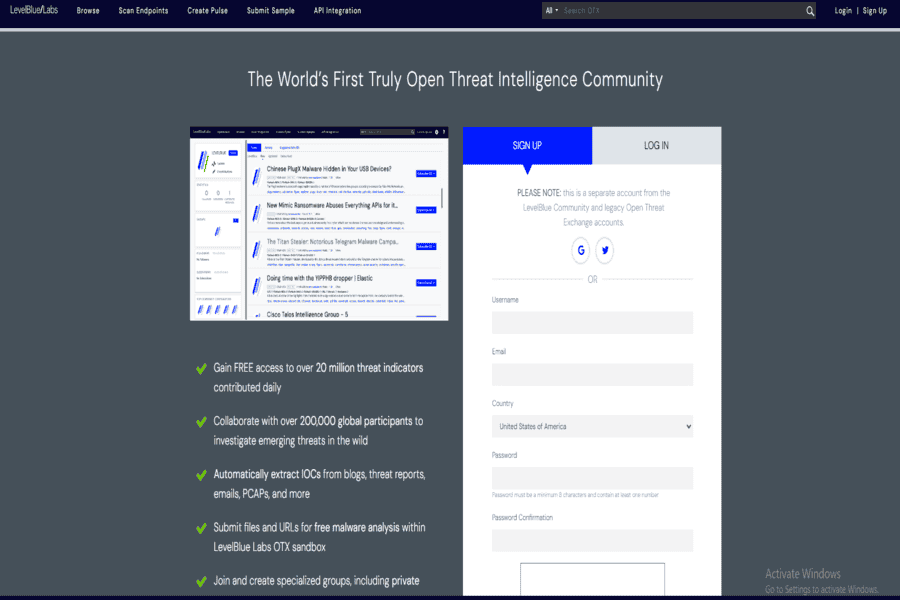
Unified Security Management (USM) platform built around AlienVault’s Open Threat Exchange (OTX) community feed. AT&T spun its cybersecurity business, including AlienVault, into LevelBlue — a joint venture with WillJam Ventures — in May 2024, so it’s no longer branded “AT&T Cybersecurity.”
Pros:
- Simplified threat detection.
- Affordable for SMBs.
Cons:
- Limited scalability for large enterprises.
Pricing Package:
Starts around $1,075/month.
Social Media Accounts:
- Twitter: @LevelBlue
- LinkedIn: LevelBlue
- Email: [email protected]
Flashpoint
Threat intelligence platform covering cyber threats, fraud, and physical security — replaces “FireEye Threat Intelligence” in this list, which now redirects straight to Mandiant Advantage (already covered above) since FireEye’s products business became Mandiant/Trellix.
Pros:
- Covers fraud and physical-security intelligence alongside cyber, not just network threats.
- Strong dark web and closed-source (illicit forum/marketplace) coverage.
Cons:
- Enterprise-focused pricing, not aimed at small teams.
Pricing Package:
Custom pricing; contact sales.
Social Media Accounts:
- Twitter: @flashpointintel
- LinkedIn: Flashpoint
CrowdStrike Falcon X
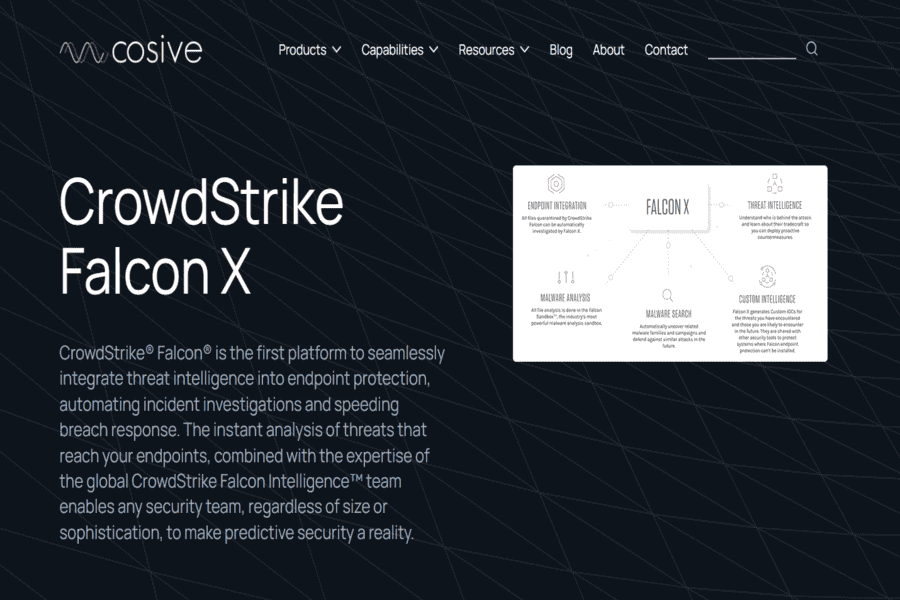
Provides automated threat intelligence reports and real-time analysis for proactive threat management.
Pros:
- Streamlined automation for faster insights.
- Strong malware analysis capabilities.
Cons:
- Premium pricing may only suit some businesses.
Pricing Package:
Starts at $8.99 per endpoint/month.
Social Media Accounts:
- Facebook: CrowdStrike
- Twitter: @CrowdStrike
- LinkedIn: CrowdStrike
- Instagram: CrowdStrike
- Email: [email protected]
- Phone Number: +1 888-512-8906
Where This Is Headed
The clearest near-term direction is proactive threat hunting — AI that surfaces attacker behavior before an alert fires, rather than just triaging after the fact — paired with real-time intelligence feeds that update risk scores continuously instead of on a scan schedule. Incident response keeps moving toward automation for the routine steps (isolating a host, deploying a known patch) so analysts spend their time on judgment calls a model can’t make. And ethical AI — auditing models for bias, being transparent about how a risk score was reached — is getting real investment as more security decisions depend on model output that a human then has to defend.
Conclusion
AI has become a core part of how security teams handle the volume of modern threat data — the 10 platforms above range from broad threat-intel feeds (Recorded Future, Anomali, ThreatConnect, Flashpoint) to vendor-specific offerings tied to a wider security suite (Mandiant, Unit 42, Cisco Talos, CrowdStrike, IBM X-Force, AlienVault OTX). None of them replace a security team’s judgment, and false positives/negatives and adversarial manipulation are real operational risks, not just checkbox concerns. Match the tool to what’s already in your stack rather than picking on reputation alone, and budget for the specialized skill it takes to run these well.