In today’s rapidly evolving digital landscape, businesses constantly seek innovative ways to streamline operations, reduce costs, and enhance customer experiences. AI-powered process optimization emerges as a powerful tool that harnesses the potential of artificial intelligence to revolutionize how organizations work. By leveraging advanced algorithms and data-driven insights, AI enables businesses to identify inefficiencies, make data-driven decisions, and automate routine tasks. By integrating AI robotics tools into their workflow, businesses can optimize processes by automating physical tasks, improving efficiency, and reducing labor costs.
What is AI-Powered Process Optimization?
AI-powered process optimization involves applying artificial intelligence techniques to analyze and improve business processes. It encompasses various technologies, including machine learning, natural language processing, and robotic process automation. By automating tasks, predicting future trends, and optimizing resource allocation, AI empowers organizations to achieve significant operational efficiencies and competitive advantages.
The Need for AI in Process Optimization
Traditional process optimization methods often rely on manual analysis, which can be time-consuming, error-prone, and limited scope. AI offers a transformative solution by automating data-driven insights and enabling organizations to:
Identify hidden patterns:
AI algorithms can uncover complex patterns and correlations within vast datasets that may not be apparent to human analysts.
Predict future trends:
By analyzing historical and current data, AI can forecast future outcomes, enabling organizations to proactively plan and respond to changes.
Optimize decision-making:
AI-powered tools provide data-driven recommendations, helping organizations make informed decisions that drive business growth.
Automate routine tasks:
AI can automate repetitive tasks, freeing human resources to focus on higher-value activities.
Benefits of AI-Powered Process Optimization Tools
The implementation of AI-powered process optimization tools can yield numerous benefits:
Increased efficiency:
AI can significantly improve operational efficiency by automating tasks and streamlining workflows.
Enhanced decision-making:
AI-driven insights empower organizations to make informed decisions based on data-backed evidence.
Improved customer experience:
AI can personalize customer interactions, leading to higher satisfaction and loyalty.
Cost reduction:
By optimizing resource allocation and reducing errors, AI can help organizations save costs.
Competitive advantage:
AI-powered innovations can differentiate businesses from competitors and drive market leadership.
Core Components of AI-Powered Process Optimization Tools
To effectively implement AI-powered process optimization, organizations must leverage a combination of key components:
Data Collection and Integration
Data sources:
We identify and access relevant data sources, including internal systems, external databases, and real-time sensors.
Data quality:
It ensures data accuracy, completeness, and consistency to maintain the reliability of AI models.
Data integration:
Combining data from various sources into a unified format for analysis.
Data Cleaning and Preprocessing
Data cleaning:
Removing errors, inconsistencies, and outliers to improve data quality.
Data preprocessing:
We transform data into a suitable format for machine learning algorithms, including normalization, feature engineering, and handling missing values.
Machine Learning Algorithms
Supervised learning:
Training models on labeled data to make predictions or classifications (e.g., regression, classification).
Unsupervised learning:
We are discovering patterns and structures within unlabeled data (e.g., clustering, dimensionality reduction).
Reinforcement learning:
Training agents to learn optimal behavior through trial and error and rewards.
Deep learning:
Leveraging neural networks to model complex relationships within data.
Predictive Analytics
Forecasting:
I am predicting future trends and outcomes based on historical data and current patterns.
Anomaly detection:
Identifying unusual patterns or deviations from normal behavior.
Risk assessment:
Evaluating potential risks and their impact on business operations.
Prescriptive Analytics
Optimization:
Finding the optimal solution to a complex problem, considering multiple factors and constraints.
Simulation:
Modeling real-world scenarios to test different strategies and their potential outcomes.
Recommendation systems:
We are providing personalized recommendations based on user preferences and behavior.
Visualization and Reporting
Data visualization:
I am creating visual representations of data to facilitate understanding and decision-making.
Dashboards:
Develop interactive dashboards to monitor key performance indicators and track progress.
Reporting:
I am generating comprehensive reports to communicate insights and recommendations to stakeholders.
Top AI Process Optimization Tools
UiPath
AI-powered robotic process automation (RPA) platform that automates repetitive business processes for greater efficiency.
Pros:
- Scalable and customizable.
- Strong AI and machine learning integration.
Cons:
- Requires significant upfront setup.
- It can be complex for smaller businesses.
Pricing Package:
Custom pricing is available.
Social Media:
- Facebook: UiPath Facebook
- Instagram: UiPath Instagram
- Twitter: UiPath Twitter
- LinkedIn: UiPath LinkedIn
- YouTube: UiPath YouTube
Contact Information:
- Mail: [email protected]
- Contact Number: +1 844-432-3457
Automation Anywhere
AI-powered RPA platform designed to streamline business processes with automation and artificial intelligence.
Pros:
- Easy-to-use interface.
- Scalable for businesses of all sizes.
Cons:
- Limited by the complexity of tasks.
- Higher cost for small businesses.
Pricing Package:
Starts at $750/month.
Social Media:
- Facebook: Automation Anywhere Facebook
- Instagram: Automation Anywhere Instagram
- Twitter: Automation Anywhere Twitter
- LinkedIn: Automation Anywhere LinkedIn
- YouTube: Automation Anywhere YouTube
Contact Information:
- Mail: [email protected]
- Contact Number: +1 408-824-9950
Blue Prism
An AI-powered RPA tool that helps businesses automate complex, data-intensive processes for better productivity.
Pros:
- Strong security and scalability.
- Integrates with existing systems easily.
Cons:
- Requires in-house expertise to implement.
- Complex pricing structure.
Pricing Package:
Custom pricing is available.
Social Media:
- Facebook: Blue Prism Facebook
- Twitter: Blue Prism Twitter
- LinkedIn: Blue Prism LinkedIn
- YouTube: Blue Prism YouTube
Contact Information:
- Mail: [email protected]
- Contact Number: +44 1223 372000
WorkFusion
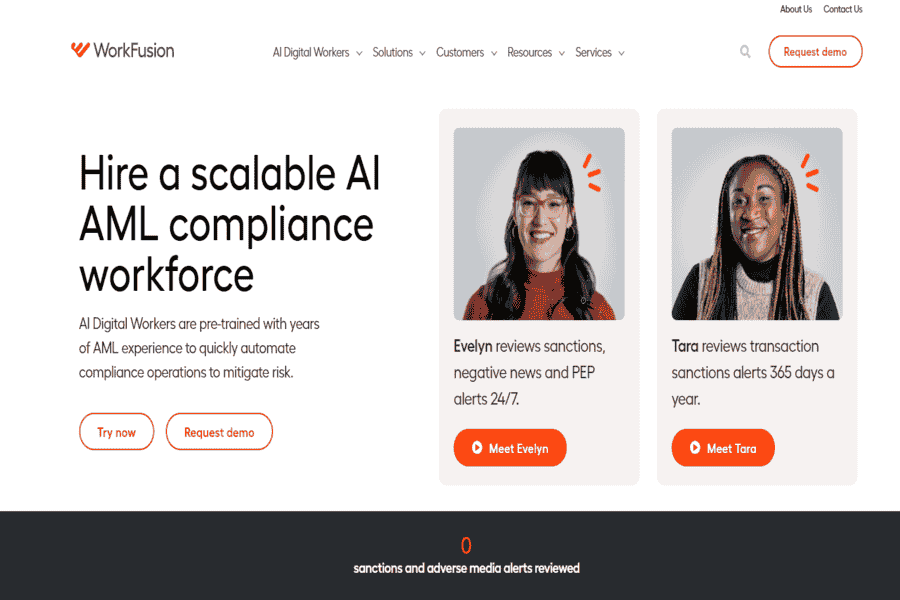
A platform combining AI and RPA to streamline workflows, improving efficiency and reducing operational costs.
Pros:
- AI and machine learning for process insights.
- Comprehensive automation with RPA and cognitive bots.
Cons:
- Initial implementation can be resource-heavy.
- Premium pricing.
Pricing Package:
Custom pricing is available.
Social Media:
- Facebook: WorkFusion Facebook
- Twitter: WorkFusion Twitter
- LinkedIn: WorkFusion LinkedIn
- YouTube: WorkFusion YouTube
Contact Information:
- Mail: [email protected]
- Contact Number: +1 866-817-0417
ABBYY FlexiCapture
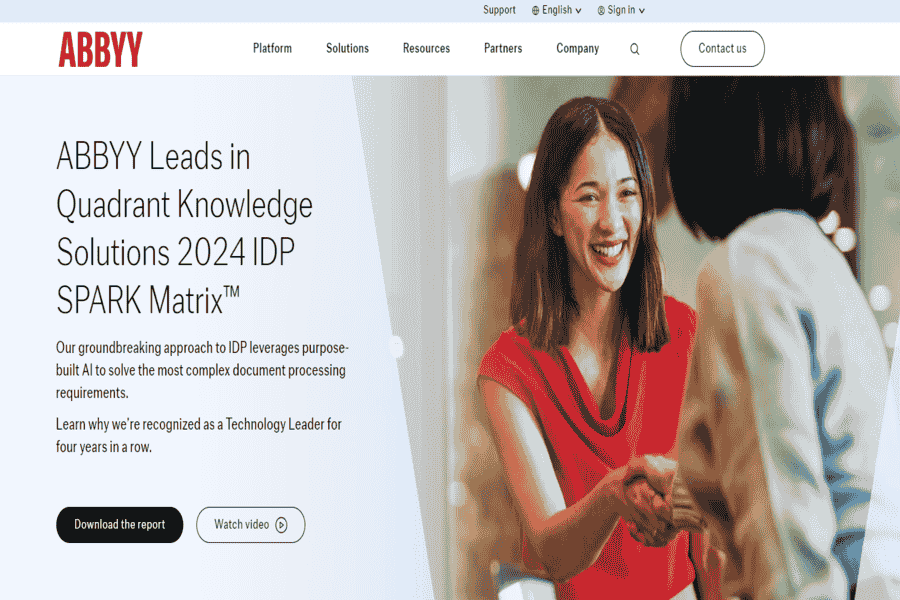
Intelligent document processing tool that uses AI to automate data extraction, classification, and analysis from unstructured content.
Pros:
- Robust data capture and extraction.
- High accuracy and customizable workflows.
Cons:
- Requires training for optimal use.
- It can be expensive for small-scale businesses.
Pricing Package:
Custom pricing is available.
Social Media:
- Facebook: ABBYY Facebook
- Twitter: ABBYY Twitter
- LinkedIn: ABBYY LinkedIn
- YouTube: ABBYY YouTube
Contact Information:
- Mail: [email protected]
- Contact Number: +1 650-587-2300
Kofax
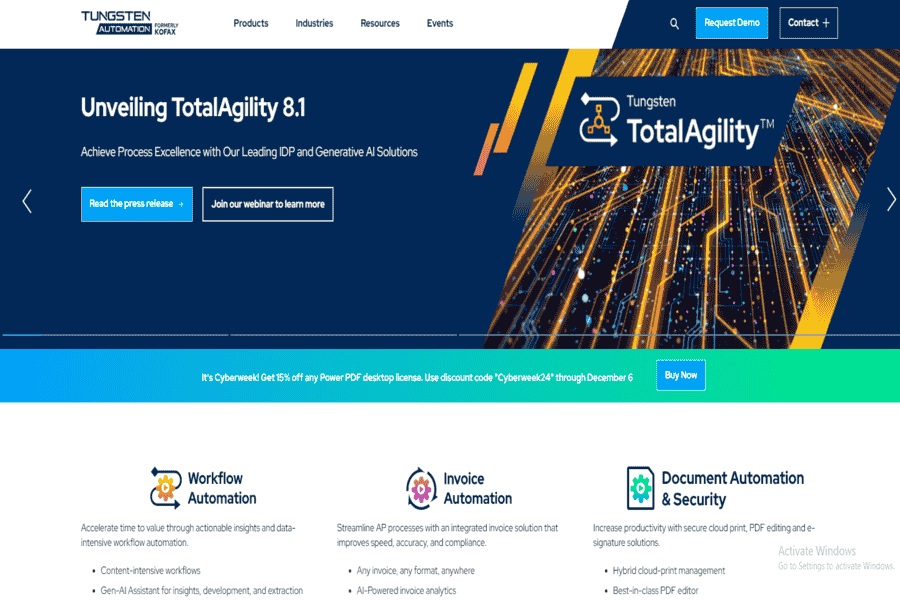
An AI-powered platform for automating document processing and workflow optimization in businesses.
Pros:
- Automated invoice processing and data extraction.
- Customizable workflow solutions.
Cons:
- Complex configuration process.
- It can be not easy to integrate with older systems.
Pricing Package:
Custom pricing is available.
Social Media:
- Facebook: Kofax Facebook
- Twitter: Kofax Twitter
- LinkedIn: Kofax LinkedIn
- YouTube: Kofax YouTube
Contact Information:
- Mail: [email protected]
- Contact Number: +1 877-856-3281
AutomationEdge
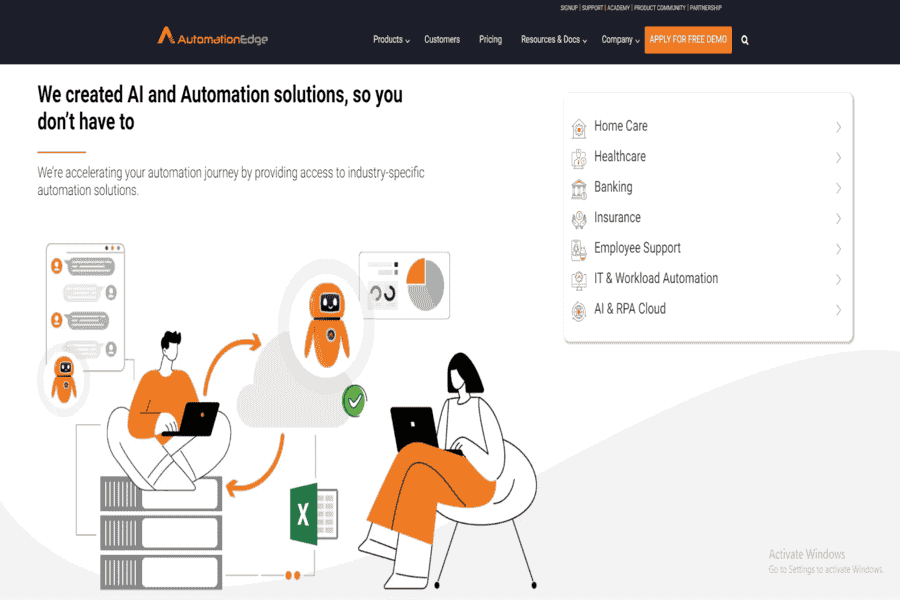
AI-driven IT process automation platform that enhances service delivery and incident management.
Pros:
- Seamless integration with IT infrastructure.
- Strong focus on cybersecurity automation.
Cons:
- Primarily geared towards IT operations.
- Limited functionality for non-IT processes.
Pricing Package:
Custom pricing is available.
Social Media:
- Facebook: AutomationEdge Facebook
- Twitter: AutomationEdge Twitter
- LinkedIn: AutomationEdge LinkedIn
- YouTube: AutomationEdge YouTube
Contact Information:
- Mail: [email protected]
- Contact Number: +1 877-356-9767
HyperScience
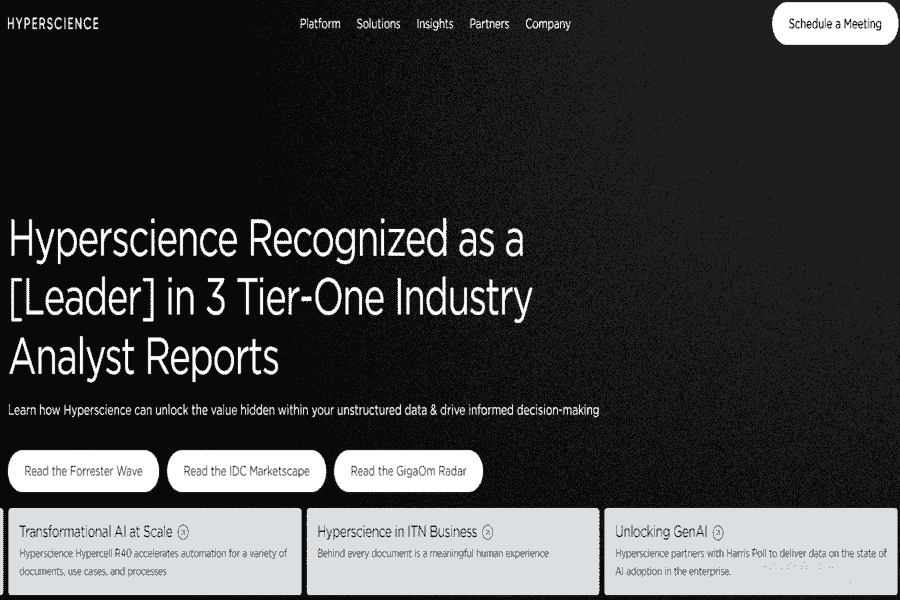
AI-powered automation platform for processing documents, data entry, and improving business workflows.
Pros:
- Strong focus on intelligent data capture.
- Effective for unstructured document processing.
Cons:
- Primarily focused on document processing.
- It can be pricey for smaller businesses.
Pricing Package:
Custom pricing is available.
Social Media:
- Facebook: HyperScience Facebook
- Twitter: HyperScience Twitter
- LinkedIn: HyperScience LinkedIn
Contact Information:
- Mail: [email protected]
- Contact Number: +1 646-586-5250
Celonis
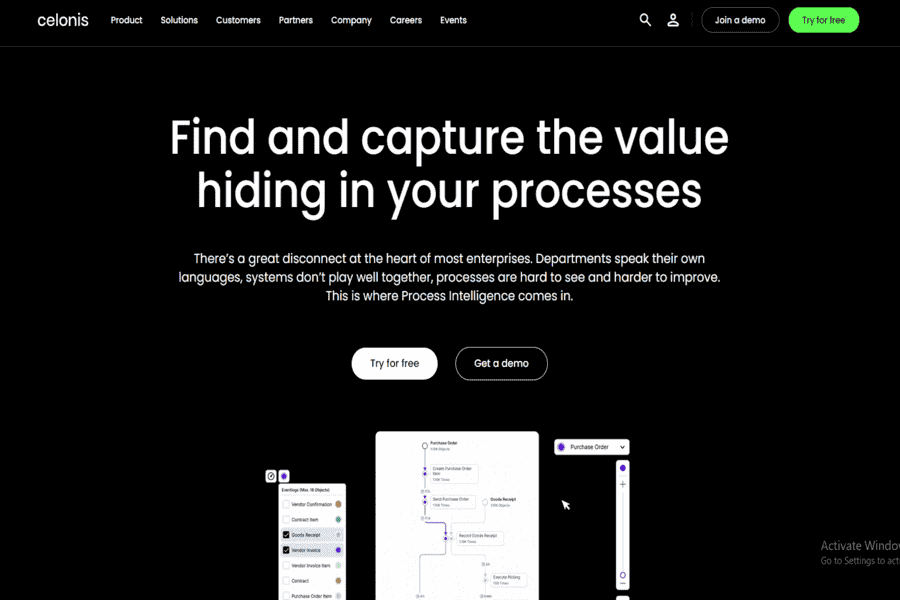
AI-powered process mining tool that provides in-depth insights into business workflows and identifies optimization opportunities.
Pros:
- Powerful process analysis and mining tools.
- It helps identify inefficiencies and bottlenecks.
Cons:
- Requires large data sets for optimal use.
- Steep learning curve.
Pricing Package:
Custom pricing is available.
Social Media:
- Facebook: Celonis Facebook
- Twitter: Celonis Twitter
- LinkedIn: Celonis LinkedIn
- YouTube: Celonis YouTube
Contact Information:
- Mail: [email protected]
- Contact Number: +49 89 2444 3900
Pega
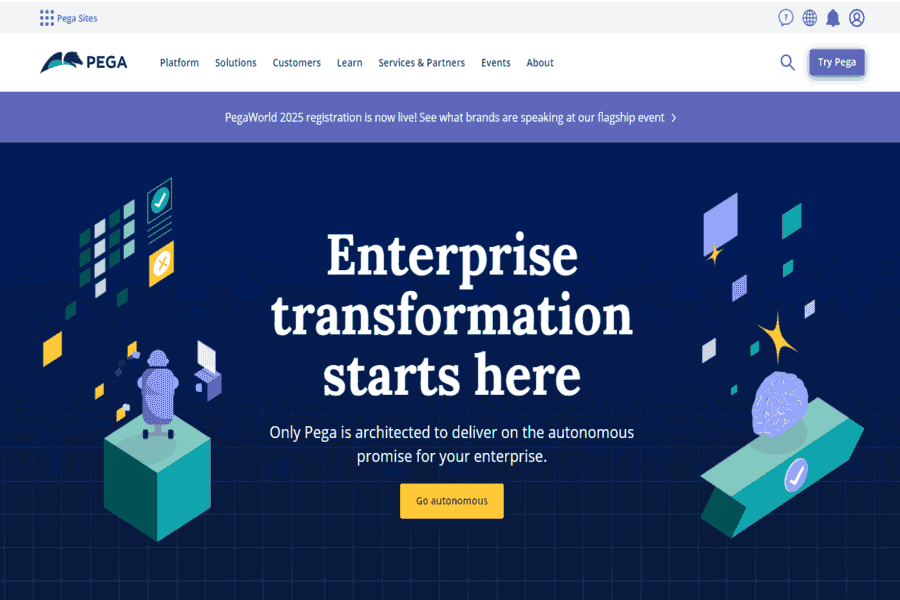
AI-driven software platform designed to optimize business processes with intelligent automation and case management.
Pros:
- Robust decisions and AI capabilities.
- Easily scalable across departments.
Cons:
- The steep learning curve for new users.
- High cost for small to medium businesses.
Pricing Package:
Custom pricing is available.
Social Media:
- Facebook: Pega Facebook
- Twitter: Pega Twitter
- LinkedIn: Pega LinkedIn
- YouTube: Pega YouTube
Contact Information:
- Mail: [email protected]
- Contact Number: +1 617-866-6000
Zoho Creator
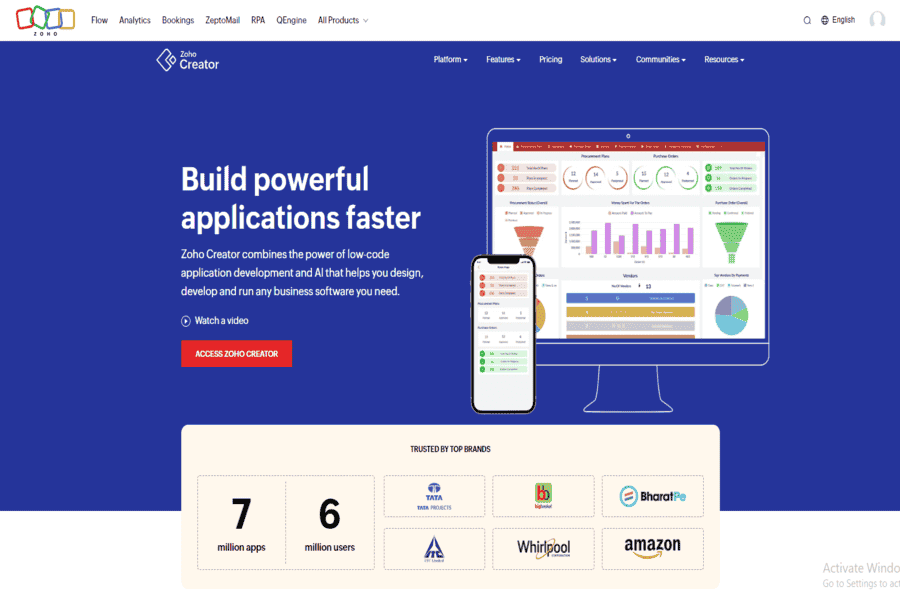
AI-powered app builder for creating custom business process automation solutions, enabling rapid workflow optimization.
Pros:
- User-friendly, no-code platform.
- Flexible integration options.
Cons:
- Limited to smaller-scale automation.
- Limited advanced AI features for complex processes.
Pricing Package:
Starts at $10/user/month.
Social Media:
- Facebook: Zoho Creator Facebook
- Instagram: Zoho Creator Instagram
- Twitter: Zoho Creator Twitter
- LinkedIn: Zoho Creator LinkedIn
- YouTube: Zoho Creator YouTube
Contact Information:
- Mail: [email protected]
- Contact Number: +1 877-764-9553
TIBCO
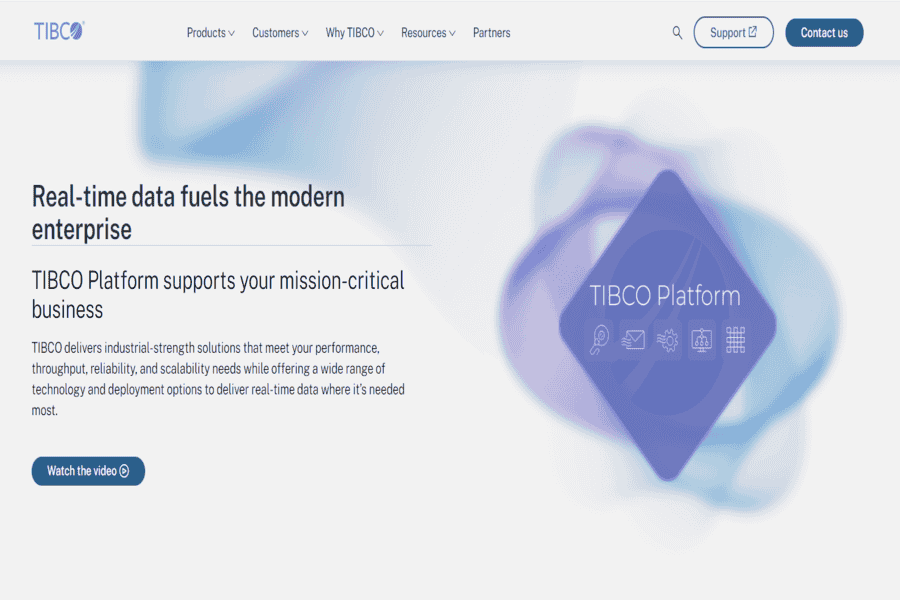
A comprehensive AI and automation suite that helps optimize workflows and business processes with advanced data analytics.
Pros:
- Strong data analytics and AI features.
- Great integration with enterprise-level solutions.
Cons:
- It can be complex to set up and maintain.
- Expensive for small businesses.
Pricing Package:
Custom pricing is available.
Social Media:
- Facebook: TIBCO Facebook
- Twitter: TIBCO Twitter
- LinkedIn: TIBCO LinkedIn
- YouTube: TIBCO YouTube
Contact Information:
- Mail: [email protected]
- Contact Number: +1 650-846-1000
Integromat (now Make)
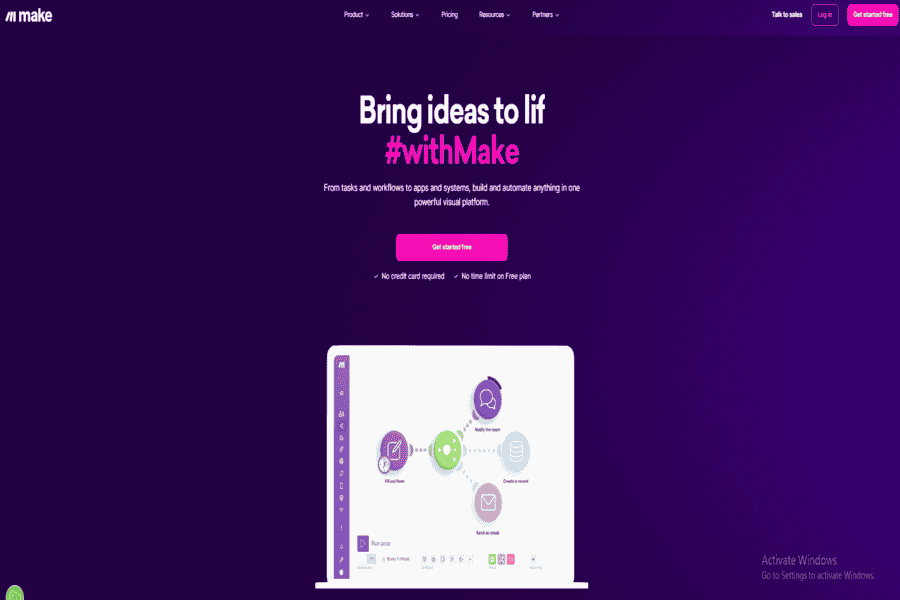
A powerful AI automation tool designed to optimize workflows by connecting apps and automating tasks across various platforms.
Pros:
- Easy-to-use drag-and-drop interface.
- Supports a wide range of integrations.
Cons:
- Limited AI capabilities for complex tasks.
- Advanced features may require some learning.
Pricing Package:
Free plan available; paid plans start at $9/month.
Social Media:
- Facebook: Make Facebook
- Twitter: Make Twitter
- LinkedIn: Make LinkedIn
- YouTube: Make YouTube
Contact Information:
- Mail: [email protected]
Celonis Intelligent Business Cloud
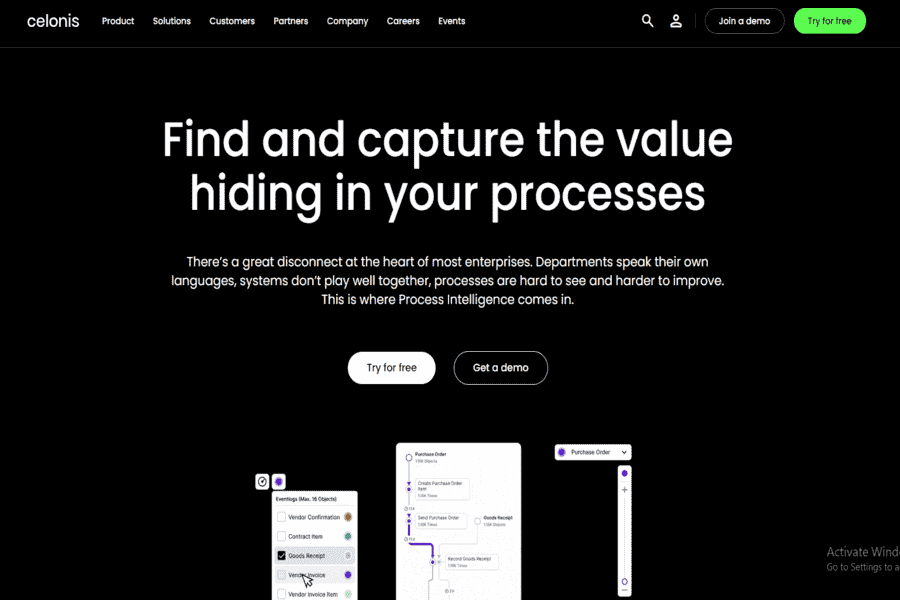
A cloud-based process mining and AI platform for optimizing business operations by analyzing workflows and providing actionable insights.
Pros:
- Deep analytics into process performance.
- Highly customizable dashboards and workflows.
Cons:
- High cost for small and medium businesses.
- Requires significant time for integration.
Pricing Package:
Custom pricing is available.
Social Media:
- Facebook: Celonis Facebook
- Twitter: Celonis Twitter
- LinkedIn: Celonis LinkedIn
- YouTube: Celonis YouTube
Contact Information:
- Mail: [email protected]
- Contact Number: +49 89 2444 3900
Applications of AI-Powered Process Optimization Tools
AI-powered process optimization has a wide range of applications across various industries. Here are some key areas where AI is driving significant improvements:
Manufacturing
- Predictive Maintenance: AI algorithms can analyze sensor data to predict equipment failures, allowing for proactive maintenance and reducing downtime.
- Quality Control: AI-powered vision systems can detect product defects, ensuring high-quality output.
- Supply Chain Optimization: AI can optimize inventory levels, transportation routes, and supplier relationships to improve efficiency and reduce costs.
Supply Chain Management
- Demand Forecasting: AI can analyze historical data and external factors to predict future demand, enabling accurate inventory management accurately.
- Logistics Optimization: AI-powered algorithms can optimize transportation routes, load planning, and warehouse operations.
- Risk Management: AI can identify potential supply chain disruptions, such as natural disasters or geopolitical events, and develop contingency plans.
Healthcare
- Drug Discovery: AI can accelerate drug discovery by analyzing vast amounts of biological data to identify potential drug targets.
- Medical Image Analysis: AI-powered image analysis tools can assist in diagnosing diseases like cancer and heart disease.
- Personalized Medicine: AI can analyze patient data to develop personalized treatment plans.
Finance
- Fraud Detection: AI algorithms can identify fraudulent transactions by analyzing patterns in large datasets.
- Risk Assessment: AI can assess credit and investment risks by analyzing financial data and market trends.
- Algorithmic Trading: AI-powered trading systems can execute trades at high speeds and with greater accuracy.
Retail
- Customer Segmentation: AI can analyze customer data to identify different segments and tailor marketing campaigns accordingly.
- Recommendation Systems: AI-powered recommendation engines can suggest products to customers based on their preferences and purchase history.
- Inventory Management: AI can optimize inventory levels to minimize stockouts and excess inventory.
Customer Service
- Chatbots and Virtual Assistants: AI-powered chatbots can provide 24/7 customer support and answer common queries.
- Sentiment Analysis: AI can analyze customer feedback to measure customer service, identify areas for improvement and enhance customer satisfaction.
- Predictive Customer Service: AI can anticipate customer needs and proactively address issues before they escalate.
- AI Voice Bot further enhance this by enabling natural, human-like conversations for support and query resolution.
Challenges and Considerations
While AI-powered process optimization offers immense potential, it also presents several challenges that organizations must address:
Data Quality and Quantity
- Data Quality: Ensuring data accuracy, completeness, and consistency is crucial for training effective AI models.
- Data Quantity: Sufficient, high-quality data is necessary to train robust AI models.
- Data Privacy and Security: Protecting sensitive data is essential, especially when dealing with personal information.
Model Interpretability
- Black-Box Models: Many AI models, particularly deep learning models, are complex and difficult to interpret.
- Explainable AI: Developing techniques to understand the decision-making process of AI models can enhance trust and transparency.
Ethical Implications
- Bias and Fairness: AI models can inadvertently perpetuate biases in training data, leading to unfair outcomes.
- Job Displacement: Automating tasks through AI may lead to job losses, necessitating workforce reskilling and upskilling.
Implementation Costs
- Initial Investment: Implementing AI-powered solutions requires significant upfront investment in technology, infrastructure, and talent.
- Ongoing Costs: Maintaining and updating AI systems involves ongoing costs for data management, model retraining, and technical support.
Future Trends and Innovations
The future of AI-powered process optimization is promising, with several exciting trends on the horizon:
Advanced Machine Learning Techniques
- Generative AI: Creating new content, such as text, images, and music.
- Transfer Learning: Leveraging knowledge from one task to improve performance on another.
- Reinforcement Learning: Training AI agents to make decisions by interacting with an environment.
Real-time Optimization
- Streaming Data Processing: Analyzing data as it is generated to make real-time decisions.
- Edge Computing: Processing data closer to the source, reducing latency and improving responsiveness.
Integration with IoT and Edge Computing
- Real-time Data Collection: Gathering IoT device data enables real-time monitoring and optimization.
- Decentralized Decision-Making: Making decisions at the edge, closer to the data source, for faster response times.
AI-Driven Automation
- Robotic Process Automation (RPA): Automating repetitive tasks to increase efficiency.
- Autonomous Systems: Developing self-driving vehicles, drones, and robots to perform tasks autonomously.
Conclusion
AI-powered process optimization is a powerful tool that can transform businesses across industries. By addressing the challenges and embracing emerging trends, organizations can unlock the full potential of AI and achieve significant operational improvements. As AI continues to evolve, adopting an ethical and responsible approach is essential to ensure that AI benefits society.