The best MLOps platforms are the ones that match your stack, not the ones with the longest feature list. This roundup compares 12 platforms across three buckets that real buyers weigh against each other: Managed cloud platforms, open-source frameworks, and enterprise or specialized tools. You will see who each one is for, what it does well, one honest limitation, and pricing signals where they exist. The goal is not a single winner. It is a shortlist you can narrow by team size, cloud provider, and how much infrastructure you want to own.
How We Picked These MLOps Platforms
An MLOps platform is the software layer that moves machine learning models from a notebook to reliable production, covering experiment tracking, pipelines, deployment, and monitoring. The tricky part for buyers is that “platform” means very different things depending on whether you want a managed cloud service or an open-source framework you host yourself.

We built this shortlist around the same evaluation lens that shows up across competitor roundups and comparison pages: how much of the model lifecycle a tool covers, how flexibly it deploys, how usable it is day to day, what it integrates with, and how it handles governance and monitoring. We deliberately mixed managed, open-source, and enterprise options because buyers in this category almost always compare across those three buckets at once.
Every platform here earns its spot on merit for a specific job, not on name recognition. Here is the checklist we applied:
- Covers at least one core MLOps need: tracking, pipelines, deployment, or monitoring
- Fits a clear buyer profile by team size, cloud, or production maturity
- Appears repeatedly in credible MLOps comparisons
- Offers a genuine tradeoff worth naming, not just marketing polish
The 12 Best MLOps Platforms for Production Teams
The list runs from managed cloud platforms to open-source frameworks to enterprise and specialized tools, so it reads like a real shortlist rather than a random pile. Each entry answers what the tool is, who should shortlist it, its standout strength, and the one reason a buyer might pass.
1. Amazon SageMaker
Amazon SageMaker is a fully managed AWS environment for teams that want one place to train, deploy, monitor, and serve models. It suits organizations already standardized on AWS infrastructure who would rather not stitch together separate tools. The pull is tight coupling with the rest of the AWS stack, so data in S3 and Redshift flows in with zero-ETL integrations. The catch is billing: components are metered separately, so your total cost never lands as one clean flat number.
- Best for: AWS-native teams that want unified training, deployment, and monitoring
- Standout feature: Zero-ETL data access across S3, Redshift, and third-party sources
- Free tier or trial: Yes, a limited free tier with monthly usage allowances
2. Google Vertex AI
Google Vertex AI is Google Cloud’s managed platform for running training, pipelines, and foundation-model access from one control plane. It is the natural pick for GCP teams who want managed MLOps and a broad model catalog in the same place. Its Model Garden gives you access to more than 200 foundation models, spanning Google, open-source, and third-party options, alongside Vertex AI Pipelines. Budgeting takes work, though, since costs shift with model type, batch versus real-time usage, and machine configuration.
- Best for: GCP teams that want managed training, pipelines, and model access
- Standout feature: Model Garden with 200+ foundation models plus Vertex AI Pipelines
3. Databricks
Databricks is a lakehouse platform that unifies analytics and machine learning on shared data, so data prep, model development, and production ML live in one environment. It fits data-heavy teams whose ML program is inseparable from large-scale data engineering. The lakehouse architecture handles both structured and unstructured data, which removes the usual split between your analytics stack and your ML stack. Pricing runs on consumption measured in Databricks Units, and storage plus network costs depend on your cloud provider and workload, so simple flat budgeting is not the model here.
- Best for: Data-heavy ML teams that want one lakehouse for analytics and ML
- Standout feature: Lakehouse architecture unifying structured and unstructured data

4. Azure Machine Learning
Azure Machine Learning is Microsoft’s managed platform that automates training and deployment pipelines while plugging into Azure DevOps and GitHub. It is the strongest fit for Microsoft-centric enterprises where governance and CI/CD integration matter most. The standout is continuous delivery: automated pipelines tie directly into the tools your engineering org already runs. The tradeoff is lock-in. Teams not already invested in Azure face a steeper learning curve and a platform tightly bound to the Microsoft ecosystem.
- Best for: Microsoft-centric enterprise teams needing governance and automation
- Standout feature: Automated training and deployment pipelines with Azure DevOps and GitHub
- Free tier or trial: Yes, a free tier for new users plus pay-as-you-go
5. Kubeflow
Kubeflow is an open-source, Kubernetes-native stack that runs reusable, version-controlled ML pipeline components on container orchestration. It is built for platform teams already running Kubernetes who want portable pipelines without cloud-vendor lock-in. Because it is open source, there are no licensing fees, only the infrastructure you provision. The honest caveat is that the operational burden is the product: without strong Kubernetes expertise, the setup and maintenance overhead will outweigh the flexibility.
- Best for: Kubernetes-first teams that need portable pipelines and deep control
- Standout feature: Reusable, version-controlled pipeline components on Kubernetes
- Free tier or trial: Yes, free and open source with infrastructure costs only
6. MLflow
MLflow is an open-source lifecycle tool that logs parameters, metrics, and artifacts across runs and stores models in a registry for reuse. It is the go-to for lean teams that want experiment tracking and a model registry without committing to a heavyweight vendor platform. Its biggest strength is neutrality: it does not lock you into a specific infrastructure stack, and it works across TensorFlow, PyTorch, and scikit-learn. The limit worth knowing is that MLflow is still maturing into a full end-to-end platform, so do not expect it to cover deployment and monitoring as completely as a managed suite.
- Best for: Teams needing experiment tracking and a model registry without lock-in
- Standout feature: Logging and comparing metrics, parameters, and artifacts across runs
- Free tier or trial: Yes, free and open source when self-hosted
7. Weights & Biases
Weights & Biases is a collaboration-first experiment tracking platform that records runs, supports hyperparameter sweeps, and visualizes training progress across a team. It shines for research-heavy groups and ML engineers who need shared dashboards and live insight into training performance. Where MLflow leans toward lightweight self-hosting, Weights & Biases leans into collaboration and optimization at scale. The tradeoff is that the free tier is limited to core features, and enterprise pricing is custom rather than public.
- Best for: Research teams and ML engineers who need collaboration and sweeps
- Standout feature: Experiments and sweeps with live dashboards for optimization at scale
- Starting price: Free tier available; Pro starts at $50/month; enterprise custom
- Free tier or trial: Yes, a free tier plus free academic access
8. ClearML
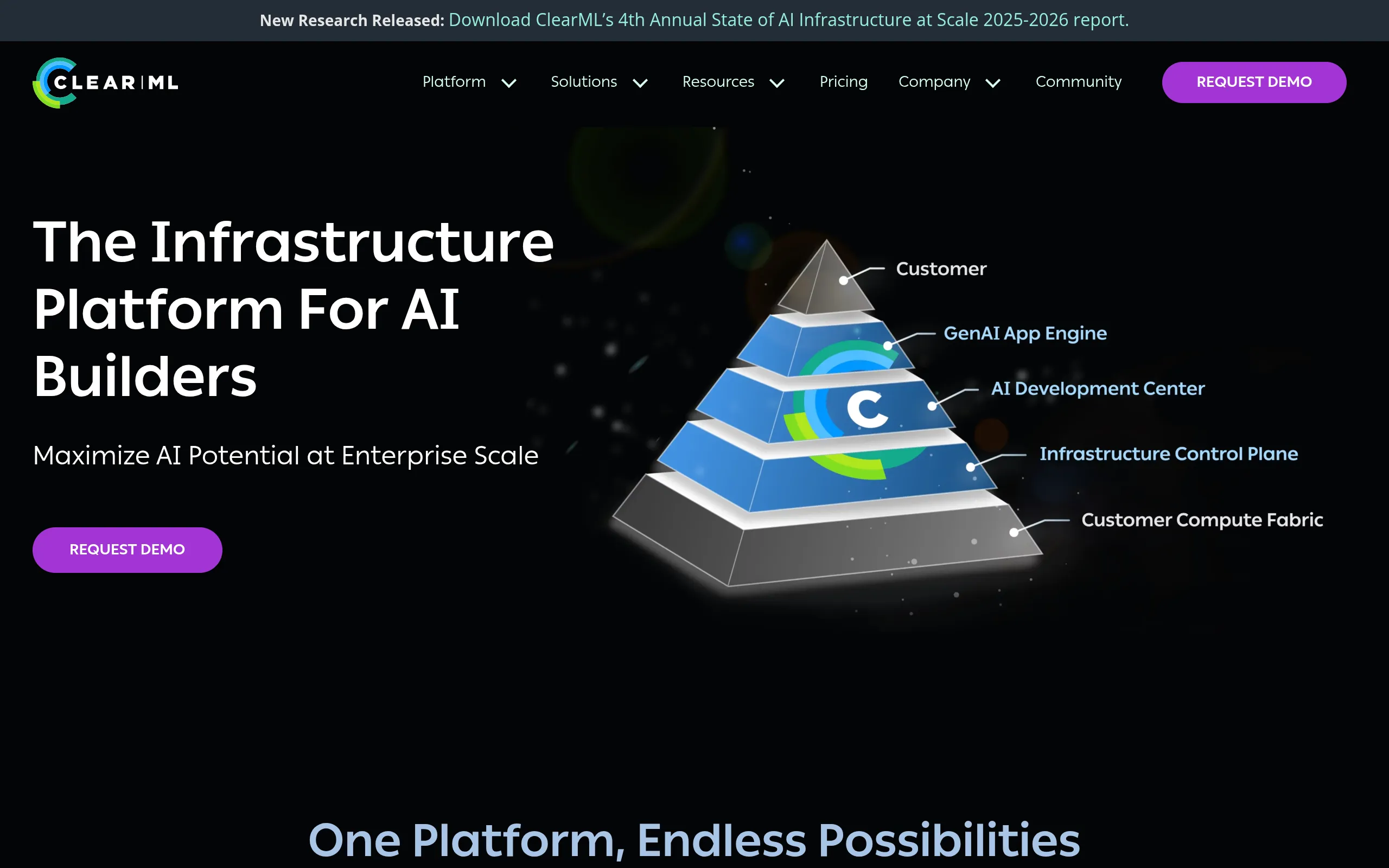
ClearML is an integrated MLOps platform that folds experiment tracking, orchestration, and scaling into one workflow layer. It suits teams that want a single system covering multiple lifecycle steps rather than assembling separate tools. Its pitch is low-friction adoption, described as MLOps with only two lines of code, which lowers the barrier for teams without dedicated platform engineers. One caution: pricing transparency is thin in the public research, so procurement should verify plan structure before committing.
- Best for: Teams wanting integrated tracking, orchestration, and scaling
- Standout feature: MLOps with only two lines of code to develop and automate workflows
9. Dataiku
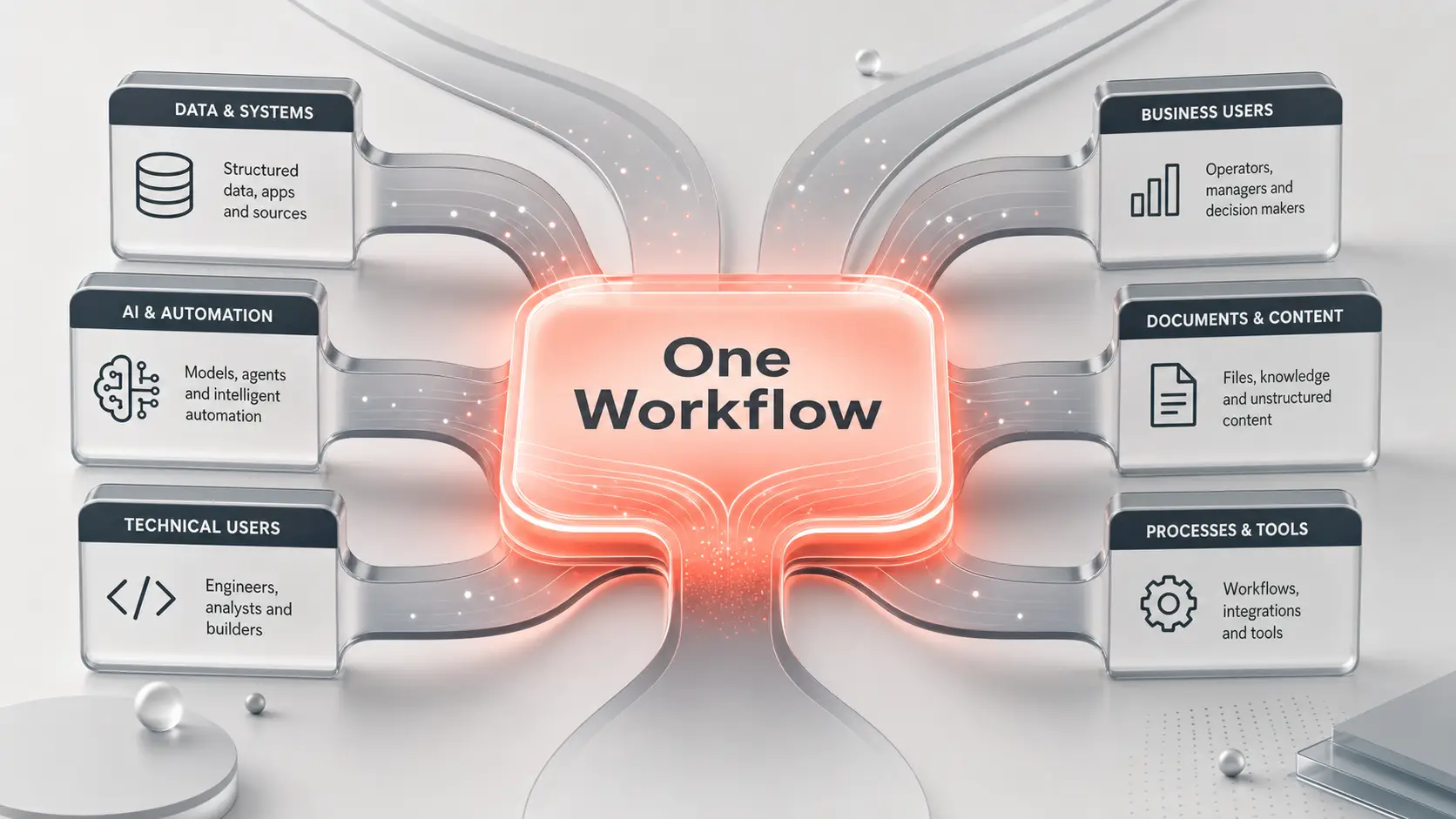
Dataiku is a human-centric enterprise AI platform where technical and nontechnical users work across data and AI workflows in one shared space. It fits enterprise data teams that need analysts, engineers, and business stakeholders collaborating in the same environment. The differentiator is accessibility: it democratizes access to data and AI across roles rather than assuming everyone codes. Where DataRobot pushes automation, Dataiku prioritizes cross-functional reach. Pricing and plan tiers are not surfaced publicly, so treat cost as a procurement conversation.
- Best for: Enterprise data teams that want a human-centric, cross-functional AI platform
- Standout feature: Democratized data and AI access for technical and nontechnical users
10. DataRobot
DataRobot is an enterprise AI platform built to automate the path from raw data to model value, with a heavy focus on AutoML workflows. It fits enterprise buyers who want the platform to do more of the modeling work and less manual pipeline assembly. The strength is speed to deployable outcomes when automation carries the load. But the honest limit is scope: it is not genuinely end-to-end outside AutoML-heavy use cases, so teams needing broad custom flexibility should weigh that carefully.
- Best for: Enterprise AutoML buyers who want automation from data to value
- Standout feature: End-to-end automation that accelerates every step from data to model
11. Seldon Core

Seldon Core is a serving-focused platform for deploying models on Kubernetes with advanced patterns like A/B testing and multi-armed bandits. It is aimed at enterprise teams that train elsewhere and need sophisticated model serving in production. Where Kubeflow spans the broader lifecycle, Seldon Core specializes in deployment and traffic shaping. The clear boundary: it is for model versioning and deployment only, not for training models, so it belongs in a stack alongside a training tool, not as a full suite.
- Best for: Enterprise teams that need advanced model serving patterns, not training
- Standout feature: A/B testing and multi-armed bandit support for production serving
- Starting price: $18,000/year license (as of January 2024)
12. Valohai
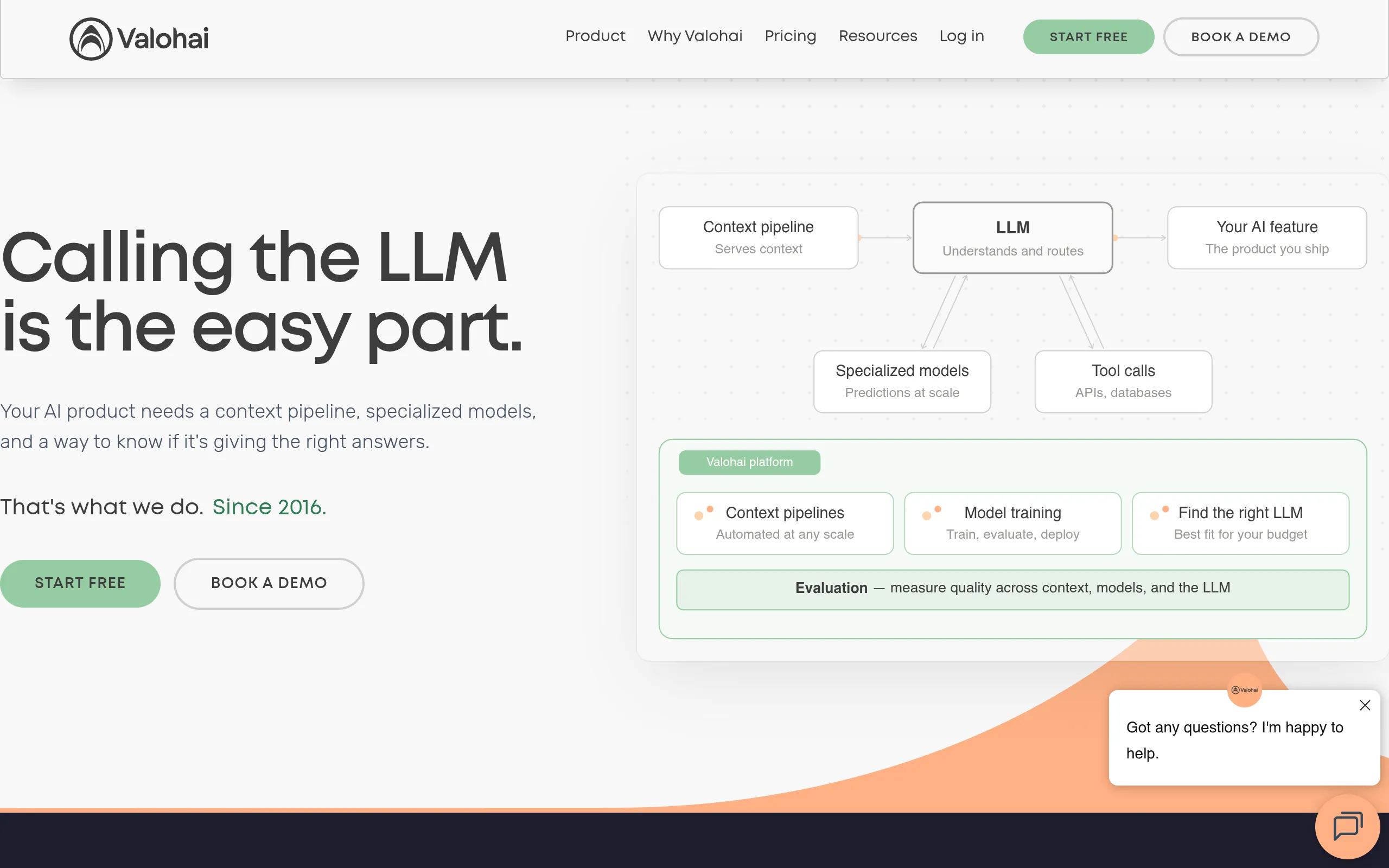
Valohai is an end-to-end, technology-agnostic workflow platform that automates the path from data extraction to model deployment. It fits deep-learning and API-first teams that want a consistent pipeline without hard-coding the infrastructure layer themselves. Its selling point is automation across the full loop: train, evaluate, deploy, repeat, with integrations across AWS, Azure, NVIDIA, Oracle, and Snowflake. The gap for buyers is pricing clarity, since ongoing cost after the trial is not disclosed publicly and needs a direct conversation with sales.
- Best for: Deep-learning and API-first teams that want an end-to-end workflow
- Standout feature: Automation from data extraction through to model deployment
- Free tier or trial: Yes, a 14-day free trial
Comparison Summary Table
Use this table to narrow the field to two or three candidates in under a minute. Where a firm starting price is not public, the price column says so honestly rather than guessing.
| Platform | Best For | Starting Price |
|---|---|---|
| Amazon SageMaker | AWS-native teams wanting unified training, deployment, and monitoring | Free tier + usage-based billing |
| Google Vertex AI | GCP teams wanting managed training, pipelines, and model access | Pay-as-you-go, pricing on request |
| Databricks | Data-heavy ML teams wanting one lakehouse for analytics and ML | Pay-as-you-go, consumption-based |
| Azure Machine Learning | Microsoft-centric enterprise teams needing governance and automation | Free tier + pay-as-you-go |
| Kubeflow | Kubernetes-first teams needing portable pipelines and deep control | Free and open source |
| MLflow | Teams needing experiment tracking and a model registry without lock-in | Free and open source |
| Weights & Biases | Research teams and ML engineers needing collaboration and sweeps | Free tier; Pro from $50/month |
| ClearML | Teams wanting integrated tracking, orchestration, and scaling | Pricing on request |
| Dataiku | Enterprise data teams wanting a human-centric AI platform | Pricing on request |
| DataRobot | Enterprise AutoML buyers wanting automation from data to value | Pricing on request |
| Seldon Core | Enterprise teams needing advanced model serving patterns | $18,000/year license |
| Valohai | Deep-learning and API-first teams wanting an end-to-end workflow | 14-day free trial, then custom |
We picked these 12 by matching each platform to a distinct buyer job across the MLOps lifecycle, from tracking and pipelines to deployment and monitoring. The list mixes managed, open-source, and enterprise options because those are the three buckets buyers actually weigh against each other. Ordering reflects category fit and how often each name appears in credible comparisons, not sponsored placement.
Best MLOps Platform by Use Case
Most teams do not need the single “best” platform. They need the one that fits their cloud, their compliance bar, their team size, and how much infrastructure they are willing to run. Here is the fast filter.

Best for Startups and Lean ML Teams
Start with MLflow. It gives you experiment tracking and a model registry for free when self-hosted, with no vendor commitment while you are still finding your workflow. Lean teams rarely need a managed suite on day one, and MLflow keeps your options open.
Best for Collaboration-Heavy Research Teams
Choose Weights & Biases. Live dashboards, hyperparameter sweeps, and shared experiment visibility are built for teams iterating fast together. The free tier covers early work, and you upgrade only when collaboration scales.
Best for Enterprise Governance
Look at Azure Machine Learning or Dataiku. Azure ML wins when your organization already runs on Microsoft and needs CI/CD plus governance baked in. Dataiku wins when cross-functional access for analysts and business users matters as much as governance.
Best for Kubernetes-First Teams
Kubeflow is the answer when you already run Kubernetes and want portable, vendor-neutral pipelines. You accept the operational overhead in exchange for deep control over the stack.
Best for Open-Source Flexibility
Pair Kubeflow with MLflow. Kubeflow handles orchestration and deployment on Kubernetes, MLflow handles tracking and the model registry, and neither locks you into a cloud vendor. This combination is common in teams that want to own their tooling.
Best for Regulated, Serving-Only Deployments
Seldon Core fits teams that train elsewhere and need production serving with A/B testing and traffic control. Do not overbuy a full lifecycle platform if serving is your only gap. A dedicated serving tool alongside your existing training stack is the leaner choice.
FAQ
What is an MLOps platform?
An MLOps platform is software that takes machine learning models from experimentation to reliable production and keeps them running well. It typically covers experiment tracking, model versioning, pipeline orchestration, deployment, and monitoring. Some platforms handle the entire lifecycle, while others specialize in one stage such as serving or tracking.
Is MLflow a platform or a framework?
MLflow sits between the two. It is an open-source framework for experiment tracking and model registry management, not a full managed platform. It handles logging, comparison, and model storage well, but it is still maturing toward end-to-end coverage, so many teams pair it with an orchestration or serving tool.
What is the difference between Kubeflow and SageMaker?
Kubeflow is open source and Kubernetes-native, so you host and operate it yourself for full control and portability. SageMaker is a fully managed AWS service where the infrastructure is handled for you. Kubeflow trades operational effort for flexibility, while SageMaker trades some flexibility for a managed experience inside AWS.
Which MLOps platform is best for beginners?
MLflow is the most beginner-friendly starting point because it is free, lightweight, and does not require Kubernetes or a large infrastructure setup. It lets a small team track experiments and manage models without heavy overhead. From there, you can add orchestration or a managed platform as your needs grow.
How do I choose between open-source and managed MLOps tools?
Weigh how much infrastructure your team wants to own against how much control you need. Open-source tools like Kubeflow and MLflow cost less in licensing but demand engineering time and expertise. Managed platforms like SageMaker or Vertex AI cost more per use but remove operational burden, which suits teams that would rather ship models than run servers.
Choosing the Platform That Matches Your Stack
There is no universal winner here, and any roundup that names one is selling something. The right MLOps platform is the one that fits your cloud, your team’s skills, and your production maturity. Shortlist two or three from the table above, run one real pipeline through each, and pick the one that fits how your team actually works. Compare the rest of our Best machine learning software picks To round out your stack before you commit.