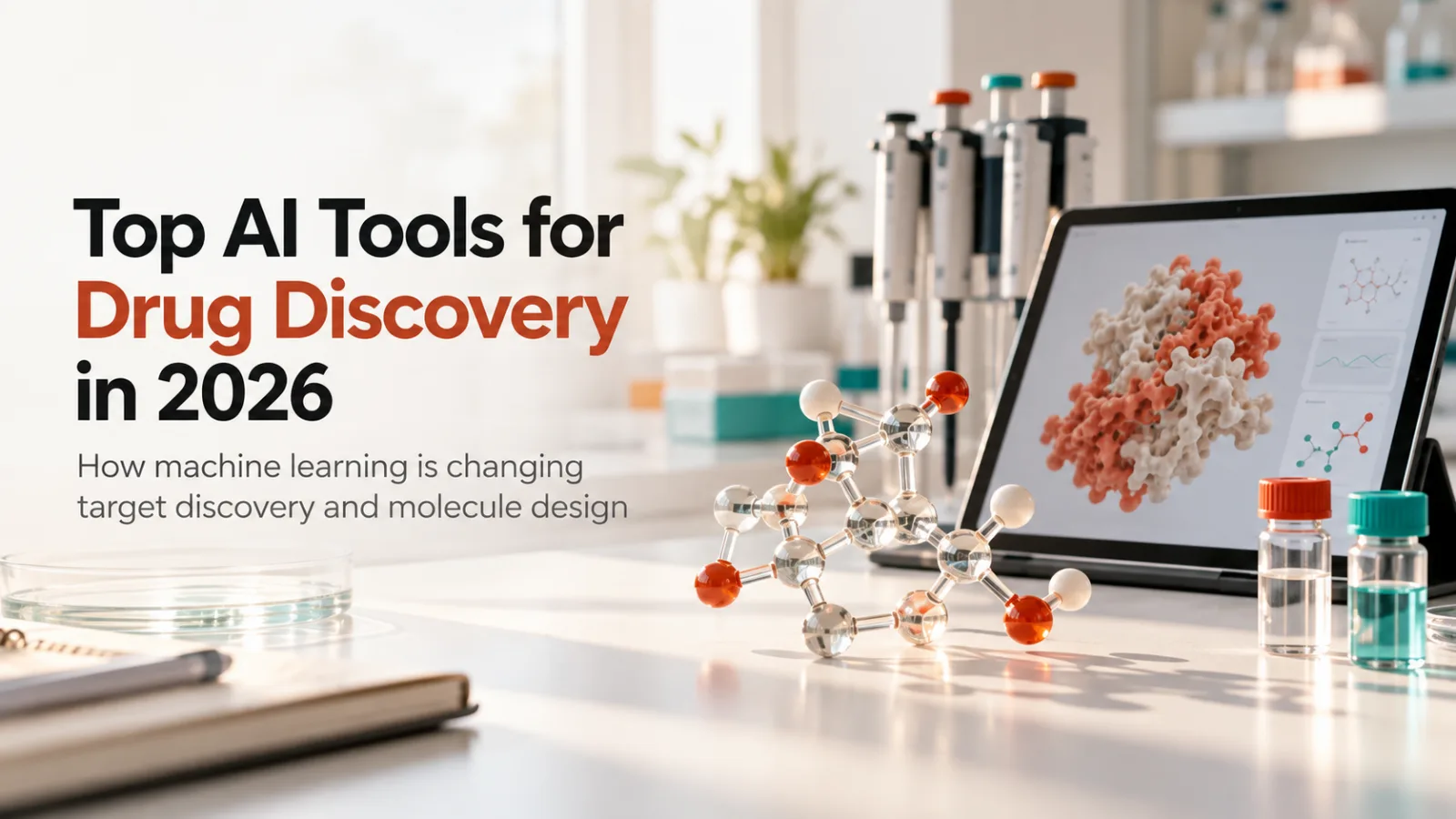
The landscape of drug discovery is undergoing a radical transformation driven by the advent of artificial intelligence (AI). Traditional drug discovery methods, often time-consuming and costly, are being augmented by AI-powered tools that promise to accelerate the process and increase success rates. In this blog post, we will explore the key AI techniques that are changing the field, their applications in various stages of drug discovery, and the exciting future of AI-driven medicine. By effectively using AI object recognition techniques, researchers can analyze medical images, identify patterns, and assist in the diagnosis of diseases, accelerating the development of targeted therapies and improving patient outcomes.
What is AI in Drug Discovery?
AI in drug discovery refers to applying artificial intelligence techniques to accelerate and improve the process of developing new drugs. This involves using algorithms and machine learning models to analyze vast amounts of biological and chemical data, identify patterns, and make predictions to help researchers identify potential drug targets, design novel molecules, and optimize drug development processes.
Key AI Techniques in Drug Discovery
Machine Learning:
Machine learning algorithms are at the core of many AI-powered drug discovery tools. By analyzing vast amounts of biological and chemical data, these algorithms can identify patterns and make predictions that would be difficult or impossible for human researchers.
Supervised Learning:
This technique involves training models on labeled data, such as protein structures and their associated biological activities. Once trained, the model can predict the activity of new, unseen compounds.
Unsupervised Learning:
This approach allows the model to discover hidden patterns in unlabeled data, such as clustering similar molecules or identifying novel chemical spaces.
Reinforcement Learning:
This technique involves training models to make decisions in a dynamic environment, such as optimizing a molecular structure to improve its drug-like properties.
Deep Learning:
Deep learning, a subset of machine learning, uses artificial neural networks with multiple layers to learn complex patterns from data.
Convolutional Neural Networks (CNNs):
CNNs are particularly well-suited for analyzing images like protein structures or microscopy images.
Recurrent Neural Networks (RNNs):
RNNs are designed to process sequential data, such as DNA sequences or protein-protein interaction networks.
Generative Adversarial Networks (GANs):
GANs can generate new molecular structures with desired properties, accelerating the de novo drug design process.
Natural Language Processing (NLP):
NLP techniques enable computers to understand and interpret human language, allowing them to analyze scientific literature and extract valuable information.
Text Mining:
NLP can be used to mine vast amounts of scientific literature to identify trends and emerging research areas.
Information Extraction:
Specific information, such as drug targets, mechanisms of action, or clinical trial results, can be extracted from text documents.
Knowledge Graph Construction:
NLP can be used to build knowledge graphs that represent relationships between entities, such as proteins, drugs, and diseases.
AI Applications in Drug Discovery
Target Identification and Validation:
AI can help identify novel drug targets by analyzing large-scale biological data, such as genomic and proteomic data. Once a target is identified, AI can validate its druggability and identify potential drug candidates.
Virtual Screening:
Virtual screening involves using computational methods to screen large libraries of compounds for potential drug candidates. AI-powered virtual screening tools can significantly accelerate this process by prioritizing compounds with the highest likelihood of success.
De Novo Drug Design:
AI can generate new molecular structures with desired properties, such as high potency, low toxicity, and good pharmacokinetic properties. This can lead to the discovery of novel drug candidates that would be difficult to find using traditional methods.
Pharmacokinetics and Pharmacodynamics (PK/PD) Modeling:
AI can model drug candidates’ absorption, distribution, metabolism, excretion, and toxicity (ADMET) properties. This information can help optimize drug design and predict drug interactions.
Top AI Tools for Drug Discovery
AlphaFold
AlphaFold, developed by DeepMind, uses AI to predict protein structures accurately. It has changed the field of biology by providing detailed insights into protein folding.
Pros:
- Highly accurate protein structure predictions.
- Open-source for scientific use.
- Accelerates drug discovery research.
Cons:
- Requires computational expertise for effective use.
- Limited direct applications outside of structural biology.
Pricing Package:
Free (open-source for non-commercial research).
Schrödinger
Schrödinger’s Schrödinger’srages AI and computational chemistry to accelerate drug design, offering tools for molecular modeling, simulation, and data analysis.
Pros:
- Comprehensive suite for drug discovery.
- Supports both academic and commercial users.
- Strong customer support and tutorials.
Cons:
- Expensive for commercial use.
- The steeper learning curve for beginners.
Pricing Package:
Varies: Licenses are available for academic, commercial, and enterprise use.
Atomwise
Atomwise uses AI to predict molecule-target interactions, focusing on structure-based drug discovery and high-throughput screening.
Pros:
- Highly scalable AI-driven drug discovery.
- Large database of molecule interactions.
- Speedy lead compound identification.
Cons:
- Collaboration is required to make full use of its services.
- Limited transparency for independent use.
Pricing Package:
Customizable, based on projects and partnerships.
Insilico Medicine
Insilico Medicine combines AI and biology to identify novel drug targets and design molecules, offering solutions for drug discovery pipelines.
Pros:
- Strong target identification.
- AI-powered molecule generation.
- Integrated platform for end-to-end drug discovery.
Cons:
- Expensive for small organizations.
- Complex tools may require expert users.
Pricing Package:
Custom pricing based on services and collaborations.
Exscientia
Exscientia uses AI-driven precision medicine to design and develop drugs, focusing on small molecules and clinical efficacy.
Pros:
- AI-augmented precision drug design.
- Proven success in clinical-stage programs.
- Integrated patient-first approach.
Cons:
- Limited to specific disease areas.
- Expensive collaborations for startups.
Pricing Package:
Custom pricing for projects and collaborations.
Cyclica
Cyclica focuses on proteome-wide drug discovery using AI, offering a ligand design platform and predictive analytics.
Pros:
- Proteome-wide target screening.
- AI-driven de novo drug design.
- Flexible platform for researchers.
Cons:
- Limited visibility into proprietary algorithms.
- Moderate learning curve for new users.
Pricing Package:
Custom pricing based on use and licensing.
BenevolentAI
BenevolentAI combines machine learning and domain expertise to identify drug targets and repurpose existing compounds for unmet medical needs.
Pros:
- Focus on rare and complex diseases.
- Advanced AI-driven data analysis.
- Successful collaborations with major pharmaceutical companies.
Cons:
- Limited resources for startups.
- Mostly targeted towards large-scale enterprises.
Pricing Package:
Custom pricing based on project scope.
PharmAI
PharmAI provides AI-based solutions to accelerate drug discovery with target validation and lead identification tools.
Pros:
- Fast AI-based validation.
- Easy-to-use interface.
- Scalable for different research sizes.
Cons:
- Limited to early-phase drug discovery.
- It may lack reliability for complex workflows.
Pricing Package:
Customizable based on features and usage.
BioSymetrics
BioSymetrics offers an AI-driven biological and chemical data integration platform, optimizing drug discovery and development.
Pros:
- Data-centric AI for drug discovery.
- Versatile integration of biology and chemistry.
- Customizable platform for various industries.
Cons:
- It may require specialized expertise for full functionality.
- There is less focus on clinical development phases.
Pricing Package:
Contact for detailed pricing.
Roivant Discovery
Roivant Discovery uses AI to enhance the process of identifying promising drug candidates, focusing on unmet medical needs.
Pros:
- Patient-centric approach.
- Experienced team in AI and pharma.
- A broad range of therapeutic areas.
Cons:
- We are primarily focused on partnerships with enterprises.
- High dependency on proprietary technologies.
Pricing Package:
Tailored pricing for collaborations and partnerships.
ReviveMed
ReviveMed employs AI to analyze metabolomic data and discover drug targets, focusing on small molecules for rare and complex diseases.
Pros:
- Specialized in metabolomic-driven drug discovery.
- AI-powered insights into complex biological systems.
- Scalable for various disease applications.
Cons:
- Limited use outside of metabolomics.
- Focused on partnerships, not standalone use.
Pricing Package:
Custom pricing based on collaboration terms.
Deep Genomics
Deep Genomics uses AI to identify genetic mutations and predict how they affect human biology, aiding in target identification and drug development.
Pros:
- Focus on genetic-based drug discovery.
- AI for mutation analysis.
- Proven pipeline with successful results.
Cons:
- Niche focuses on genetic disorders.
- High cost for partnerships and usage.
Pricing Package:
Pricing is available upon request.
PathAI
PathAI uses AI to assist in drug discovery by analyzing pathology data to improve diagnostic accuracy and therapeutic targeting.
Pros:
- Exceptional pathology insights.
- AI-driven efficiency in biomarker discovery.
- Enhances preclinical research.
Cons:
- Primarily focused on pathology applications.
- Limited to supporting drug development stages.
Pricing Package:
Custom pricing based on project requirements.
TwoXAR Pharmaceuticals
TwoXAR Pharmaceuticals uses computational methods to identify and prioritize drug candidates, focusing on rapid drug discovery and repurposing.
Pros:
- Rapid identification of viable drug candidates.
- A simplified platform for drug repurposing.
- Proven track record in preclinical and clinical pipelines.
Cons:
- Requires partnerships for access to full tools.
- Narrow focus on preclinical drug discovery.
Pricing Package:
Tailored pricing for collaborations.
Euretos
Euretos provides an AI-driven biomedical knowledge platform that aids hypothesis generation, target identification, and drug repurposing.
Pros:
- Extensive biomedical database integration.
- Facilitates hypothesis generation.
- Supports a wide range of therapeutic areas.
Cons:
- Requires expertise to use fully.
- Limited access to proprietary datasets for standalone use.
Pricing Package:
Subscription and licensing options are available.
Molecule. One
Molecule. One uses AI to design and predict synthetic pathways for chemical compounds, making the drug development process more efficient.
Pros:
- AI-driven synthesis planning.
- Easy-to-use interface for chemists.
- Reduces costs and time for synthesis.
Cons:
- Primarily focused on synthetic chemistry.
- Limited features for later-stage drug development.
Pricing Package:
Custom pricing based on usage and project requirements.
Absci
Absci uses AI to design and optimize protein-based therapeutics, offering a complete platform for drug target discovery.
Pros:
- Advanced protein design and optimization.
- Accelerates biopharmaceutical development.
- AI-powered platform with experimental validation.
Cons:
- Primarily focused on biologics.
- High costs for smaller organizations.
Pricing Package:
Customizable based on project size and scope.
Relay Therapeutics
Relay Therapeutics uses AI and advanced computing to predict protein motion and design novel drugs targeting dynamic protein states.
Pros:
- Innovative focus on protein dynamics.
- AI-driven drug discovery pipeline.
- Strong focus on oncology and genetic diseases.
Cons:
- Limited applications outside protein motion.
- High dependency on proprietary technology.
Pricing Package:
Custom pricing based on collaborations.
Aria Pharmaceuticals (formerly TwoXAR)
Aria Pharmaceuticals uses computational AI to identify disease treatments and de-risk early-stage drug development.
Pros:
- AI-driven disease-specific insights.
- Rapid drug candidate identification.
- Focus on rare and complex diseases.
Cons:
- Limited tools for independent researchers.
- High costs for licensing and collaboration.
Pricing Package:
Tailored pricing for partnerships.
Numedii
Numedii uses big data and AI to identify therapeutic candidates, focusing on drug repurposing and precision medicine.
Pros:
- Strong big-data integration.
- Effective in identifying drug repurposing opportunities.
- Focused on precision medicine.
Cons:
- It mainly targets drug repurposing, limiting novel discoveries.
- High costs for advanced collaborations.
Pricing Package:
Custom pricing for partnerships and licensing.
Benefits of AI for Drug Discovery
AI has the potential to change drug discovery by addressing several key challenges and accelerating the development of new therapies. Here are some of the key benefits:
Accelerated Drug Discovery:
AI can sharply speed up drug discovery by automating tasks such as target identification, virtual screening, and de novo drug design.
Improved Accuracy and Efficiency:
AI algorithms can analyze vast amounts of data to identify patterns and trends that may be missed by human researchers, leading to more accurate predictions and better decision-making.
Reduced Costs:
AI can reduce the costs associated with drug discovery by minimizing the need for time-consuming and expensive laboratory experiments.
Enhanced Precision Medicine:
AI can help personalize treatments by analyzing patient-specific data, such as genetic information and medical history, to identify the most effective therapies.
Novel Drug Discovery:
AI can help discover novel drug targets and generate novel molecular structures with desired properties, leading to the development of innovative therapies.
Challenges of AI for Drug Discovery
While AI offers significant benefits, some challenges need to be addressed:
Data Quality and Quantity:
AI models rely on high-quality and large amounts of data to train well. The quality and quantity of data can sharply impact the accuracy and reliability of AI-based predictions.
Model Interpretability:
Many AI models, particularly deep learning models, are complex and difficult to interpret. This can make understanding the underlying reasons for a model’s predimodel’schallenging.
Ethical Considerations:
AI-powered drug discovery raises ethical concerns, such as the potential for algorithm bias and the responsible use of AI in healthcare.
Regulatory Hurdles:
The regulatory market for AI-driven drug development is still evolving, and there may be challenges in obtaining regulatory approval for AI-designed drugs.
Future Trends of AI for Drug Discovery
The future of AI in drug discovery is promising, with several exciting trends emerging:
AI-Driven Drug Design:
AI will continue to shapes designing novel drug molecules with improved properties, such as increased potency and reduced toxicity.
AI-Enabled Clinical Trials:
AI can optimize clinical trial design, patient recruitment, and data analysis, leading to faster and more efficient clinical trials.
AI-Powered Drug Repurposing:
AI can identify existing drugs that may be repurposed to treat new diseases, accelerating drug development.
AI-Enhanced Drug Safety Assessment:
AI can help predict potential side effects and toxicity, improving drug safety and reducing the risk of adverse events.
AI is poised to transform the future of drug discovery, accelerating the development of new therapies and improving patients’ lives. By using the power of machine learning, deep learning, and NLP, researchers can get more from vast amounts of biological and chemical data. As AI advances, we can look forward to a future where drug discovery is faster, more efficient, and more successful.