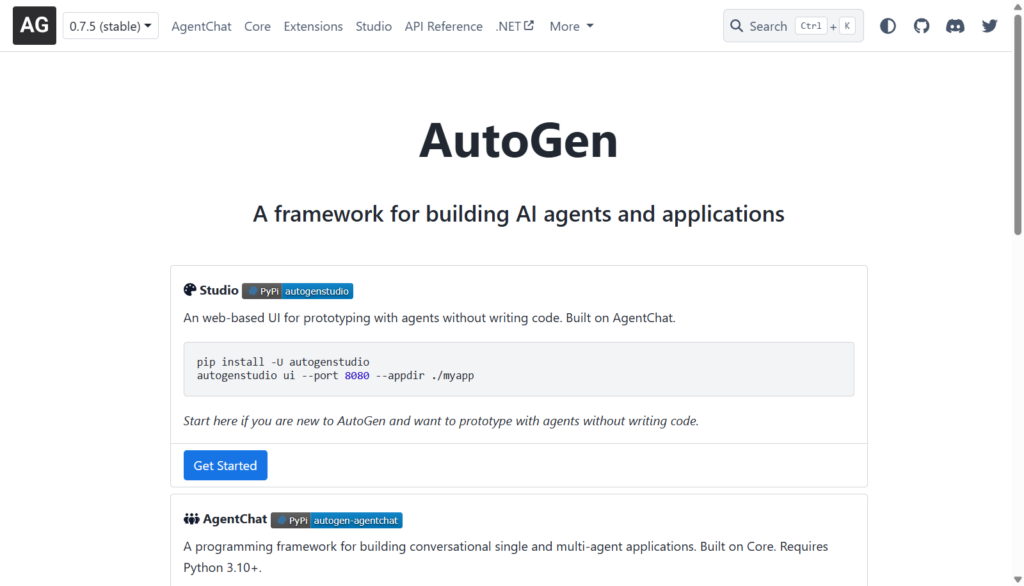
AutoGen came out of Microsoft Research in 2023 as an open-source framework for a specific pattern: multiple AI agents having a structured conversation with each other to solve a task collaboratively, rather than one model working alone through a single prompt chain. One agent might write code, another reviews it, and a third tests it, passing work back and forth automatically.
That multi-agent conversation pattern, published alongside Microsoft's research, influenced a wide range of later agent frameworks that adopted similar ideas. AutoGen ships as a Python library rather than a hosted app or visual builder, aimed at developers and researchers comfortable writing code to define agent roles and conversation flows rather than clicking together a workflow. As of 2026, Microsoft has moved AutoGen into community-maintained mode and points enterprise users toward Microsoft Agent Framework as its official successor, though the open-source library remains available and actively used.
The framework itself is free and open source, with no separate paid tier since it's a library rather than a hosted service; running it still requires paying for the underlying LLM API calls it makes. For a developer or researcher building a system where multiple specialized AI agents need to collaborate through structured dialogue, AutoGen's research pedigree and multi-agent conversation model remain a reference implementation others get compared against.