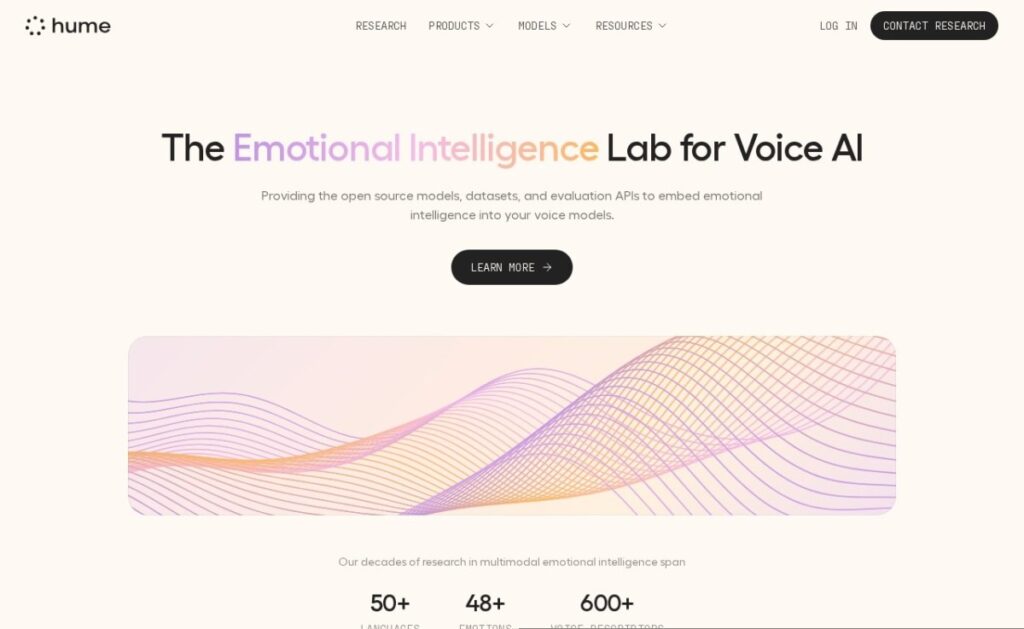
Hume AI, founded in 2021 by a former Google research scientist, builds its technology around a different question than most voice AI companies: not only what someone said, but what emotion their voice actually carried while saying it. Its Empathic Voice Interface reads tone, pacing, and other vocal cues to detect emotional state and responds in a way meant to match that emotional context.
That emotional-intelligence focus positions Hume differently from transcription-accuracy or voice-cloning-quality competitors: its research publications and API are aimed at developers building voice agents, mental health applications, and customer service tools where recognizing frustration, confusion, or distress in a caller's voice changes how the system should respond, beyond what words get logged.
Access runs through a free tier for developers testing the API, with usage-based pricing for production deployment. For a team building a voice application where emotional context genuinely changes the right response, rather than one focused purely on transcription accuracy or voice realism, Hume's research-driven approach targets a need most competitors don't address directly.