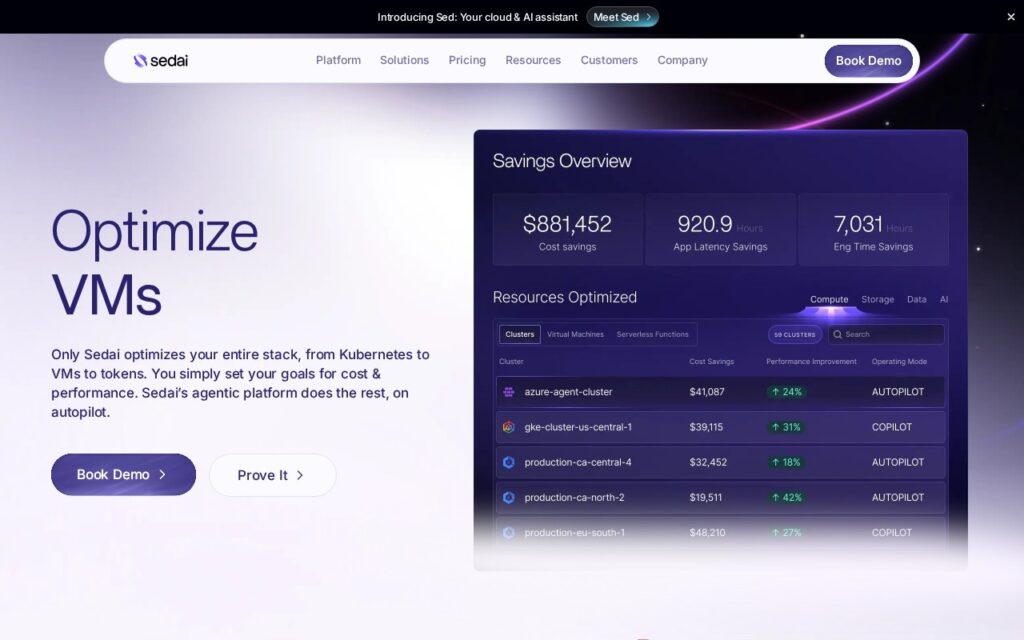
Sedai autonomously optimizes cloud infrastructure cost, performance and availability using reinforcement learning, across containers (EKS, AKS, GKE), VMs, serverless, storage and data workloads on AWS, Azure, Google Cloud, IBM Cloud and Oracle Cloud. It offers a Copilot mode requiring manual approval and a fully autonomous Autopilot mode, with proactive issue resolution, Smart SLO monitoring, and integrations across monitoring, CI/CD and ITSM tools.
The Copilot/Autopilot distinction is the meaningful safety design here – an organization can start with human approval on every autonomous action and only move to full autonomy once trust is established, rather than an all-or-nothing autonomous system from day one. Eight US patents on autonomous cloud actions and named customer results with specific dollar figures (Palo Alto Networks’ $3.5M savings, KnowBe4’s 50% cost reduction) back the autonomous-optimization claims with real, checkable outcomes rather than vague efficiency promises.
Autonomous infrastructure changes, even with a strong safety track record, still warrant real operational oversight and rollback planning – “zero incidents claimed” is the vendor’s own reported figure, not independently audited. No self-serve pricing is published for a platform this infrastructure-critical; expect a sales conversation, though the page references flexible options for startups and SMBs.