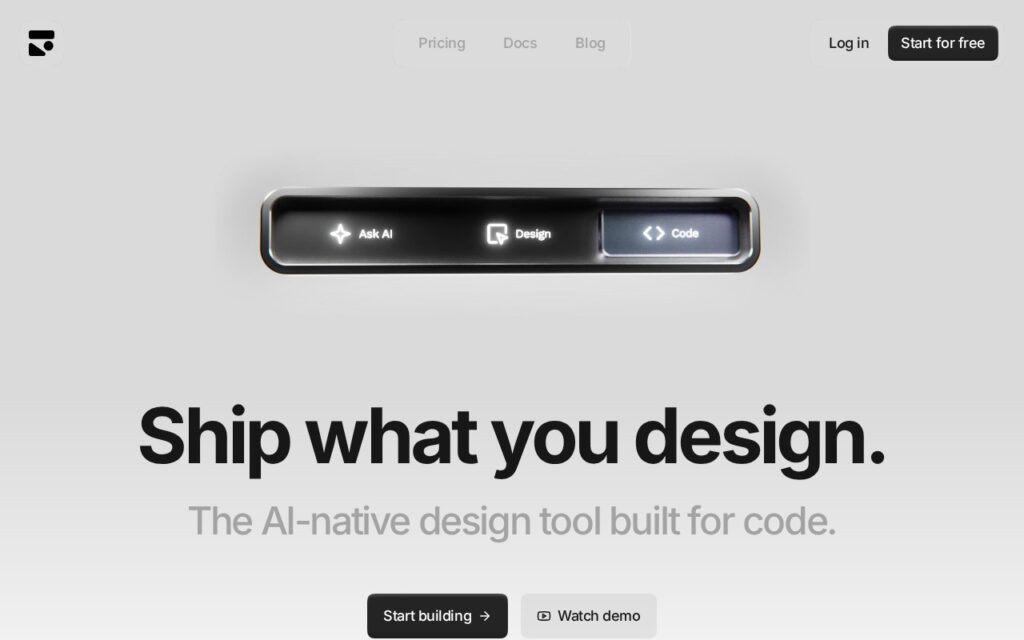
Subframe is a design tool that outputs real code. Interfaces are built visually with drag-and-drop, auto-layout and a component system, and what comes out is production code built on Radix UI and Tailwind CSS rather than a static mockup for an engineer to rebuild from scratch. Real-time multiplayer collaboration is built in, and it connects to code editors including Cursor and Claude over MCP. Free covers one project up to 10 pages with limited AI; Pro is $29 a month per editor for unlimited projects and AI usage.
Shipping code on a real, boring, well-supported stack is the decision that matters most here. Radix and Tailwind are widely used, well-documented and not proprietary to Subframe, so a team adopting this is not locking its whole design system into a vendor’s own component format – the classic failure of design-to-code tools that export something only that tool can meaningfully edit further. MCP access from Cursor and Claude is the forward-looking piece: it puts the design system directly in reach of an AI coding session rather than behind a separate export step.
This still sits in a genuinely competitive design-to-code category, and the real test is whether the exported code matches how your team already structures a codebase, or whether it becomes something to refactor immediately after import – worth checking against a real component from your own product before committing a design system to it.