Bottom line: Photograph a room and see it restyled across different interior themes, with sketch-to-render for design ideas that do not exist yet. Free plan available.
Uses your actual room, which is what mood boards cannot doRenders do not respect real dimensions – treat them as ideas, not plans
CVReviewed by Challenging Voice Editorial · Updated Sep 2026How we rate ↗
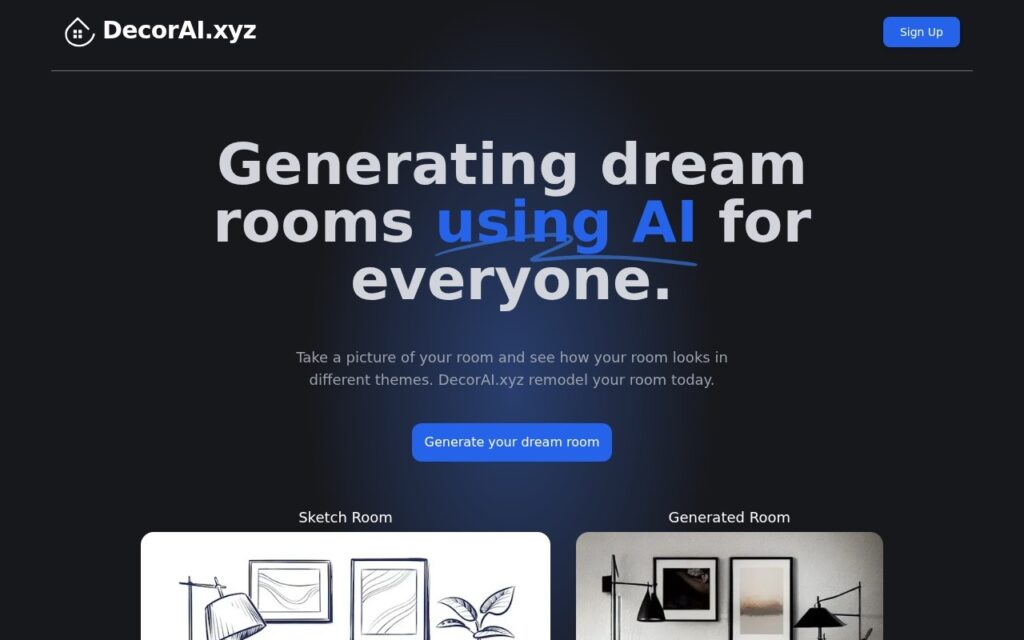
DecorAI restyles interiors from a photograph: take a picture of a room and see it rendered in different design themes.
The reason this works better than mood boards is that it uses your room. The gap between an inspiration image and your actual space – its proportions, window placement and awkward corners – is exactly what makes interior inspiration hard to act on, and seeing a style applied to the room you have answers a question a catalogue cannot. A sketch mode extends it to spaces that do not exist yet.
It is deliberately simple and aimed at homeowners and renters rather than professional designers – no CAD, no measurements, no floor plans. Treat the output as a visual idea rather than a plan: generated renders do not respect real dimensions, and what looks right in an image may not fit the room.
Key features
Restyles a photographed room across design themes
Sketch-to-render for spaces that do not exist yet
Works from a phone photo with no setup
Multiple interior styles per room
Aimed at homeowners and renters rather than professionals
Screenshots & demo
Pricing
DecorAI offers a free plan, with paid upgrades for higher limits and more features.
Pricing is provided as a guide. Check the official site for the latest plans.
Is DecorAI expensive?
DecorAI has no advertised paid tier. Among the 105 priced tools we list in Design, the median entry price is $15 a month.
72% of Design tools in the directory offer a free tier, and this is one of them.
Compared against every priced listing in Design, recalculated as the catalogue changes. Method and the full market breakdown are in our AI tool pricing study.
Pros & cons
Pros
Uses your actual room, which is what mood boards cannot do
No measurements, CAD or floor plans required
Fast enough to explore several directions before committing
Cons
Renders do not respect real dimensions – treat them as ideas, not plans
No professional design output such as measurements or sourcing