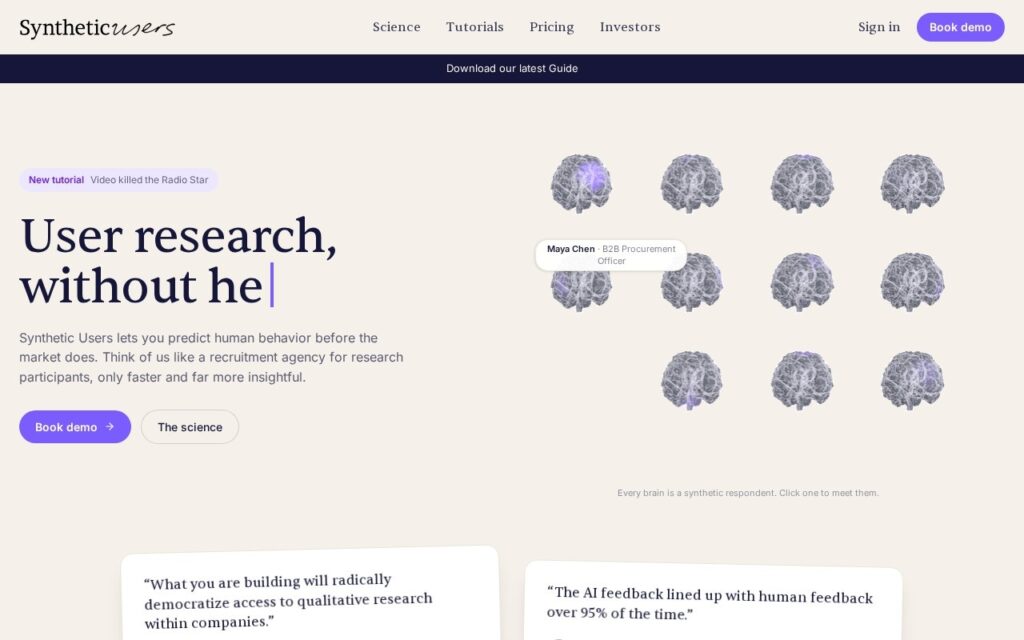
Synthetic Users runs qualitative user research against AI-generated participants rather than recruited people, positioning itself as a research team that can predict behaviour before the market reveals it. The company publishes a Science section setting out its methodology.
The appeal is obvious to anyone who has run studies. Recruiting the right participants is slow, expensive and the reason most product decisions get made without research at all – so a tool producing interview-shaped output in an afternoon is genuinely tempting, particularly for early exploration and for pressure-testing a discussion guide before spending real recruitment budget.
Be clear about what the output is and is not. A model generating what a persona would plausibly say is producing a prediction from patterns in text, not evidence from a person – and the failure mode is specific and dangerous: fluent, confident findings that carry full authority in a decision meeting while grounded in nobody’s actual experience. Real users are unreasonable in ways models are not, and that unreasonableness is usually the finding. Treat this as a way to sharpen questions before talking to humans, and be honest in write-ups about where the data came from – publishing this to stakeholders as user research without that distinction is a serious misrepresentation. The vendor’s willingness to publish its methodology is to its credit; read it before relying on the output.