AI opponent generation covers the techniques and frameworks game developers use to build adaptive, challenging virtual adversaries, from classic finite state machines to modern reinforcement learning. This guide covers the core techniques and the tools worth knowing. Ranging from full ML frameworks and game engines to specialized NPC-behavior platforms.
Key Techniques and Benefits
Opponent AI ranges from simple to sophisticated: finite state machines handle basic behavior switching (patrol, chase, attack), behavior trees organize more complex decision logic in a way designers can actually read and edit, and machine learning, especially reinforcement learning, where an agent learns through trial and reward rather than following hand-coded rules, produces opponents that genuinely adapt to how a specific player plays. Done well, this means a more engaging and replayable game, longer play sessions since opponents don’t become predictable, and faster iteration than hand-scripting every behavior manually.
Top AI Opponent Generators for Game Developers
Unity ML-Agents Toolkit
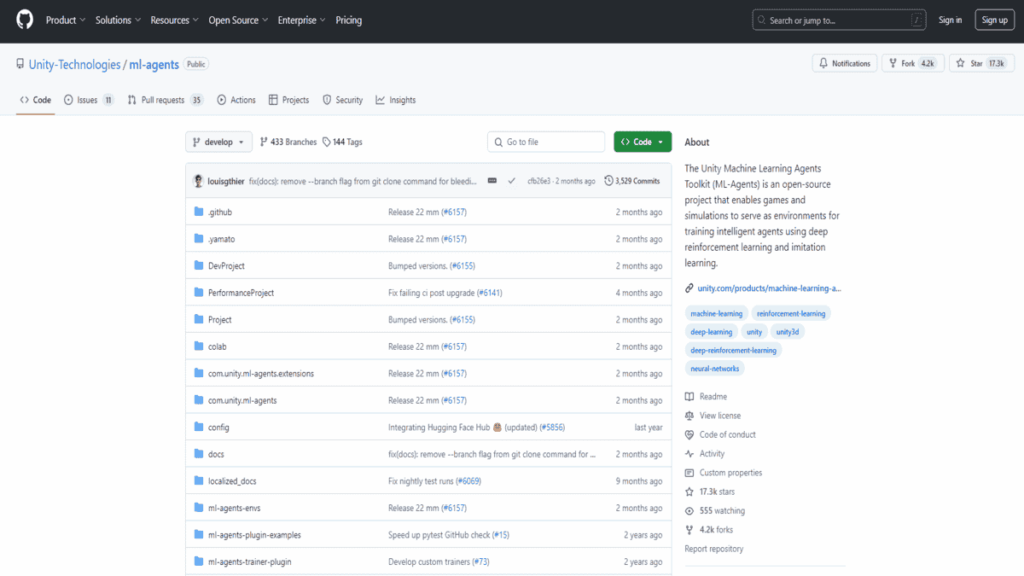
Unity ML-Agents Toolkit is an open-source plugin for Unity that enables game developers to create intelligent agents powered by machine learning. It allows you to generate AI opponents that can learn and improve their behavior through reinforcement learning.
Pros:
- Fully integrated with Unity.
- Supports various machine learning algorithms.
- Great for creating sophisticated opponent behaviors.
Cons:
- Requires knowledge of machine learning.
- It can be complex for beginners.
Pricing Package:
- Free.
Gymnasium (formerly OpenAI Gym)
Gymnasium is the maintained continuation of OpenAI Gym. OpenAI stopped maintaining Gym in 2020 and handed it to the Farama Foundation, which released Gymnasium as its direct successor. It’s a toolkit for developing and comparing reinforcement learning algorithms, used to create AI agents that simulate different opponent behaviors in various game environments.
Pros:
- Open-source and widely used in AI research.
- Supports diverse game scenarios and environments.
- Easy integration with Python-based libraries.
Cons:
- Requires knowledge of reinforcement learning.
- Limited pre-built game environments.
Pricing Package:
- Free.
Cerebras Wafer-Scale Engine
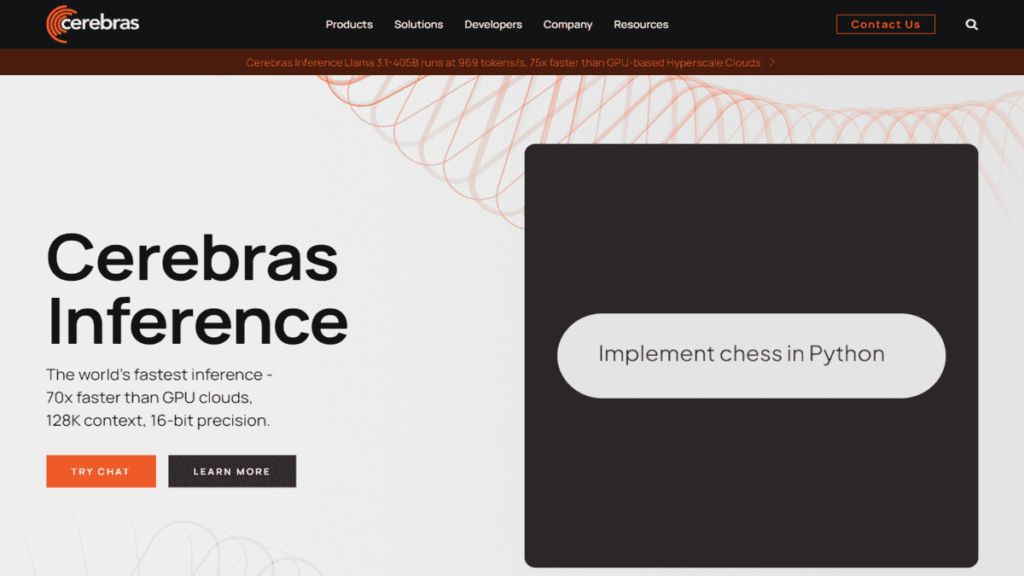
Cerebras Offers a high-performance AI hardware solution that accelerates the creation of AI-powered game opponents. It uses large-scale neural networks to train complex models for in-game AI behavior.
Pros:
- High-performance AI processing.
- Suitable for complex game environments.
- Optimized for deep learning models.
Cons:
- Expensive hardware requirements.
- Requires expertise in deep learning models.
Pricing Package:
- Custom pricing based on requirements.
DeepMind Lab
DeepMind Lab is a 3D learning environment used to develop AI agents. It provides a platform for testing AI models and creating dynamic, intelligent game opponents.
Pros:
- Created by DeepMind, a leader in AI research.
- Supports complex AI behavior modeling.
- Highly customizable environments.
Cons:
- Requires advanced knowledge of AI and reinforcement learning.
- It may have a steep learning curve.
Pricing Package:
- Free.
Godot Engine
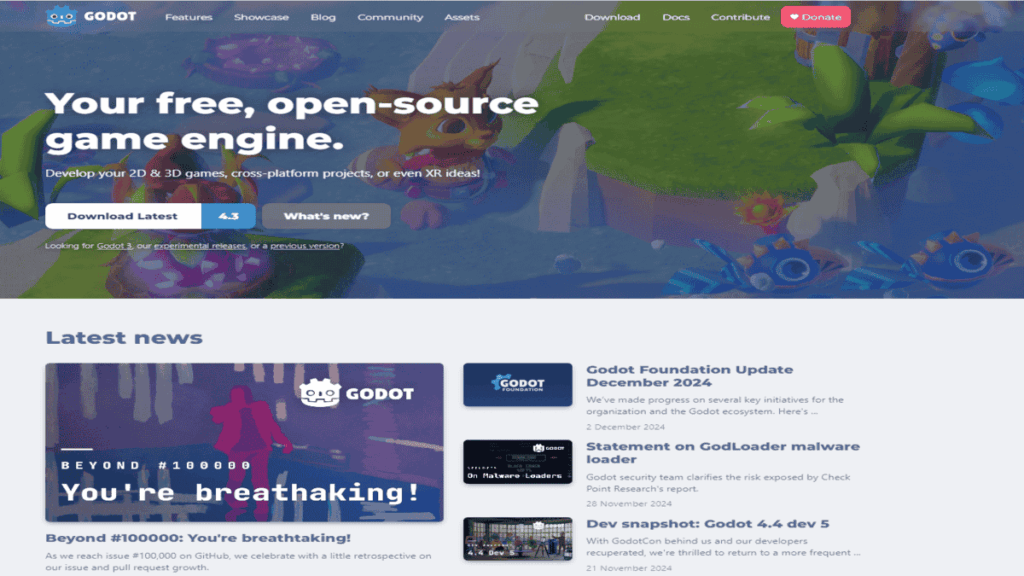
Godot is an open-source game engine with built-in tools for developing AI opponents. Its flexible scripting system enables developers to create intelligent NPCs and opponents for games.
Pros:
- Free and open-source.
- Easy-to-use scripting language (GDScript).
- Great for 2D and 3D games.
Cons:
- Limited documentation compared to more established engines.
- There is a smaller user community than Unity or Unreal Engine.
Pricing Package:
- Free.
Unreal Engine AI
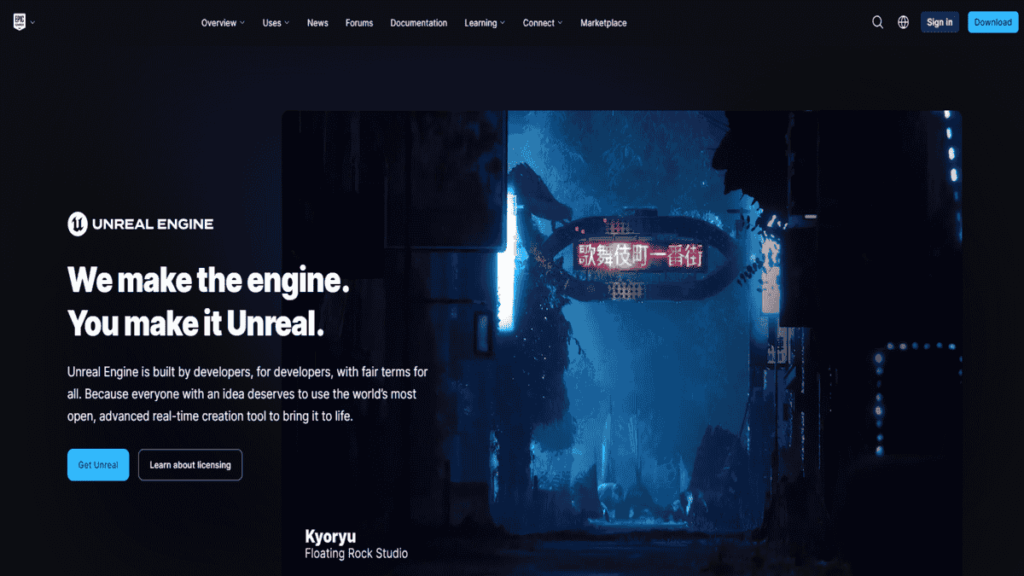
Unreal Engine offers strong AI tools for creating intelligent in-game opponents. Its built-in systems, like the Behavior Tree and Environment Query System (EQs), help developers craft complex AI opponents.
Pros:
- Advanced AI tools like Behavior Trees and EQs.
- Supports both 2D and 3D environments.
- Extensive resources and documentation.
Cons:
- High resource usage, especially for larger games.
- Steep learning curve for beginners.
Pricing Package:
- Free with royalty-based pricing for commercial use.
AI Dungeon
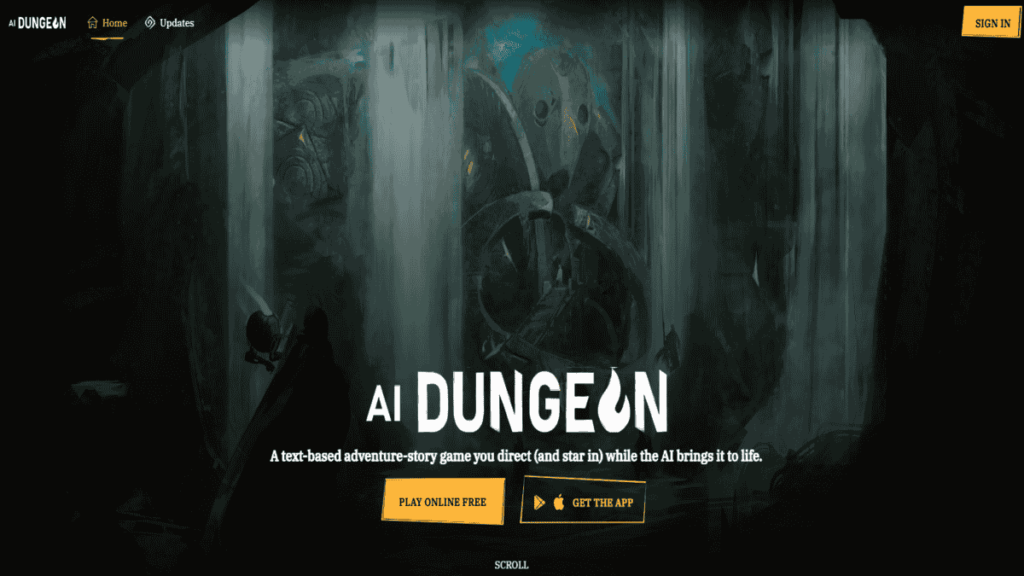
AI Dungeon is a game powered by OpenAI’s GPT-3, creating dynamic narratives and interactive game experiences. It can generate intelligent, unpredictable opponents and NPCs for text-based games.
Pros:
- Generates creative and unpredictable narratives.
- It uses powerful language models to simulate opponents.
- Highly customizable through input and interaction.
Cons:
- Limited to text-based games.
- It can be slow or unpredictable at times.
Pricing Package:
- A free plan with premium options for more features is available.
RPG Maker
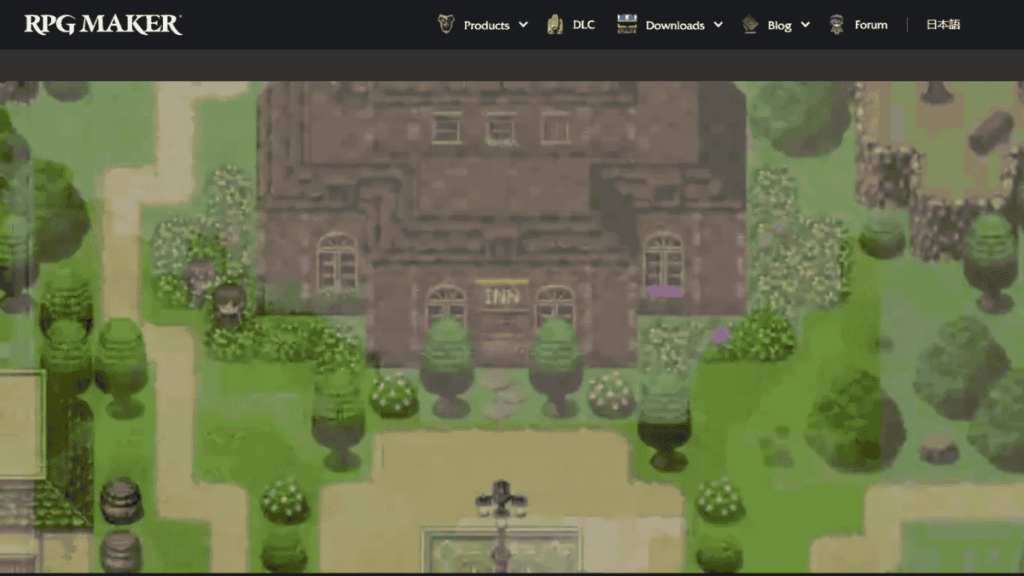
RPG Maker is a game development engine with AI that creates opponents in turn-based RPGs. It offers built-in tools for designing AI behavior and creating complex enemy interactions.
Pros:
- Easy to use, with a focus on RPGs.
- Extensive asset library.
- Powerful scripting and event-based AI.
Cons:
- Limited to RPG games.
- AI behavior customization is more basic than other platforms.
Pricing Package:
- Plans start at $79.99.
BotPress
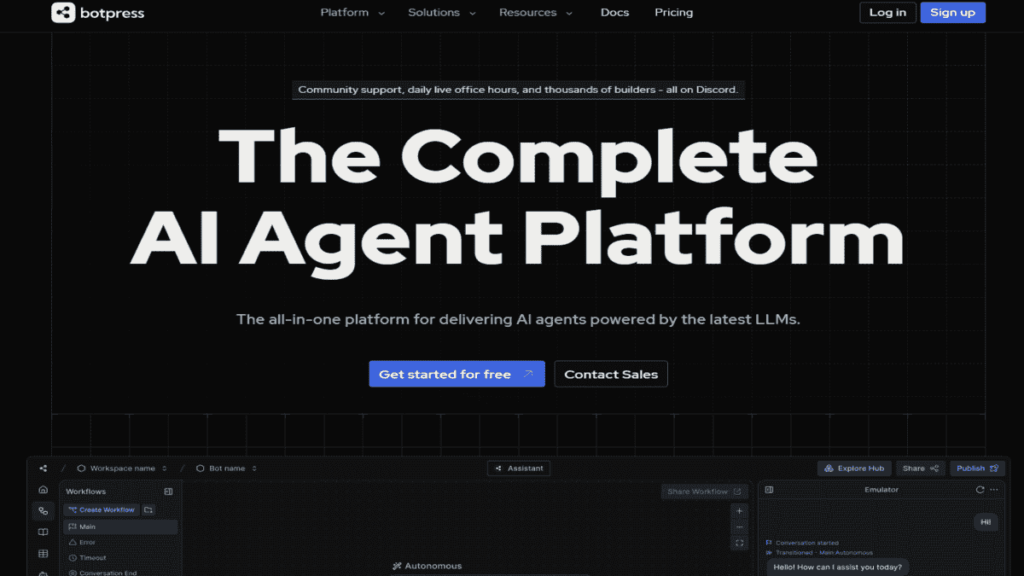
BotPress is an open-source conversational AI platform that allows game developers to create intelligent NPCs and in-game opponents for text-based interaction and chat-based games.
Pros:
- Customizable and open-source.
- Works well with chatbots and conversational systems.
- Allows for complex AI behavior trees.
Cons:
- Primarily designed for chatbots.
- Requires knowledge of AI programming.
Pricing Package:
- Free with paid enterprise plans.
TensorFlow
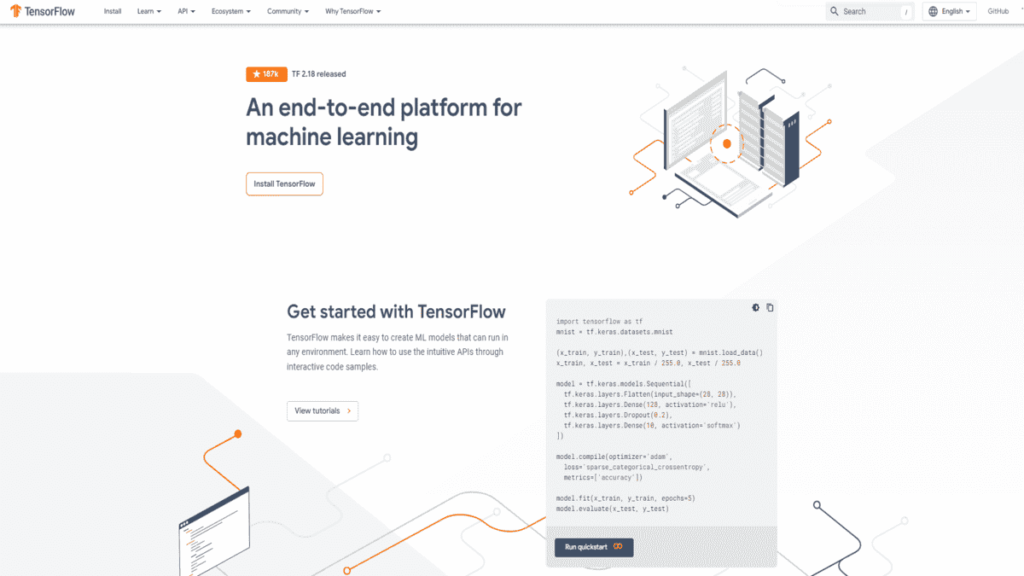
TensorFlow is an open-source machine learning framework that can be used to develop AI-powered opponents. Game developers can use TensorFlow to build AI models and train them for realistic in-game behavior.
Pros:
- Open-source and highly customizable.
- Supports various machine learning models.
- Great for building complex AI systems.
Cons:
- Requires extensive programming knowledge.
- It can be resource-intensive.
Pricing Package:
- Free
Game AI Pro
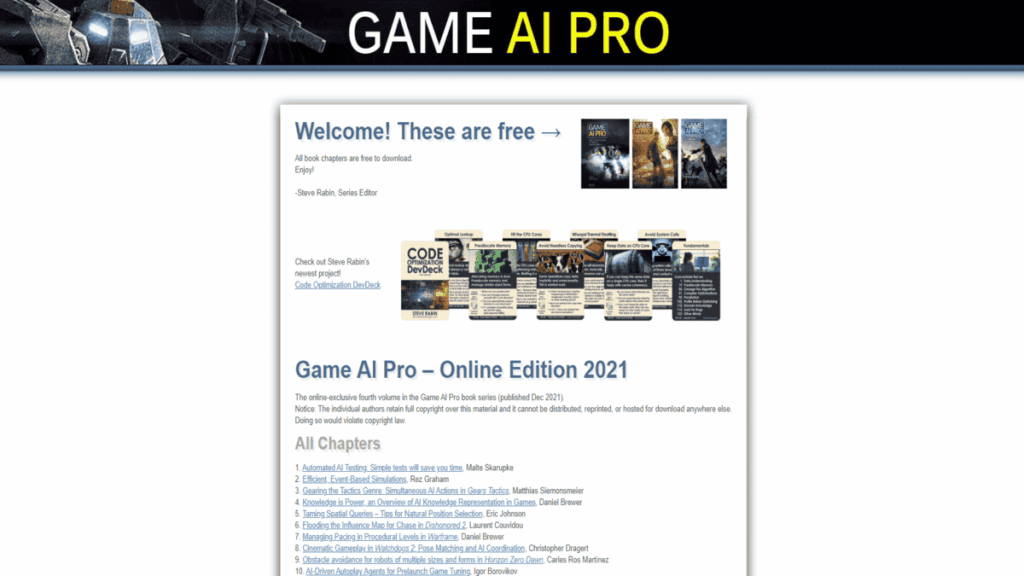
Game AI Pro offers a variety of tutorials, tools, and resources designed specifically for game developers looking to implement AI in their games. The platform focuses on helping developers create intelligent opponents.
Pros:
- Extensive collection of resources for game AI.
- Covers various game genres.
- Ideal for developers seeking advanced AI solutions.
Cons:
- It is not a direct tool but a resource platform.
- Requires a subscription for full access.
Pricing Package:
- Subscription-based pricing.
AI For Games (Book + Library)
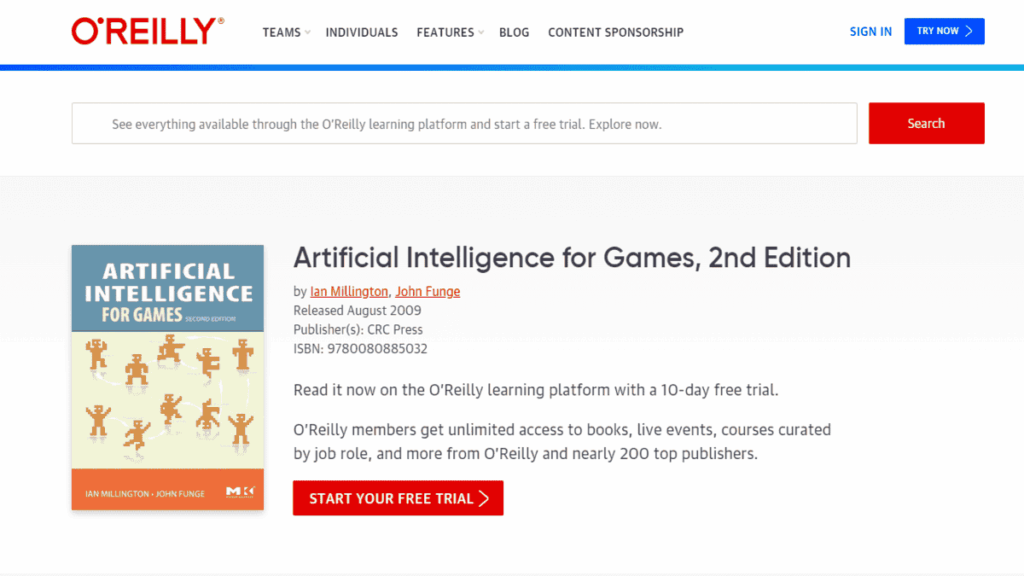
AI For Games is a comprehensive book and accompanying library that provides game developers with techniques for creating intelligent AI opponents. It covers everything from pathfinding to decision-making and combat strategies.
Pros:
- In-depth coverage of game AI principles.
- Detailed examples and code snippets.
- It can be used as a library to implement AI directly into games.
ConIt is not a standalone software tool; it requires coding knowledge.
- Primarily text-based, without a visual interface.
Pricing Package:
- Book available for purchase. Pricing for the library varies.
Inworld AI
Platform for building AI-driven NPCs and characters with persistent personality, memory, and real-time dialogue. Replaces “Killer Robots AI” in this list, an entry whose description (a specific neural-network product) was entirely invented; its URL actually pointed to the Campaign to Stop Killer Robots, a real anti-autonomous-weapons advocacy nonprofit with no connection to game development.
Pros:
- Purpose-built for game-ready NPCs, not adapted from a general chatbot platform.
- Integrates with Unity and Unreal Engine.
Cons:
- Focused on dialogue and character behavior, not combat/tactical opponent AI.
Pricing Package:
- Free tier available; usage-based pricing for production.
Convai
AI platform for building conversational, narrative-aware NPCs that react to game context. Replaces “Cinematic AI” in this list, whose domain (cinematicai.com) is a GoDaddy domain-for-sale listing, not a real product; its description was entirely invented.
Pros:
- Strong for narrative-driven games and RPGs specifically.
- Supports voice, lip-sync, and animation alongside dialogue logic.
Cons:
- More suited to narrative and dialogue-driven games than pure action/combat AI.
Pricing Package:
- Free tier available; usage-based pricing for production.
Charisma.ai
Platform for creating interactive AI characters with branching, emotionally-aware dialogue for narrative games. Replaces “Frictionless AI” in this list, whose domain (frictionless.ai) is listed for sale on Afternic, not a real product; its description was entirely invented.
Pros:
- No-code character and dialogue authoring tools.
- Built specifically for game and interactive-media studios.
Cons:
- Focused on dialogue-driven character AI, not tactical/combat opponent behavior.
Pricing Package:
- Custom pricing based on project scope.
Challenges and Limitations
These tools have real limits. Training capable ML-based opponents is genuinely computationally expensive, and simpler techniques (finite state machines, behavior trees) remain the practical choice for a lot of real production work despite being less “intelligent.” AI opponents trained with reinforcement learning can develop unpredictable or exploitable behavior that wasn’t part of the design intent, which matters for shipped games where players will find and abuse any weird edge case. And using AI to generate opponent behavior raises real ethical and design questions around difficulty tuning, fairness, and how much a game should adapt to individual players versus offering a consistent challenge.
Where This Is Headed
Emergent behavior. Opponents that develop tactics the designers didn’t explicitly script, is becoming more common as RL techniques mature and become more accessible outside pure research contexts. Real-time learning, where an opponent adapts within a single play session rather than only during offline training, is moving from research demos toward production use. And social AI, opponents and NPCs that react believably to player behavior over time, not just in the current encounter, is a growing area as platforms likeInworld AI and Convai make persistent character memory more accessible to smaller studios.
The tools above split into a few groups: ML frameworks and research platforms (Unity ML-Agents, Gymnasium, DeepMind Lab, TensorFlow) for building custom opponent AI from the ground up; game engines with built-in AI tooling (Godot, Unreal Engine AI, RPG Maker); and specialized character/dialogue platforms (Inworld AI, Convai, Charisma.ai, BotPress) for narrative-driven NPCs specifically. Most real projects combine a game engine’s native AI tools with a specialized platform for dialogue or personality, rather than relying on one tool to cover the whole opponent-AI problem.