AI recruiting and screening tools handle the volume side of hiring — sourcing candidates, screening resumes, running structured interviews, and scoring fit — so recruiters spend their time on people, not paperwork. The category has consolidated heavily through acquisitions over the past few years, so the list below is shorter than most: several tools you’ll see cited elsewhere are now the same company under one name.
What These Tools Do, and Where They Fall Short
The category breaks into a few types: AI chatbots that handle candidate FAQs and scheduling (Paradox), resume screening and ranking, video interview analysis, and predictive/sourcing tools that surface passive candidates from public profiles. Done well, they cut time-to-hire, keep candidate communication consistent at scale, and surface data patterns a recruiter reviewing resumes one at a time would miss.
The real limitations: AI screening can encode bias from historical hiring data instead of removing it (several vendors below have been the subject of bias audits and lawsuits over exactly this), technical setup and integration take real time, and none of these tools should make a final hiring decision unsupervised — they narrow the pool, a person still needs to make the call. Treat any “reduces bias” claim from a vendor as something to verify against your own outcomes, not take at face value.
Top Tools for AI Recruiting and Screening
HireVue (includes Modern Hire)
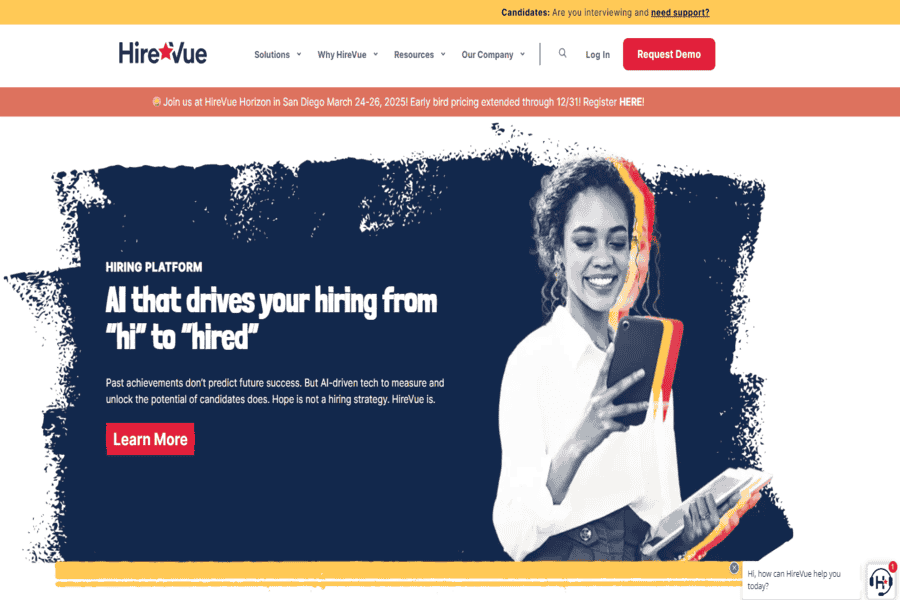
Video interviewing and AI-assisted candidate assessment, now a larger platform after HireVue acquired competitor Modern Hire in 2023 — if you see “Modern Hire” listed elsewhere as a separate tool, it’s the same company today. See our HireVue review.
Pros:
- Combined the two largest players in AI video assessment into one platform
- Strong enterprise adoption — 60% of the Fortune 100 use it
Cons:
- No public self-serve pricing — enterprise sales process
Pricing:
Custom quote only — contact HireVue directly.
Harver (includes OutMatch and Pymetrics)
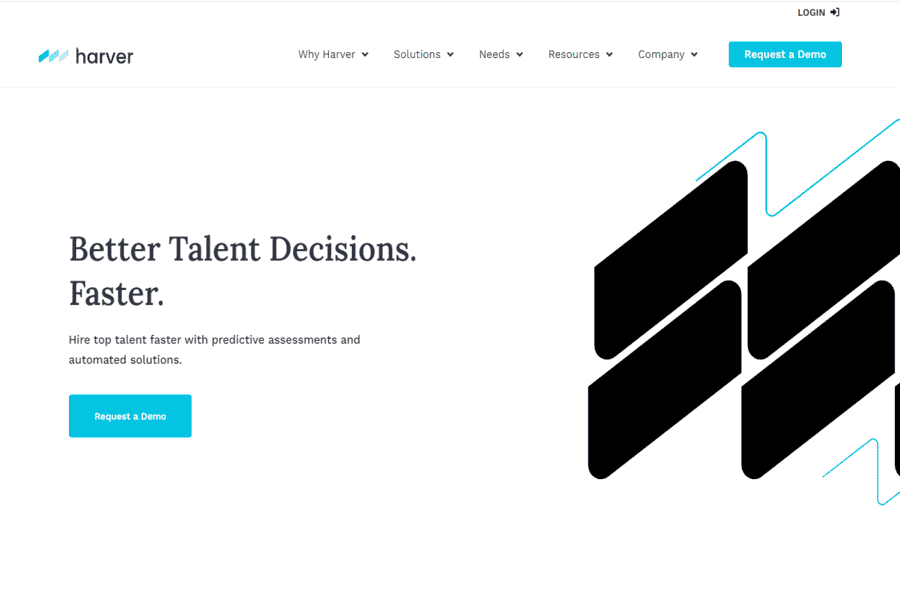
Pre-hire assessments and volume-hiring automation. This is genuinely one company under three names you might encounter: OutMatch acquired Harver in 2021 and took the Harver name, then Harver acquired behavioral-assessment tool Pymetrics in 2022 — all three names now point to the same platform.
Pros:
- Combines assessment science from three formerly-separate companies
- Strong fit for high-volume, structured hiring (retail, call centers, seasonal)
Cons:
- If you researched “OutMatch” or “Pymetrics” separately, confirm you’re looking at current Harver docs
Pricing:
Custom quote only — contact Harver directly.
Eightfold AI
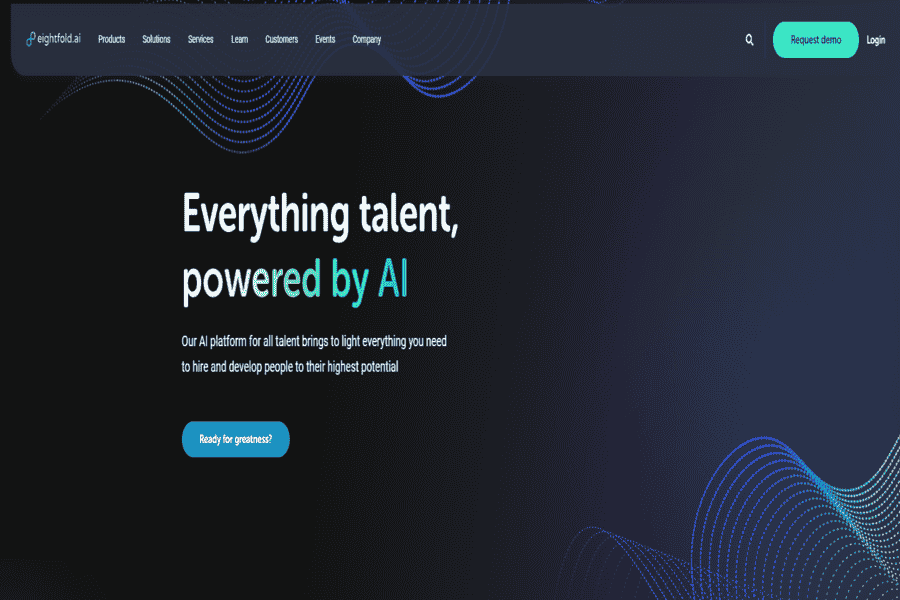
A talent intelligence platform matching candidates to roles based on skills rather than keyword matching, spanning recruiting, internal mobility, and workforce planning. Named a Strategic Leader in the 2026 Fosway 9-Grid for Talent Acquisition, its fourth consecutive year on that list. See our Eightfold AI review.
Pros:
- Skills-based matching goes beyond keyword search
- Covers internal mobility and workforce planning, not just external hiring
Cons:
- Enterprise-scale platform and pricing — overkill for small teams
Pricing:
Custom quote only — contact Eightfold directly.
Paradox (Olivia) — now a Workday company
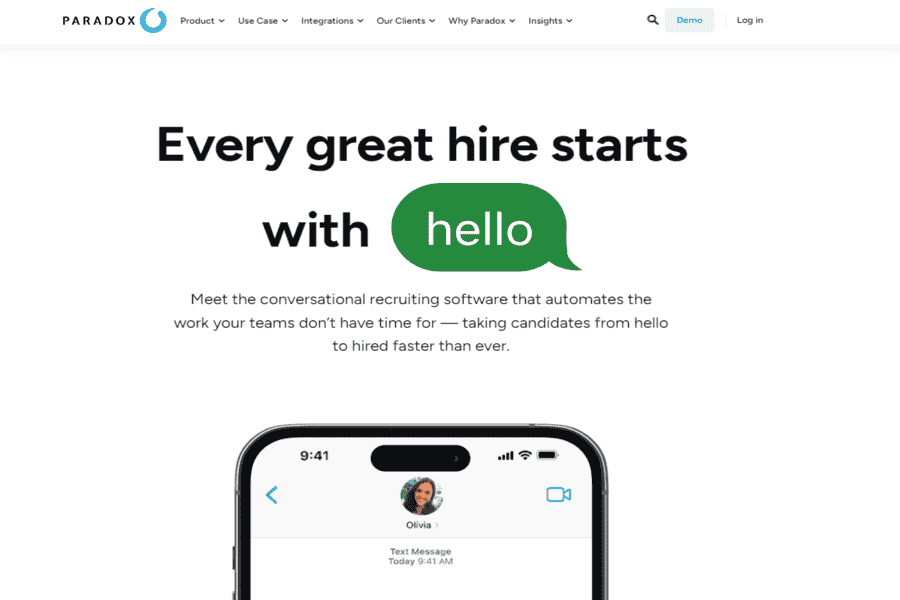
Status update: Workday acquired Paradox for roughly $1 billion, closing October 1, 2025. Olivia, its conversational AI assistant, is being integrated into Workday’s talent acquisition suite as the Workday Paradox Candidate Experience Agent — expect it to show up under the Workday name going forward. See our Paradox review.
Pros:
- Conversational scheduling and FAQ handling reduces recruiter admin load
Cons:
- No free trial or free tier — and now mid-integration into Workday, so evaluate current packaging before buying
Pricing:
Custom quote; reported contracts have ranged from roughly $1,000–2,000/month for smaller deployments up to $25,000+/year for larger ones.
XOR
An AI recruiting chatbot and sourcing automation tool aimed at high-volume hiring, particularly hourly and frontline roles.
Pros:
- Built for high-volume, fast-turnover hiring specifically
Cons:
- Less suited to specialized or executive-level recruiting
Pricing:
Custom quote only — contact XOR directly.
Talentegy (by Jobvite)
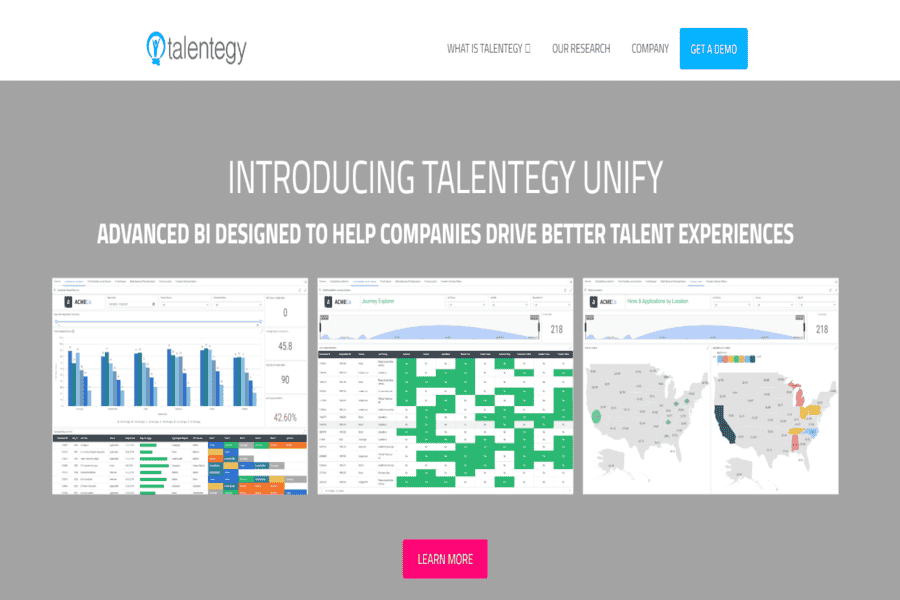
A candidate and employee experience/feedback platform, now operating as “Talentegy by Jobvite” after being acquired.
Pros:
- Focused specifically on measuring and improving candidate experience, a gap most ATS tools don’t cover
Cons:
- Narrower scope than a full recruiting suite — complements an ATS rather than replacing one
Pricing:
Custom quote only — contact Jobvite directly.
SeekOut
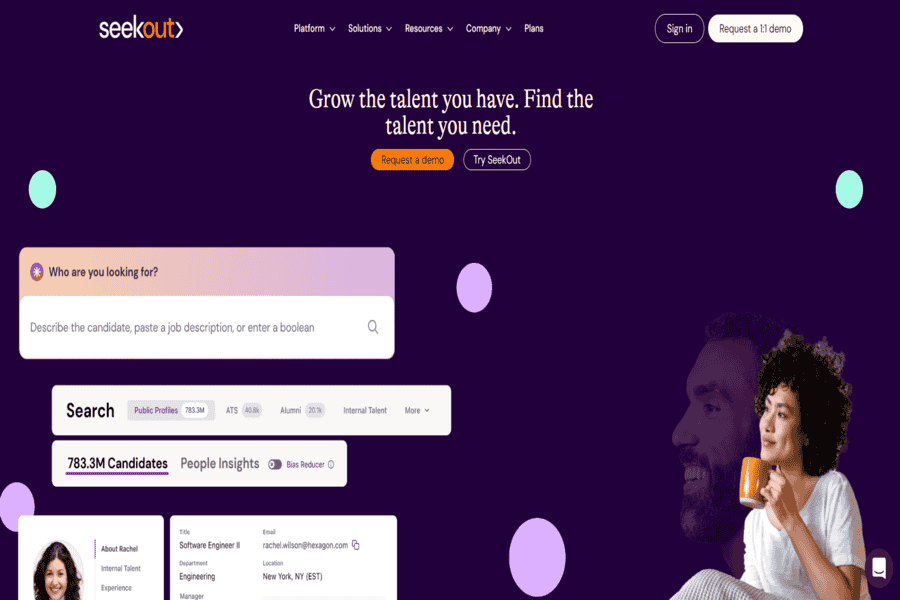
A sourcing platform for finding passive candidates, including hard-to-find profiles like engineers and diverse talent pools. See our SeekOut review.
Pros:
- Deep sourcing database, strong for technical and niche roles
- Has a genuine self-serve entry tier, unlike most tools on this list
Cons:
- Team/Enterprise tiers require a 3-seat minimum and annual contract
Pricing:
Recruit Lite (self-serve, 1 seat): $2,150/year. Team and Enterprise plans are quote-based; median annual contract across real deals is around $20,000.
iCIMS Talent Cloud
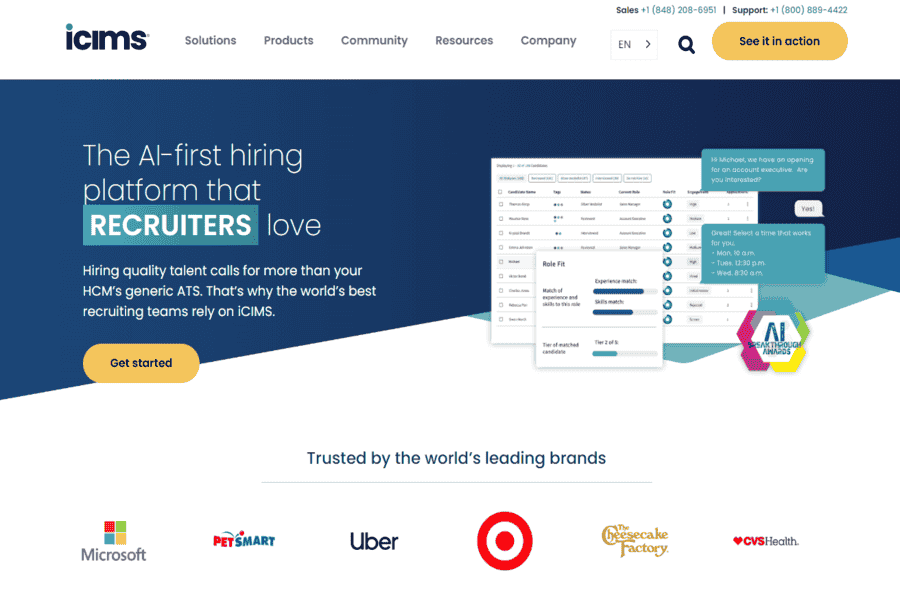
A large-scale applicant tracking and talent acquisition suite covering the full hiring pipeline — sourcing, ATS, offer management, and onboarding as separate connected modules.
Pros:
- Full pipeline coverage in one connected suite
Cons:
- Each module (offer management, onboarding, CRM) is a separate contract — full suite costs 2–3x the core ATS alone
Pricing:
Custom quote. Real contracts run roughly $15,000–40,000/year for mid-market core ATS, $40,000–150,000+/year for enterprise with full Talent Cloud modules.
Phenom (formerly Phenom People)
A talent experience platform covering candidate, employee, and recruiter-facing AI across the hiring lifecycle. See our Phenom review.
Pros:
- Covers candidate, employee, and recruiter experience in one platform
Cons:
- No public pricing tiers — sales-quote process
Pricing:
Custom quote; reported starting point is around $10,000/month.
HireEZ
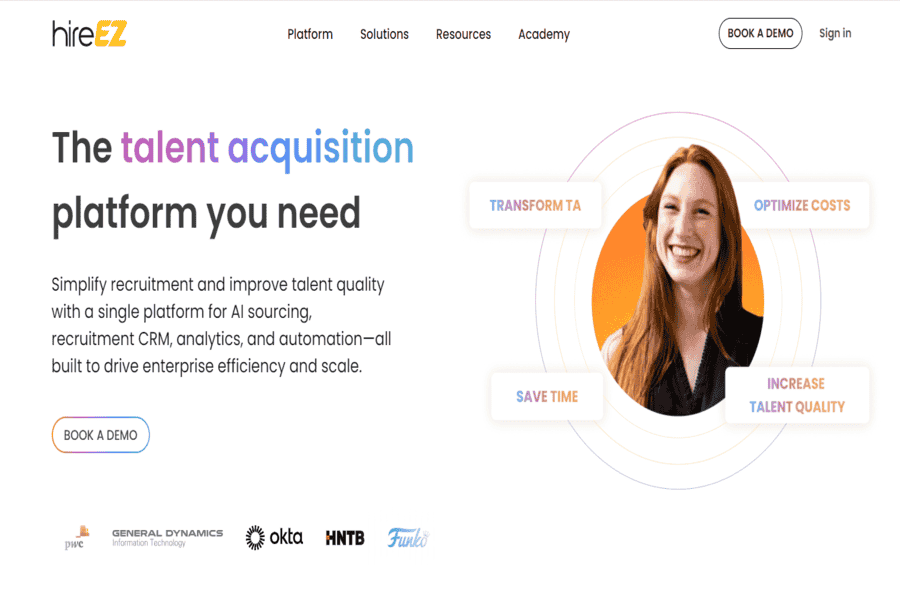
An AI sourcing platform (formerly named Hiretual, rebranded to HireEZ — both names refer to the same product) that finds and ranks candidates across public profiles.
Pros:
- Strong Boolean-free search across multiple public data sources
Cons:
- If you have older bookmarks/notes under “Hiretual,” confirm current HireEZ pricing before assuming they still apply
Pricing:
Custom quote only — contact HireEZ directly.
TurboHire
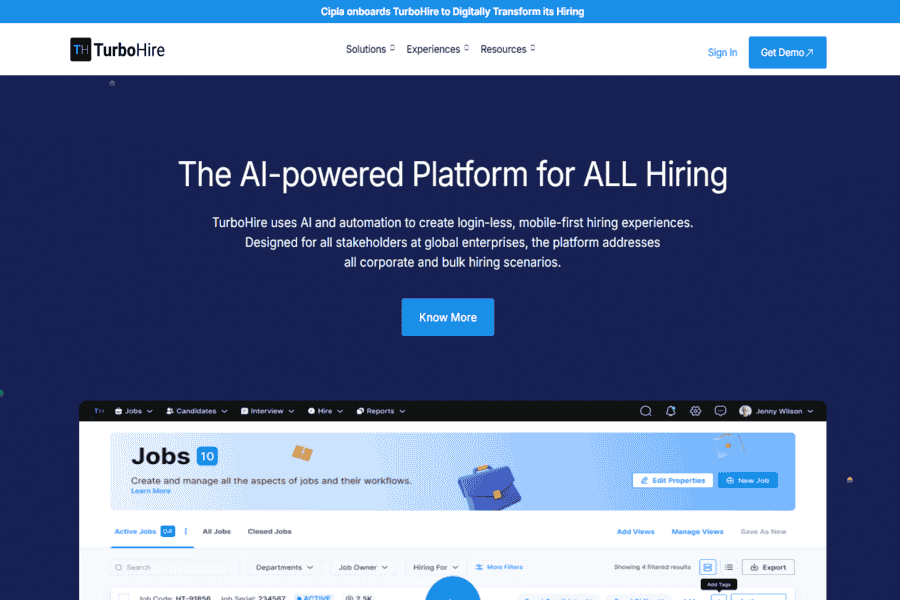
An AI recruitment platform for resume parsing, candidate ranking, and interview scheduling, popular with mid-size teams in Asia-Pacific markets.
Pros:
- Published, self-serve pricing tiers — unusual for this category
Cons:
- Smaller brand presence in Western markets than most tools on this list
Pricing:
Four published tiers from $40–134/month; 10% discount on annual billing.
Fetcher
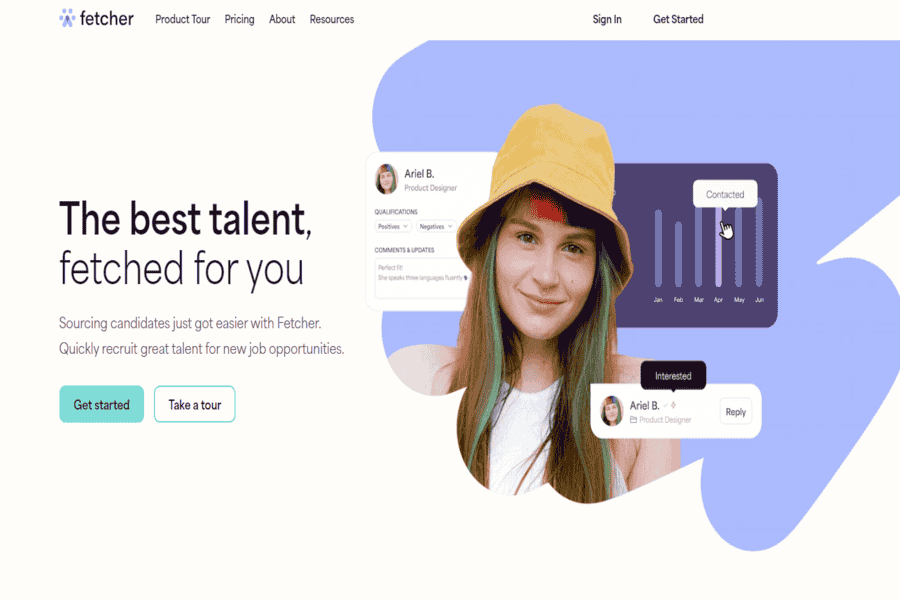
Automated candidate sourcing — set your criteria and Fetcher‘s AI plus human researchers deliver a curated candidate list to your inbox. See our Fetcher review.
Pros:
- Combines AI matching with human research quality control
Cons:
- No free tier or trial
Pricing:
Self-Serve $115/month, Growth $379–499/month, Amplify $649–849/month, Enterprise custom. Annual billing cuts roughly 30% off monthly rates.
Snaphunt
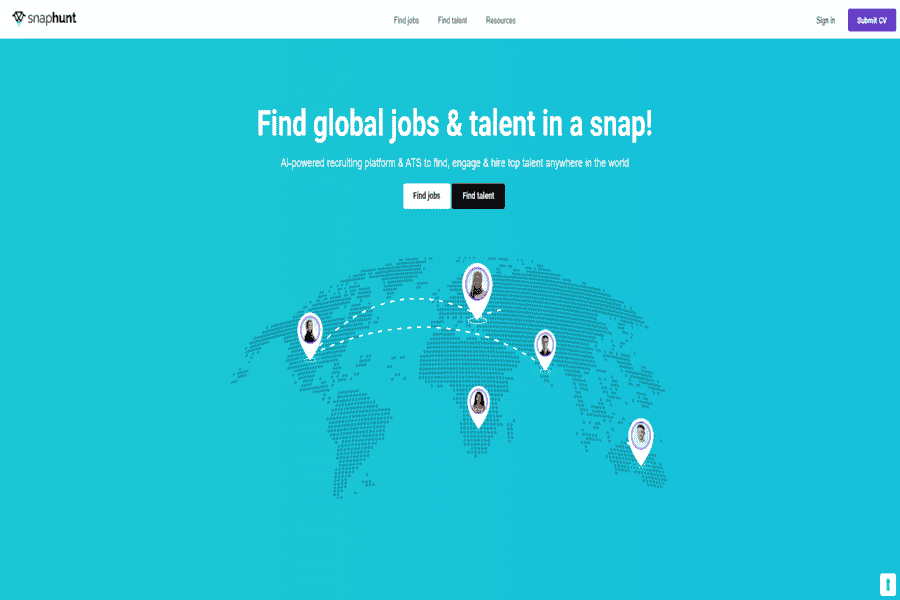
A remote-hiring-focused platform giving employers access to sourcing, video interviewing, and AI reference checks for onsite and remote roles globally.
Pros:
- Has a genuine free plan with unlimited job postings
Cons:
- Deeper sourcing and managed-recruiter tiers cost significantly more than the entry plan
Pricing:
Free plan available. Paid subscriptions start around $129/month; a fully-managed “Flexpert” tier with a dedicated recruiter is quote-based.
Vervoe
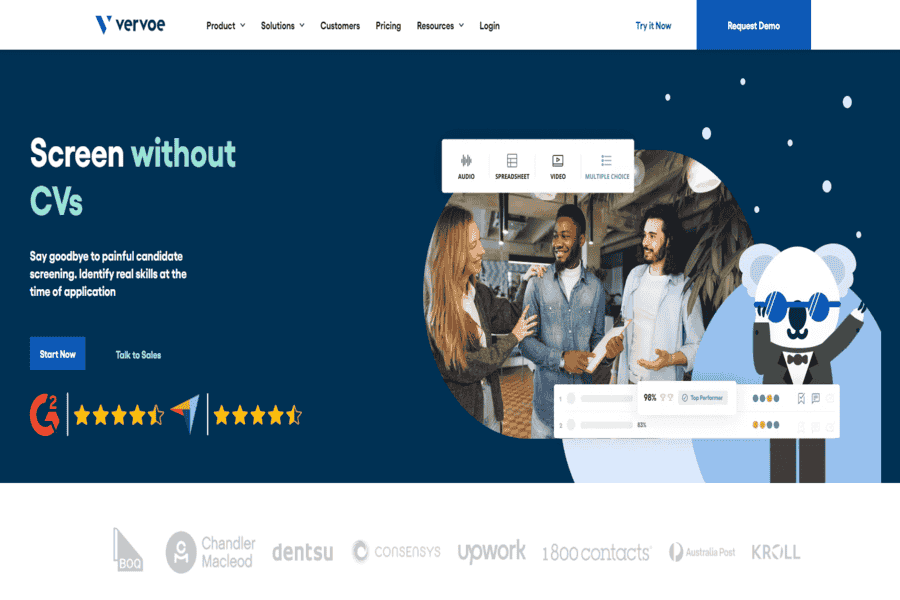
Skills-based hiring assessments — candidates complete job-relevant tasks that Vervoe’s AI grades, aiming to predict on-the-job performance rather than screen resumes.
Pros:
- Skills-based tasks over resume keywords — useful for reducing credential bias
Cons:
- Pricing isn’t published — confirm current cost directly before assuming any figure you find elsewhere is current
Pricing:
Custom quote only — contact Vervoe directly.
Breezy HR
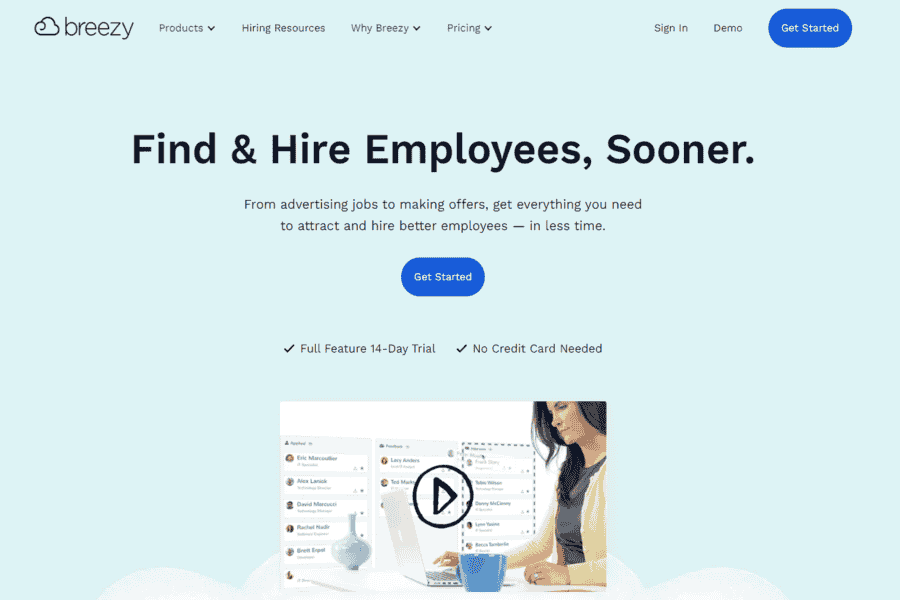
A visual, pipeline-based applicant tracking system for small and mid-size teams, with flat per-company pricing rather than per-recruiter seats.
Pros:
- Free forever tier, and unlimited users on every paid plan
Cons:
- Lighter on AI-specific features than the dedicated tools higher up this list
Pricing:
Free (Bootstrap) plan available. Startup $157/month, Growth $273/month, Business $439/month (annual billing); a custom Pro tier is also available.
A Consolidating Category
Recruiting tech has consolidated hard in the past few years: HireVue absorbed Modern Hire, OutMatch became Harver and then absorbed Pymetrics, Hiretual became HireEZ, and Paradox’s Olivia is being folded into Workday. If a “best AI recruiting tools” list you find elsewhere still lists any of those old names as separate products, treat it as stale rather than assuming a gap in this one — that consolidation is why this list has fewer distinct entries than a simple search would suggest.
Which One Should You Use?
For a small team just starting to formalize hiring, Breezy HR or Snaphunt’s free tiers are the lowest-risk entry point. For sourcing passive or technical candidates, SeekOut or HireEZ. For high-volume, structured hiring, Harver or XOR. For enterprise-scale hiring already invested in a major HR suite, HireVue, Eightfold AI, iCIMS, or Phenom fit that scale — and if you’re evaluating Paradox’s Olivia specifically, budget time to understand how it’s packaged under Workday now rather than assuming standalone pricing still applies.