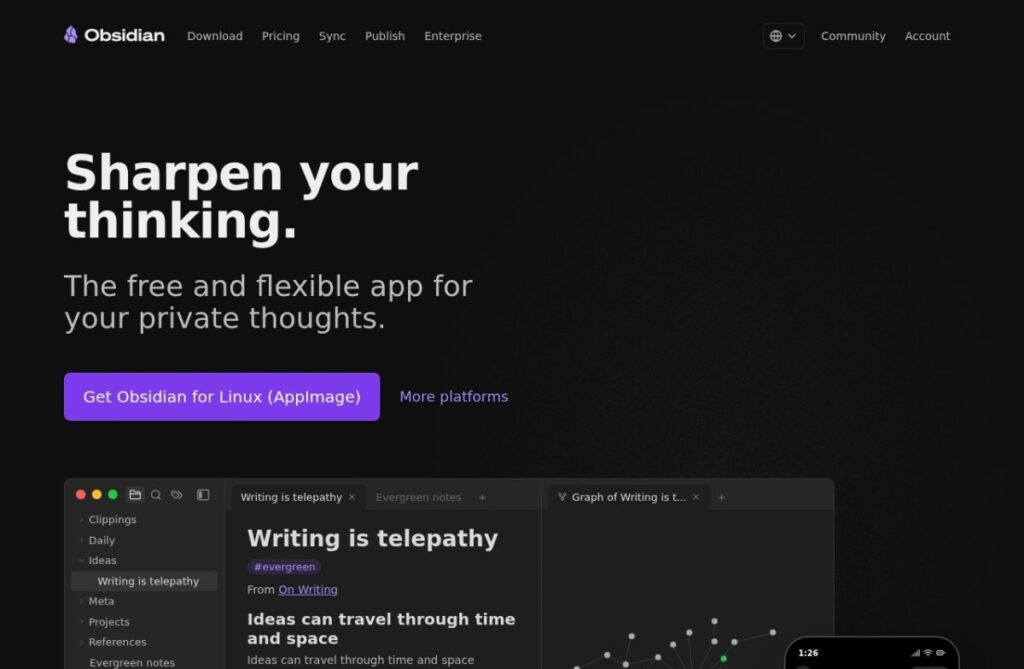
Obsidian, built by the Dynalist team since 2020, takes a different foundational approach than most note-taking competitors: every note is stored as a plain, local Markdown text file on a user's own device by default, readable and editable by any text editor, rather than locked inside a proprietary cloud database format only that one company's app can open.
That file-format choice matters most for long-term durability: notes remain accessible and portable even if Obsidian itself stopped being developed someday, a real concern for anyone who's lost years of notes when a proprietary note app shut down or changed its format. An extensive community plugin ecosystem extends functionality well past the core editor, built specifically because the underlying files stay open and inspectable.
A free tier covers full personal use, and paid plans start around $4 a month for sync and publishing features. For anyone specifically concerned about long-term data portability and ownership, rather than trusting notes to a proprietary format locked inside one company's app, Obsidian's plain-Markdown-file foundation addresses that concern directly.