AI marketing automation tools handle the repetitive parts of a marketing operation — segmenting customers, personalizing emails, scoring leads, scheduling posts — so teams can focus on strategy instead of manual execution. Most platforms in this space started as plain automation tools and have layered AI on top over the past few years: predictive lead scoring, generative copy, and behavior-based personalization are now standard rather than premium add-ons.
What These Tools Actually Do
The common feature set spans customer segmentation (grouping contacts by behavior or demographics), personalized content and email generation, predictive lead scoring, automated social scheduling, and campaign analytics. The benefit is straightforward: automating repetitive tasks like email sends and lead nurturing frees up time, keeps messaging consistent across channels, and lets teams act on data patterns a person would take much longer to spot manually.
The tradeoffs are consistent across the category too: output quality depends entirely on the data feeding the system (biased or messy contact data produces biased or messy targeting), and most of these platforms take real setup time before they pay off. None of them replace a marketing strategy — they execute one faster.
Popular AI Marketing Automation Tools
HubSpot
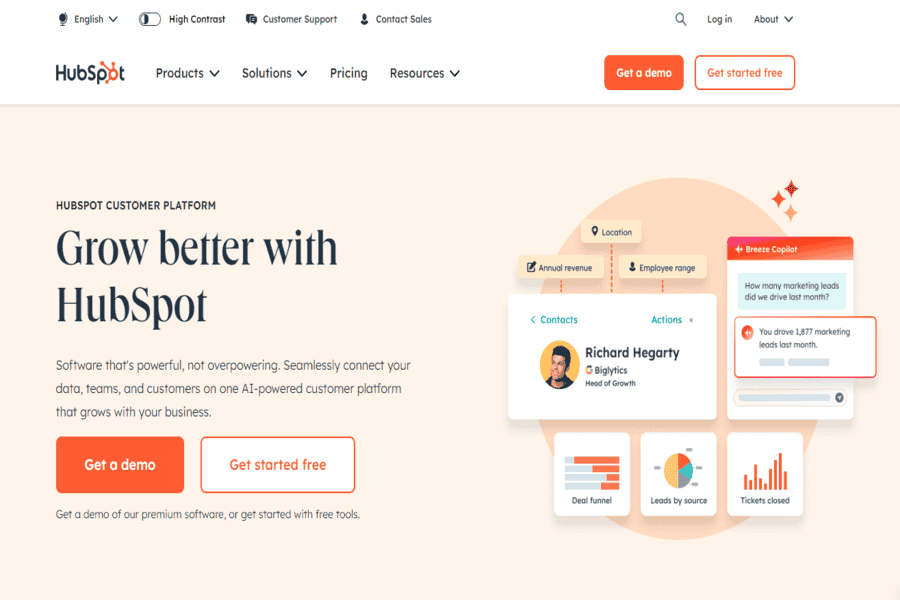
An inbound marketing platform with AI-driven email automation, lead scoring, and content tools, built around its own free CRM. See our HubSpot review.
Pros:
- Free CRM plus a genuinely usable free marketing tier
- Deep ecosystem — sales, service, and CMS hubs all connect to the same data
Cons:
- Cost jumps sharply between tiers, plus one-time onboarding fees at higher levels
Pricing:
Free tier. Starter from ~$20/month (1,000 contacts), Professional ~$890/month (2,000 contacts, 3 seats), Enterprise ~$3,600/month.
Mailercloud
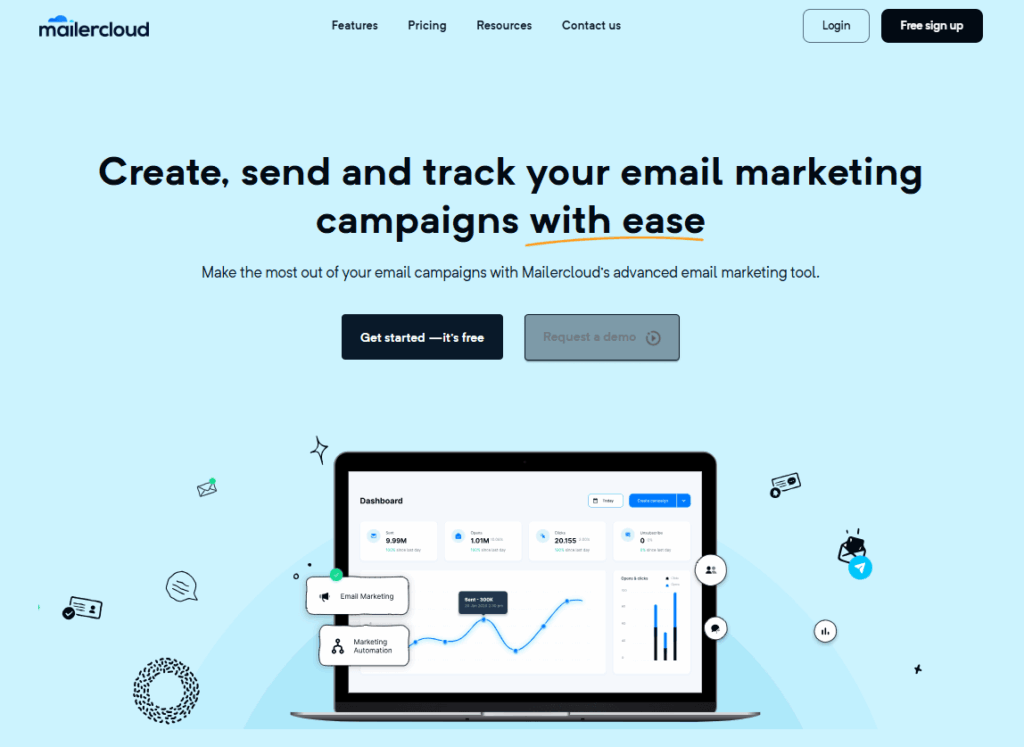
A budget-friendly email marketing platform with automation workflows, aimed at smaller businesses that don’t need enterprise-scale features.
Pros:
- Generous free tier for a full email platform
- Low entry price for paid plans
Cons:
- Smaller ecosystem and integration library than the bigger names on this list
Pricing:
Free (12,000 emails/month, 1,000 contacts). Premium from $3/month billed annually (5,000 contacts). Enterprise custom.
Marketo Engage
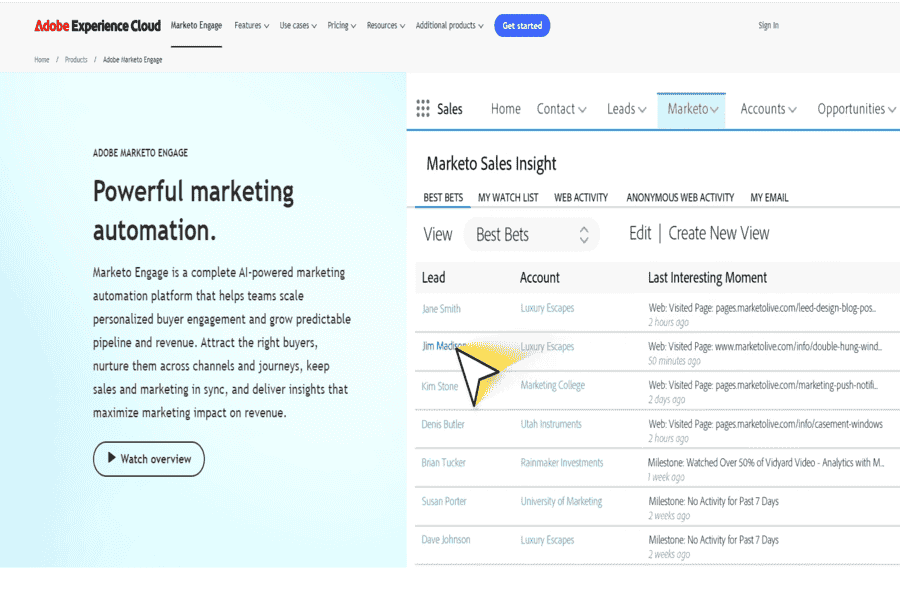
Adobe’s enterprise marketing automation platform, built for large B2B teams running complex, multi-channel lead nurturing at scale.
Pros:
- Deep lead-nurturing and scoring capability for complex B2B funnels
- Integrates natively with the wider Adobe Experience Cloud
Cons:
- No public pricing — quote-based, and priced well beyond small-business budgets
Pricing:
Custom quotes only. Industry estimates put smaller implementations around $1,500–3,000/month, scaling to $20,000+/month for large enterprise contact databases.
ActiveCampaign
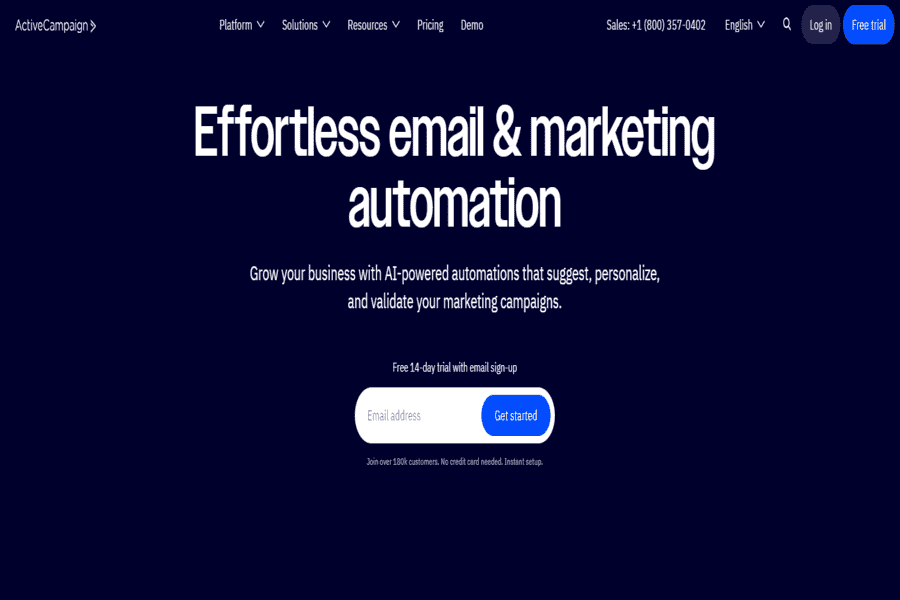
An AI-powered email marketing and automation platform with strong workflow-building tools for mid-size businesses. See our ActiveCampaign review.
Pros:
- Powerful visual automation builder
- No setup or onboarding fees
Cons:
- As of November 2025, billing counts all contacts including unsubscribed and bounced ones
Pricing:
Starter $15/month, Plus $49/month, Professional $79/month, Enterprise $145/month (1,000 contacts, billed annually).
Mailchimp
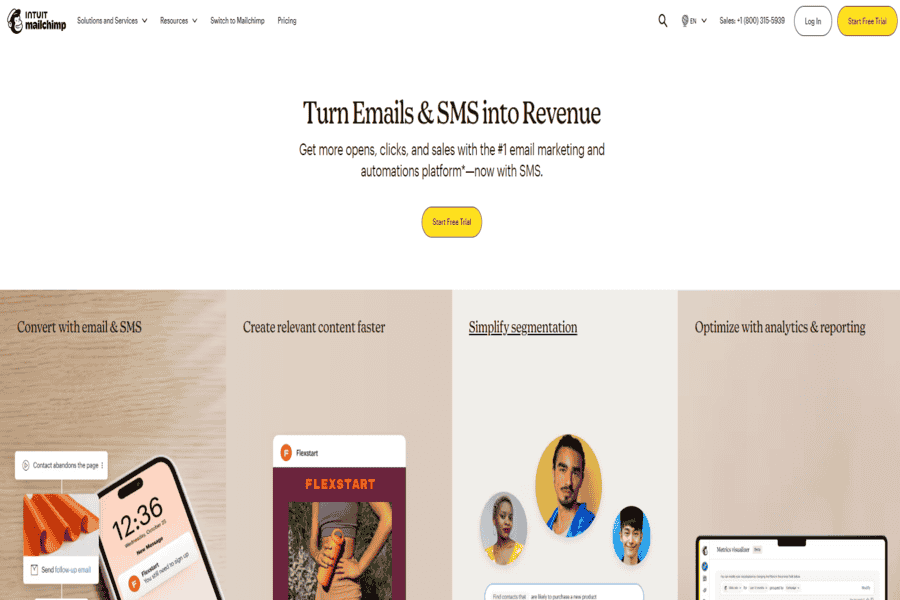
One of the most recognizable email marketing platforms, with AI-assisted content and audience tools built in.
Pros:
- Familiar interface, huge template and integration library
- Still usable free for very small lists
Cons:
- Free tier cut to 250 contacts / 500 sends as of February 2026, down from previous limits
Pricing:
Free (250 contacts). Essentials from $13/month, Standard from $20/month, Premium from $350/month (all at 500 contacts, scaling with list size).
Salesforce Account Engagement (Pardot)
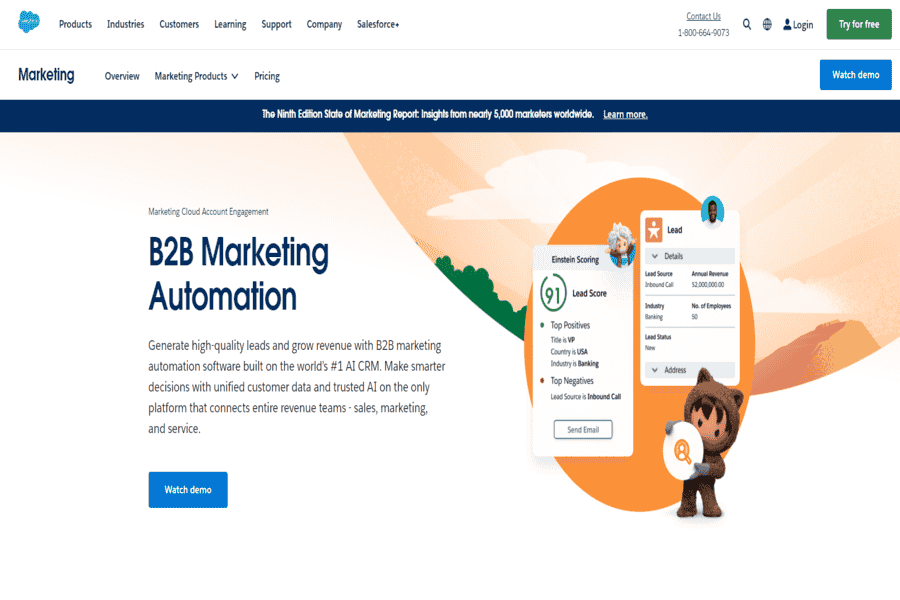
Salesforce’s B2B marketing automation product — Pardot was renamed “Account Engagement” in 2022, though the old name still shows up in search and documentation. Requires a Salesforce org to run.
Pros:
- Tight native integration if you’re already on Salesforce CRM
- Einstein AI adds predictive lead scoring on the higher tiers
Cons:
- Priced for enterprise B2B budgets, not small teams
Pricing:
Growth $1,250/month, Plus $2,500/month, Advanced $4,000/month, Premium $15,000/month.
Omnisend
Marketing automation built specifically for ecommerce, combining email, SMS, and push notifications in one workflow builder.
Pros:
- Email, SMS, and push in a single workflow, purpose-built for online stores
- Pro tier bundles SMS credits into the subscription cost
Cons:
- Less useful outside ecommerce — built around store platforms specifically
Pricing:
Free plan. Standard from $16/month, Pro from $59/month (500 contacts, scaling with list size).
SendGrid
Twilio’s transactional and marketing email platform, priced by send volume rather than contact count — a different model from most tools on this list.
Pros:
- Strong deliverability infrastructure, built for developers sending high transactional volume
Cons:
- The permanent free tier is gone — replaced with a 60-day trial in 2025
Pricing:
60-day free trial (100 emails/day). Essentials from $19.95/month (100K emails), Pro from $89.95/month (2.5M emails), Premier custom.
GetResponse
An all-in-one platform combining email automation, landing pages, and webinar hosting.
Pros:
- Webinar hosting bundled in, unusual for this category
- Landing page builder included on paid tiers
Cons:
- Pricing jumps in large steps as your contact count crosses thresholds
Pricing:
Free tier available. Starter $19/month, Marketer $59/month, Creator $69/month (1,000 contacts).
Zapier
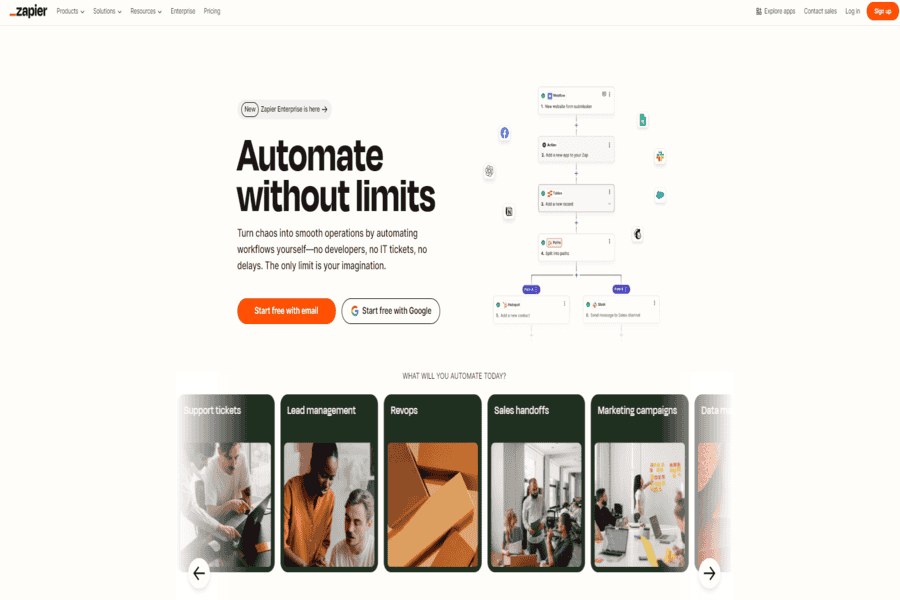
Not marketing-specific, but a common piece of marketing stacks — connects your other tools (forms, CRM, email, spreadsheets) into automated workflows without code. See our Zapier review.
Pros:
- Connects to thousands of apps — the default glue between marketing tools
Cons:
- Task-based pricing gets expensive fast at real automation volume
Pricing:
Free (100 tasks/month, 2-step Zaps only). Professional from $29.99/month (750 tasks), Team from $103.50/month, Enterprise custom.
Drift
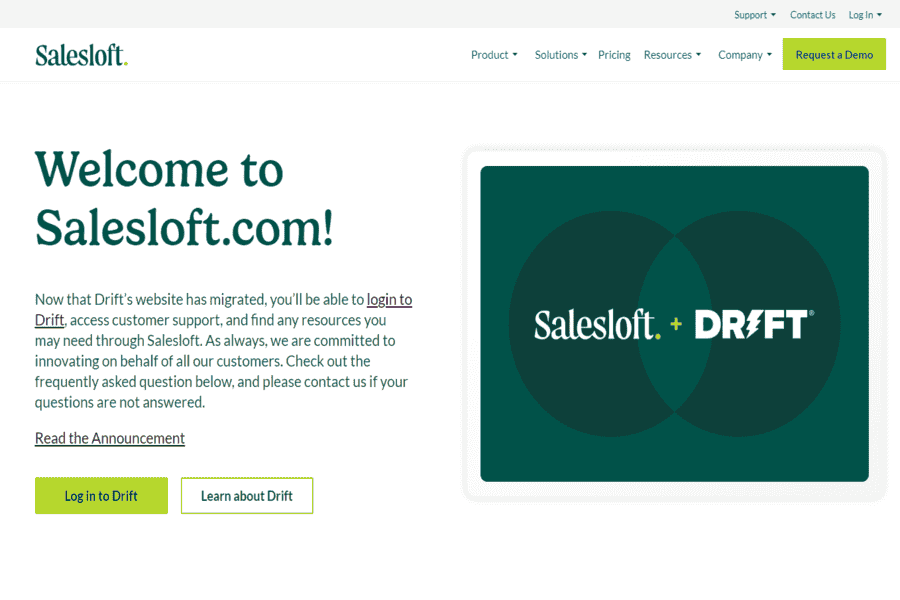
Status update: Drift was acquired by Salesloft in 2024, and as of a March 2026 announcement, Salesloft (now merged with Clari) is winding Drift down, migrating existing customers to a successor product called 1mind. If you’re evaluating conversational marketing tools now, factor in that migration before committing.
Pros:
- Still functional for existing customers during the wind-down period
Cons:
- Being sunset — not a safe choice for a new, long-term commitment
Pricing:
Not publicly listed; entry pricing has been reported around $2,500/month. Given the sunset, get current status directly from Salesloft before budgeting for it.
Ortto (formerly Autopilot)
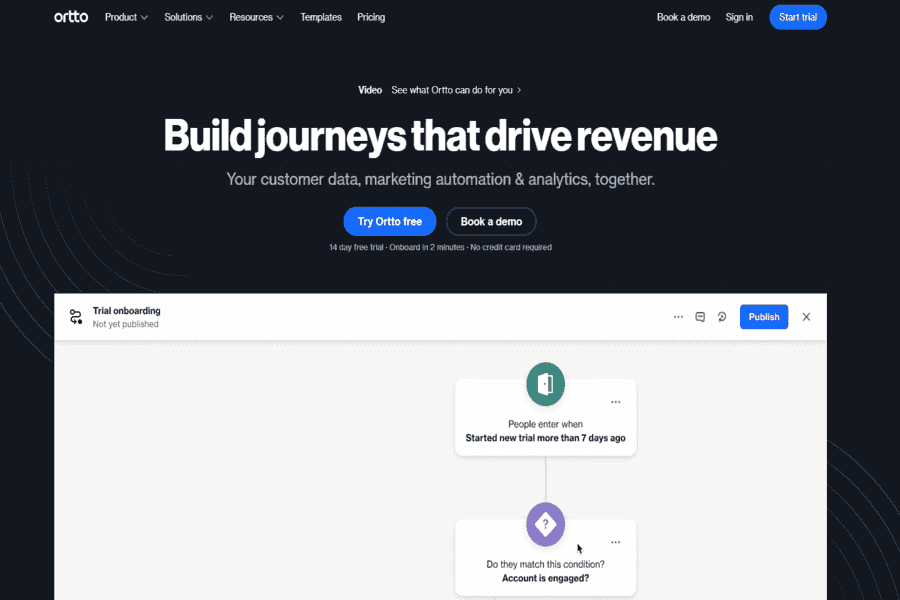
The visual customer-journey builder formerly known as Autopilot rebranded to Ortto, now combining customer data, messaging, and analytics in one platform rather than automation alone.
Pros:
- Visual journey builder is intuitive for non-technical marketers
- Combines CDP-style data with messaging in one tool
Cons:
- If you know it by the old “Autopilot” name, double-check you’re looking at current Ortto docs and pricing
Pricing:
Check ortto.com for current tiers — plans are based on contact volume and feature tier.
Intercom
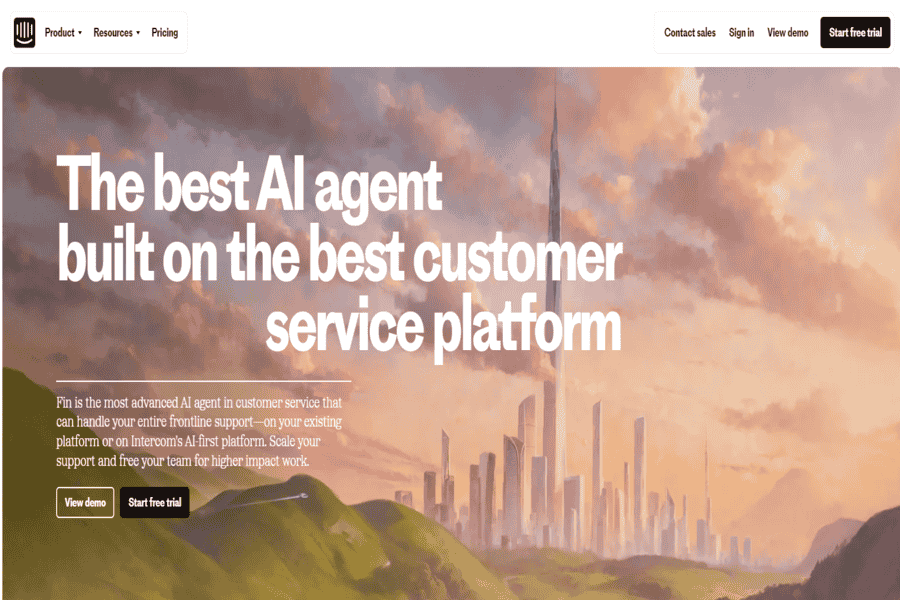
A customer messaging platform combining live chat, email, and its Fin AI agent for automated support and marketing touchpoints. See our Intercom review. Note: Salesforce agreed to acquire Fin AI for roughly $3.6 billion in a deal announced June 2026; as of this writing the acquisition is signed but not yet closed.
Pros:
- Combines live chat, email, and AI support agent in one inbox
Cons:
- Fin AI Agent bills separately per resolution, on top of seat pricing
Pricing:
Essential from $29/seat/month (annual) or $39/seat/month (monthly). Advanced $85–99/seat/month, Expert $132–139/seat/month. Fin AI Agent: $0.99 per successful resolution.
Driftrock
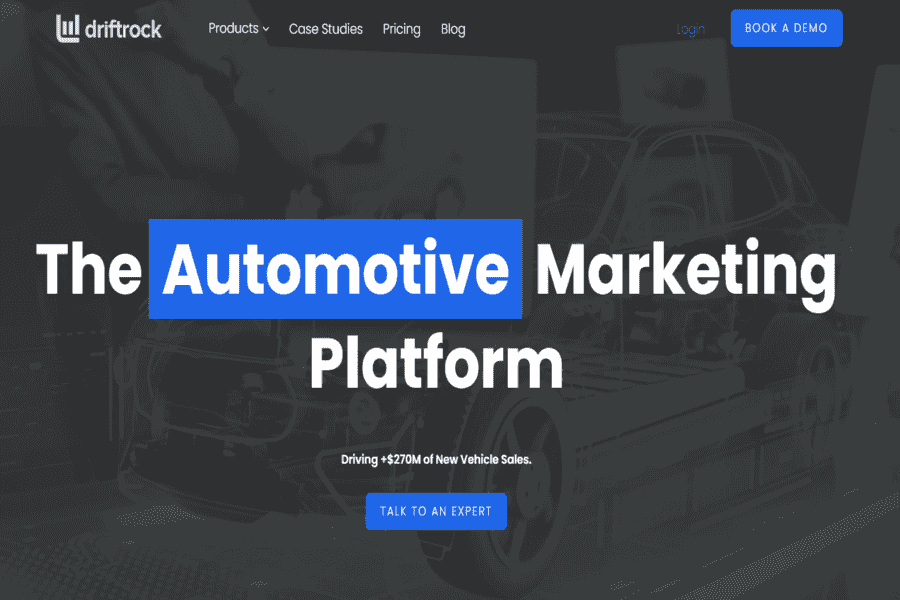
Now positioned specifically as an automotive lead-generation platform (BMW, Mercedes-Benz, Hyundai, and other auto brands are customers), not a general-purpose marketing automation tool — relevant mainly if you’re in that industry.
Pros:
- Deep, purpose-built fit if you’re an automotive brand or dealer
Cons:
- Not a fit outside automotive — too narrow for general marketing use
Pricing:
Not publicly listed — contact Driftrock directly for a quote.
Sendlane
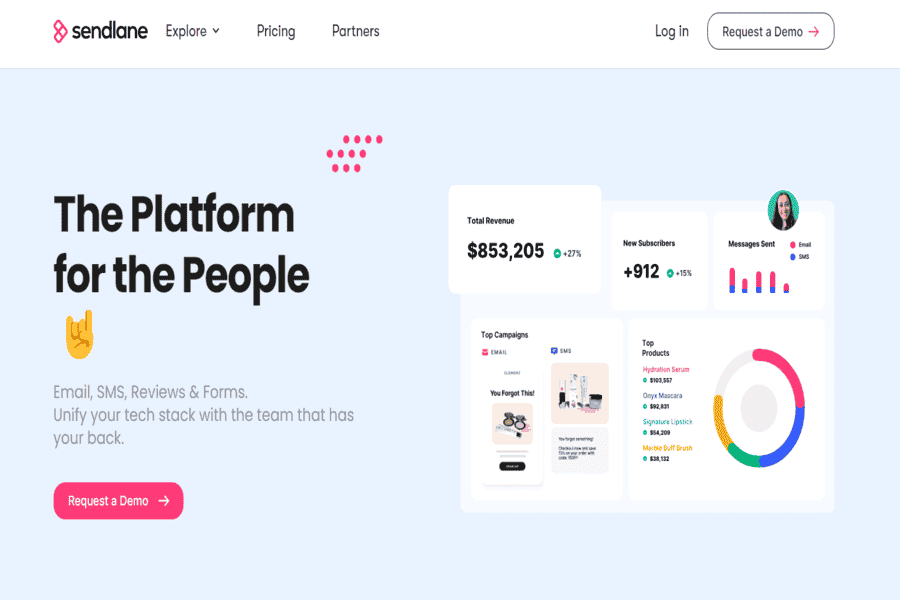
An email and SMS marketing automation platform aimed at ecommerce brands, priced by send volume rather than a flat monthly seat.
Pros:
- 60-day free trial, no card required
Cons:
- Pricing sits noticeably higher than most tools on this list — built for established ecommerce volume, not small lists
Pricing:
Usage-based; Professional plans start around $600/month depending on email volume.
CleverTap
A customer engagement and retention platform built for mobile apps, with AI-driven segmentation and messaging across push, email, and in-app.
Pros:
- Strong for mobile-app-specific engagement and retention data
Cons:
- Priced by monthly active users, which scales quickly for larger apps
Pricing:
Entry tier from roughly $75–100/month for smaller lists; scales to $999+/month around 1M monthly active users. Get a live quote for your actual volume.
Klaviyo
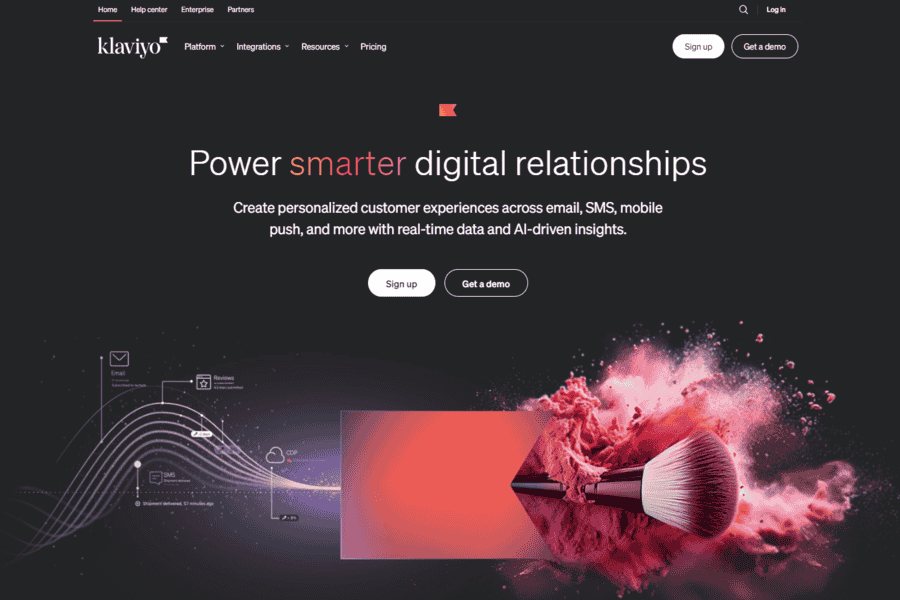
An ecommerce-focused email and SMS platform, especially popular with Shopify stores, with strong behavioral segmentation. See our Klaviyo review.
Pros:
- Deep ecommerce behavioral data (purchase history, browsing) drives segmentation
Cons:
- Steep price jumps at certain contact-count thresholds (e.g. 10K→25K profiles)
Pricing:
Free (250 profiles). From $20/month at 500 profiles, $30/month at 1,000, scaling to roughly $2,300/month at 250,000 profiles. Email+SMS plans start at $35/month.
MailerLite
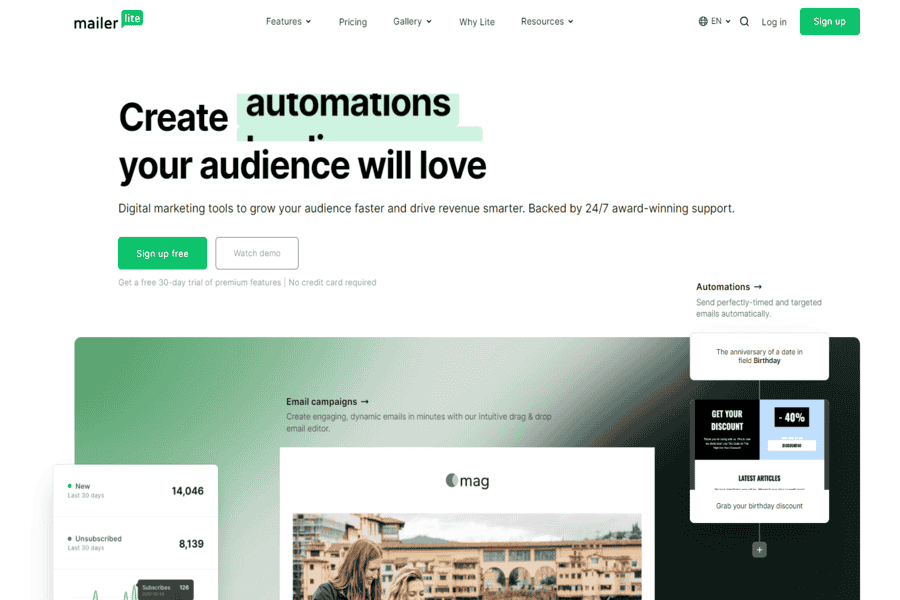
A simple, budget-friendly email marketing tool for small businesses and creators, with AI writing assistance built into the editor.
Pros:
- All paid plans include unlimited monthly emails
Cons:
- Free plan cut from 1,000 to 500 subscribers in September 2025
Pricing:
Free (500 subscribers). Growing Business from $10/month, Advanced from $20/month, Enterprise custom (100K+ subscribers).
CoSchedule
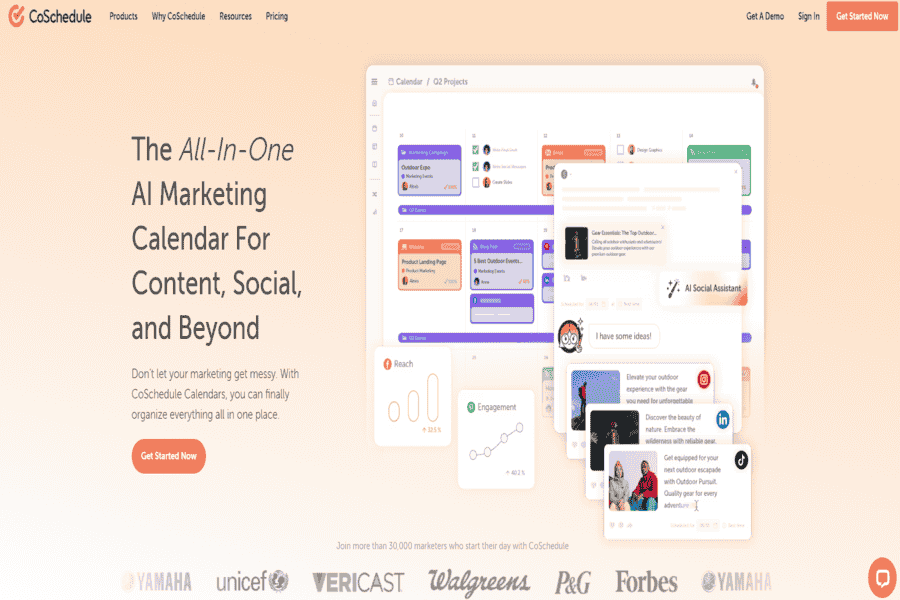
A marketing calendar and content-scheduling platform for planning campaigns and social posts across a team. See our CoSchedule review.
Pros:
- Free calendar tier works well for solo users and freelancers
Cons:
- Content Calendar and Marketing Suite tiers are custom-quoted, not self-serve
Pricing:
Free Calendar available. Social Calendar $19/user/month, Agency Calendar $59/user/month, Content Calendar and Marketing Suite custom.
Where This Is Headed
The clearest trend across this list is consolidation: point tools keep getting folded into bigger suites (Autopilot into Ortto, SharpSpring into Constant Contact, Drift into Salesloft and now being sunset entirely), and AI features that used to be premium add-ons — predictive scoring, generative copy, behavioral segmentation — are now baseline expectations rather than differentiators. When picking a platform, weigh acquisition risk alongside features: a few names on this list changed owners or got discontinued within the past two years.
Which One Should You Use?
For most small-to-mid businesses starting out, HubSpot’s free tier or Mailchimp covers the basics without commitment. Ecommerce brands are better served by Klaviyo or Omnisend, which build segmentation around purchase behavior specifically. Larger B2B teams already on Salesforce or Adobe should stay in that ecosystem (Pardot/Account Engagement, Marketo). If you just need to connect existing tools together, Zapier fills that gap regardless of which platform above you choose. Skip Drift for new commitments given the active sunset, and if you’re looking up “Autopilot,” you want Ortto now.