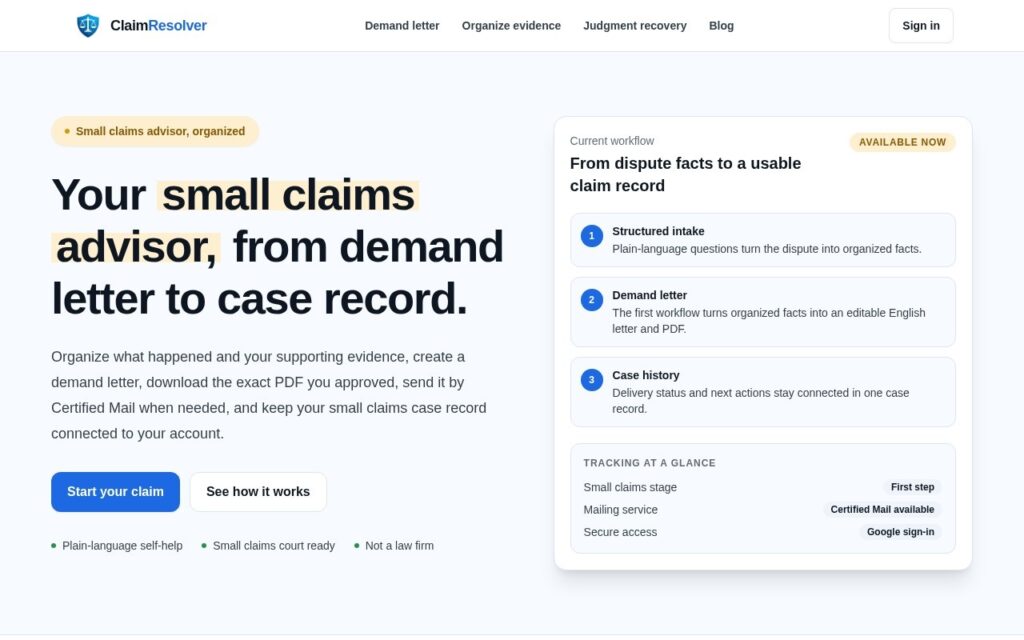
ClaimResolver walks a small claims dispute through three stages. Structured intake asks plain-language questions that turn what happened into organised facts, the first workflow turns those facts into an editable demand letter downloadable as the exact PDF you approved, and case history keeps delivery status and next actions attached to one record. Certified Mail is available for sending, and access is via Google sign-in.
The three disclaimers under the fold are the most valuable thing on the page: plain-language self-help, small claims court ready, not a law firm. Legal AI aimed at consumers lives or dies on that distinction, and a product that states it plainly on the homepage is being straighter with a stressed user than one that leaves them to infer it. Downloading the exact PDF you approved matters for the same reason – what gets posted is what you read.
Keeping the mailing status connected to the case record is the practical detail: small claims turns on whether the other party was properly served and when, and that evidence is normally scattered across a receipt and somebody’s memory. No pricing is published. Self-help means the quality of the letter depends on the quality of your intake answers, small claims procedure varies by jurisdiction, and a demand letter is the easy part of a claim that may still need a hearing.