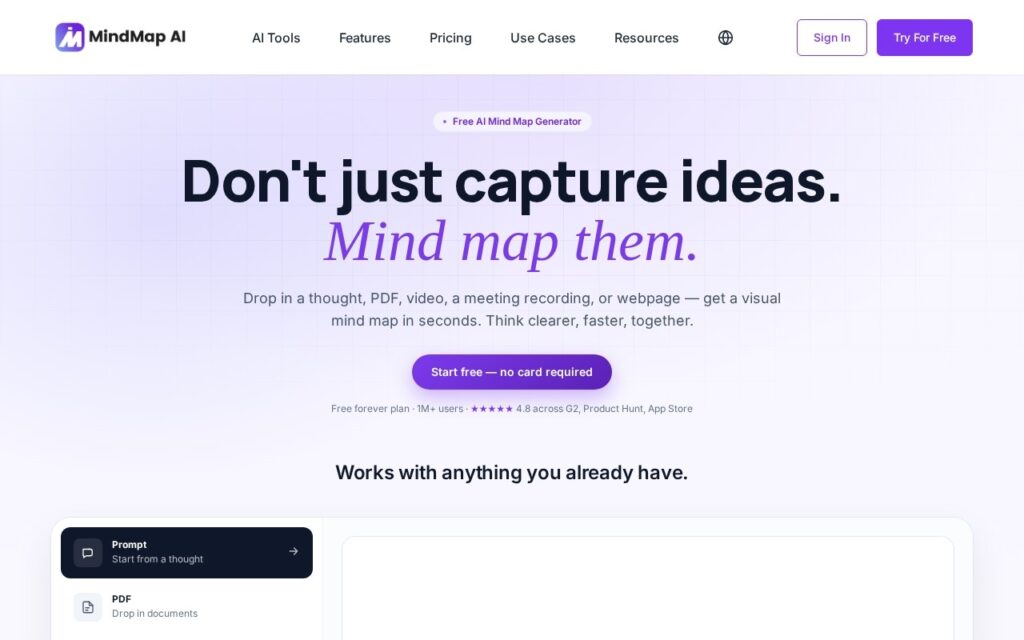
MindMap AI builds visual maps from almost any input: a prompt, a PDF, an image, an audio recording, a video, a meeting transcript, Markdown, CSV or a webpage. Output comes as a mind map, logic chart, org chart or outline, and you can then chat with the AI to expand a branch, reorganise a section or explain a concept, or drag it about by hand. It covers 29-plus languages including right-to-left scripts, syncs across web, iOS, Android and browser extensions, and exports to PDF, PNG, SVG, CSV and Markdown. The company is 3axislabs, Inc.
Accepting audio and video directly is what lifts this above the many prompt-to-map tools. The material people most need structured is the material that arrives unstructured — an hour of recorded meeting, a lecture, a long call — and having to transcribe it first is the step that stops it happening. Being able to then converse with the map, expanding one branch without regenerating the whole thing, is the right interaction model for something you are thinking with.
The honest limitation is about what a generated map is for. Much of the value of mind mapping comes from making it: deciding what connects to what is the act that produces understanding, and a map handed to you complete reflects the source document’s structure rather than your grasp of it. Used to navigate someone else’s material it is genuinely useful; used to learn, the manual mode is doing more for you than the generator. A free plan exists with monthly AI credits, and rates sit on a separate pricing page with monthly, yearly and lifetime options.