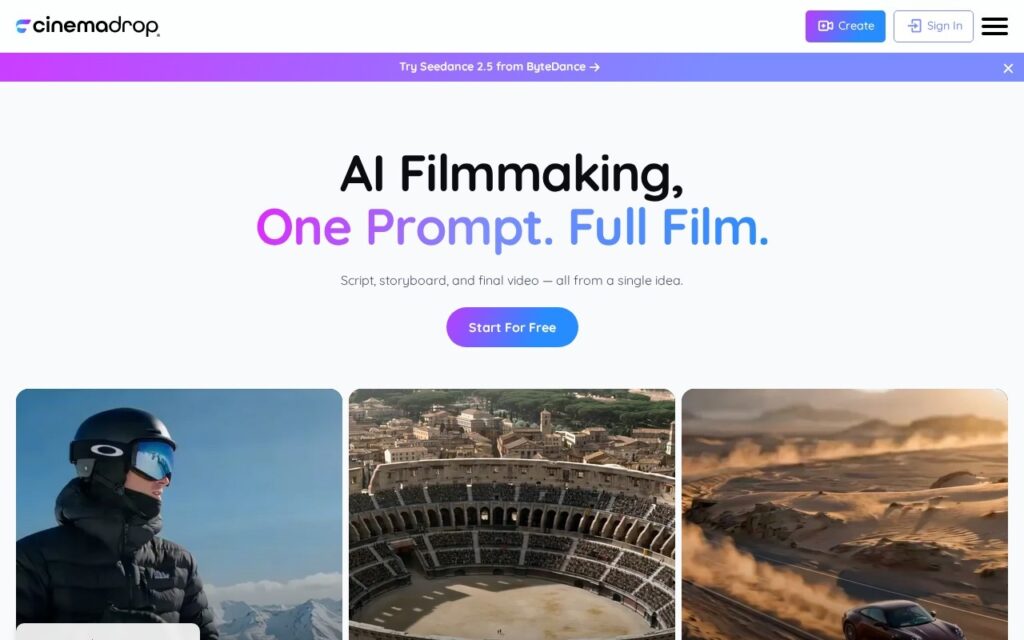
CinemaDrop runs the whole pipeline of a short film in four steps: describe an idea and it writes a script with scenes, dialogue and structure; define characters and elements; build a storyboard shot by shot; then export video with voiceover, lip-sync, cloned speech and composed music. Characters are tagged once and held consistent across every scene. More than 30 image and video models sit behind it, with 65-plus styles, and editing is done by text prompt rather than a timeline.
Structuring this as a pipeline is what separates it from a clip generator. The reason generated video rarely becomes a film is not shot quality – it is that nothing carries between shots, so the protagonist changes face and the location changes architecture. Tagging characters once and enforcing consistency across scenes attacks that directly, and putting a script and storyboard stage before generation is how the work is actually organised in a real production.
Two reservations. The style list names Pixar, which is a company and a trademark rather than a genre – offering a studio’s house look as a preset is contested ground, and anything you make that way is awkward to publish commercially whatever the tool permits. And pricing is unpublished beyond a free Lite tier of 50 one-time credits, with Basic, Plus, Pro, Max and Enterprise above it; the 14-day refund window applies only if you have used 500 credits or fewer, which is a meaningful condition to notice before assuming you can change your mind.