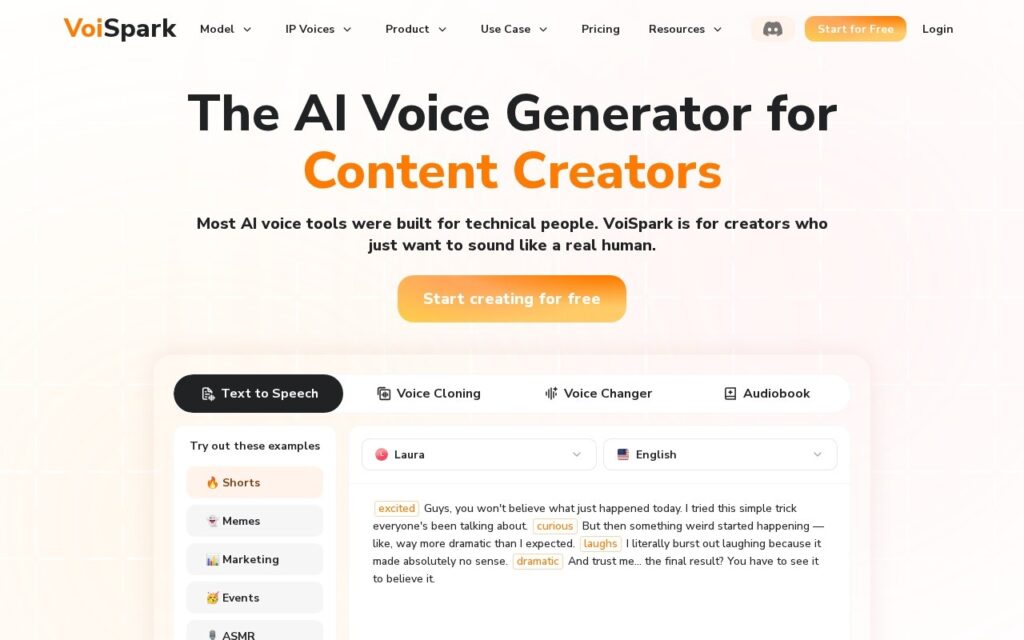
VoiSpark, Inc. is a voice platform for content creators: text to speech with emotion tags controlling tone, rhythm and intent, a voice changer, long-form narration without the word limits competitors impose, voice cloning from about 15 seconds of audio, and a library of more than 700 voices.
The technical work is sound and two parts are genuinely useful. Emotion tagging gives control that a flat read cannot, and long-form narration without a per-request word ceiling matters for audiobooks and documentaries, where competitors force you to stitch chunks together and hope the voice does not drift between them.
The library is the problem, and it is not a small one. Voices are advertised as **including celebrities**, with SpongeBob, Donald Trump and Taylor Swift named as examples. Those are a trademarked character owned by a studio and two living people whose voices are protected by right-of-publicity law — and several US states have now legislated specifically on unauthorised digital voice replicas, Tennessee’s ELVIS Act and California’s digital-replica statutes among them. Anything you make with those voices is a liability you are carrying, not the vendor. Cloning from 15 seconds compounds it: that is less audio than a voicemail, so the consent question applies to any voice you did not record yourself, and no policy on the page addresses it. Use your own voice or a licensed library one; the celebrity shelf is not worth what it costs.