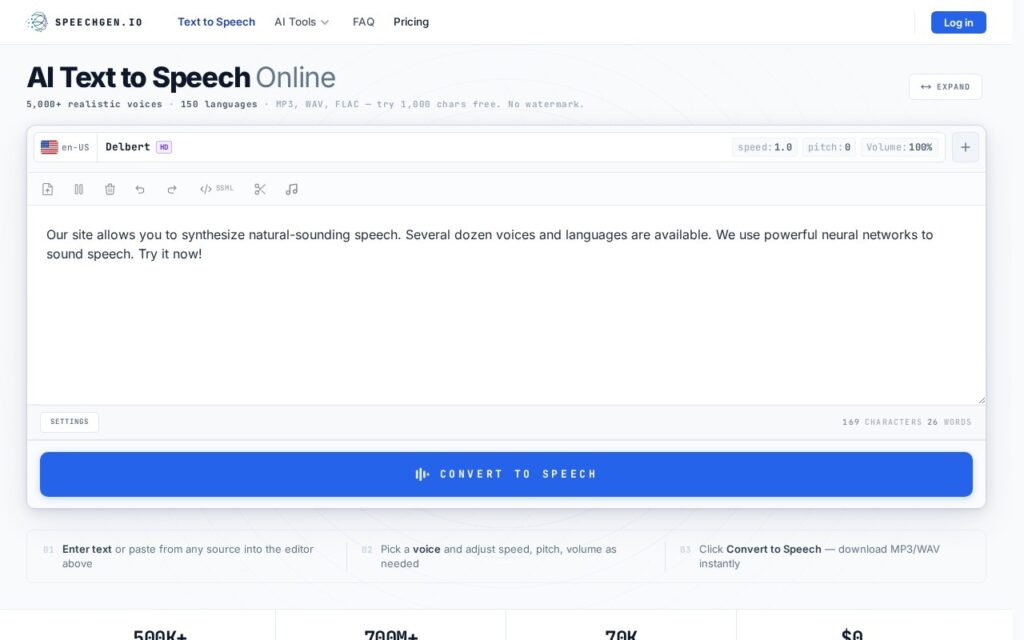
SpeechGen covers the whole voice workflow rather than one direction of it: text to speech across a large voice library, voice cloning, audio and video transcription, YouTube transcription, subtitles converted to audio, a voice changer, and an API.
Subtitles-to-audio is the feature worth calling out, because it solves a specific and awkward job. Localising a video usually means either subtitles, which exclude anyone not reading the screen, or a full dub, which means a studio and voice talent. Generating audio directly from an existing subtitle file – already timed, already translated – turns work that was quoted in thousands into work quoted in credits.
2,000 free characters make it testable before paying. Voice cloning carries the obligation the whole category shares: clone only your own voice or one you have explicit, documented permission to use. Several jurisdictions now legislate specifically on synthetic voice likeness, and consent obtained casually is not consent.