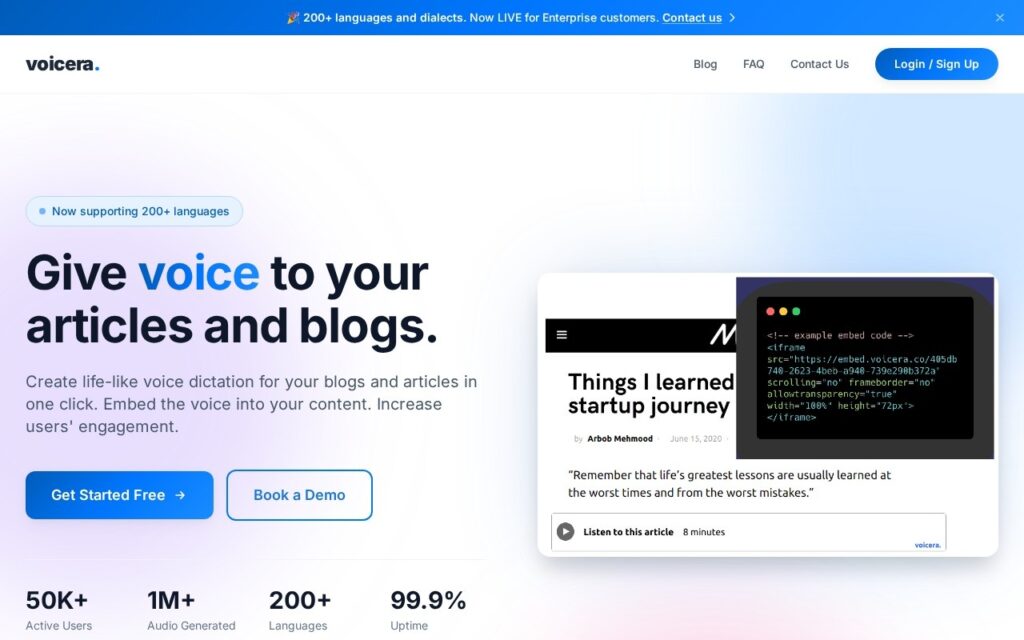
Voicera converts written articles and blog posts into spoken audio that publishers can embed as a player directly in their content, aimed at reaching visually impaired readers and the large share of visitors who say they prefer listening over reading. The company cites industry figures that 2.2 billion people are visually impaired listeners and that audio content sees roughly three times better engagement, and it supports more than 200 languages and dialects, now live for enterprise customers specifically. A Chrome extension lets a reader have any web page read aloud independent of whether the publisher has embedded a player.
As with any large-scale text-to-speech engine, pronunciation of names, technical terms or a language’s own regional accents can still come out wrong occasionally, so a publisher embedding audio at scale should spot-check a sample of articles rather than assume every generated file is publication-ready. The pricing page’s articles-per-plan figures are based on an assumed 1,000 words per article, so a publisher with much longer or shorter pieces should estimate its own usage in words and credits rather than relying on the article count alone.
Starter is free for life, with 5,000 credits, up to 5 articles at the stated word-count assumption, 10+ voice versions and a standard embed player. Pro is $9 a month, or 20% less billed annually, for 100,000 credits, up to 50 articles, priority support, custom embed styling and an analytics dashboard. Enterprise is custom-priced for unlimited credits and articles, 200+ languages and dialects, a dedicated account manager, custom integrations and an SLA. Every plan includes a 14-day, no-questions-asked money-back guarantee.