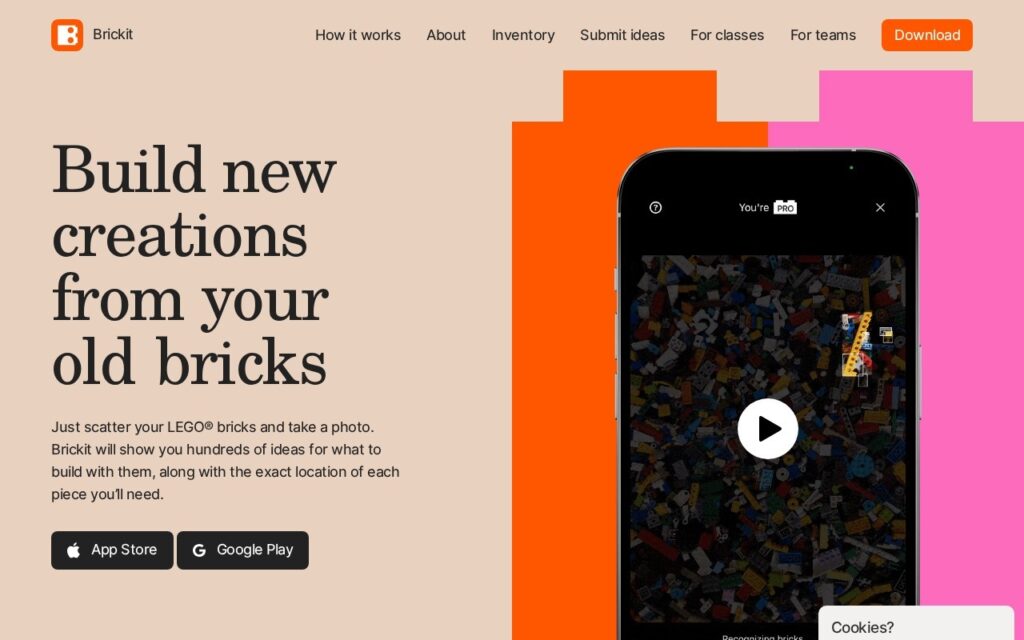
Brickit uses machine learning trained on 3D models of piled bricks to recognize up to 1,600 of the most common brick types from a single photo of a scattered pile, then suggests builds ranging from small shapes to detailed models, highlighting exactly which pieces are needed and where they sit in the photo. A separate “Pockets” feature lets a user scan and catalog an entire collection, of any size, into a searchable digital inventory rather than digging through boxes by hand. Built by Brickit Inc, the app was created by a small team with backgrounds at companies including Google and Yandex after founder Leo wanted an easier way to find bricks for his son’s builds; a direct lookup of its own App Store listing shows a 4.55-out-of-5 average across more than 22,000 ratings and an update dated within the past few days, confirming the app is actively maintained rather than abandoned. A separate “Brickit for Classes” version drops the social features in favor of a one-time purchase suited to school and camp group activities.
Brickit is built by fans and is explicitly not an official LEGO product, and the LEGO Group does not sponsor, authorize or endorse it. Third-party app-pricing trackers report somewhat different figures for the Brickit Pro monthly subscription (commonly cited around $5 to $7 a month, with separate annual options), so a user should confirm the exact current price inside the app or app store listing before subscribing rather than treating any single figure as fixed.
The core app, including brick scanning, build suggestions and basic inventory, is free on both iOS and Android. A Brickit Pro subscription unlocks additional scanning, building and organizing features for a recurring fee (reported around $5 to $7 a month by third-party app-pricing trackers, with discounted annual options), and a separate one-time-purchase version exists for classroom and camp use.