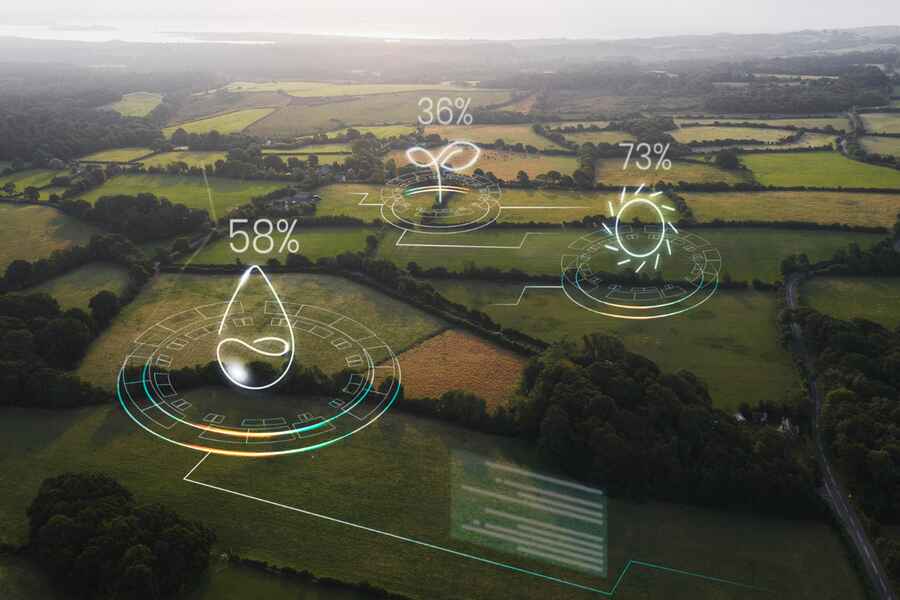
AI-powered environmental monitoring automates what used to be slow, manual data collection and analysis. Processing sensor readings, satellite imagery, and historical records in real time to catch problems (a pollution spike, an emerging wildfire risk, a water-quality anomaly) faster than a human review cycle ever could. This guide covers how AI is actually used across the field and the platforms worth knowing.
How AI Is Used in Environmental Monitoring
The core applications: real-time monitoring and analysis of live sensor and imagery feeds; predictive modeling that forecasts conditions (air quality, flood risk, wildfire spread) before they happen rather than just reporting after the fact; anomaly detection that flags a reading outside normal range automatically; image and video analysis applied to satellite and camera-trap data; and natural language processing that turns raw environmental reports and regulatory documents into something searchable and summarizable. Done well, this translates into better-informed environmental decisions, easier regulatory compliance, lower monitoring costs than a fully manual program, wider public awareness, and problems caught early enough to actually act on.
AI Tools for Environmental Monitoring
IBM Environmental Intelligence Suite
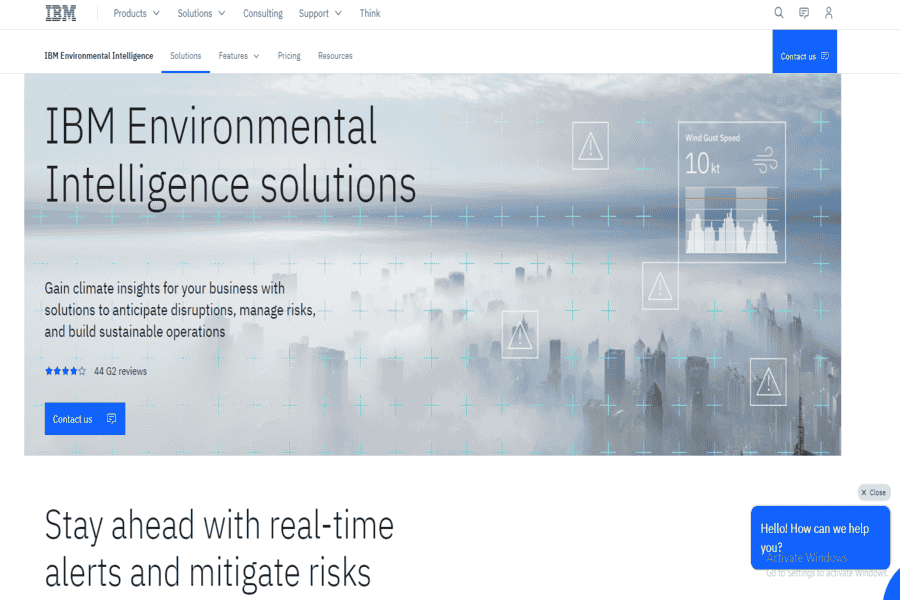
IBM’s suite offers AI-powered solutions for real-time environmental monitoring, using data analytics to track air quality, carbon emissions, and other environmental factors.
Pros:
- Real-time monitoring
- Scalable solutions
- Detailed insights for decision-making
Cons:
- It can be expensive for small enterprises
- Requires technical expertise
Pricing Package:
Custom pricing based on usage
Envirosuite
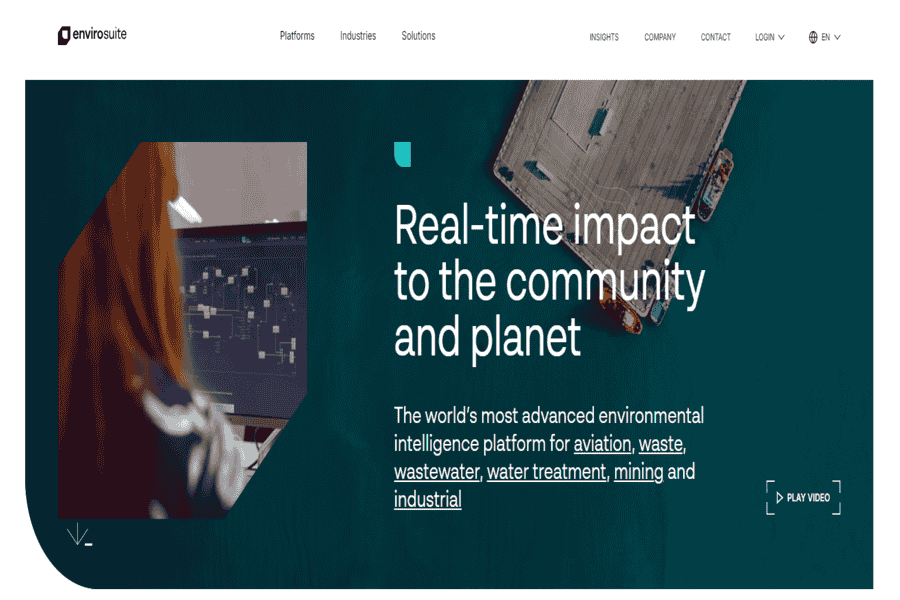
A comprehensive environmental management platform using AI to monitor air, noise, and water quality in real-time, helping businesses comply with regulations.
Pros:
- Highly customizable
- Accurate data analytics
- Scalable for different industries
Cons:
- High learning curve
- Pricing can be on the higher end
Pricing Package:
Custom pricing based on requirements
AirVisual (IQAir)
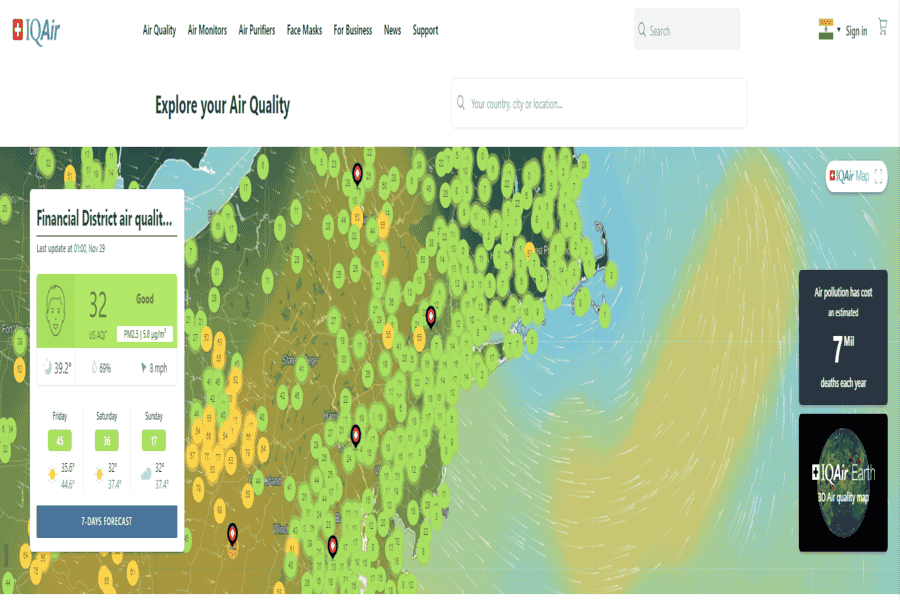
AirVisual by IQAir offers an AI-powered platform for air quality monitoring, using real-time data to track pollution levels globally.
Pros:
- Accurate and reliable data
- Wide range of monitoring devices
- Global coverage
Cons:
- Device prices can be high
- Limited in-depth analytics for large enterprises
Pricing Package:
Starts at $99 for personal devices
ClimateAI
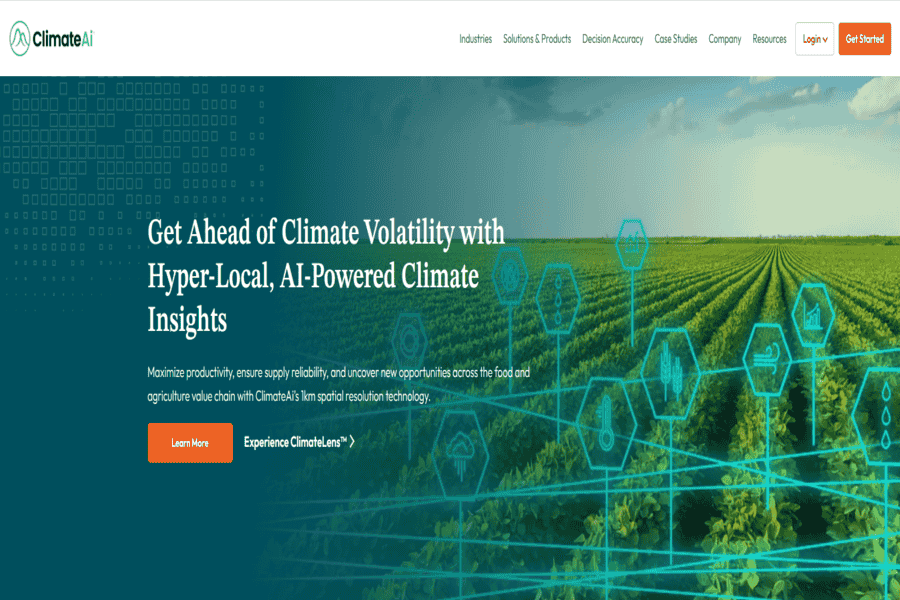
ClimateAI uses machine learning to predict climate-related risks and impacts, focusing on agriculture and environmental sustainability.
Pros:
- Highly predictive models
- Industry-specific focus (agriculture, water management)
- Strong emphasis on climate resilience
Cons:
- Primarily targeted toward agriculture
- Limited availability of features for other sectors
Pricing Package:
Custom pricing based on needs
Pano AI
AI-powered wildfire detection network combining camera towers, satellite data, and AI image analysis to spot fires within minutes of ignition. Replaces “Sensedge AI” in this list, an entry whose invented social media handles and placeholder contact number don’t correspond to any real company; its URL actually pointed to Cron AI’s senseEDGE, a LiDAR object-detection product for transportation and security, not environmental monitoring.
Pros:
- Detects fires in minutes rather than the hours a satellite pass or human spotter takes.
- Used by utilities and fire agencies for real early-warning coverage.
Cons:
- Coverage depends on camera tower placement, not available everywhere.
Pricing Package:
Custom pricing
Airthings
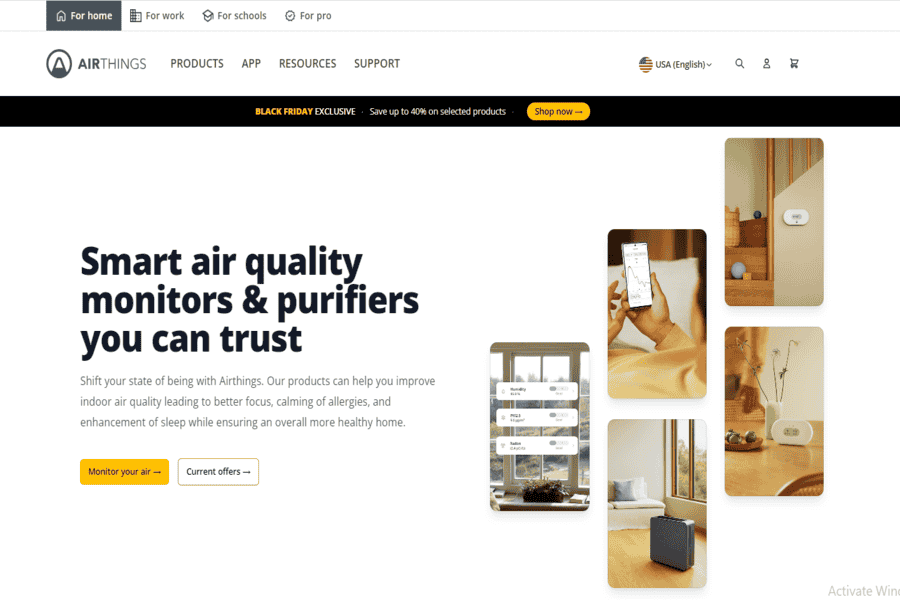
Airthings provides AI-powered indoor air quality monitoring solutions, helping businesses and homes track and optimize air quality.
Pros:
- Easy-to-use devices
- AI-driven insights for improved indoor air quality
- Cost-effective for personal use
Cons:
- Limited data for industrial applications
- Focused mainly on indoor air quality
Pricing Package:
Starts at $299 for devices
Wildlife Insights
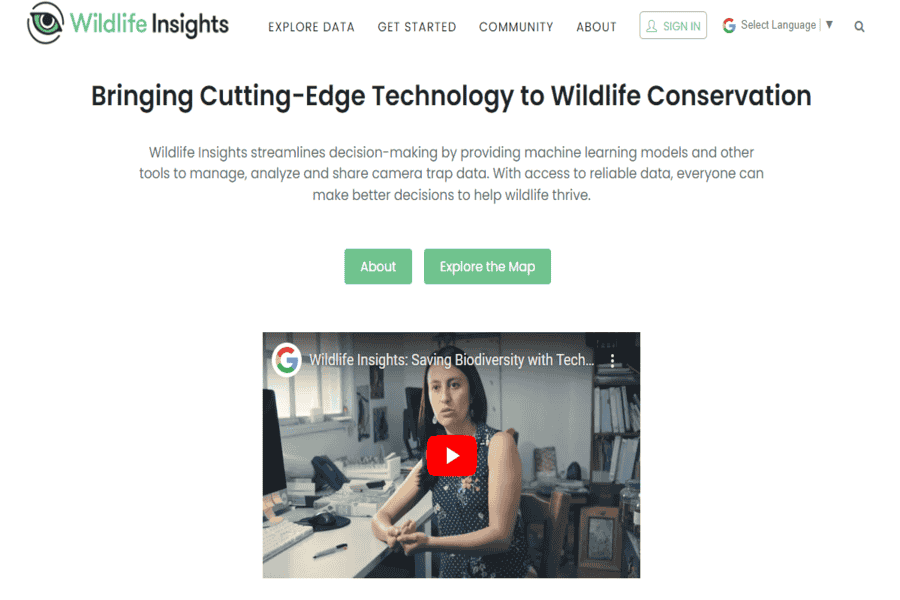
AI-powered wildlife monitoring platform that collects and analyzes camera trap data to monitor biodiversity and track animal populations.
Pros:
- AI-backed wildlife data analytics
- Helps in biodiversity monitoring
- Supports conservation efforts
Cons:
- Limited to camera-based monitoring
- Requires high-quality camera equipment
Pricing Package:
Free and paid options for conservation organizations
Greenly
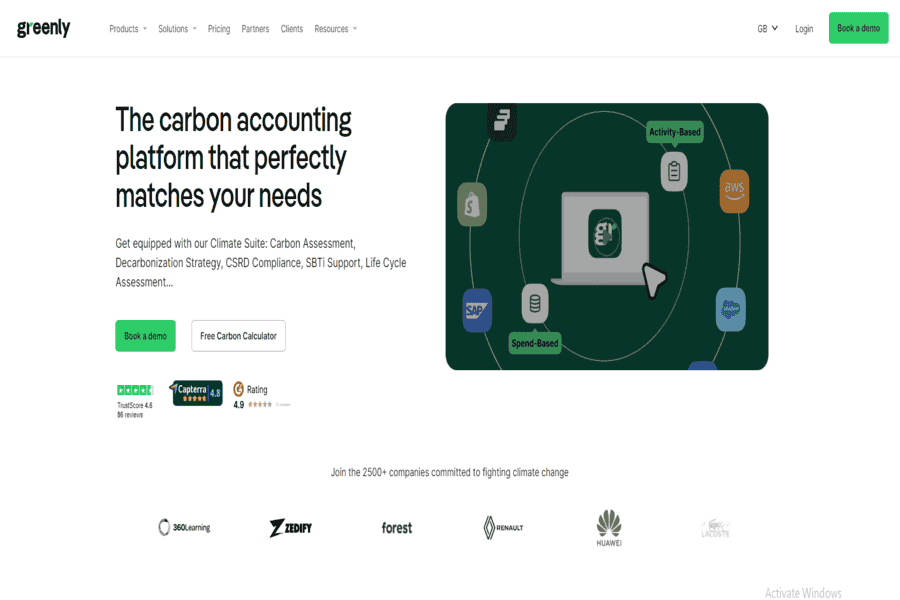
Greenly uses AI to calculate and track your carbon footprint, offering tools for businesses to assess and mitigate their environmental impact.
Pros:
- Easy-to-understand carbon footprint reports
- Affordable for small businesses
- Integrates well with existing workflows
Cons:
- It may not provide detailed environmental data beyond carbon emissions
- Limited for larger enterprises
Pricing Package:
Subscription starting at €99 per month
Xylem
Xylem provides AI-powered water quality monitoring tools, helping companies track water quality in real-time to make sure safe and sustainable usage.
Pros:
- Highly accurate water quality monitoring
- Real-time alerts for contamination
- Extensive global reach
Cons:
- Expensive for small enterprises
- Focused mostly on water quality
Pricing Package:
Custom pricing
Ecobot
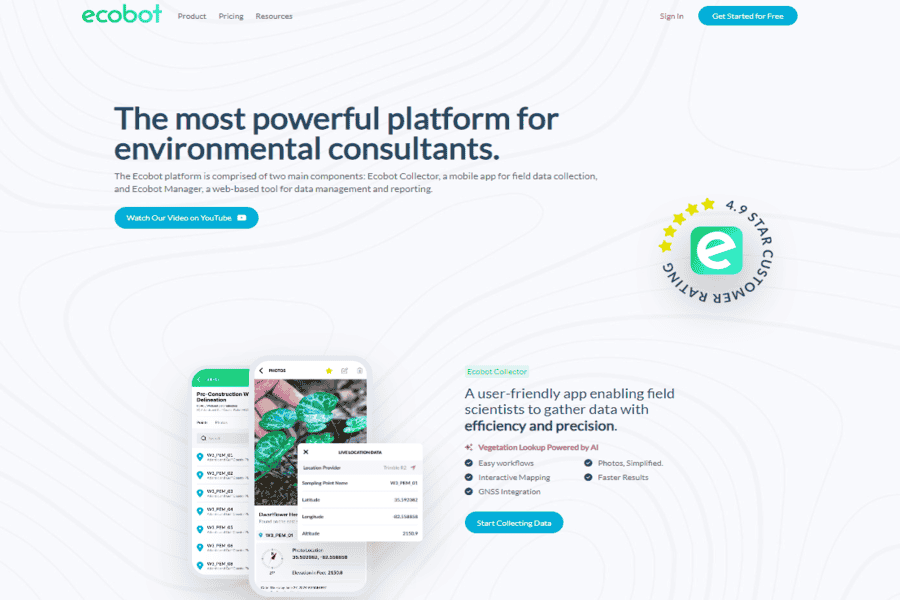
AI-driven environmental monitoring tool for companies, helping track and report environmental data like emissions, waste, and water quality.
Pros:
- Intuitive interface
- Real-time data analytics
- Supports sustainability efforts
Cons:
- Some features require advanced technical knowledge
- It may require training for full use
Pricing Package:
Starts at $149 per month
Sustainalytics
Sustainalytics provides AI-driven environmental, social, and governance (ESG) risk analysis and solutions, helping businesses monitor and improve their environmental impact.
Pros:
- Complete ESG monitoring
- Customizable reports for industries
- Real-time environmental impact analysis
Cons:
- Focused primarily on ESG risks
- Pricing can be high for smaller organizations
Pricing Package:
Custom pricing
Climacell (Tomorrow.io)
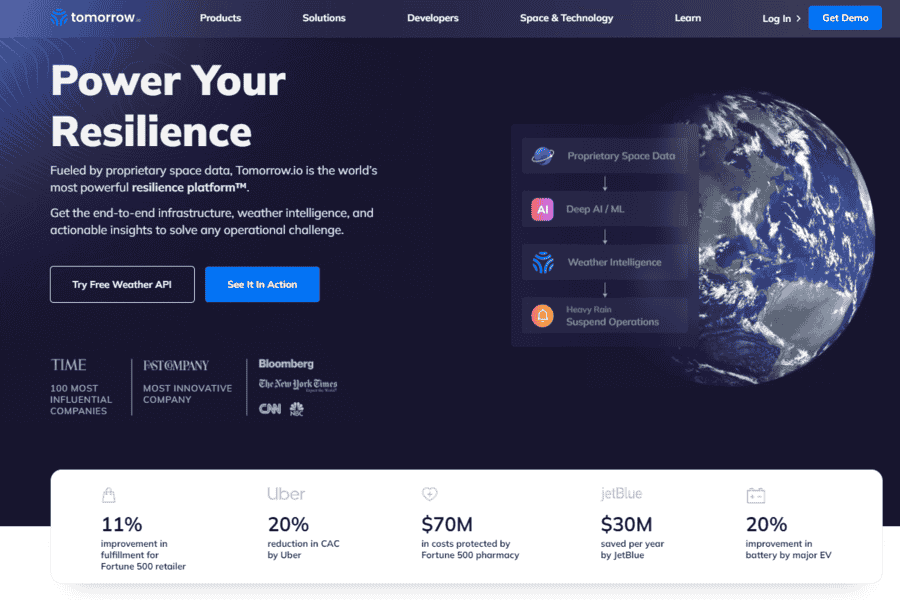
Tomorrow.io offers AI-powered weather forecasting and environmental monitoring tools, helping companies predict climate impacts and manage risks.
Pros:
- Accurate, hyper-local weather data
- AI-powered predictive analytics
- Useful for both industries and governments
Cons:
- Focused on weather data rather than direct environmental sensors
- Pricing may be a barrier for small businesses
Pricing Package:
Custom pricing based on needs
Overstory
AI and satellite-imagery platform for vegetation management and wildfire risk, used by utilities to spot dangerous vegetation growth near power lines before it causes an outage or ignition. Replaces BlueSky Analytics in this list, which shrank to a handful of employees and whose domain (blueskyhq.io) no longer resolves at all.
Pros:
- Purpose-built for utility wildfire-risk use cases, not a generic satellite-data platform.
- Combines multiple satellite sources with AI vegetation modeling.
Cons:
- Narrow focus on vegetation/wildfire risk rather than general environmental monitoring.
Pricing Package:
Custom pricing
Planet Labs
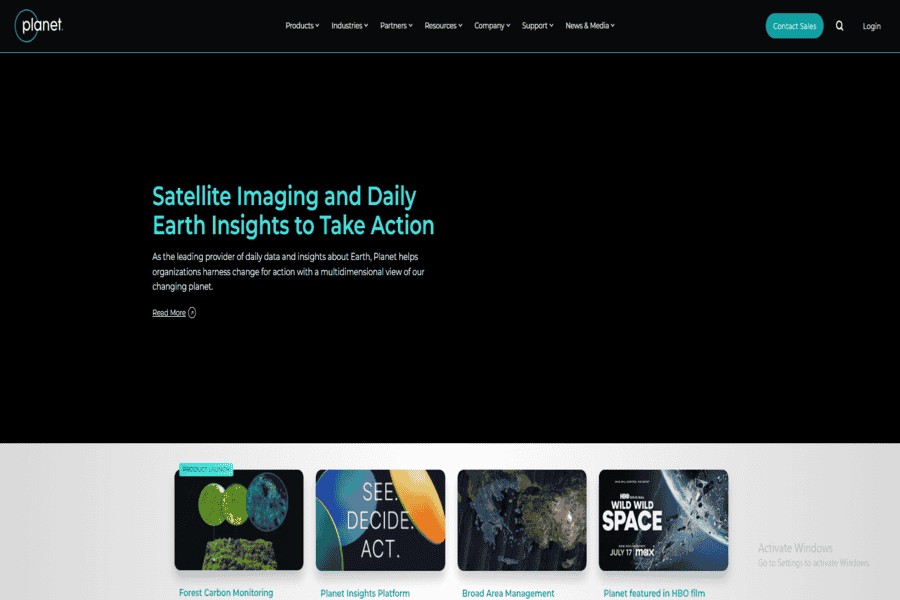
Planet Labs provides satellite imagery powered by AI to track environmental changes, deforestation, and land use over time.
Pros:
- High-quality satellite imagery
- AI analysis for environmental monitoring
- Supports environmental policy and conservation
Cons:
- Focused primarily on satellite imagery
- It can be expensive for frequent use
Pricing Package:
Custom pricing
Airly
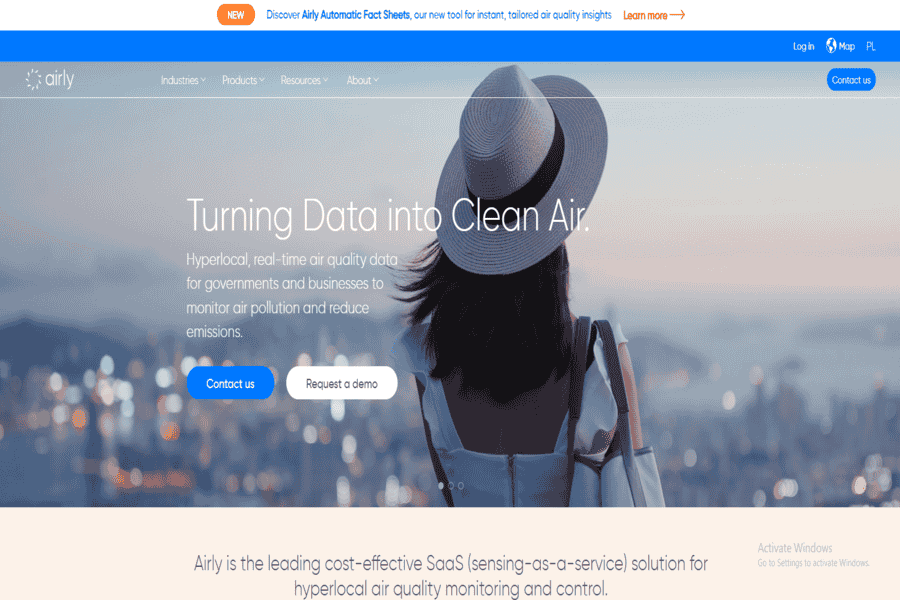
Airly offers a global network of air quality monitoring sensors powered by AI, helping cities and organizations track pollution levels and improve public health outcomes.
Pros:
- Real-time air quality monitoring
- AI-powered predictive analytics
- Extensive sensor network
Cons:
- Limited to air quality data
- It can be costly for widespread deployment
Pricing Package:
Custom pricing
Green Building Studio (Autodesk)
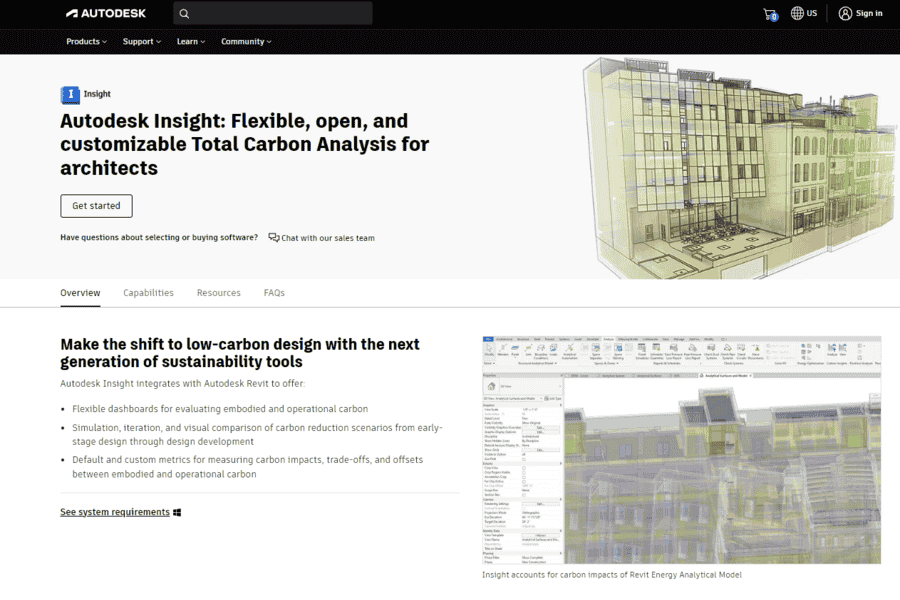
Green Building Studio is an AI-powered energy and environmental simulation tool designed for architects and engineers to optimize buildings’ environmental impact.
Pros:
- AI-based simulation for energy efficiency
- Helps design environmentally friendly buildings
- Integrates with other Autodesk software
Cons:
- Primarily targeted at architects and engineers
- Requires knowledge of CAD systems
Pricing Package:
Subscription-based, starting at $380/year
C3.ai
C3.ai offers AI-driven applications for environmental sustainability, including emissions reduction and energy management for industries and government agencies.
Pros:
- Complete AI-driven environmental solutions
- Focus on sustainability goals
- Scalable for various industries
Cons:
- High implementation costs
- Requires significant technical expertise
Pricing Package:
Custom pricing
Clarity Movement
Air quality sensor network with cloud-based AI analytics, used by cities and regulators to build hyperlocal pollution maps. Replaces “IoT Systems” in this list, whose URL (iot-systems.com) turned out to be a domain-for-sale listing, not a real company (its “555” contact number was a tell too).
Pros:
- Built specifically for regulatory and municipal-scale air quality networks.
- Combines low-cost sensor hardware with cloud analytics rather than software alone.
Cons:
- Requires deploying physical sensor hardware, not a pure software subscription.
Pricing Package:
Custom pricing
Spire Global
Spire Global uses satellite-based AI technology to monitor environmental factors such as ocean conditions, weather patterns, and climate data.
Pros:
- Satellite-based environmental monitoring
- Wide range of environmental data
- AI-driven analytics for accurate predictions
Cons:
- High costs for regular access
- Primarily focused on large-scale monitoring
Pricing Package:
Custom pricing
Fathom
AI-powered flood risk modeling covering water hazards at global scale, used by insurers, governments, and infrastructure planners. Replaces “Aqua AI” in this list, whose domain (aqua.ai) turned out to be listed for sale on a domain marketplace, not a real company (its “555” contact number was another tell).
Pros:
- Global flood-risk coverage, including areas with sparse ground-based monitoring.
- Used by major insurers and government agencies for real risk decisions.
Cons:
- Focused on flood/water hazard modeling rather than broader water-quality monitoring.
Pricing Package:
Custom pricing
Challenges and Considerations
These tools have real limits. Model output is only as reliable as the sensor and satellite data feeding it, and gaps in coverage (remote regions, underfunded monitoring programs) produce real blind spots, not just noisy data. Running large-scale environmental AI models, especially satellite image analysis across wide areas, takes real computational resources, which factors into cost for smaller organizations. Environmental data can touch sensitive land-use and property questions, raising real ethical considerations around who has access to it and how it gets used. And more sophisticated models are often harder to interpret, which matters when a regulatory or policy decision needs to be defensible, not just accurate.
Where This Is Headed
Edge computing is moving more processing onto the sensor or device itself, which matters for remote monitoring sites with limited connectivity. Explainable AI is getting real investment, driven by the same interpretability concerns above, particularly where model output feeds into regulatory decisions. Citizen science platforms are expanding the sheer volume of ground-truth data available, letting ordinary observers contribute to monitoring networks no single funded program could build alone. And digital twins. Live, continuously updated models of an ecosystem, watershed, or region, are moving from research projects toward practical tools that let planners test interventions before committing resources to them.
The tools above split roughly into a few groups: broad enterprise environmental-intelligence platforms (IBM Environmental Intelligence Suite, Envirosuite, C3.ai) for organizations tracking multiple environmental factors at once; specialized sensor and hardware-tied tools (AirVisual, Airthings, Clarity Movement, Xylem) built around a specific monitoring domain; satellite and remote-sensing platforms (Planet Labs, Spire Global, Overstory) for coverage where ground sensors aren’t practical; and climate-risk and compliance tools (ClimateAI, Fathom, Sustainalytics, Greenly) for organizations managing environmental risk and reporting obligations. Match the tool to the specific environmental factor and scale you’re actually monitoring, and treat AI output as a tool for prioritizing where human attention goes, not a replacement for it.