Predictive maintenance has emerged as a crucial strategy for businesses across various industries. Identifying and addressing potential equipment failures minimizes downtime, reduces maintenance costs, and enhances overall operational efficiency. While traditional methods often rely on time-based maintenance schedules or reactive repairs, the integration of Artificial Intelligence (AI) is changing this field. By using AI Tools for Predictive Maintenance, businesses can analyze machine data, predict potential failures, proactively schedule maintenance, optimize equipment lifespan, maximize production uptime, and minimize unexpected disruptions to their operations.
What is Predictive Maintenance?
Predictive maintenance involves continuously monitoring the health of equipment and predicting potential failures before they occur. This proactive approach allows for timely interventions, such as scheduled repairs or component replacements, preventing costly and disruptive breakdowns.
How AI Can Enhance Predictive Maintenance
Analyze Sensor Data:
- AI algorithms, particularly those using machine learning techniques, can continuously monitor and analyze data streams from various sensors attached to equipment.
- These sensors measure temperature, vibration, pressure, current, and acoustic emissions.
- By analyzing these sensor readings, AI models can identify subtle deviations from normal operating conditions, such as unusual vibrations, sudden temperature spikes, or changes in pressure.
- These deviations can be early indicators of equipment failures, allowing for proactive maintenance interventions.
Process Historical Data:
- AI models can effectively use historical maintenance records, equipment performance data, and other relevant information.
- This historical data can include past maintenance events, repair times, component replacements, and equipment failure records.
- Analyzing these historical trends, AI algorithms can identify patterns and correlations between different factors and equipment failures.
- This allows for more accurate predictions of future failures based on past experiences and the equipment’s operational history.
Optimize Maintenance Schedules:
- Instead of relying on fixed maintenance schedules based on time intervals, AI can adjust maintenance schedules based on real-time equipment health data.
- By continuously monitoring equipment conditions and predicting failures, AI can prioritize and schedule maintenance tasks optimally.
- This minimizes unnecessary downtime and makes sure that maintenance resources are allocated efficiently.
Improve Decision-Making:
- AI-powered tools can provide maintenance teams with valuable insights and actionable recommendations.
- These insights can include:
- The likelihood and timing of potential failures.
- The most critical components that require attention.
- The optimal maintenance strategies and procedures.
- The potential impact of different maintenance decisions on equipment reliability and operational costs.
- This helps maintenance teams to make more informed decisions, optimize resource allocation, and improve the overall effectiveness of their maintenance operations.
The Role of AI in Predictive Maintenance
AI shapes several key aspects of predictive maintenance:
Anomaly Detection:
- AI algorithms, particularly those employing unsupervised learning techniques like clustering and anomaly detection, excel at identifying deviations from normal equipment behavior.
- AI can detect unusual parameter variations like temperature, vibration, current, and pressure by comparing sensor data to established baselines or historical patterns.
- These anomalies can be subtle and difficult to detect manually but can be key indicators of impending failures, such as bearing wear, motor imbalance, or fluid leaks.
Failure Prediction:
- AI models, often using supervised learning techniques like regression and classification, can predict the likelihood and timing of equipment failures.
- By analyzing historical maintenance data, sensor readings, and other relevant information, these models learn to identify patterns and correlations that precede equipment failures.
- This predictive capability allows maintenance teams to proactively schedule maintenance interventions, preventing unexpected breakdowns and minimizing downtime.
Root Cause Analysis:
- Pinpointing the root cause of equipment failures is critical for effective corrective actions and preventing future occurrences.
- AI can assist in this process by analyzing a wide range of data, including sensor readings, maintenance logs, and environmental factors.
- By identifying patterns and correlations between different factors and equipment failures, AI can help pinpoint the underlying causes, such as faulty components, inadequate lubrication, or environmental conditions.
Prescriptive Maintenance:
- AI can go beyond simply predicting failures by recommending specific maintenance actions.
- Based on the analysis of equipment health data and failure predictions, AI models can suggest appropriate maintenance actions, such as:
- Replacing specific components.
- Adjusting operating parameters.
- Performing specific maintenance procedures.
- Scheduling preventive maintenance activities.
Top AI Tools for Predictive Maintenance
AVEVA Predictive Analytics
AVEVA Predictive Analytics compares near-real-time asset data against equipment history to flag deviations from normal operating conditions, giving early warning of equipment issues days, weeks, or months before failure.
Pros:
- Early-warning detection days to months ahead of failure
- Backed by a large industrial software vendor with deep OT expertise
- Scalable for large industrial operations
Cons:
- Expensive for small businesses
- Requires technical expertise for setup
Pricing Package:
Custom pricing based on enterprise needs; contact AVEVA for details.
Social Media:
- LinkedIn: AVEVA on LinkedIn
Contact Information:
- Email: [email protected]
Azure IoT Predictive Maintenance

Microsoft Azure IoT Predictive Maintenance uses Azure Machine Learning and IoT Hub to analyze equipment data and predict potential failures before they occur.
Pros:
- Integration with the Microsoft ecosystem
- Scalable cloud-based solution
- Supports multiple machine learning models
- Highly customizable
Cons:
- Requires cloud subscription
- The steep learning curve for customization
Pricing Package:
Pay-as-you-go pricing based on Azure resources used.
Social Media:
- Facebook: Azure on Facebook
- Instagram: Azure on Instagram
- Twitter: @Azure
- LinkedIn: Azure on LinkedIn
- YouTube: Azure YouTube Channel
Contact Information:
- Email: [email protected]
- Contact Number: 1-800-642-7676
Falkonry
Falkonry applies no-code AI to operational time-series data from plants and field systems, detecting and predicting equipment issues without requiring in-house data scientists.
Pros:
- No-code time-series AI, no data science team required
- Deploys on-premises, in the cloud, or at the edge
- Used across metals, defense, chemicals, and semiconductor manufacturing
Cons:
- Smaller company footprint than the largest industrial software vendors
- Best suited to operations with existing time-series sensor data
Pricing Package:
Contact Falkonry for custom pricing.
Social Media:
- LinkedIn: Falkonry on LinkedIn
Contact Information:
- Email: [email protected]
SAP Asset Performance Management
SAP Asset Performance Management (SAP APM), the current name for what was SAP Predictive Maintenance and Service, integrates IoT data with predictive analytics to optimize maintenance schedules and reduce operational costs.
Pros:
- Smooth integration with SAP ERP systems
- Advanced analytics for failure prediction
- Suitable for various industries
Cons:
- High implementation cost
- Requires expertise in the SAP ecosystem
Pricing Package:
Custom pricing based on the business needs; contact SAP for details.
Social Media:
- Facebook: SAP on Facebook
- Instagram: SAP on Instagram
- Twitter: @SAP
- LinkedIn: SAP on LinkedIn
- YouTube: SAP YouTube Channel
Contact Information:
- Email: [email protected]
- Contact Number: +1 (800) 872-1727
Cumulocity
Cumulocity is an independent industrial IoT platform (spun out of Software AG in a 2025 management buyout) that connects equipment data to predictive-maintenance and asset-monitoring applications for manufacturing and industrial operations.
Pros:
- Vendor- and device-agnostic IoT platform
- Established industrial IoT pedigree from its Software AG origins
- Independent ownership since its 2025 management buyout
Cons:
- Platform breadth means more setup than a single-purpose predictive-maintenance tool
- Best suited for medium to large enterprises
Pricing Package:
Contact Cumulocity for detailed pricing options.
Social Media:
- LinkedIn: Cumulocity on LinkedIn
Contact Information:
- Email: [email protected]
PTC ThingWorx
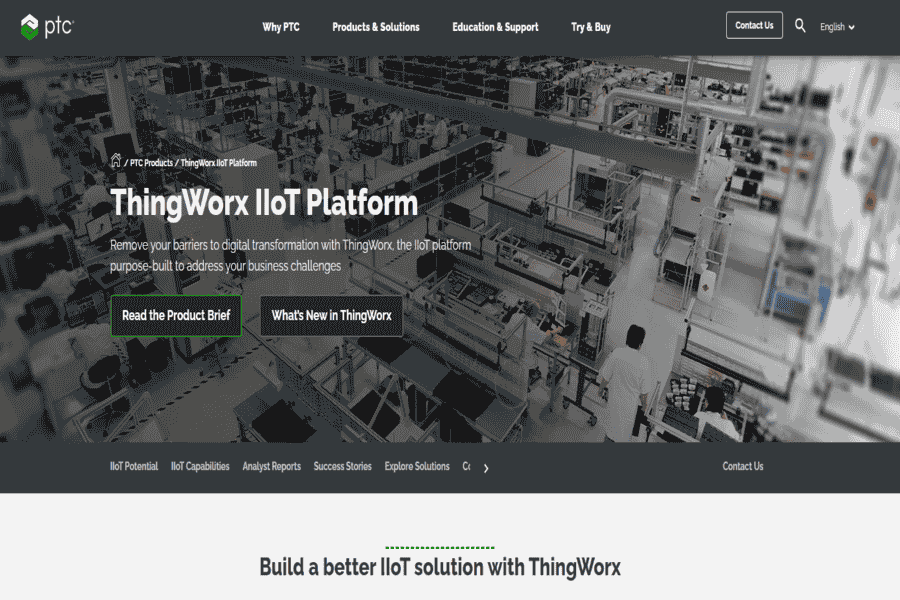
PTC ThingWorx is an industrial IoT platform for predictive maintenance and asset monitoring. It enables businesses to create custom applications for data collection and failure prediction.
Pros:
- Highly customizable platform
- Real-time analytics for industrial IoT
- Integration with augmented reality tools
Cons:
- Requires expertise in IoT and industrial setups
- High initial setup cost
Pricing Package:
Custom pricing based on business needs; contact PTC for details.
Social Media:
- Facebook: PTC on Facebook
- Instagram: PTC on Instagram
- Twitter: @PTC
- LinkedIn: PTC on LinkedIn
- YouTube: PTC YouTube Channel
Contact Information:
- Email: [email protected]
- Contact Number: +1 (781) 370-5000
Anodot
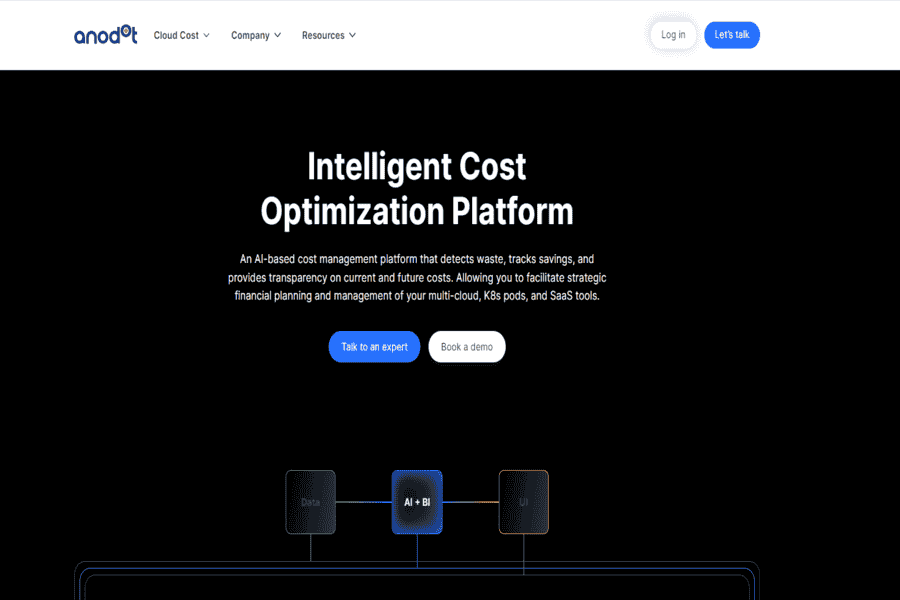
Anodot offers autonomous predictive maintenance solutions that monitor asset health, detect anomalies, and forecast failures using machine learning algorithms.
Pros:
- Real-time anomaly detection
- Easy to integrate with existing systems
- Scalable for various industries
Cons:
- Requires a strong data pipeline for best results
- Limited offline capabilities
Pricing Package:
Subscription-based pricing; contact for details.
Social Media:
- Facebook: Anodot on Facebook
- Twitter: @Anodot
- LinkedIn: Anodot on LinkedIn
- YouTube: Anodot YouTube Channel
Contact Information:
- Email: [email protected]
- Contact Number: +1 (650) 549-5320
Augury
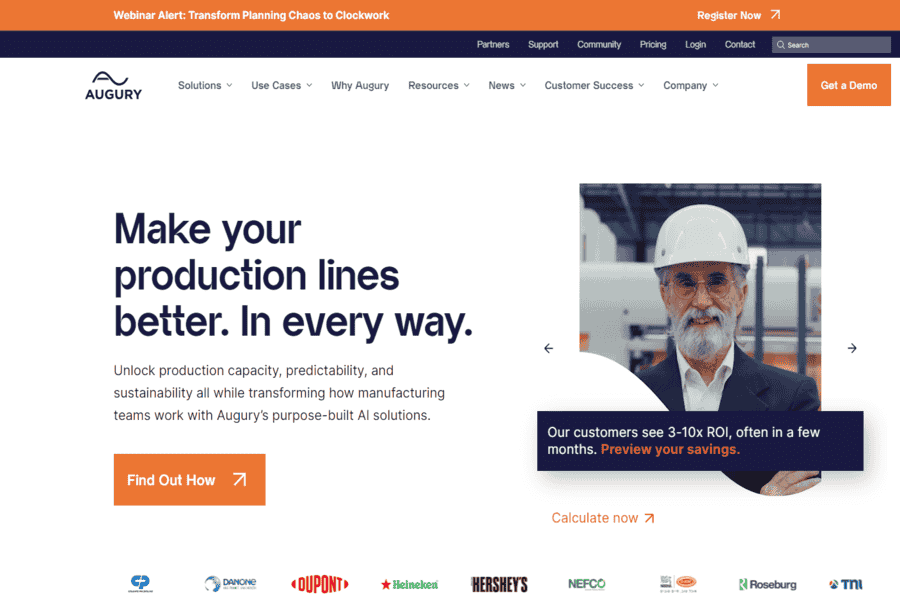
Augury uses AI-driven insights to monitor the health of industrial machines, detect issues early, and predict potential failures.
Pros:
- Easy-to-deploy sensors for machine monitoring
- Focus on industrial and manufacturing sectors
- Mobile-friendly interface
Cons:
- Limited features for non-industrial environments
- High costs for large-scale deployments
Pricing Package:
Custom pricing; contact Augury for more information.
Social Media:
- Facebook: August on Facebook
- Twitter: @AuguryInc
- LinkedIn: Augury on LinkedIn
- YouTube: Augury YouTube Channel
Contact Information:
- Email: [email protected]
- Contact Number: +1 (646) 790-7472
Schneider Electric EcoStruxure Asset Advisor
EcoStruxure Asset Advisor is Schneider Electric’s condition monitoring and predictive maintenance service, using partnered analytics (including Semiotic Labs’ technology) to flag potential equipment failures up to six months in advance.
Pros:
- Failure predictions up to six months ahead
- Single dashboard covering a broad portfolio of assets
- Backed by Schneider’s Connected Service Hub digital service team
Cons:
- Requires substantial initial investment
- Focused on enterprise-level organizations
Pricing Package:
Custom pricing based on use case and requirements; contact Schneider Electric for details.
Social Media:
- LinkedIn: Schneider Electric on LinkedIn
Contact Information:
- Contact Number: +1 (847) 397-2600
Senseye PdM
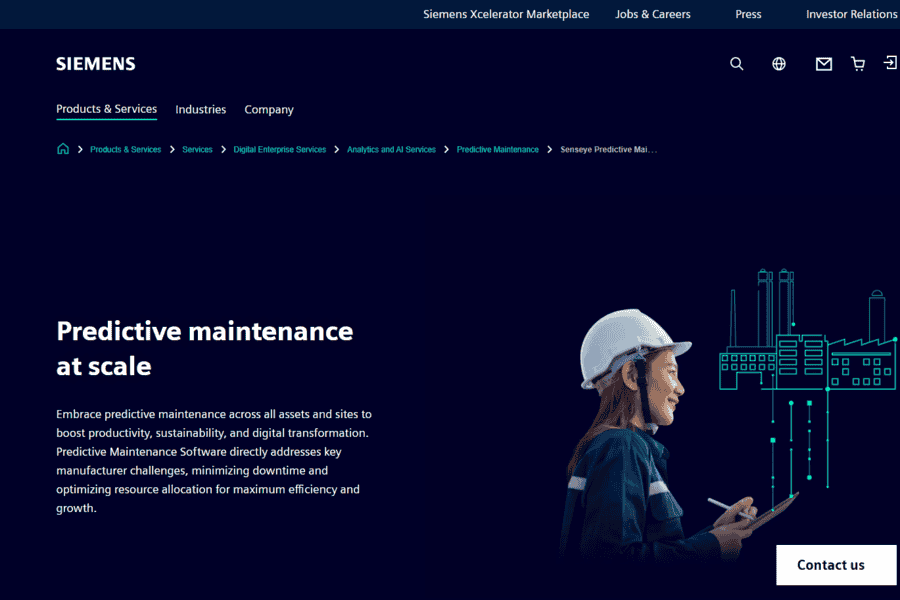
Senseye PdM is a scalable predictive maintenance platform that uses AI and machine learning to help industries reduce downtime and maintenance costs. Senseye has operated as a Siemens subsidiary since 2022, continuing to run under its own brand.
Pros:
- Designed for manufacturing and industrial operations
- Automatic failure predictions with actionable insights
- Scalable solution for businesses of all sizes
Cons:
- Best suited for manufacturing industries
- Requires consistent data input for accurate predictions
Pricing Package:
Contact Senseye for pricing details.
Social Media:
- Facebook: Senseye on Facebook
- Twitter: @SenseyeIoT
- LinkedIn: Senseye on LinkedIn
- YouTube: Senseye YouTube Channel
Contact Information:
- Email: [email protected]
- Contact Number: +44 (0)23 8011 6361
Siemens Insights Hub
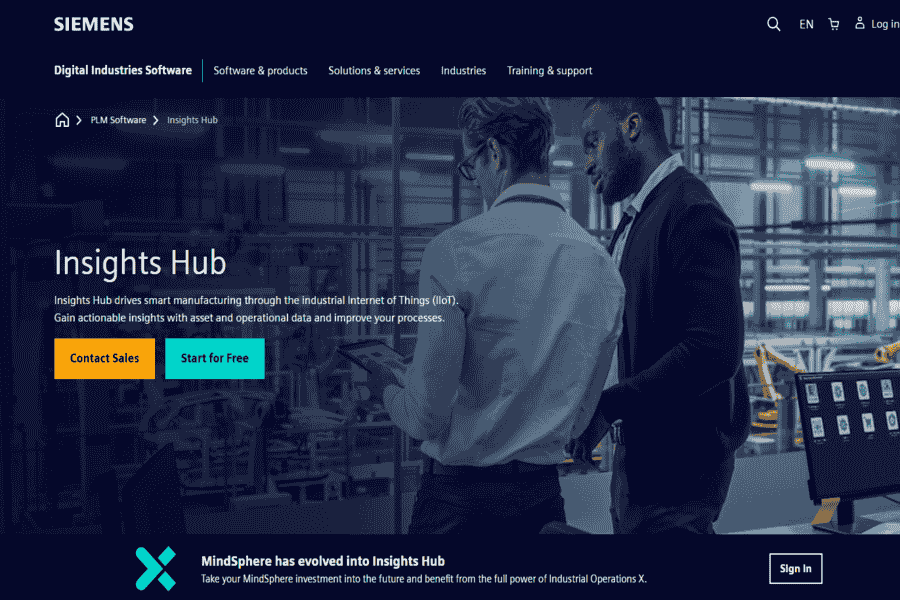
Insights Hub (formerly MindSphere) by Siemens is an industrial IoT platform integrating AI for predictive maintenance. It allows real-time monitoring, analysis, and decision-making for industrial assets.
Pros:
- Tailored for industrial operations
- Smooth integration with Siemens equipment
- Supports third-party IoT sensors and platforms
Cons:
- Requires technical expertise to configure
- Expensive for small businesses
Pricing Package:
Custom pricing based on the scope of deployment.
Social Media:
- Facebook: Siemens on Facebook
- Instagram: Siemens on Instagram
- Twitter: @Siemens
- LinkedIn: Siemens on LinkedIn
- YouTube: Siemens YouTube Channel
Contact Information:
- Email: [email protected]
- Contact Number: +49 (89) 636-00
Amazon Monitron
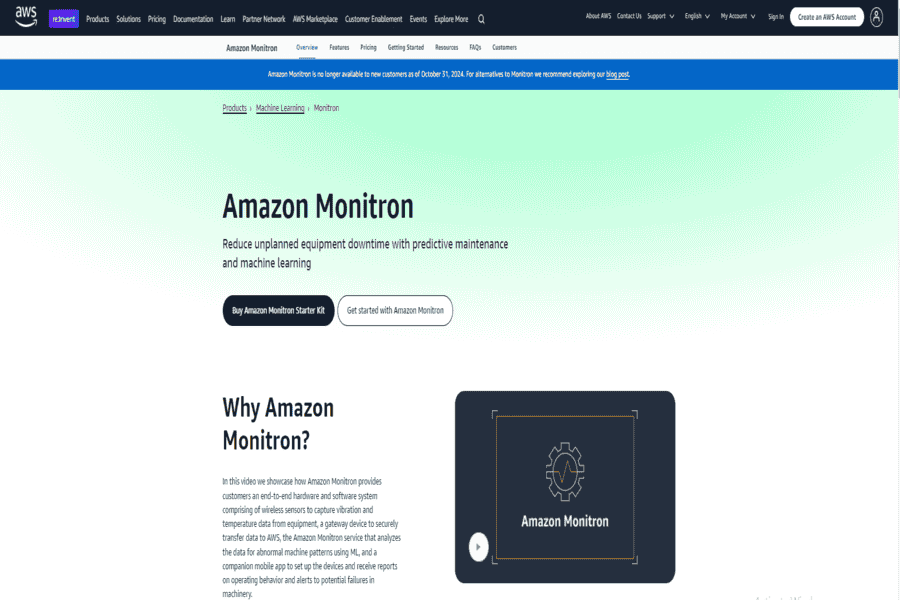
Amazon Monitron is an end-to-end system that uses IoT sensors and machine learning to monitor industrial equipment and provide predictive maintenance insights.
Pros:
- Easy to deploy and manage
- Integrated with the AWS ecosystem
- Affordable subscription plans for SMBs
Cons:
- Limited customization
- Focused on specific industrial setups
Pricing Package:
Starts at $50 per month; additional costs for sensors and setup.
Social Media:
- Facebook: AWS on Facebook
- Instagram: AWS on Instagram
- Twitter: @AWSCloud
- LinkedIn: AWS on LinkedIn
- YouTube: AWS YouTube Channel
Contact Information:
- Email: [email protected]
- Contact Number: +1 (206) 266-1000
Fluke Connect Condition Monitoring
Fluke Connect combines IoT and AI to monitor machine conditions and predict potential failures, helping organizations maintain equipment uptime.
Pros:
- Simple and intuitive interface
- Suitable for various industries
- Integrates with Fluke hardware tools
Cons:
- Requires Fluke devices for full functionality
- Limited features compared to enterprise-level tools
Pricing Package:
Contact Fluke for detailed pricing options.
Social Media:
- Facebook: Fluke on Facebook
- Instagram: Fluke on Instagram
- Twitter: @FlukeCorp
- LinkedIn: Fluke on LinkedIn
- YouTube: Fluke YouTube Channel
Contact Information:
- Email: [email protected]
- Contact Number: +1 (425) 347-6100
C3 AI Reliability
C3 AI Reliability offers predictive maintenance solutions that use advanced AI to detect anomalies, forecast failures, and optimize equipment performance.
Pros:
- Highly advanced AI algorithms
- Scalable for large enterprises
- Integrates with multiple data sources
Cons:
- Best suited for large organizations
- High implementation costs
Pricing Package:
Custom pricing based on deployment requirements.
Social Media:
- Facebook: C3 AI on Facebook
- Twitter: @C3_AI
- LinkedIn: C3 AI on LinkedIn
- YouTube: C3 AI YouTube Channel
Contact Information:
- Email: [email protected]
- Contact Number: +1 (650) 503-2200
Oden Technologies
Oden Technologies provides an AI-powered predictive maintenance and manufacturing optimization platform, helping businesses reduce downtime and increase operational efficiency.
Pros:
- Focused on manufacturing optimization
- Real-time insights and anomaly detection
- User-friendly dashboards
Cons:
- Limited applications outside manufacturing
- High initial investment
Pricing Package:
Custom pricing; contact Oden Technologies for more details.
Social Media:
- Facebook: Oden on Facebook
- Twitter: @OdenTech
- LinkedIn: Oden Technologies on LinkedIn
- YouTube: Oden Technologies YouTube Channel
Contact Information:
- Email: [email protected]
- Contact Number: +1 (646) 961-4482
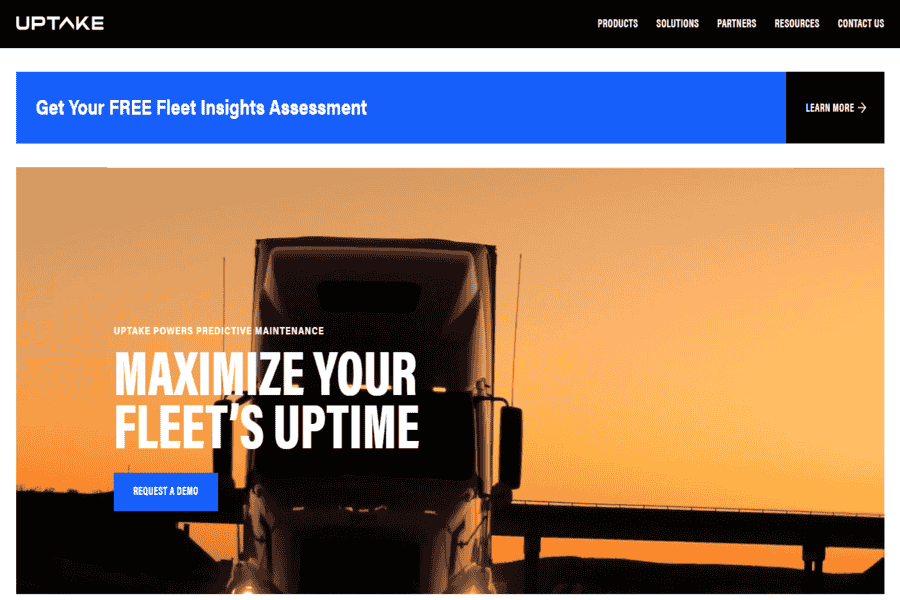
Uptake
Uptake provides an AI-driven industrial intelligence platform to predict equipment failures, improve operational efficiency, and optimize maintenance schedules.
Pros:
- Industry-specific solutions for transportation, manufacturing, and energy
- Comprehensive asset performance management
- Real-time analytics and insights
Cons:
- Requires strong data integration
- It may involve a steep learning curve for new users
Pricing Package:
Custom pricing based on deployment scope.
Social Media:
- Facebook: Uptake on Facebook
- Twitter: @Uptake
- LinkedIn: Uptake on LinkedIn
- YouTube: Uptake YouTube Channel
Contact Information:
- Email: [email protected]
- Contact Number: +1 (312) 242-2200
IBM Maximo Application Suite
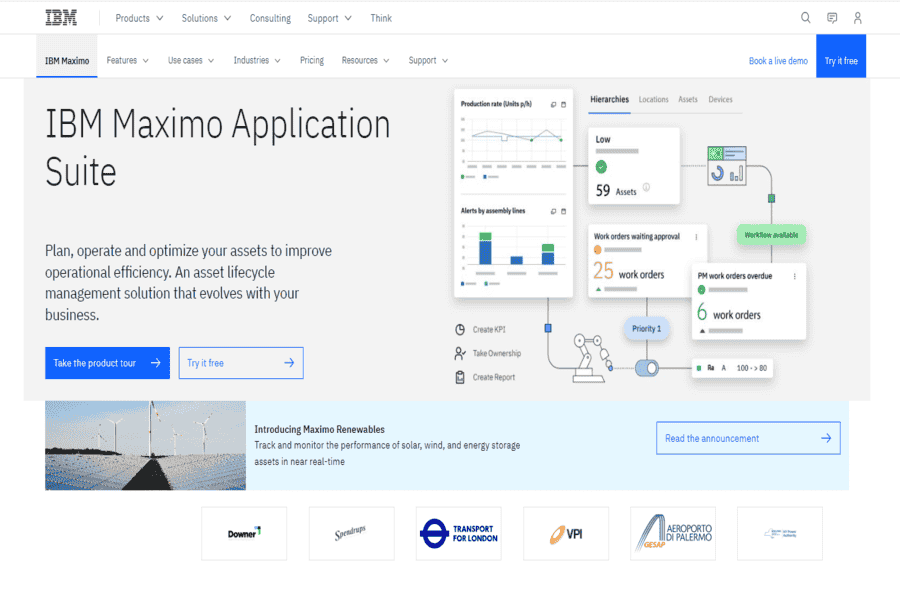
IBM Maximo is a complete suite of applications that uses AI for predictive maintenance, asset monitoring, and performance optimization.
Pros:
- Strong integration with IoT and AI technologies
- Scalable for industries like utilities, manufacturing, and healthcare
- Cloud and on-premise deployment options
Cons:
- Complex setup and management
- High costs for small-scale deployments
Pricing Package:
Subscription-based pricing; contact IBM for details.
Social Media:
- Facebook: IBM on Facebook
- Instagram: IBM on Instagram
- Twitter: @IBM
- LinkedIn: IBM on LinkedIn
- YouTube: IBM YouTube Channel
Contact Information:
- Email: [email protected]
- Contact Number: +1 (914) 499-1900
GE Vernova APM (Asset Performance Management)
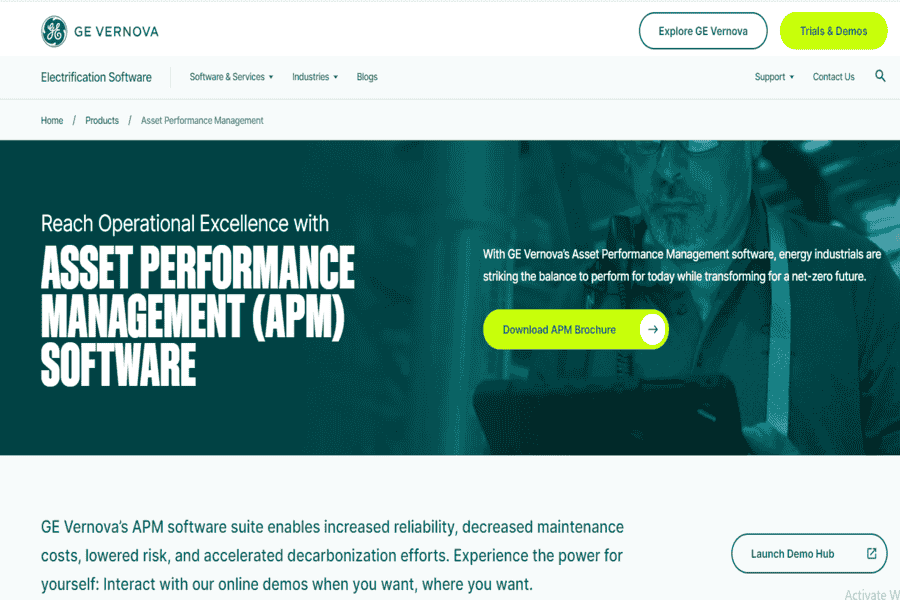
GE Digital APM uses advanced analytics and machine learning to monitor asset health, predict failures, and optimize maintenance processes.
Pros:
- Tailored for heavy industries such as energy and aviation
- Real-time monitoring with actionable insights
- Proven expertise in industrial asset management
Cons:
- Requires significant initial investment
- Best suited for large-scale enterprises
Pricing Package:
Custom pricing; contact GE Digital for details.
Social Media:
- Facebook: GE Digital on Facebook
- Instagram: GE on Instagram
- Twitter: @GEDigital
- LinkedIn: GE Digital on LinkedIn
- YouTube: GE Digital YouTube Channel
Contact Information:
- Email: [email protected]
- Contact Number: +1 (617) 443-3000
Softweb Smart Maintenance
Softweb Smart Maintenance is a predictive maintenance platform that uses IoT, AI, and machine learning to optimize equipment performance and reduce downtime.
Pros:
- Easy to implement and scale
- Provides detailed diagnostics and actionable insights
- Supports integration with existing systems
Cons:
- Limited features for advanced industrial use cases
- Dependent on IoT device compatibility
Pricing Package:
Contact Softweb Solutions for pricing information.
Social Media:
- Facebook: Softweb on Facebook
- Twitter: @Softweb
- LinkedIn: Softweb on LinkedIn
- YouTube: Softweb YouTube Channel
Contact Information:
- Email: [email protected]
- Contact Number: +1 (224) 545-5145
NEC Predictive Maintenance
NEC’s predictive maintenance solution uses AI and data analytics to detect abnormalities and predict potential failures in industrial equipment.
Pros:
- Global expertise in IT and AI solutions
- Tailored for diverse industries, including logistics and manufacturing
- Advanced visualization tools
Cons:
- It may require technical training for new users
- High customization costs for specific needs
Pricing Package:
Contact NEC for pricing details.
Social Media:
- Facebook: NEC on Facebook
- Instagram: NEC on Instagram
- Twitter: @NEC_corp
- LinkedIn: NEC on LinkedIn
- YouTube: NEC YouTube Channel
Contact Information:
- Email: [email protected]
- Contact Number: +81 (3) 3454-1111
Benefits of AI in Predictive Maintenance
The integration of AI in predictive maintenance offers numerous benefits, including:
Certainly, let’s explore deeper into the specific benefits of AI in predictive maintenance:
Reduced Downtime:
- Unplanned equipment failures can lead to large production disruptions, revenue losses, and customer dissatisfaction.
- By proactively identifying and addressing potential issues, AI-powered predictive maintenance minimizes the occurrence of unexpected breakdowns.
- This reduces downtime, allowing for uninterrupted production and improved operational efficiency.
Lower Maintenance Costs:
- Traditional reactive maintenance often involves costly emergency repairs and unplanned maintenance activities.
- AI-powered predictive maintenance helps to optimize maintenance schedules, reducing the frequency of unnecessary repairs and minimizing the need for emergency interventions.
- This leads to large cost savings in labor, spare parts, and overall maintenance expenses.
Increased Equipment Lifespan:
- By identifying and addressing potential issues early on, AI-powered predictive maintenance can extend the lifespan of equipment.
- Proactive maintenance interventions, such as component replacements and adjustments, can prevent further deterioration and extend the equipment’s operational life.
- This reduces the need for premature equipment replacements, which can be expensive and disruptive.
Improved Safety:
- Equipment failures can sometimes pose safety hazards, such as unexpected shutdowns, leaks, or mechanical failures.
- AI-powered predictive maintenance can help identify and mitigate these safety risks by detecting and addressing potential issues before they escalate.
- This enhances workplace safety, reduces the risk of accidents, and protects personnel and equipment.
Enhanced Operational Efficiency:
- AI-powered predictive maintenance enables more efficient use of maintenance resources.
- By optimizing maintenance schedules, prioritizing critical tasks, and reducing the need for emergency repairs, AI helps maintenance teams work more efficiently.
- This improves operational performance and provides a more simplified and cost-effective maintenance process.
Potential Challenges and Solutions
Challenges:
Data Quality:
Issue:
- The accuracy and reliability of AI models heavily depend on the data quality used for training. Inaccurate, incomplete, or biased data can lead to unreliable predictions and erroneous maintenance decisions.
Solution:
- Implement strong data collection processes to make sure accurate and consistent data acquisition from various sources (sensors, maintenance records, etc.).
- Establish rigorous data cleaning and preprocessing procedures to handle missing values, outliers, and inconsistencies in the data.
- Implement data quality checks and validation mechanisms to make sure data accuracy and integrity.
Model Development:
Issue:
- Developing and deploying effective AI models requires specialized data science, machine learning, and AI/ML engineering expertise.
Solution:
- Develop in-house expertise by hiring or training skilled data scientists and machine learning engineers.
- Collaborate with universities, research institutions, or AI/ML consulting firms to access specialized expertise and resources.
- Use pre-trained models and AI/ML platforms to accelerate model development and deployment.
Integration with Existing Systems:
Issue:
- Integrating AI-powered solutions with existing maintenance systems, enterprise resource planning (ERP) systems, and other operational systems can be complex and time-consuming.
Solution:
- Carefully plan and execute the integration process, considering existing system architectures and data flows.
- Use APIs and other integration technologies to facilitate data exchange and communication between different systems.
- Conduct thorough testing and validation to make sure smooth integration and data accuracy.
Explainability:
Issue:
- Many AI models, particularly deep learning models, can be complex and difficult to understand. This “black box” nature can hinder trust and adoption, as explaining the rationale behind the model’s predictions can be challenging.
Solution:
- Focus on developing and using explainable AI (XAI) techniques.
- Employ methods like feature importance analysis, decision tree visualization, and counterfactual explanations to provide insights into the model’s decision-making process.
- Prioritize the development of AI models that are inherently more interpretable, such as simpler models or rule-based systems.
The Future of AI in Predictive Maintenance
Increased Automation:
Beyond basic tasks:
AI will move beyond automating simple data analysis and begin to automate more complex maintenance tasks. This could include:
Autonomous inspections:
Robots and drones with AI and sensors can autonomously inspect equipment, identify anomalies, and even perform minor repairs.
Automated scheduling and dispatch:
AI can optimize maintenance schedules, automatically dispatch technicians, and even inventory spare parts.
Automated report generation:
AI can automatically generate reports on equipment health, maintenance activities, and performance metrics, providing valuable insights to decision-makers.
Enhanced Predictive Accuracy:
Advancements in deep learning:
- Deep learning algorithms, particularly those using neural networks and convolutional neural networks, are constantly evolving and becoming more sophisticated.
- This will lead to more accurate and reliable failure predictions, enabling more proactive and targeted maintenance interventions.
Using multi-modal data:
AI models can well integrate and analyze data from multiple sources, such as sensor data, historical maintenance records, environmental data, and social media sentiment. This multi-modal approach will significantly enhance the accuracy and reliability of failure predictions.
Greater Integration with IoT:
Edge computing:
The rise of edge computing will enable real-time data processing and analysis at the network’s edge, closer to the equipment. This will reduce latency, improve data security, and enable faster response times to critical events.
Digital twins:
The development of digital twins, virtual replicas of physical assets, will enable real-time simulations and “what-if” analysis. This will allow maintenance teams to test different maintenance scenarios, optimize maintenance strategies, and minimize the risk of unexpected failures.
Predictive analytics platforms:
The emergence of advanced predictive analytics platforms will provide businesses with a unified platform for data collection, analysis, and visualization. These platforms will enable real-time monitoring of equipment health, proactive failure prediction, and optimized maintenance scheduling.
AI is transforming the landscape of predictive maintenance, enabling businesses to optimize equipment performance, reduce costs, and enhance overall operational efficiency. By embracing AI-powered solutions, organizations can proactively address equipment failures, minimize downtime, and gain a competitive edge in today’s dynamic business environment. By well using AI Tools for Predictive Maintenance, businesses can use real-time data analysis, machine learning algorithms, and predictive modeling to identify potential equipment failures before they occur, minimizing costly downtime and making sure uninterrupted operations.