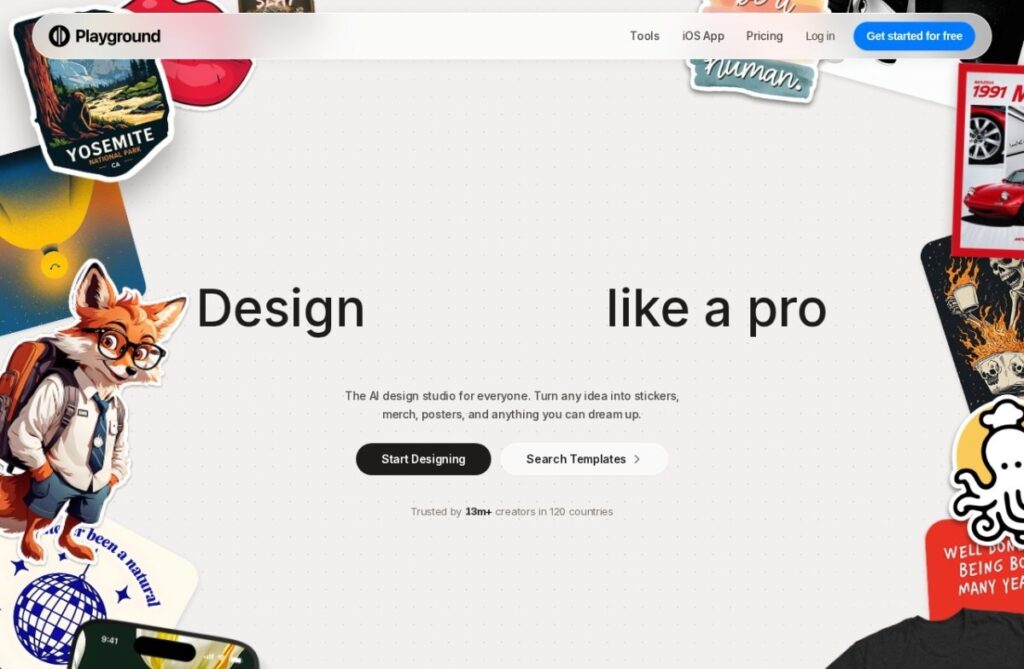
Playground trains its own foundation models rather than relying solely on licensed third-party engines, and its versions have scored well in independent aesthetic-preference benchmarks against bigger-name competitors. That in-house model sits inside a canvas-based editor built for compositing, resizing, and layering generated elements, closer to a design tool than a single-prompt generator.
That canvas approach matters most for design-conscious users: rather than generating one image and starting over for variations, a user can expand canvas, inpaint specific regions, and combine multiple generations into one composition without leaving the app. Playground has also been known for unusually generous free-tier usage limits relative to competitors, though any specific number is worth confirming directly since these limits shift over time.
Paid plans start around $12 a month for expanded generation limits and commercial licensing. For a designer who wants fine compositional control over AI-generated elements rather than accepting whatever a single generation produces, Playground's canvas-first workflow allows more hands-on editing than most prompt-box competitors.