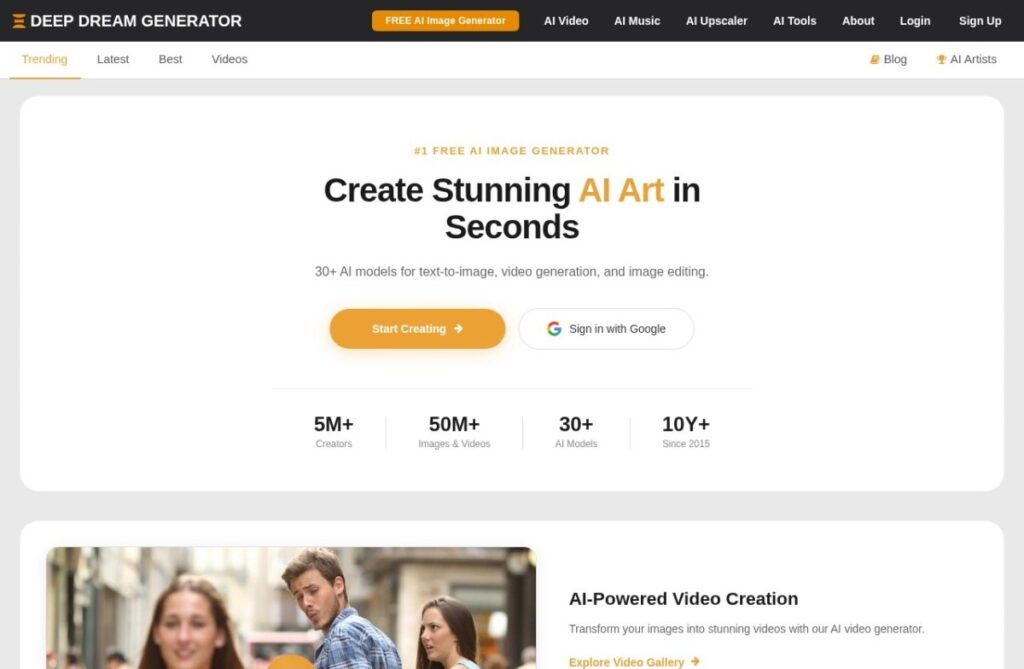
Deep Dream Generator predates GANs and diffusion models entirely. It's built on Google's original DeepDream algorithm, released in 2015, the same research that produced the psychedelic, pattern-hallucinating dog-and-eye imagery that first made AI-generated visuals a viral phenomenon well before Midjourney or DALL-E existed.
That heritage still shapes the tool's identity: it leans into surreal, dreamlike transformations of existing photos rather than photorealistic generation from a blank prompt, layering recognizable patterns and textures over an uploaded image in a way modern diffusion tools don't directly replicate. Newer style and text-to-image modes have been added over the years, but the DeepDream-style transformation remains its most distinctive feature.
A free tier covers basic generation with usage limits; paid plans start around $19 a month for faster processing and higher resolution. It won't compete with modern tools on realism or prompt precision, but for the specific psychedelic, hallucinatory aesthetic it pioneered, Deep Dream Generator remains one of the only places to get that exact look.