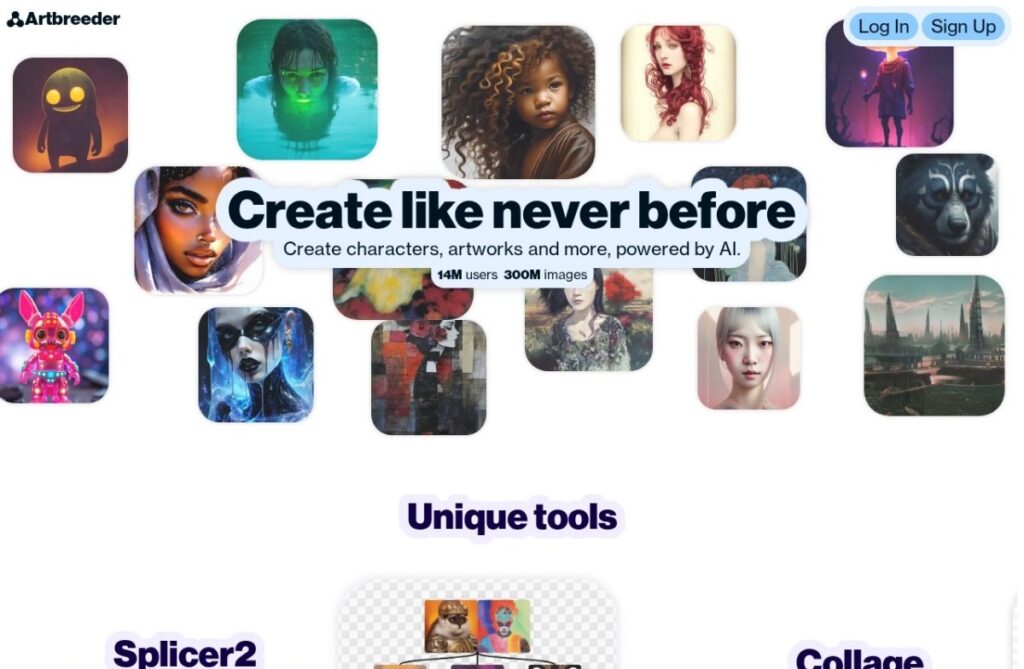
Artbreeder launched in 2018, before diffusion models existed, and it still runs on the older GAN architecture (BigGAN and StyleGAN) that shaped it. That history explains why the tool doesn't work like a typical prompt box: instead of describing an image in text, users blend existing images together, adjusting sliders for age, style, or expression, and breed new variations from the results.
That crossbreeding mechanic created a genuinely different culture around the tool. Portraits, landscapes, and creatures posted publicly can be forked and remixed by other users the way a GitHub repository gets forked, so a single popular image can spawn hundreds of derivative versions, a collaborative structure most text-to-image tools don't have at all.
A free tier with limited generations covers casual experimentation, and paid plans start around $8 a month for more image credits and higher resolution exports. Artbreeder rewards people who enjoy iterating visually rather than writing precise prompts, and its GAN-based aesthetic, dreamlike and sometimes uncanny, still looks distinct from the sharper, more literal output of newer diffusion tools.