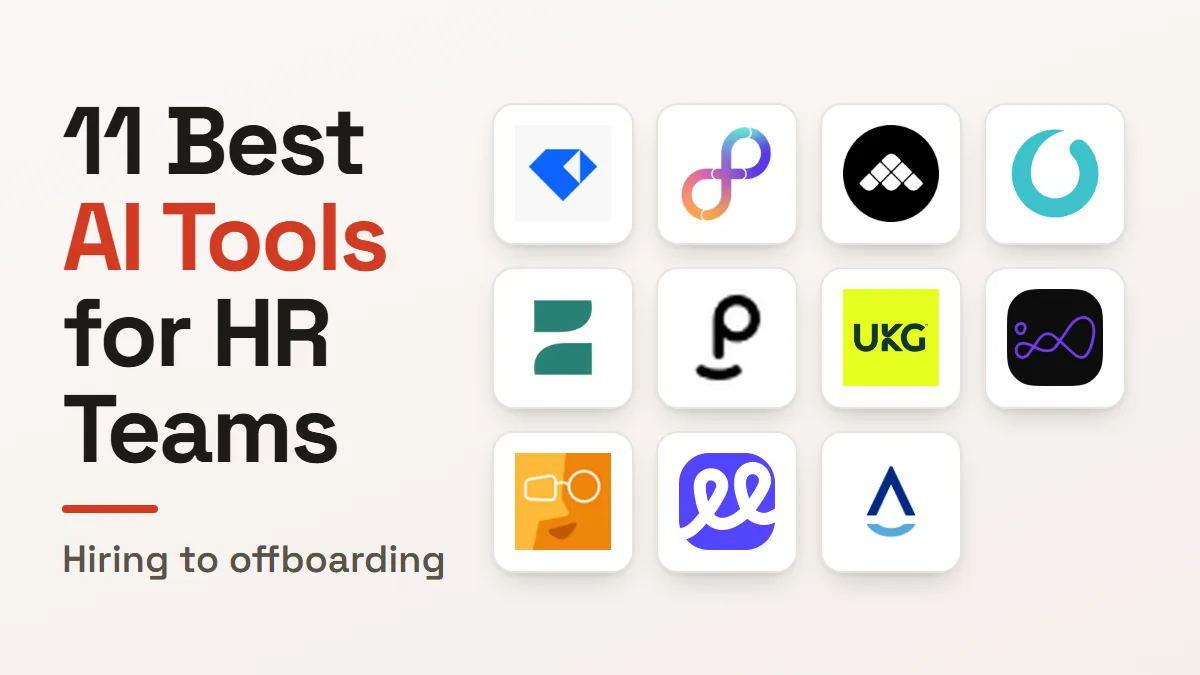
If you want the best AI tool for HR teams and you’re starting from nothing, Gem is the highest-rated in our catalogue at $99 a month. Metaview is the one you can try free today.
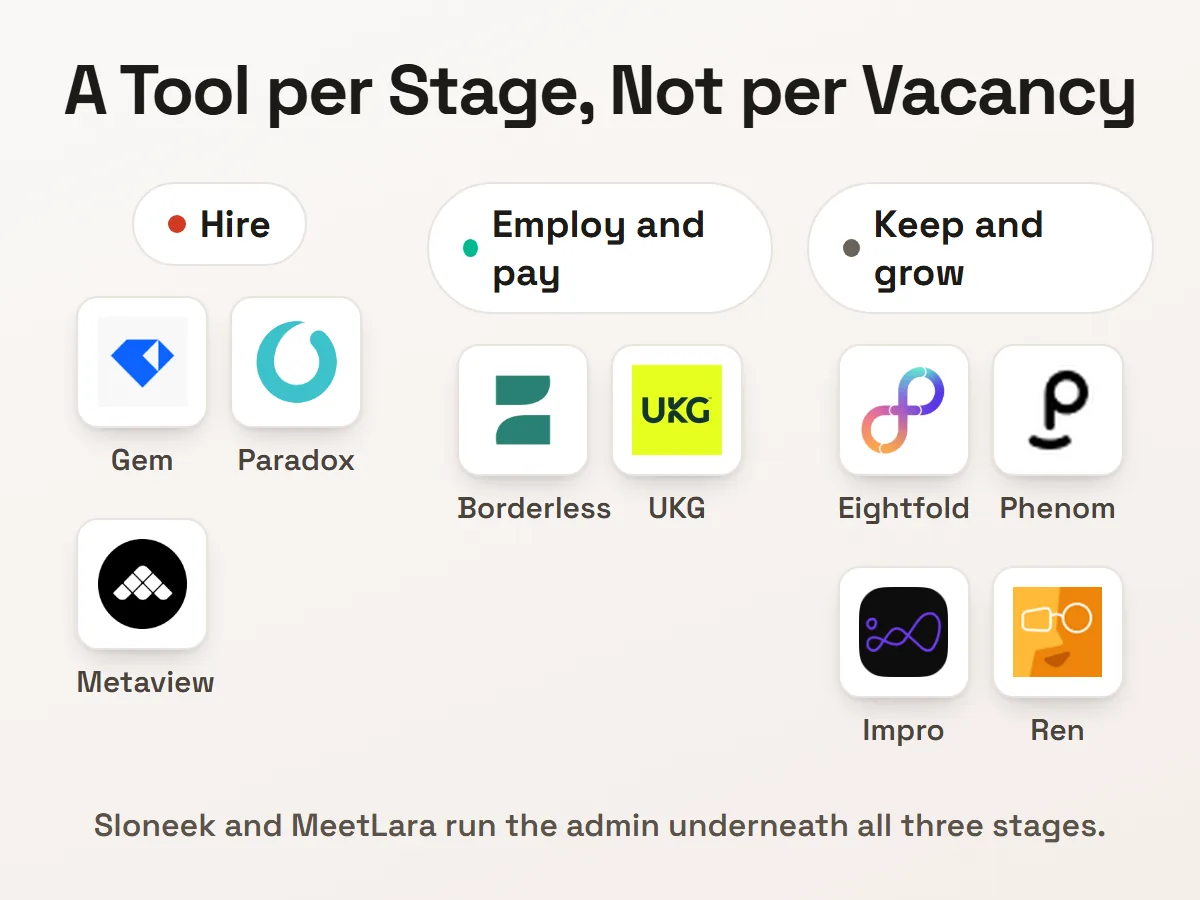
The eleven below span the whole function, not one corner of it. Seven of them do work no recruiting tool touches: payroll, employment across borders, core records, coaching and the conversations managers avoid.
How this list is ordered, and what it leaves out
These eleven are ordered by our editorial rating, then by whether a free plan exists, then by starting price. That rating comes from reviewing each product’s features, pricing and positioning against the rest of our HR tools catalogue.
We don’t run these platforms against a shared test workforce, so you won’t find a time-to-hire figure from us. Every price and limitation below is drawn from that product’s listing, each of which carries its own last-reviewed date.
The selection needs explaining. Our HR category holds 50 listings, and the highest-rated are nearly all recruiting products. A straight rating sort would have produced a sourcing list we’ve already published.
This one is picked across the employee lifecycle instead. For hiring specifically, our roundups of AI recruiting software and AI recruiting and screening go deeper than a general list can.
| Tool | Rating | Free plan | From | Covers |
|---|---|---|---|---|
| Gem | 4.4 | No | $99 | Hiring, end to end |
| Eightfold AI | 4.4 | No | $15,000 | Skills and internal moves |
| HONO | 4.4 | No | On request | Hire to retire (Chat First HRMS) |
| Metaview | 4.3 | Yes | $20 | Interview notes |
| Paradox | 4.3 | No | $1,000 | High-volume hourly hiring |
| Borderless AI | 4.1 | No | $49 | Employment across borders |
| Phenom | 4.1 | No | On request | Careers site and mobility |
| UKG | 4.1 | No | On request | Payroll and shift work |
| Impro | 4.0 | No | On request | Performance coaching |
| Ren | 3.9 | Yes | $595 | Coaching managers live |
| Sloneek | 3.9 | No | On request | One system for everything |
| MeetLara | 3.9 | No | On request | Employee conversations |
1. Gem
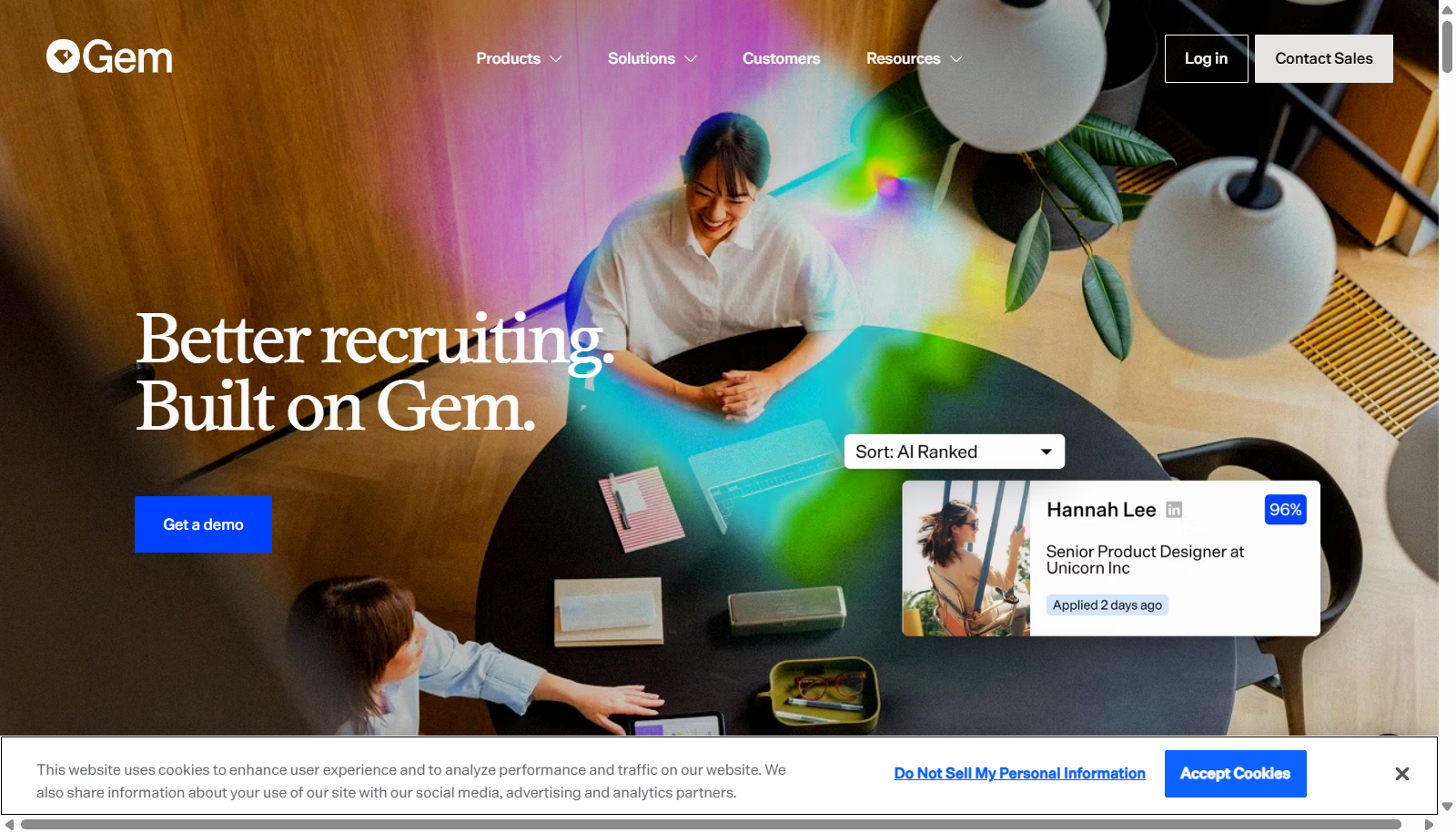
Gem puts applicant tracking, candidate relationships, sourcing, scheduling and analytics in one platform, with AI inside each step. Nick Bushak and Steven Bartel founded it in 2017.
Teams using it report processing twice the applications and cutting time-to-fill by 25%. It holds 4.8 out of 5 on G2, among the highest in recruiting software, and eligible startups get six months free.
Plans start around $99 a month with no free tier. Two costs: it prices above single-purpose tools, and the all-in-one scope is wasted if your applicant tracking already lives elsewhere.
Its startup programme is the detail most reviews miss. Eligible companies get six months free, which turns a $99 platform into a first-year trial. After that the all-in-one scope only pays if you retire the tools it replaces.
2. Eightfold AI
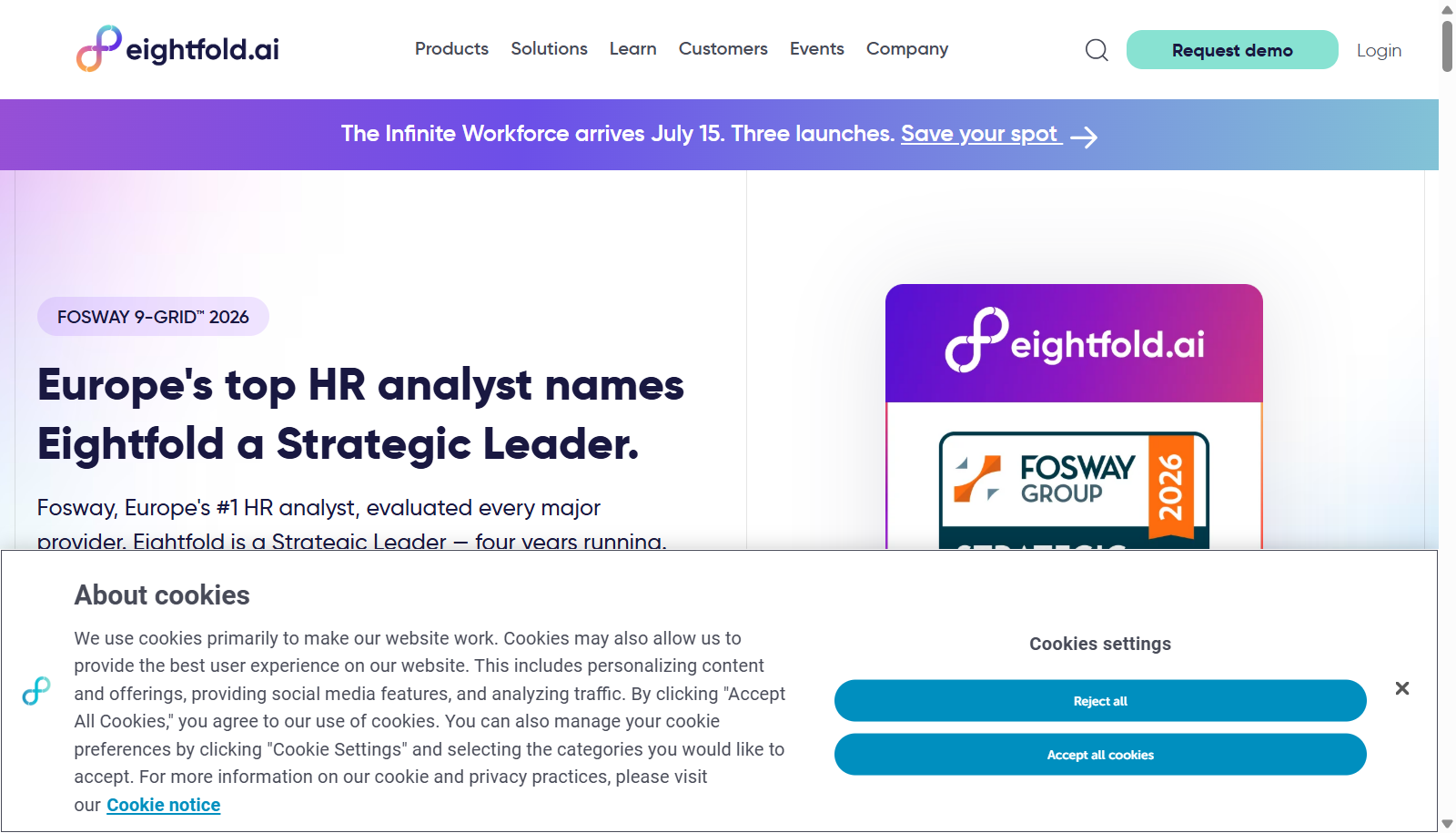
Eightfold AI matches people to roles on skills rather than job titles, and it does that for your existing staff as well as candidates. Two former Google engineers founded it in 2016.
That single data model is why it’s here rather than in a recruiting list. The same skills map drives internal moves and outside hiring, which is the join most HR stacks never make.
Pricing isn’t published and our listing records $15,000 as the entry point, with deployments running into six figures. It’s deeper than a small team will ever use, and it needs buy-in well beyond HR.
The founders came from Google, and the data model shows it. Skills are inferred rather than typed in, so an employee’s profile updates as their work changes. Deployments run enterprise-tailored, which is another way of saying slow.
3. HONO
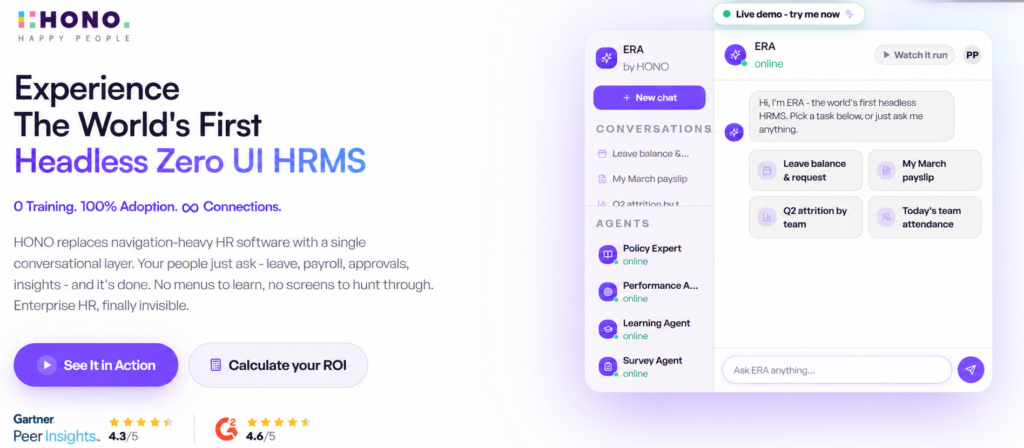
HONO is an enterprise HR platform that manages the employee journey from hiring to exit. It brings core HR, payroll, talent management and workforce analytics into one system, so employee information stays connected throughout.
One of its main features is ERA, a conversational HR assistant. Instead of going through different menus and dashboards, employees and managers can simply ask ERA what they need. For example, they can check leave balance, approve a request, view payroll details or get a headcount report.
ERA can also work through Slack, Microsoft Teams and WhatsApp. It supports different languages, which makes it easier for employees, supervisors and managers who may not be comfortable using traditional HR software.
HONO is designed for businesses with different types of employees and work environments. It can support companies in sectors such as manufacturing, retail, banking and hospitality, where shifts, workforce policies and HR processes can vary.
Pricing is available on request and is mainly suited for larger organisations. For a small company operating in one country, the platform may offer more than what is needed. It becomes more useful for businesses working across several countries or legal entities, especially where payroll rules and local compliance requirements are different.
4. Metaview
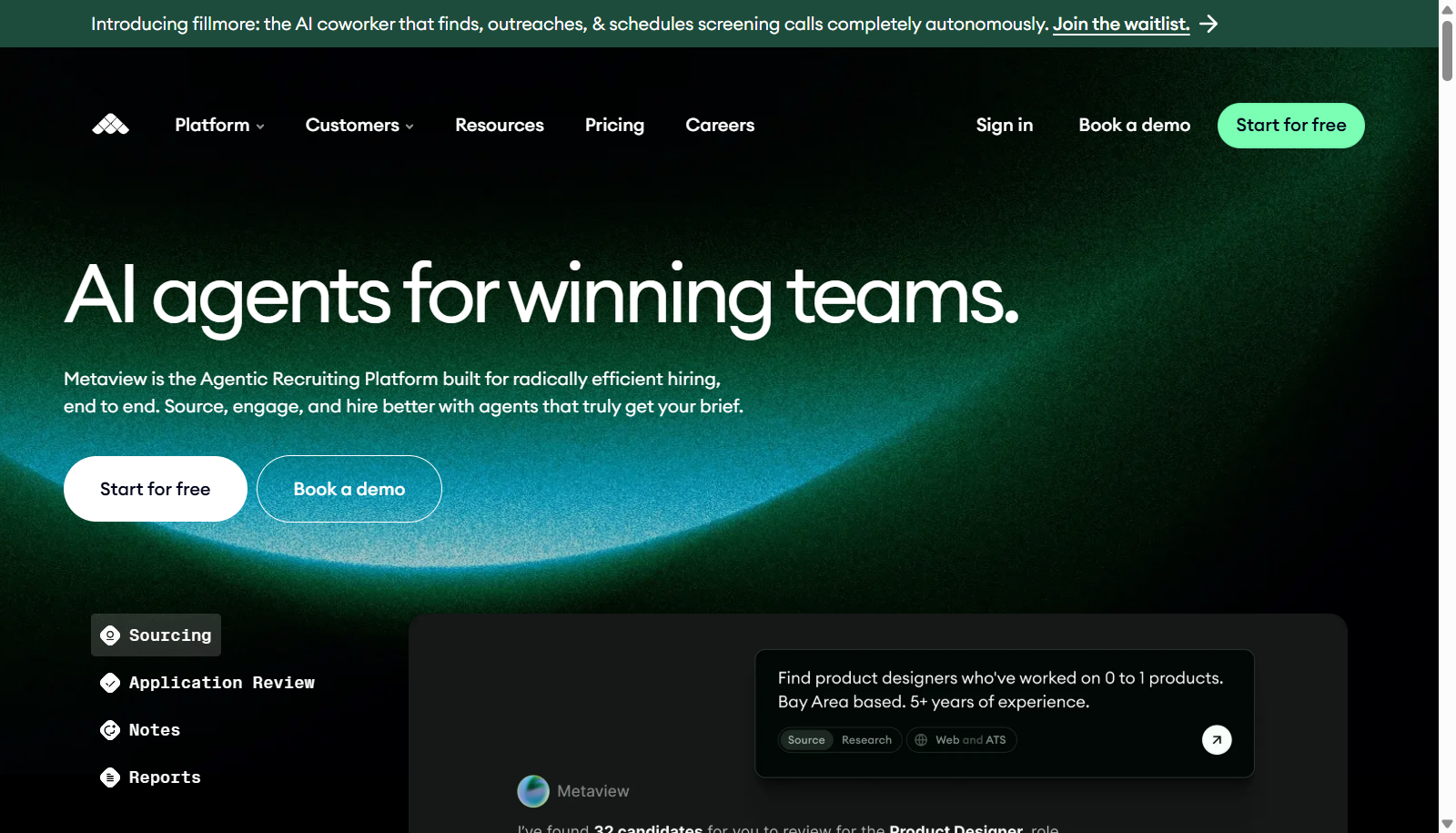
Metaview records and summarises interviews automatically, and it structures the output by competency rather than leaving a recruiter typing during the conversation. It captures from Zoom, Google Meet and Microsoft Teams.
Notes push straight into Greenhouse, Lever and Workday. Worth knowing: its own site now leads with an agentic recruiting platform that sources and engages, well beyond the note-taking our listing describes.
A free plan covers five calls and paid plans start at $20 a month, the cheapest here. The core plan caps you at twelve calls a month, which a busy interviewer passes in a week.
The integrations decide whether it sticks. Notes push into Greenhouse, Lever and Workday automatically, so a recruiter never copies anything across. Capture works from Zoom, Google Meet and Microsoft Teams without setup per call.
5. Paradox
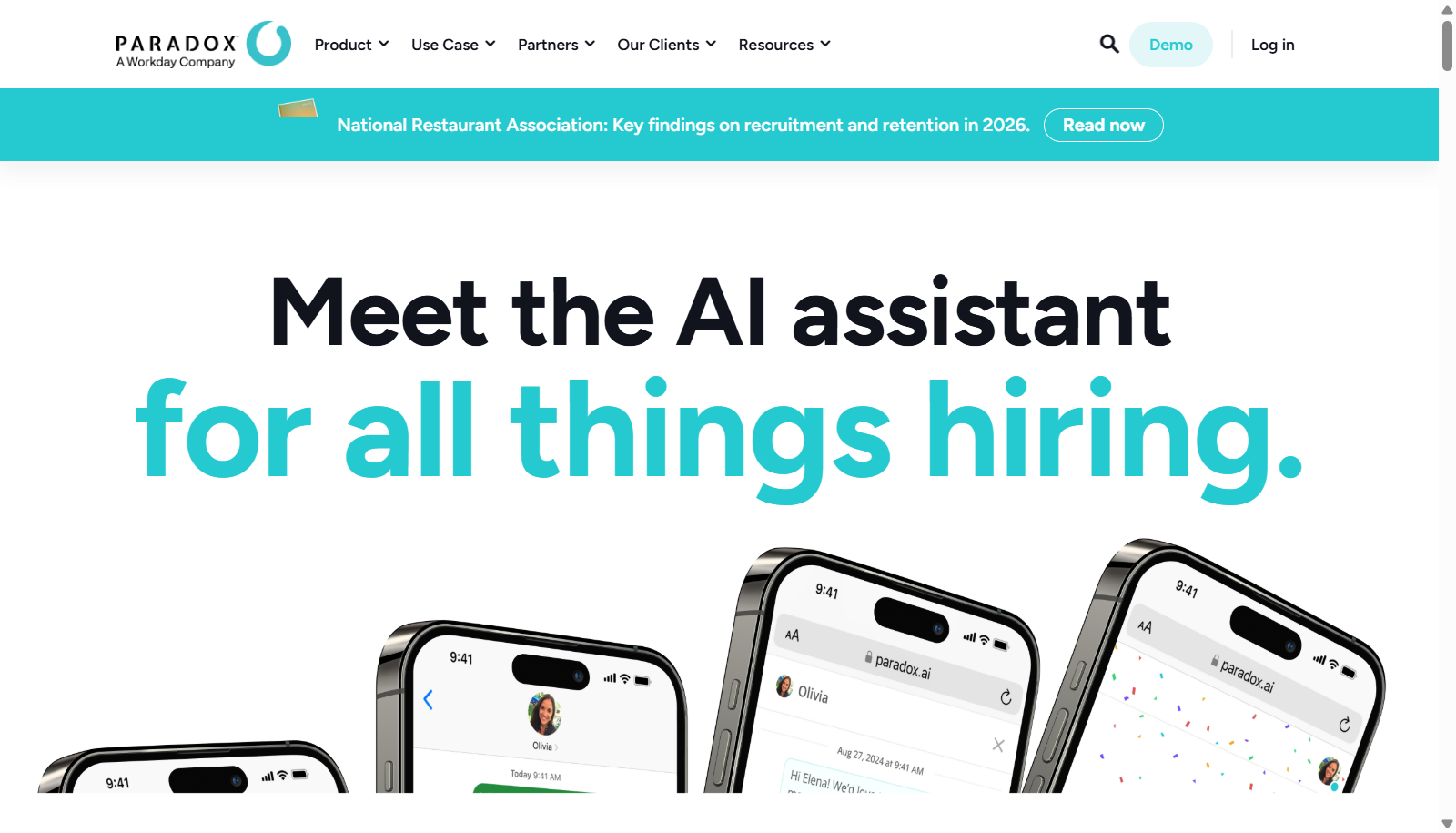
Paradox is built around an assistant called Olivia, which screens applicants, books interviews and answers questions over text and chat. It runs around the clock in more than 100 languages.
It’s aimed squarely at hourly and frontline hiring, where a slow reply loses the candidate. Its site header now reads “A Workday Company”, which our listing hasn’t caught up with.
Nothing is published on price, our listing records $1,000 as the entry point, and there’s no self-serve tier. It’s built for volume, so a small or executive search is the wrong fit.
Volume hiring is a different job from executive search, and the design admits it. Olivia answers in seconds because an hourly candidate applies to five employers the same evening. It connects to the main applicant tracking systems.
6. Borderless AI
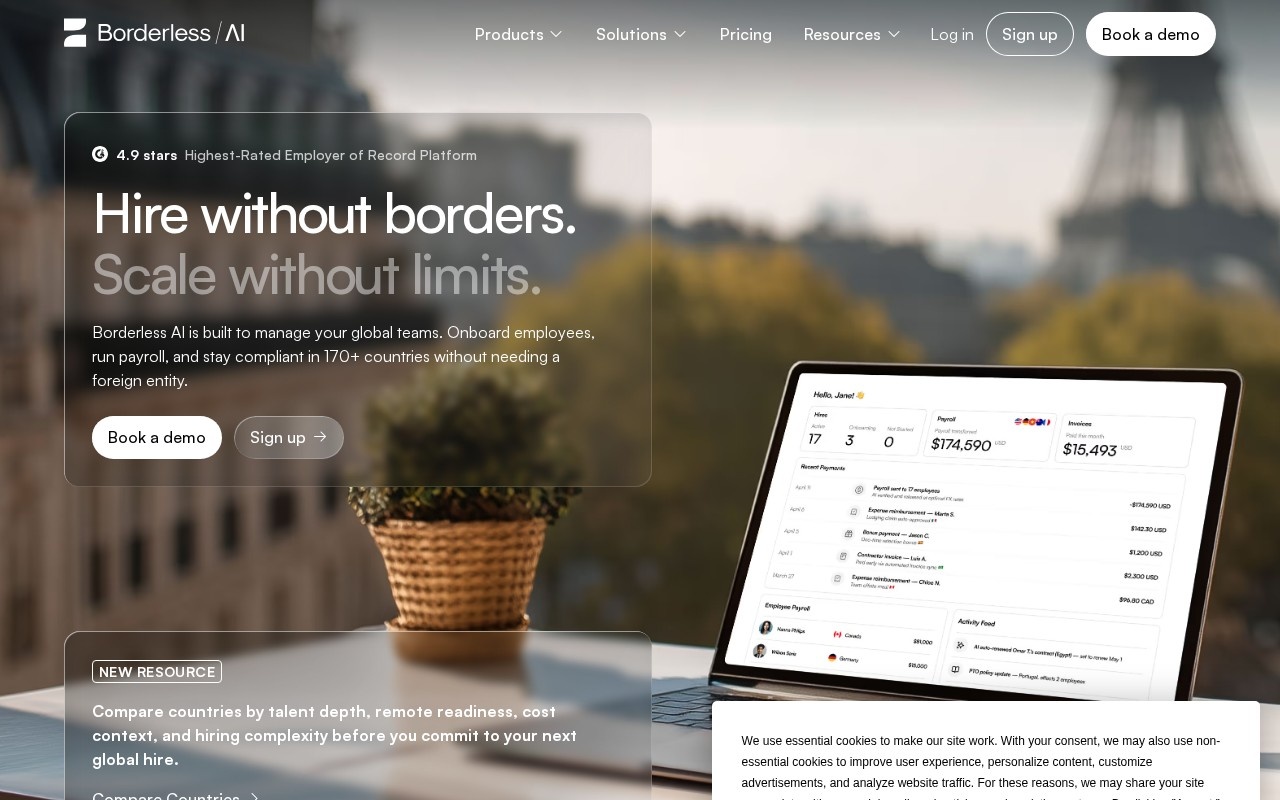
Borderless AI lets you employ and pay people in other countries without opening a local entity, covering 50-plus countries. Willson Cross and Sean Aggarwal founded it in Toronto in 2022.
Its assistant answers compliance questions from your own HR data and employment law, and a second copilot drafts and risk-checks contracts. A public calculator shows cost by country before any sales call.
Our listing records $49 as the entry point, and its own limitation notes $579 per employee per month for full cover. Founded in 2022, it has a shorter compliance record than decade-old incumbents.
The public calculator is unusual in this market. Cost by country appears before any sales conversation, where most employer-of-record vendors quote privately. Compliance answers still need a lawyer on anything consequential.
7. Phenom
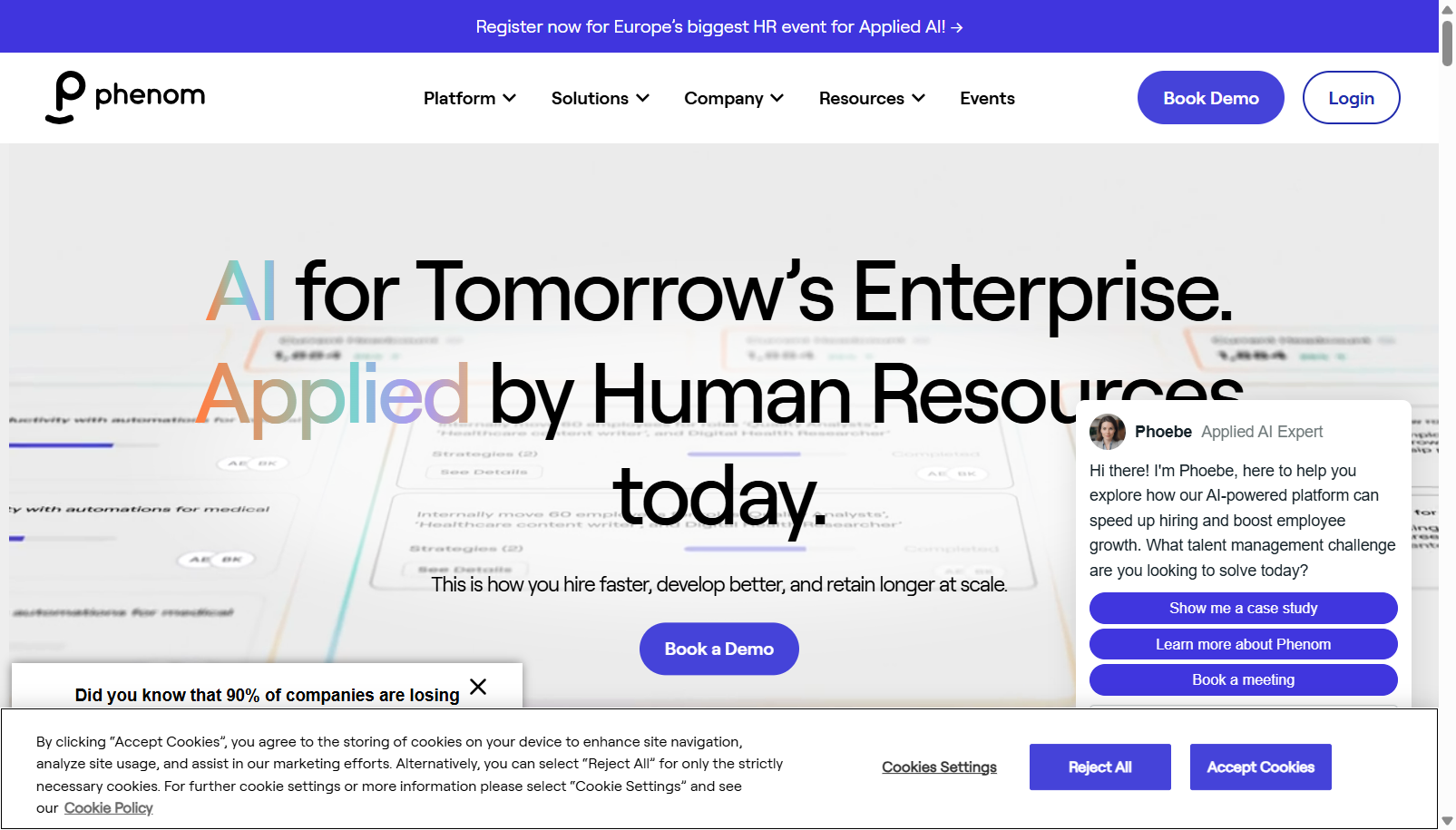
Phenom has been running since 2010 and covers sourcing, personalised career pages and predictive analytics on hire quality in one system.
Like Eightfold, it joins outside hiring to internal career moves rather than treating them as separate departments. It reached a $1.3 billion valuation and merged with skills company Plum in April 2026.
Pricing goes through sales with nothing published. The breadth across sourcing, career pages and mobility adds real onboarding complexity, and it’s oversized for a smaller company.
The Plum merger in April 2026 added skills intelligence to what was a candidate experience platform. That closes the same loop Eightfold sells, and it arrives as an integration rather than one system, which is worth asking about.
8. UKG
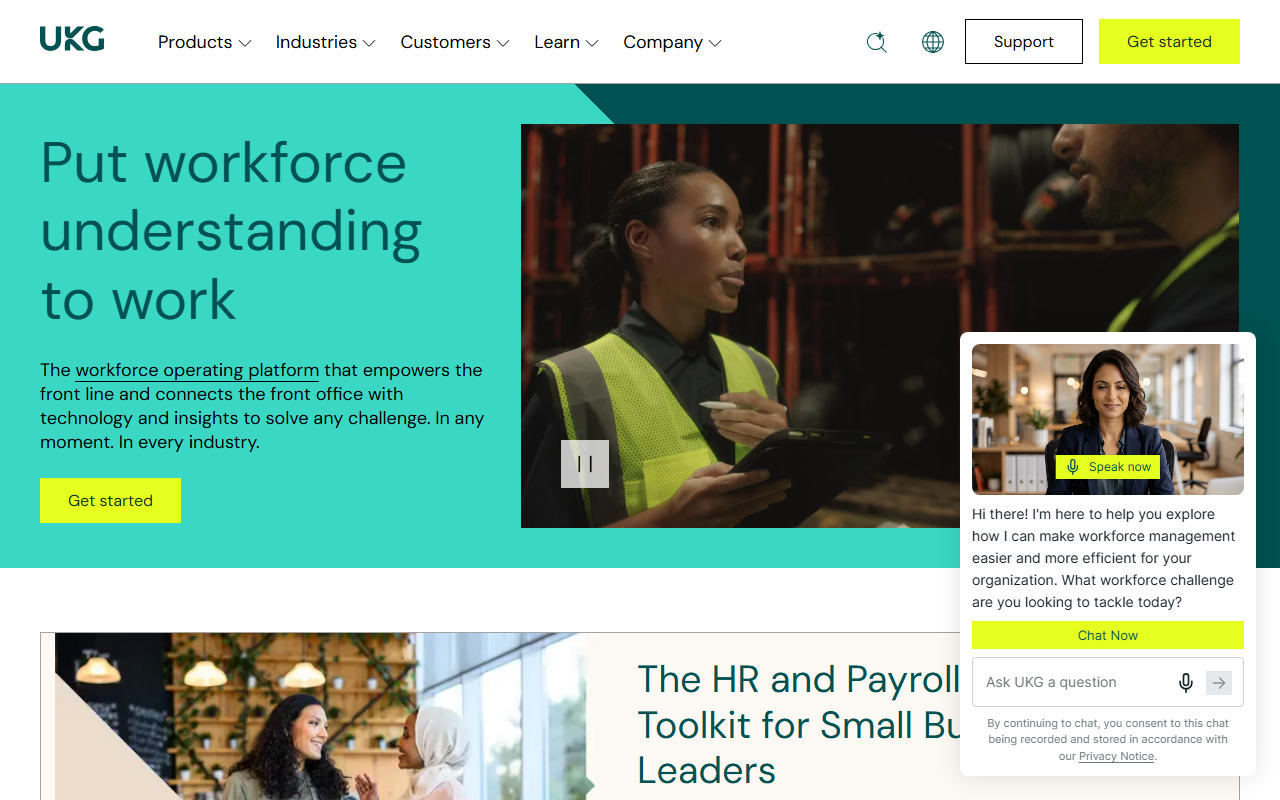
UKG covers HR, payroll and workforce management together, with AI grounded in the workforce data it already processes at scale.
That data position is the actual argument. Scheduling and labour models are only as good as the history behind them, and it has decades of it across manufacturing, public sector, hospitality, logistics and retail.
Pricing goes through enterprise procurement. Expect implementation weight to match, and if your payroll is simple you’re buying a platform built for shift and deskless work you don’t do.
Industry depth is the real differentiator. Shift and deskless work carry labour rules that generic payroll gets wrong, and the compliance handling is the product for manufacturing, hospitality, logistics and the public sector.
9. Impro
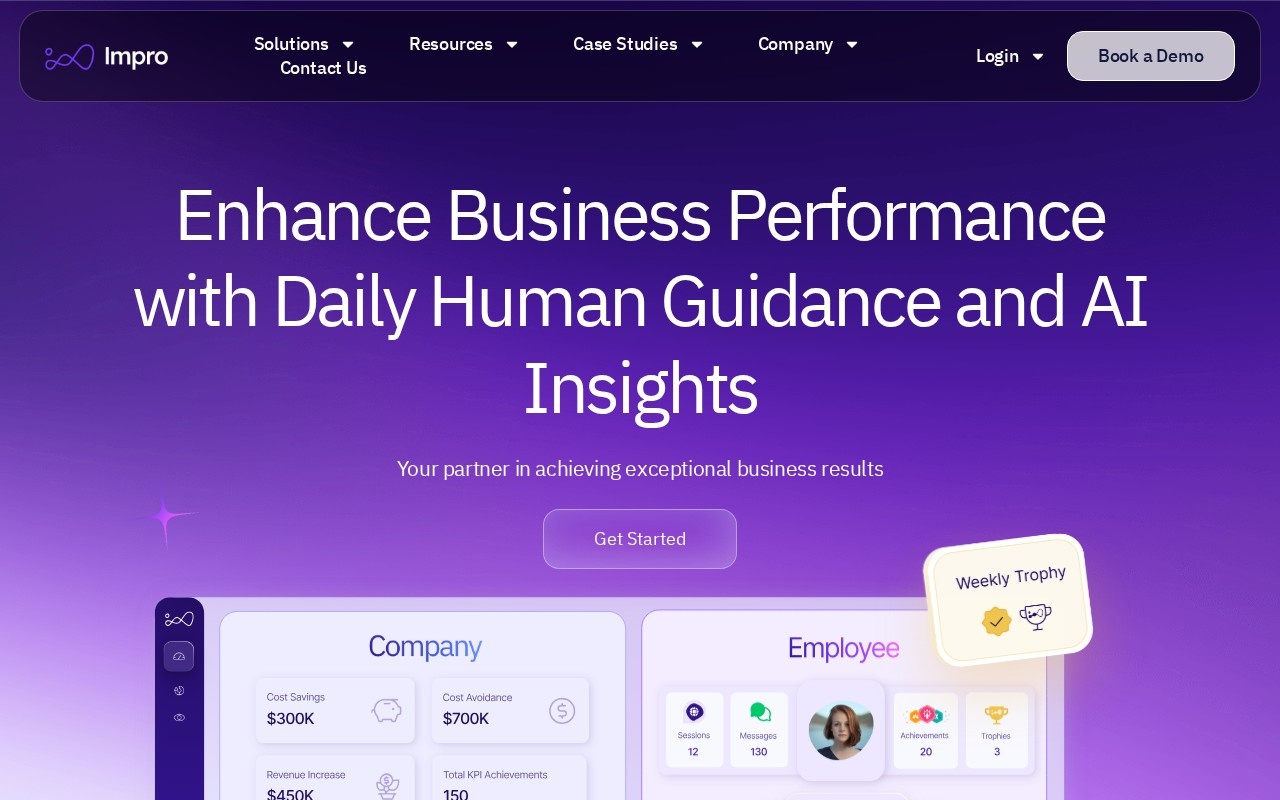
Impro pairs a human performance strategist with an assistant that reads coaching sessions for behavioural patterns and sends daily guidance. It started in Vancouver in 2020.
The hybrid is the design, not a compromise. One strategist scales across more than 100 employees, with dashboards giving managers and executives a team-level view.
Nothing is published on price. Because a person sits in the loop, cost and rollout speed scale with headcount in a way pure software doesn’t. There’s little public detail on the model behind it.
The strategist model caps how fast it scales. One person covers more than 100 employees, so rollout speed tracks hiring at the vendor, not your timeline. Dashboards give managers and executives a team-level view.
10. Ren
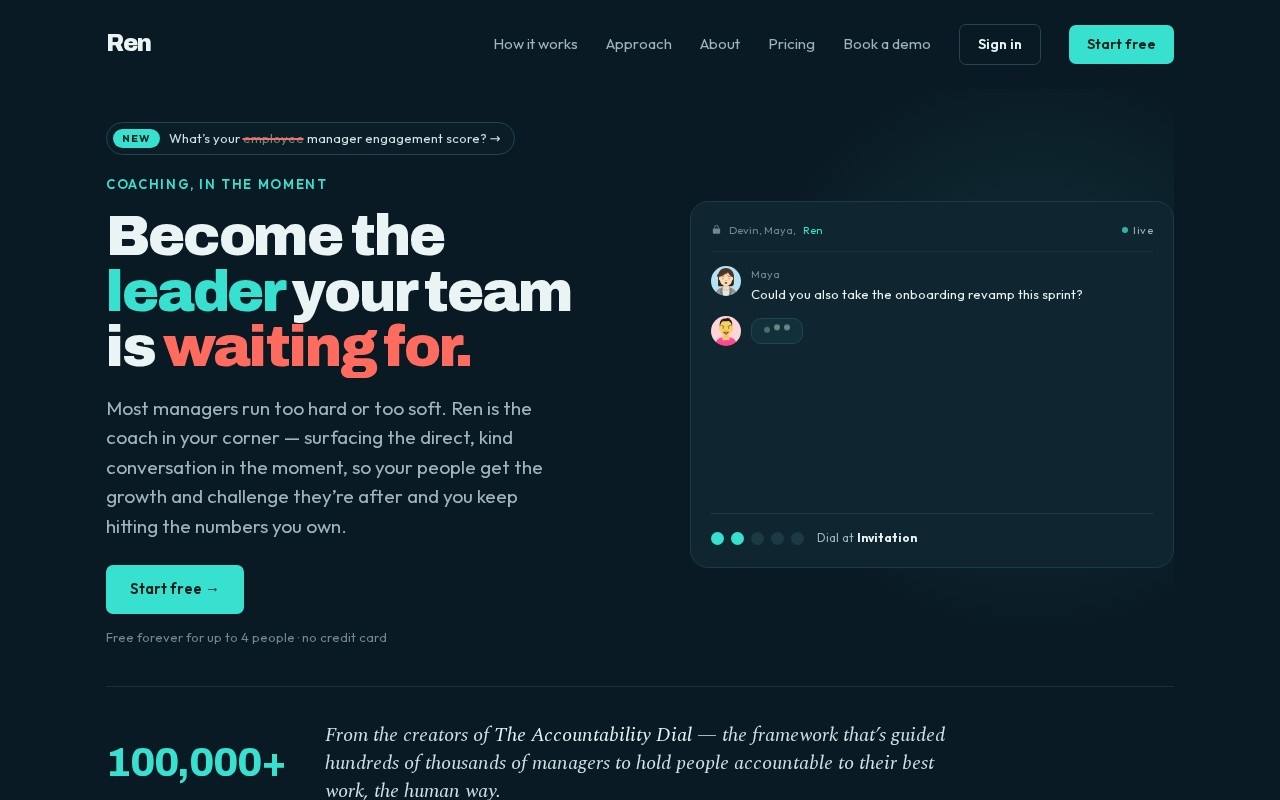
Ren watches Slack, Zoom transcripts and Google Calendar for the moment a manager should be having a conversation they’re avoiding, then coaches them privately.
Timing is the whole product. Management training normally arrives months before it’s needed, where this one arrives on the morning of the difficult conversation, with a brief on what’s coming.
It’s free for up to four people, then $595 a month for ten, a high per-person cost. Two things to settle first: it reads Slack and Zoom transcripts, which staff must be told, and it coaches both sides of the same conversation.
The Accountability Dial is the framework underneath it, advancing as a situation develops rather than waiting for a review cycle. A Morning Brief lists what’s coming. It’s free for up to four people, which makes trialling it cheap.
11. Sloneek
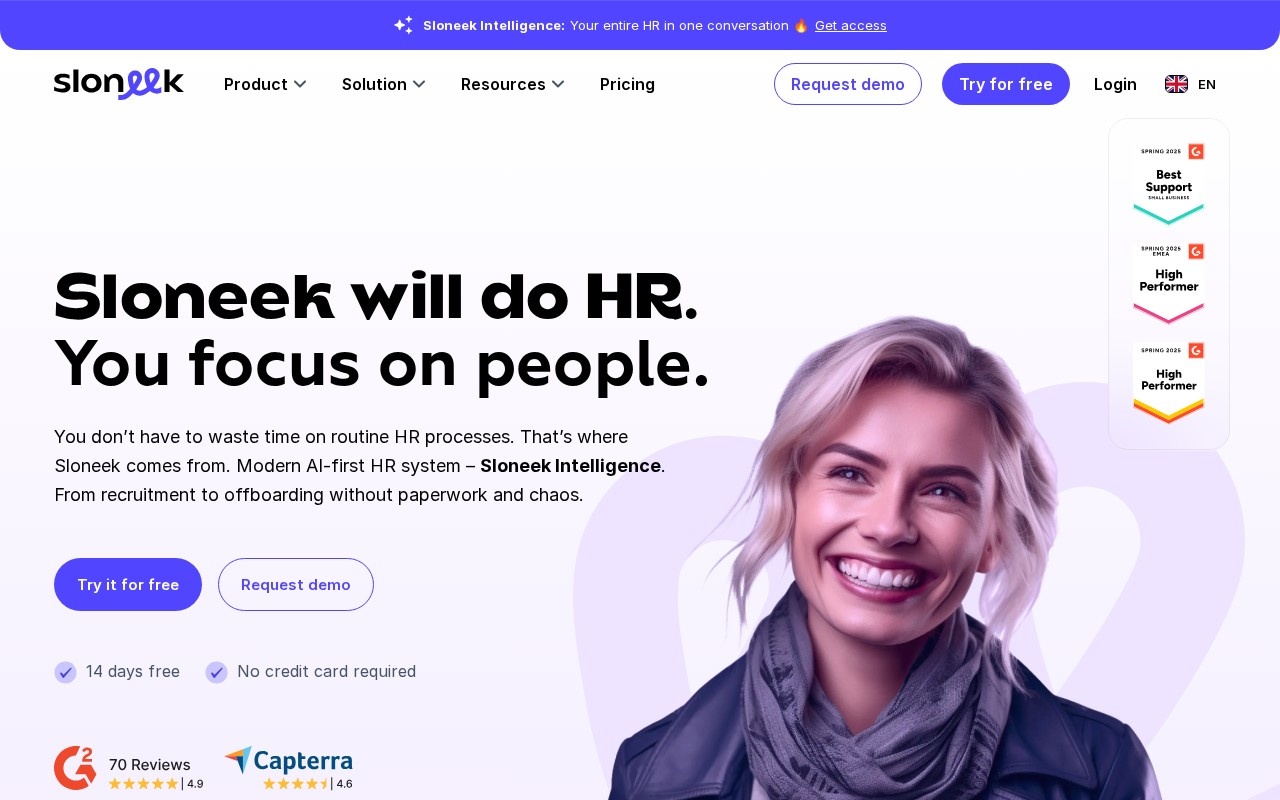
Sloneek runs the whole employee lifecycle in one system: records, documents and assets, time and absence, performance reviews with 360 feedback, hiring, onboarding, offboarding and payroll.
Consolidation is the argument. For a mid-sized company that’s a good one, because the alternative is five subscriptions that don’t agree on who works there.
No pricing figures are published. The catch is structural: all-in-one is rarely best at any single job. Adopting it means migrating every existing system at once, not one at a time.
Consolidation cuts both ways. One system means one source for headcount, and it also means one vendor holding records, time, performance and payroll. Sloneek Intelligence is the assistant layer sitting over all of it.
12. MeetLara
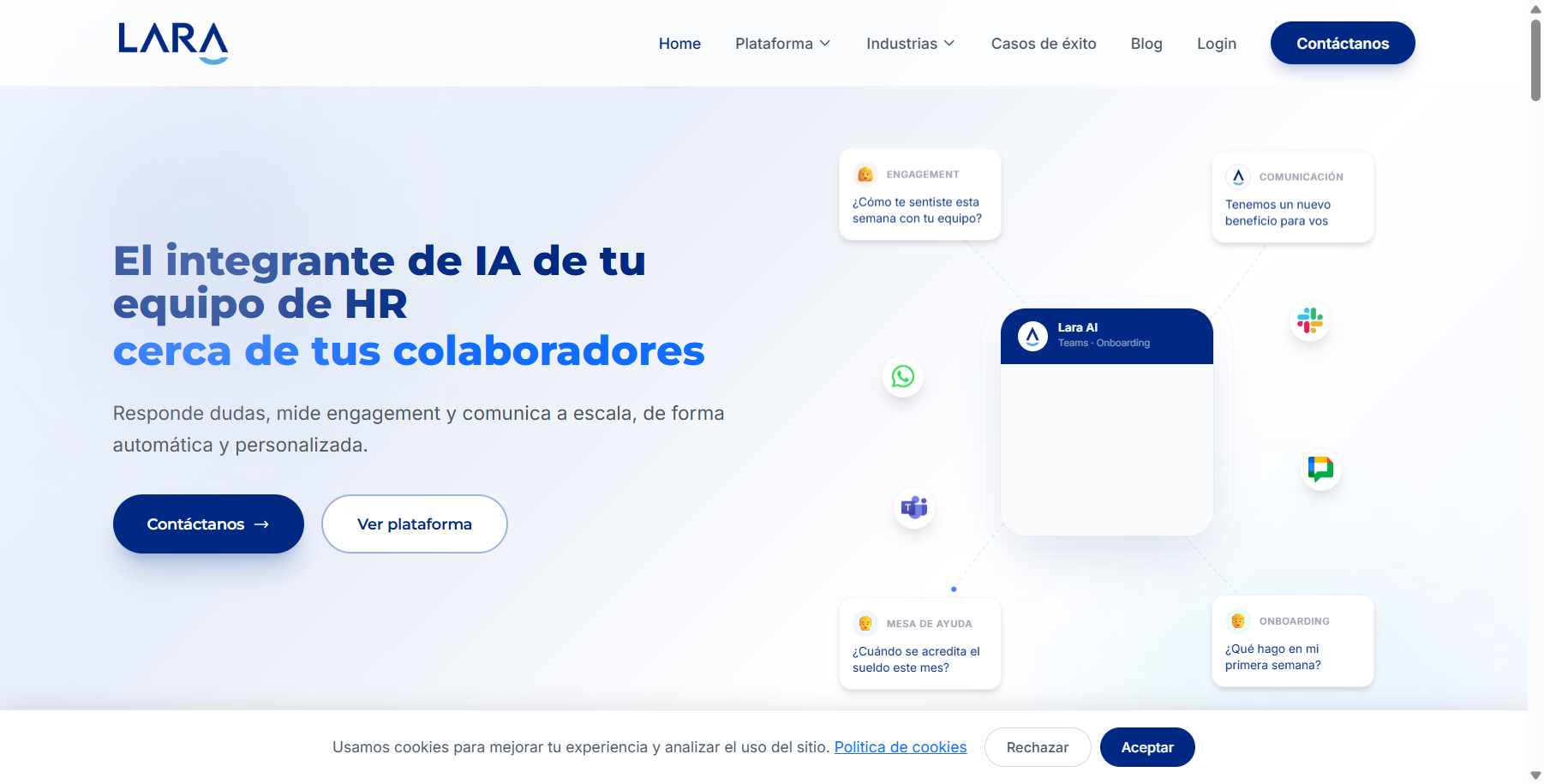
MeetLara chats with staff over WhatsApp, Slack, Microsoft Teams and Google Chat to answer questions, gather feedback and run onboarding. It was founded in Buenos Aires in 2021.
It scores engagement in real time and resolves help-desk questions without a person, connecting to SAP, BambooHR and Oracle. Its site and product run in Spanish, which decides whether it suits your workforce.
Pricing goes through sales. Norwegian group Visma acquired it in 2026, so the roadmap now follows Visma’s priorities, and sentiment scores are only as honest as employees are with a chatbot.
It reaches staff where they already talk. WhatsApp, Slack, Teams and Google Chat all carry the same assistant, and it connects to SAP, BambooHR and Oracle. Sentiment scores depend on people answering a chatbot honestly.
How we rate these
Our rating comes from reading each product’s features, pricing and positioning against the rest of the HR category. We then check the product is still live and still sold as described. It isn’t a lab score.
The thing worth measuring would be whether a tool moved retention or time-to-hire at your company. No vendor benchmark answers that, because the result depends on your managers more than on the software.
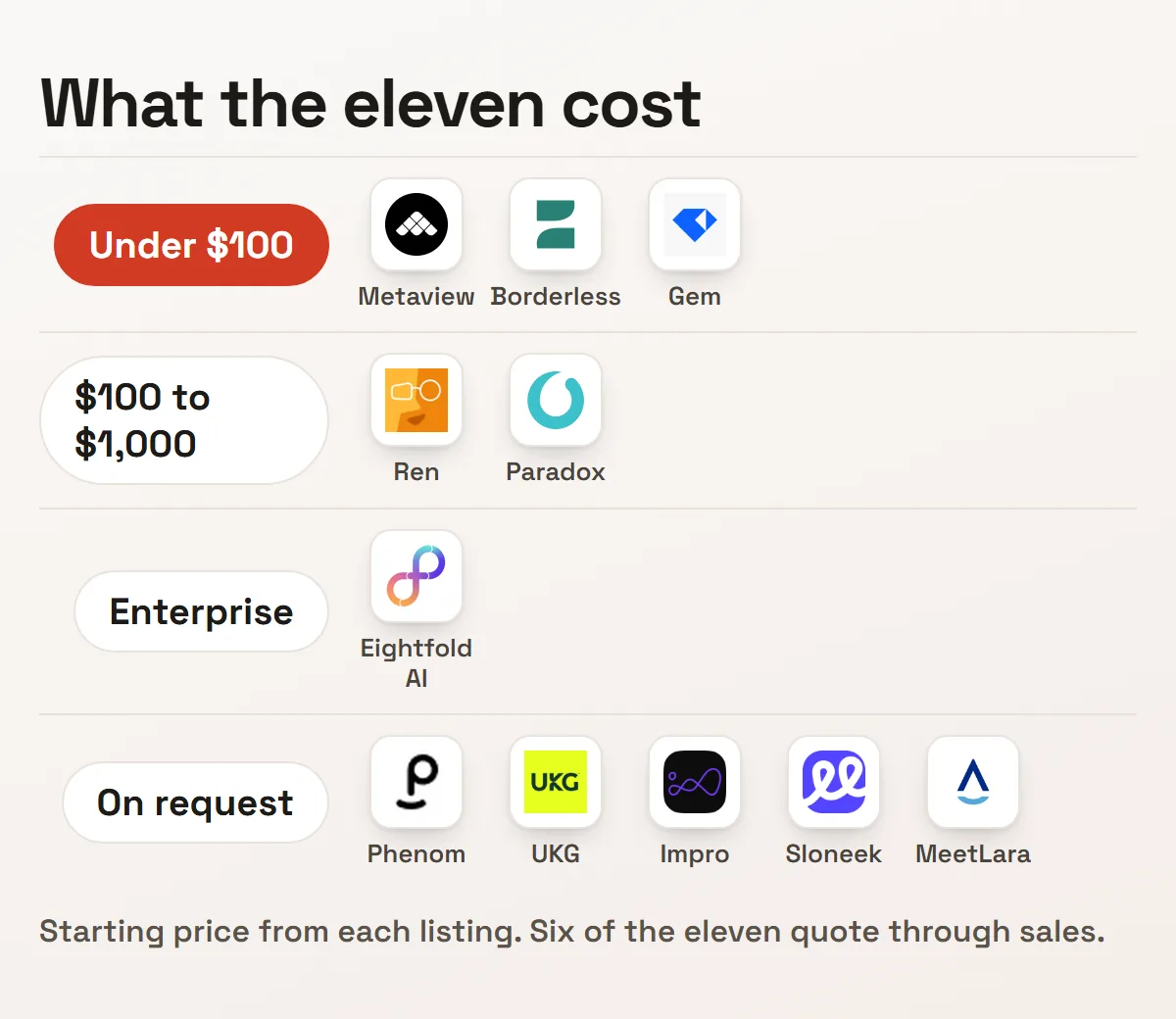
So treat the order as a shortlist. Each listing carries its own last-reviewed date, and six of these eleven quote through sales, so budget for a process rather than a card payment.
What to check before you buy
Six questions decide whether an HR tool lands or lapses. One of them is about features.
- Consent: what the tool reads, and whether staff have been told in writing
- Records: where employee data sits and who at the vendor can see it
- Overlap: which existing subscription this one is meant to retire
- Price: per seat, per employee, or a platform fee that ignores headcount
- Language: whether the interface fits the workforce, not only the buyer
- Exit: what leaving costs once payroll or records live inside it
How to choose between them
Start with the stage that hurts. If roles sit open, the answer is a hiring tool and our recruiting roundups go deeper. If people leave after joining, no sourcing product will help you.
Then count your systems. A company running five HR subscriptions that disagree on the headcount has a consolidation problem, and Sloneek or UKG answers that better than another point tool.
Watch the consent question with anything that listens. Ren reads Slack and Zoom transcripts, MeetLara reads employee chat, and staff have to be told before either is switched on, not after.
Six of these eleven quote through sales, so budget for a process rather than a card payment. Our roundup of AI employee engagement tools covers the retention side in more depth.
Questions buyers ask
What is an AI tool for HR teams?
An AI tool for HR teams is software that takes over a repeated HR job. That means reading applications, writing interview notes, answering staff questions, checking compliance or flagging a conversation a manager owes someone. The judgement stays with a person.
Which of these have a free plan?
Two: Metaview, with five recruiting calls, and Ren, free for up to four people. Gem gives eligible startups six months. The other eight want a contract, and six of those quote through sales.
How much do these cost?
Published prices run from $20 a month to $15,000 a year, and six quote privately. The spread tracks scope rather than quality: a single-job tool prices in tens, a platform that runs payroll prices in thousands.
Which of these read employee messages?
Two, openly. Ren reads Slack and Zoom transcripts to spot the conversation a manager owes someone, and MeetLara reads employee chat to score engagement. Tell staff before either goes live, and both listings say so.
Do these replace an HR manager?
No, and the listings don’t claim it. They remove the repeated work: transcription, scheduling, first-line questions, compliance lookups. Deciding who to hire, promote or let go stays with a person, and Impro builds a human strategist into the product for that reason.
What should we tell staff before switching one on?
You should tell them what it reads and who sees the output, before it’s live. Ren’s own listing names this: it reads Slack and Zoom transcripts, and staff should be told explicitly. Treat that as the standard for any tool here that listens.