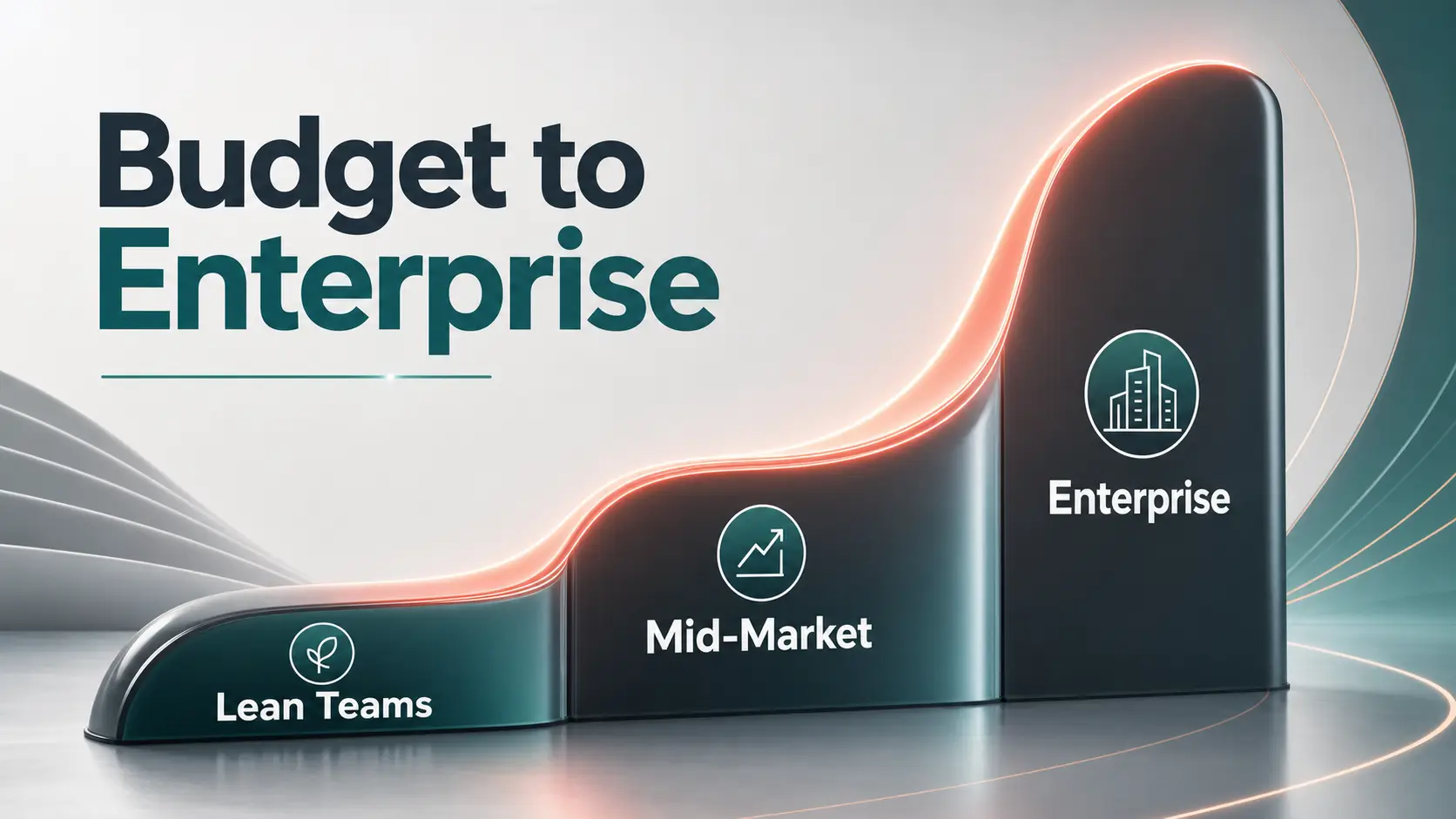
The best AI recruiting software does more than sort resumes; it helps hiring teams source, screen, schedule, and follow up without adding more manual work. AI recruiting software is a category of hiring tools that use machine learning to find candidates, match them to roles, automate outreach, and keep the pipeline moving. This roundup ranks 10 options by what they actually do, what they cost, and who they fit, so The right pick depends on your team size, hiring volume, and whether you need sourcing, screening, scheduling, or an all-in-one platform. Prices here start as low as a few dollars per user per month and climb to enterprise contracts in the tens of thousands. Every tool below names one real tradeoff, because a list where everything is flawless reads as an ad.
What Best AI Recruiting Software Means in Practice
AI recruiting software covers any hiring tool that uses machine learning to take over the slow parts of recruiting: finding candidates, matching them to job requirements, screening applicants, scheduling interviews, and automating outreach. Some of these tools are full applicant tracking systems that run your whole hiring process. Others are point solutions built to fix one bottleneck, like sourcing passive candidates or coordinating interview panels.
That split matters more than any feature list. A staffing agency drowning in outreach needs a different tool than an enterprise running thousands of interviews a quarter. The most common buyer problem here is too many tools and not enough hiring time, so the question is never which platform has the most features. It is which one removes the step that slows you down.
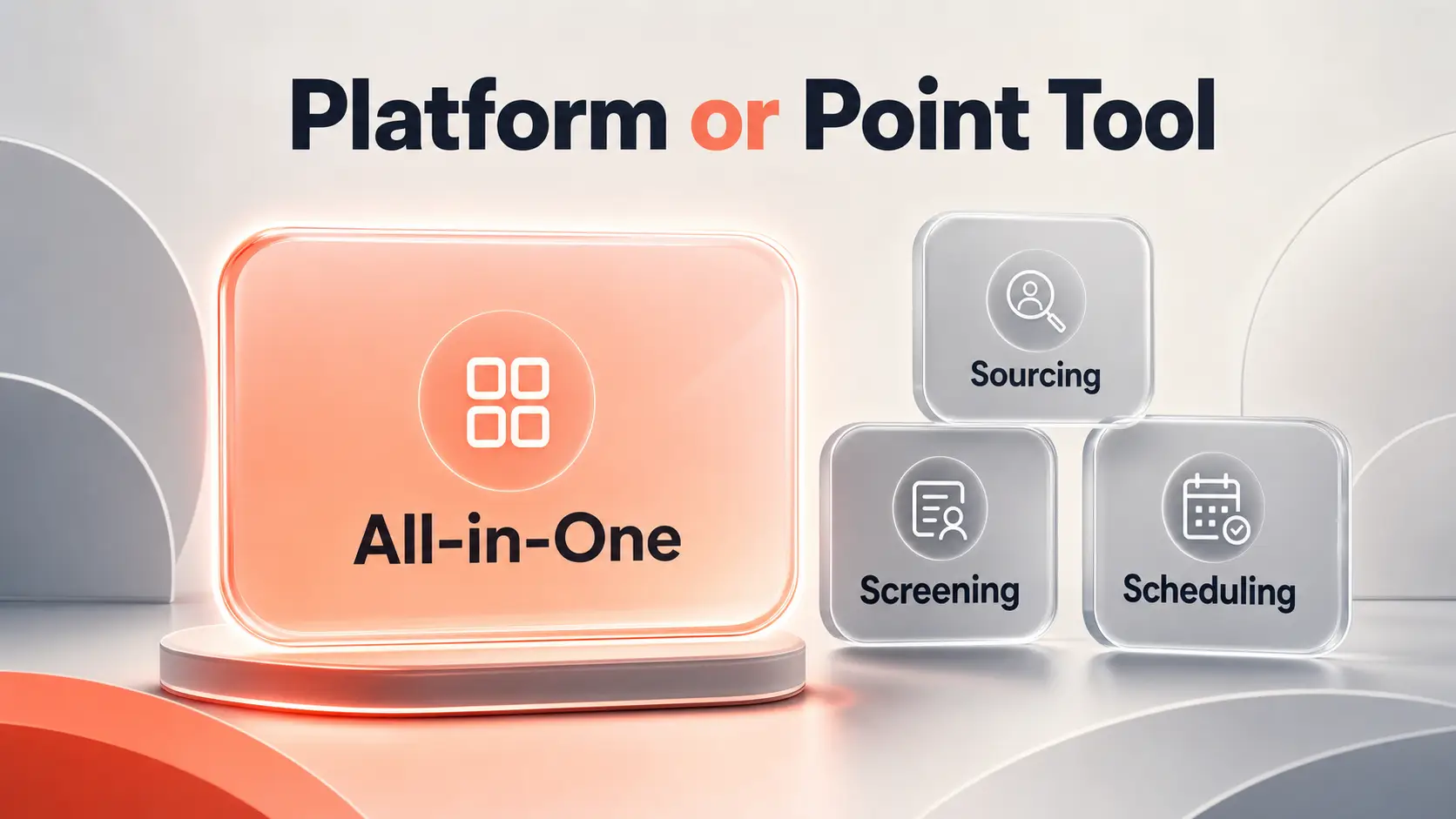
As you read, weigh three things on every tool: how transparent its pricing is, how deep it integrates with the systems you already use, and how well its workflow fits your hiring motion. Those three filters separate a tool you keep from one you abandon after the trial ends.
How We Picked These 10 Tools
We prioritized tools that solve a concrete recruiting bottleneck, from sourcing to screening to scheduling, and that publish enough pricing detail to compare without guesswork. The list balances all-in-one applicant tracking systems with specialist point solutions, because buyers often run a mix rather than one master platform.
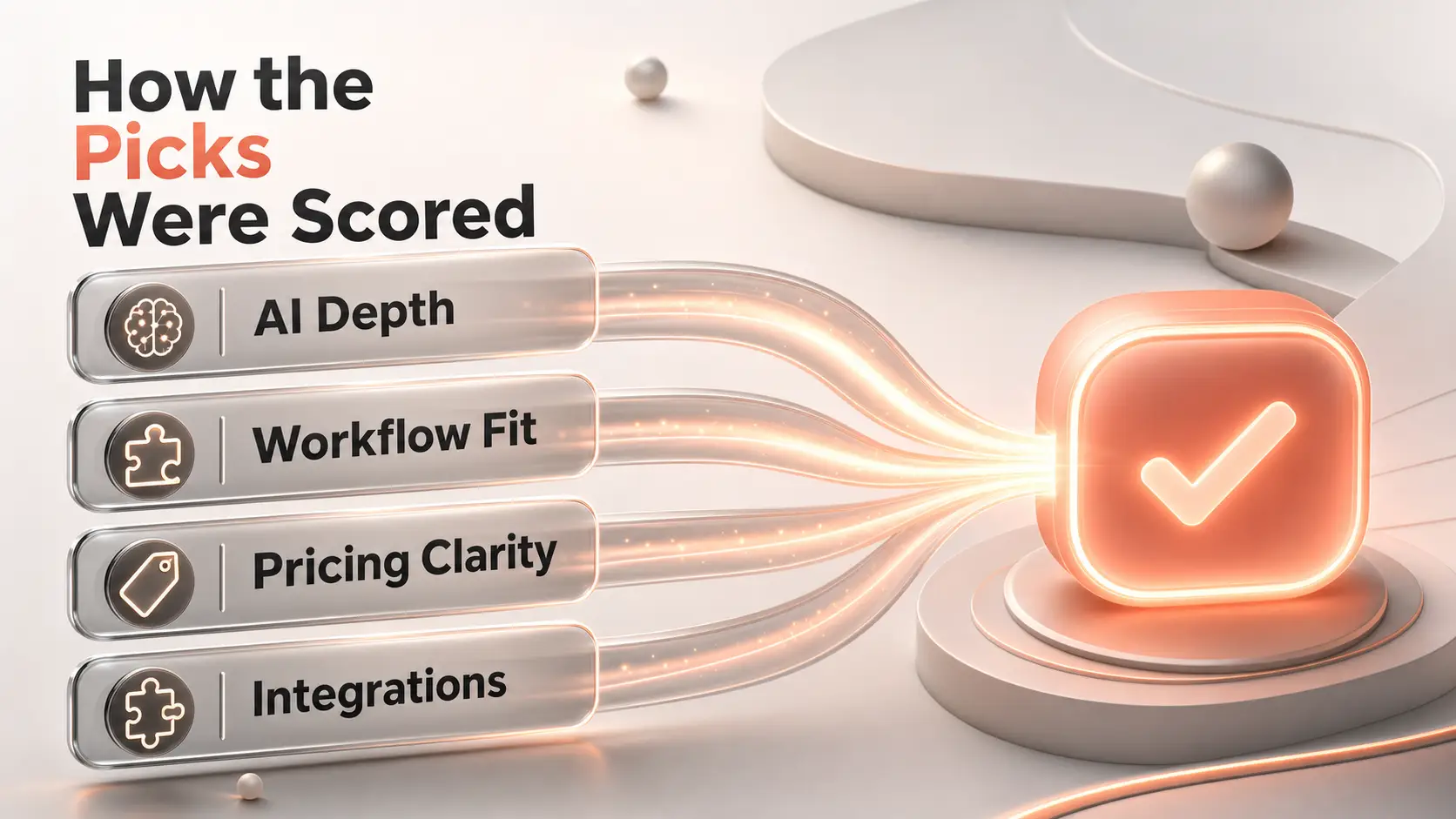
Here are the filters that shaped the ranking:
- AI capability that changes the work, not just labels a feature
- Recruiting workflow coverage across sourcing, screening, and scheduling
- Pricing transparency clear enough to budget against
- Ease of implementation and time to first value
- Integration depth, especially applicant tracking system compatibility
- A clear best-fit use case by team size and hiring volume
One honest note up front: user ratings and some pricing figures were not available for every tool in our research, so you will not see invented star scores here, and a couple of prices are flagged for you to confirm directly with the vendor.
The 10 Best AI Recruiting Software Tools
These are ranked by genuine usefulness for the hiring jobs most teams actually face, not by brand familiarity. Each entry names what the tool is, who it fits, one standout strength, and one real limitation.
1. Workable
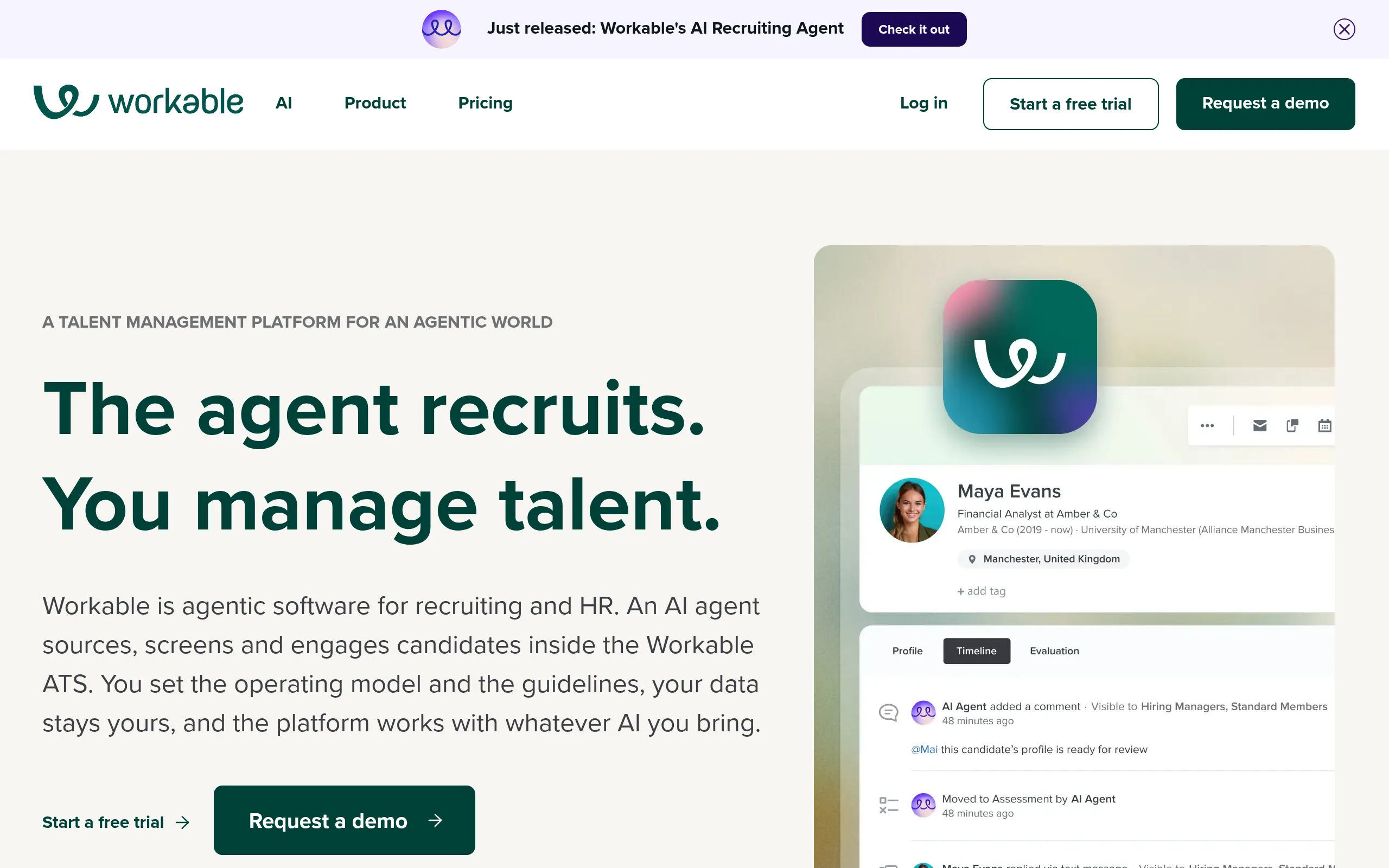
Workable Is an AI-enhanced applicant tracking system for small and mid-sized businesses that want sourcing, screening, and interviews in one place. It covers the full funnel out of the box, which is why it leads this list for teams that want a single system instead of a stack of point tools. The standout is its AI job description tool, which drafts postings with a tone you can adjust and version control you can track. The catch is the pricing model: texting, video interviews, transcription, and salary estimates are paid add-ons, so the headline price is rarely the final bill.
- Best for: SMBs wanting one AI-enhanced ATS for sourcing through interviews
- Standout feature: AI job description writer with adjustable tone and version control
- Starting price: Standard from $299/month, Premier $599/month, add-ons from $59/month
2. Greenhouse
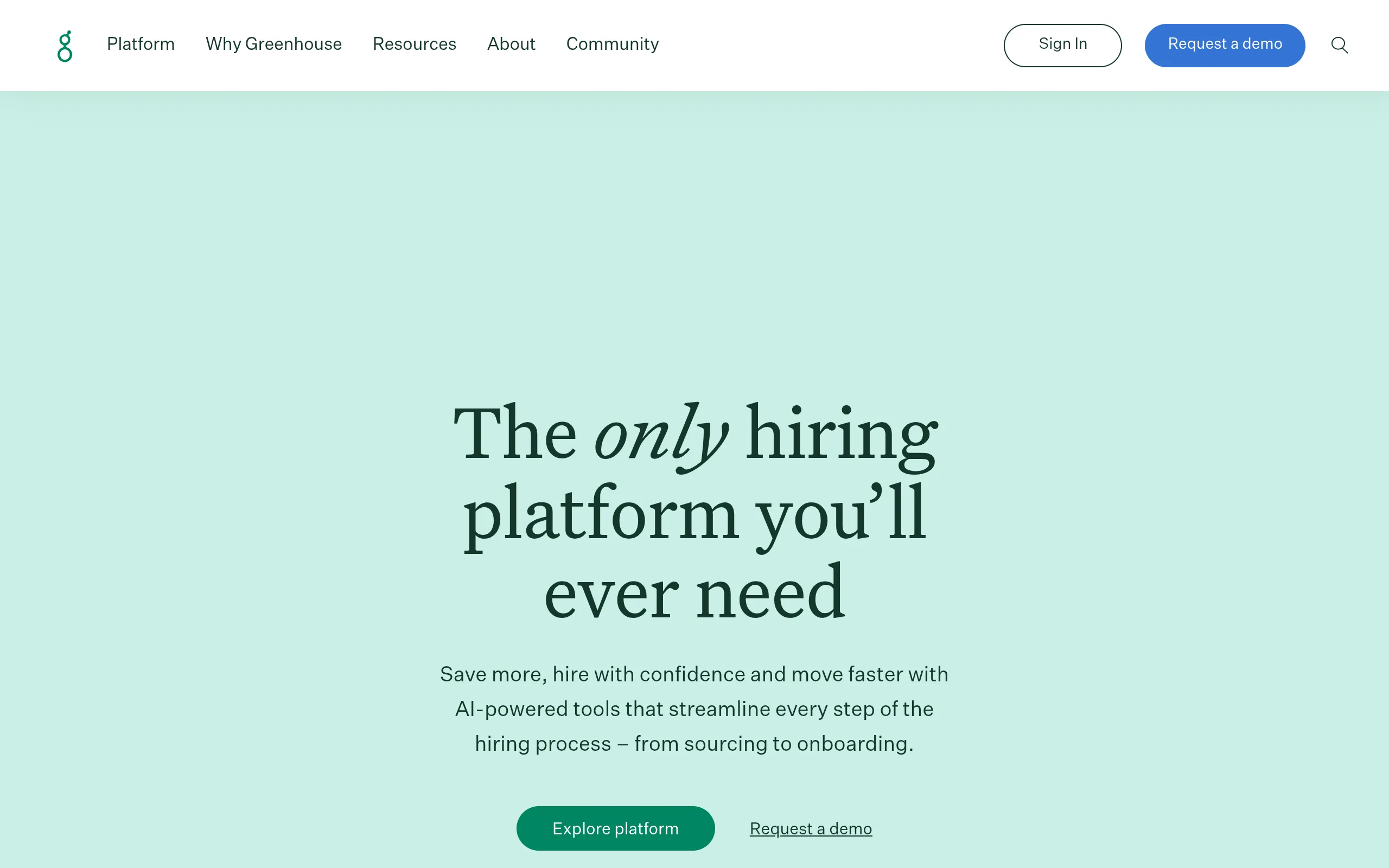
Greenhouse Is a structured hiring platform for internal talent acquisition teams that manage many roles and stakeholders. Where Workable optimizes for convenience, Greenhouse optimizes for consistency: its structured hiring framework standardizes how every candidate is evaluated, which supports fairness across departments. That discipline is the reason large teams adopt it. It also asks more of you. There is no free trial, and the platform leans on you having a consistent hiring process underneath it, so teams that want something running in days may find the setup heavy.
- Best for: Internal TA teams standardizing evaluation across departments
- Standout feature: Structured hiring framework that supports fairness and consistency
- Free tier: No free trial available
Greenhouse pricing runs across Core, Plus, and Pro tiers, but the exact starting figure is best confirmed directly.
3. Recruit CRM
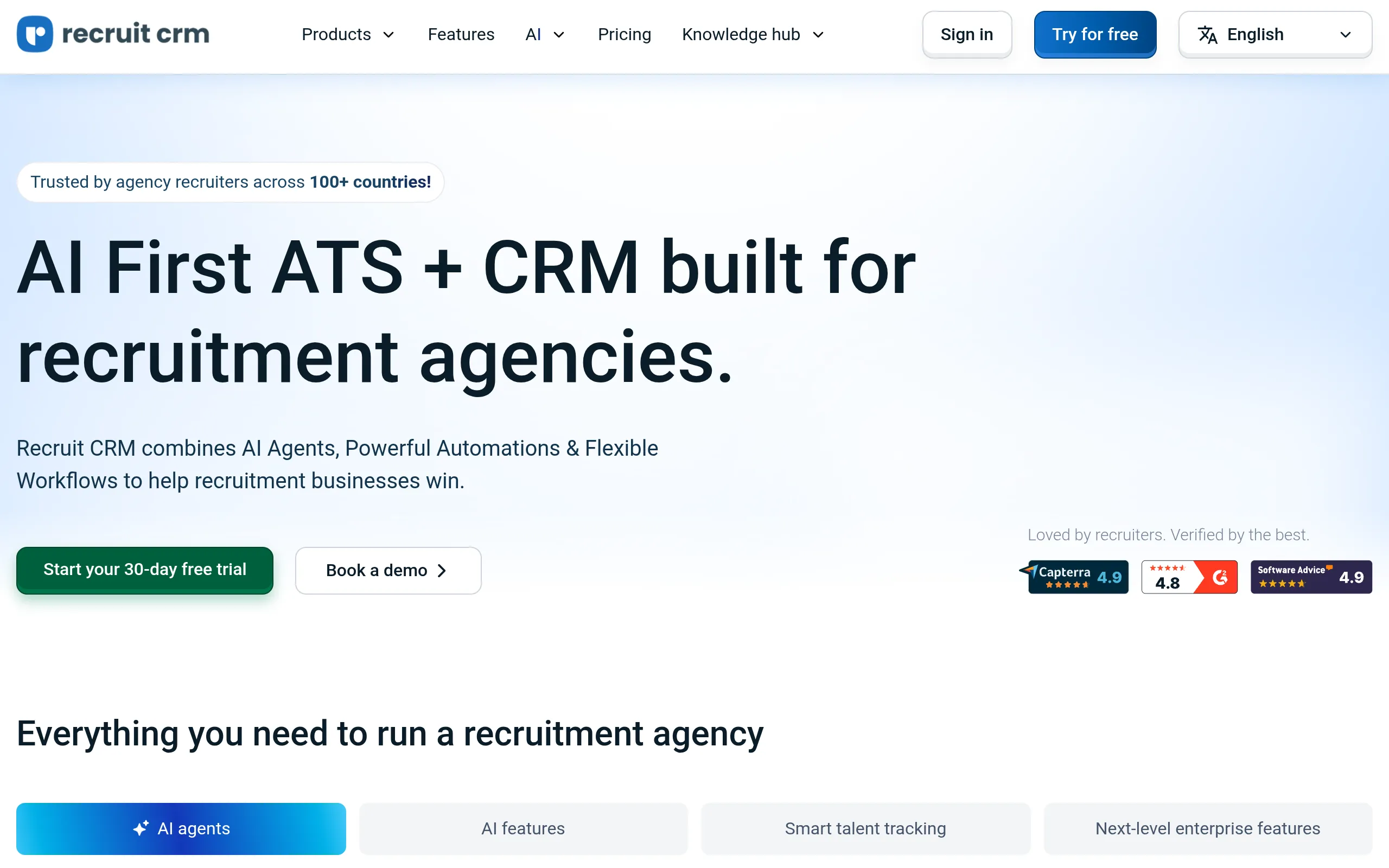
Recruit CRM Is a recruiting CRM and ATS built for staffing agencies that need flexible, AI-powered sourcing, screening, and outreach. Its AI-Assist panel pulls resume parsing, email writing, candidate summaries, and call transcription into one workflow, so recruiters stop hopping between tabs. That unified panel is its real differentiator against cheaper ATS-only tools. The limits show at the edges: AI usage is capped at 2 million tokens per user each month, the entry plan allows only one sequence, and native integrations are lighter than some rivals.
- Best for: Staffing agencies simplifying sourcing, screening, and outreach
- Standout feature: AI-Assist panel unifying parsing, email, summaries, and transcription
- Starting price: $40 to $125 per user per month, add-ons from $12/month
4. Manatal
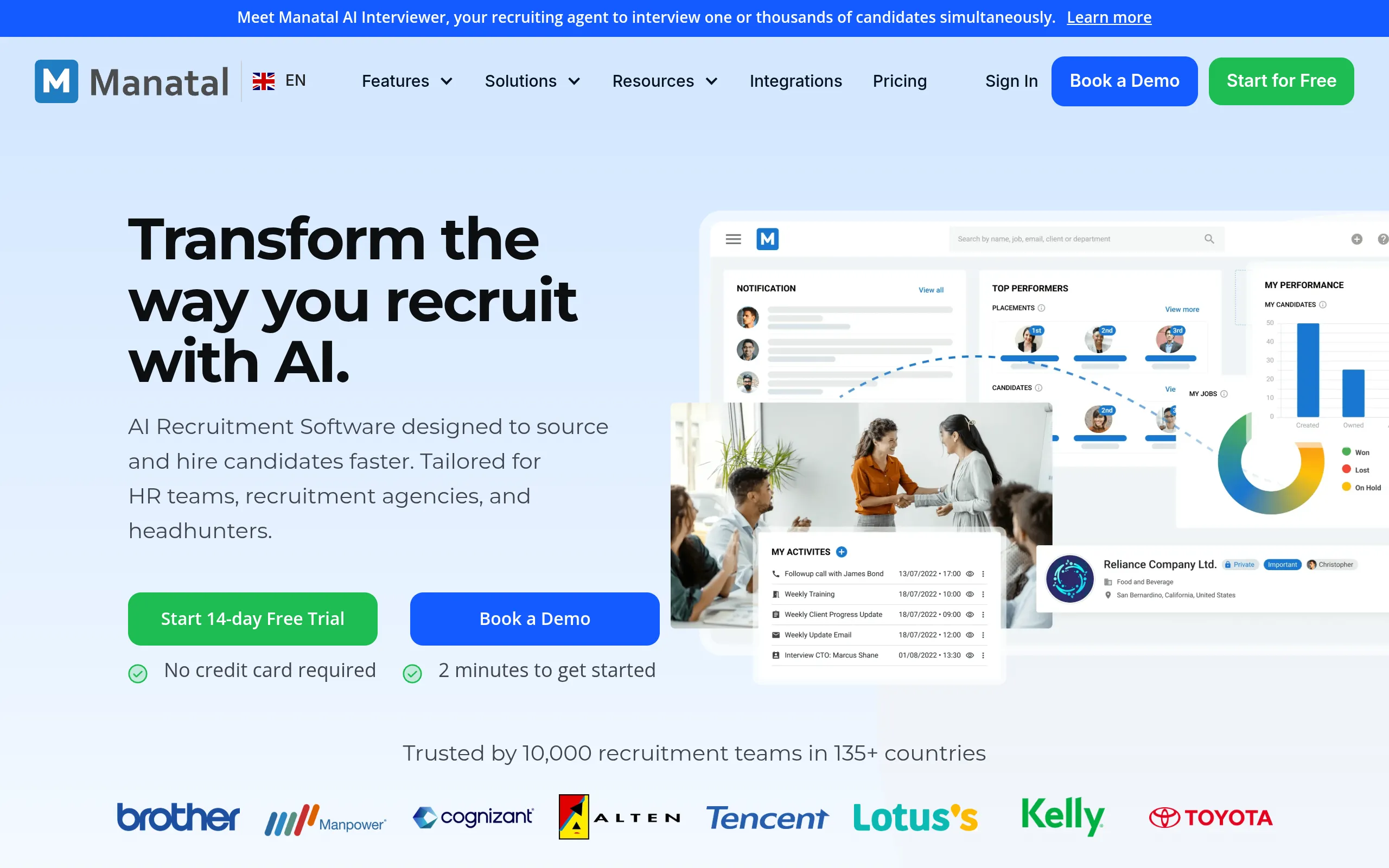
Manatal Is a low-cost AI applicant tracking system for small businesses and lean recruiting teams. It earns its spot on price and a genuinely useful AI feature: its recommendation engine scans a job description, searches your talent pool, and surfaces the candidates most suited to the role. For a team running corporate recruitment without a big budget, that matching is the main draw. Two things to know before you commit: there is no free-forever plan, and the AI works best in English, which matters if you hire heavily across other languages.
- Best for: Small teams wanting an affordable AI-enabled ATS
- Standout feature: AI recommendations that match talent-pool candidates to job descriptions
- Starting price: Professional $15/user/month, Enterprise $35, Enterprise Plus $55
5. HireVue
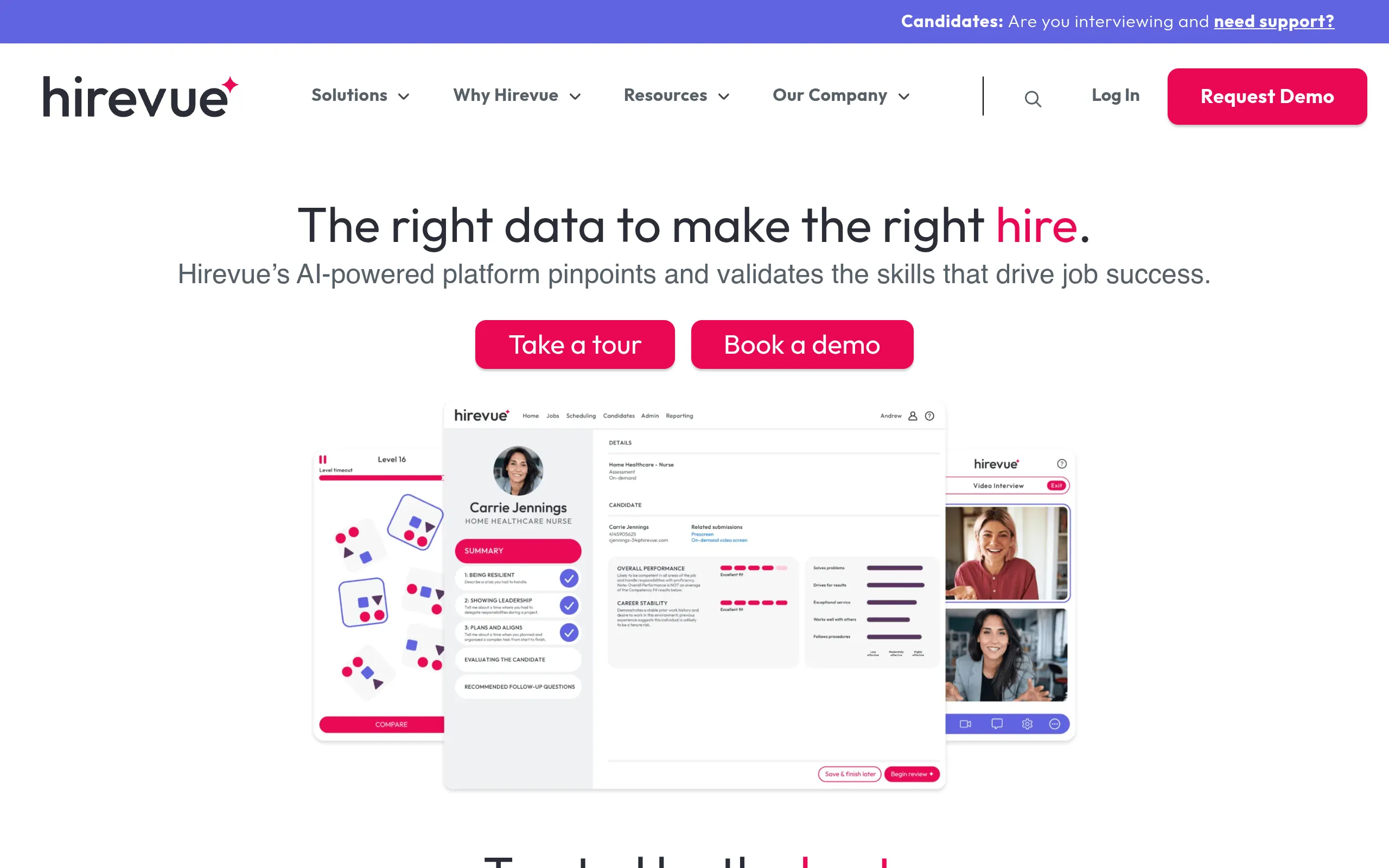
HireVue Is an enterprise screening and assessment platform for large organizations running high-volume hiring. Its AI virtual assistant screens candidates, sends messages, and collects responses on its own, which is the kind of automation that pays off when you are processing thousands of applicants. This is unambiguously an enterprise tool. The Essential plan starts at $35,000 per month for teams of 2,500 to 7,500 employees, there is no free trial, and integration partners are limited, so smaller teams should look elsewhere.
- Best for: Large enterprises running high-volume hiring programs
- Standout feature: AI assistant that screens, messages, and collects responses autonomously
- Starting price: Necessary from $35,000/month for 2,500 to 7,500 employees
6. Juicebox
Juicebox Is an AI sourcing tool for recruiting teams that want candidate discovery with explainable matching. Its sourcing agents do not just rank people; they explain why a candidate was recommended, which builds trust in the shortlist and helps you defend it to hiring managers. That explainability is rare and genuinely useful. The tradeoff is scope: Juicebox is built for sourcing and outbound recruiting, not full ATS work, so it lacks the scheduling, chatbot, and job description generation you would get from an all-in-one platform.
- Best for: Sourcing-focused teams needing explainable candidate matching
- Standout feature: AI sourcing agents that explain each candidate recommendation
- Starting price: Paid plans from $119/user/month
- Free tier: Yes, a free plan is available
7. Wellfound
Wellfound Is a startup-focused hiring tool that pairs a free applicant tracking system with AI sourcing. Its RecruiterCloud feature sources from an internal pool of more than 10 million startup-minded candidates plus a much larger external network, which is exactly the talent that startups struggle to reach elsewhere. The free ATS lowers the barrier to entry, so it sits high for early-stage teams. It is not built for non-tech enterprise hiring, there is no mobile app, and the built-in reporting stays fairly basic.
- Best for: Tech startups sourcing startup-minded talent
- Standout feature: RecruiterCloud AI sourcing from a large startup-focused candidate pool
- Starting price: ATS is free, paid plans from $149/month
- Free tier: Yes, the ATS is free
8. Recooty
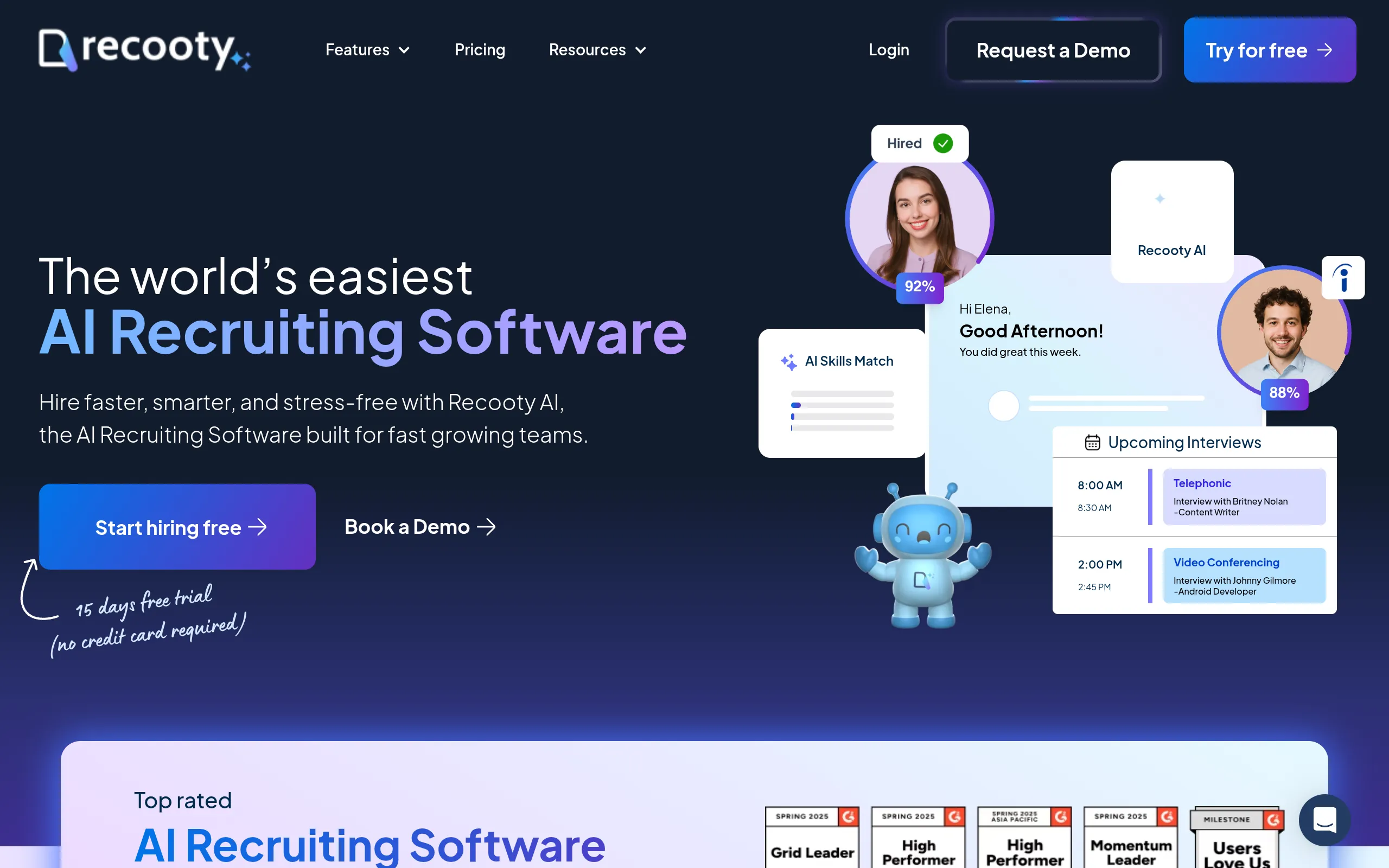
Recooty Is an affordable AI-enabled applicant tracking system for small and mid-sized businesses that want minimal setup. Its mix of AI resume matching, built-in email scheduling, and multilingual support across eight languages makes it a practical fit for teams hiring across regions. The light setup is the point: you are running quickly without a long implementation. Just know there is no free-forever plan, customization is limited, and some core hiring features like salary estimators and employee referrals are missing.
- Best for: SMBs wanting a low-cost, low-setup AI ATS with multilingual support
- Standout feature: AI resume matching plus multilingual support across eight languages
- Starting price: Starter from $79/month for 5 jobs and 20 users
9. Pinpoint
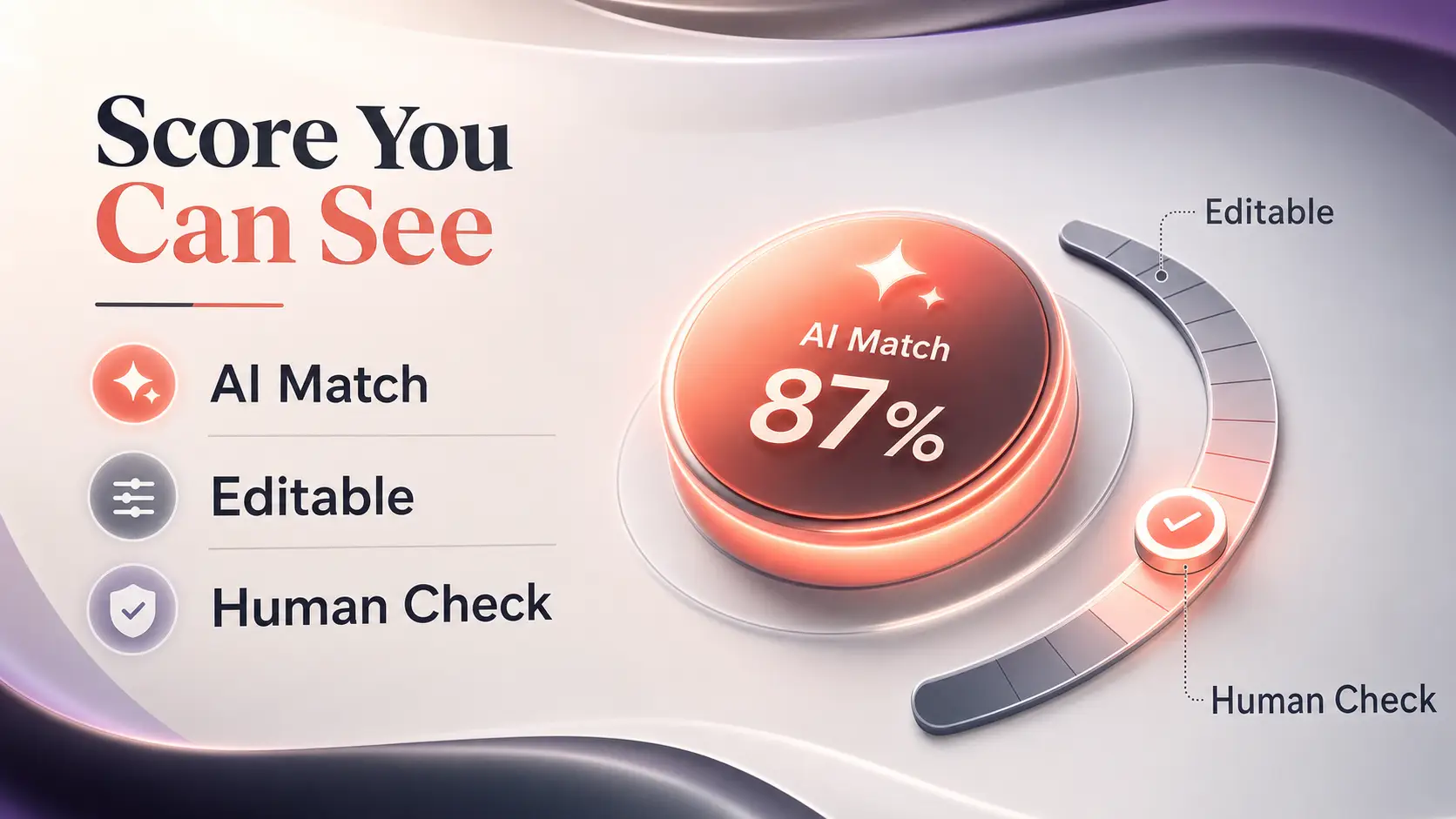
Pinpoint Is an AI screening and prioritization platform for internal talent teams that want transparency and human oversight built in. Its standout is an editable AI Candidate Match Score: the AI ranks candidates, but you can see the logic and adjust it, which keeps a human in the loop on every decision. That auditability is what sets it apart from black-box scoring tools. It fits in-house talent acquisition better than staffing agencies, and the employee onboarding module costs extra on top of the base plan.
- Best for: Internal TA teams wanting transparent, auditable AI screening
- Standout feature: Editable AI Candidate Match Score with human oversight
- Starting price: Growth from $345/month, Enterprise from $1,200/month
10. Jobin.cloud
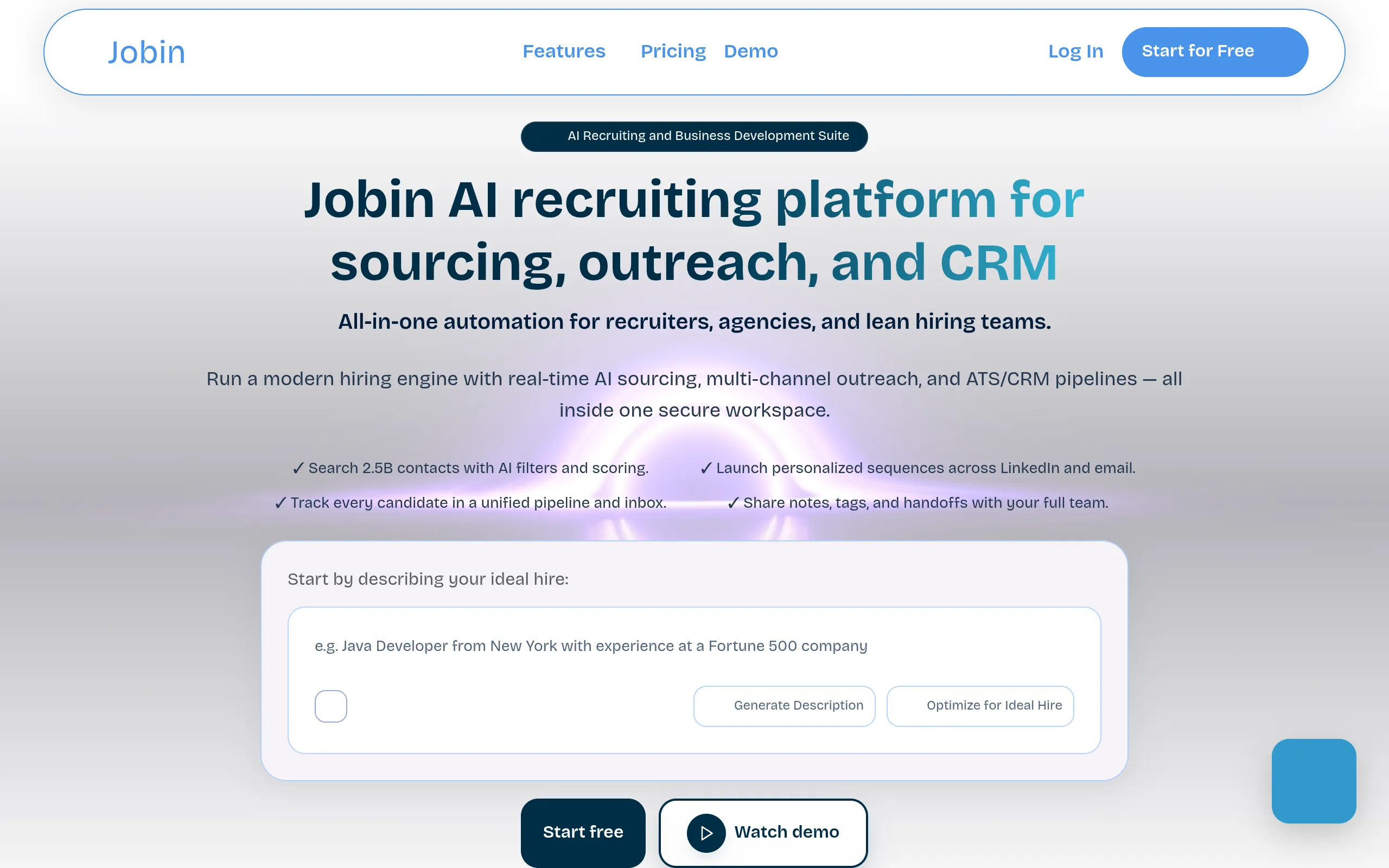
Jobin.cloud Is a low-cost LinkedIn automation and candidate-discovery tool for high-output sourcing teams. Its AI search autopilot expands and filters job descriptions semantically, then automates outreach, which lets a small team run a lot of outbound search cheaply. The per-module pricing is what makes it attractive for startups testing unfamiliar roles. The interface is dense and takes time to learn, and it skips core recruiting features like video interviewing and onboarding, so it works best alongside a real ATS rather than replacing one.
- Best for: High-output sourcing teams and startups expanding into new roles
- Standout feature: AI search autopilot that semantically expands and filters job descriptions
- Starting price: LinkedIn Automation from €7.99/month, finders €16.99/month
- Free tier: Yes, a free plan with basic features is available
Side-by-Side Comparison of the Top Picks
Pricing and use-case fit decide this more than feature count. Workable and Recruit CRM are the strong ATS-oriented picks, while Juicebox, Wellfound, and Jobin.cloud lean sourcing-heavy. Greenhouse is included as a major structured-hiring benchmark even though its exact entry price needs confirming.
| Name | Best For | Starting Price |
|---|---|---|
| Workable | SMBs wanting an AI-enhanced ATS | $299/month |
| Greenhouse | Internal TA teams needing structured hiring | Custom pricing |
| Recruit CRM | Staffing agencies simplifying sourcing and outreach | $40/user/month |
| Manatal | Small teams wanting an affordable AI ATS | $15/user/month |
| HireVue | Large enterprises running high-volume hiring | $35,000/month |
| Juicebox | Sourcing teams needing explainable matching | $119/user/month |
| Wellfound | Tech startups sourcing startup-minded talent | Free ATS, paid from $149/month |
| Recooty | SMBs wanting a low-cost AI ATS | $79/month |
| Pinpoint | Internal TA teams needing transparent screening | $345/month |
| Jobin.cloud | High-output sourcing teams | €7.99/month |
We picked these 10 by matching each tool to a real hiring bottleneck, weighing pricing transparency and integration depth, and balancing full applicant tracking systems against specialist sourcing and screening tools. We did not run a hands-on lab test; the rankings draw on documented capabilities, published pricing, and stated limitations. For a broader look at the category, see our guide to AI recruiting and screening tools.
Frequently Asked Questions
Which AI recruiting software is best for small businesses?
Manatal is the strongest pick for small businesses on a budget, starting at $15 per user per month with AI candidate matching built in. If you want a free starting point, Wellfound’s free ATS works well for tech startups, and Recooty suits small teams hiring across multiple languages. The deciding factor is whether you need a full ATS or just sourcing help.
What AI tools do agency recruiters use?
Agency recruiters lean toward tools built for outbound work and high outreach volume. Recruit CRM is purpose-built for staffing agencies, combining sourcing, screening, and communication in one AI workflow, while Jobin.cloud handles high-output LinkedIn sourcing cheaply. Many agencies pair a sourcing tool with an ATS rather than relying on a single platform, since agency work depends on constant candidate discovery.
What is the best AI recruiting software for high-volume hiring?
HireVue is the clearest fit for high-volume enterprise hiring, with an AI assistant that screens and messages thousands of candidates autonomously. The tradeoff is cost, starting at $35,000 per month for large teams. Smaller operations with steady volume can get screening automation from Workable or Pinpoint at a far lower entry point.
Is AI recruiting software worth it?
For teams spending hours on sourcing, resume review, and interview scheduling, AI recruiting software is usually worth it because it removes the repetitive work that slows hiring down. The value depends on volume: a team filling a handful of roles a year may not need it, while one hiring constantly will recover the cost in saved time. Start with a free tier or trial and run your real workflow through it before paying for a year.
Do AI recruiting tools replace recruiters?
No. These tools automate sourcing, screening, and scheduling, but the final hiring decision still belongs to a person. The best implementations, like Pinpoint’s editable match score, keep a human in the loop on every candidate so AI narrows the pool rather than making the call. Treat the software as a way to spend less time on admin and more time on judgment.
Picking the Right Tool for Your Bottleneck
Choose by the step that slows you down, not by the longest feature list. If you want an ATS-first foundation, start with Workable or Greenhouse. For agency and sourcing-heavy work, look at Recruit CRM or Jobin.cloud. For enterprise interviewing, HireVue fits, and for pure sourcing speed, Juicebox or Wellfound earn the trial.
Before you sign anything, compare the hidden costs, check that the tool integrates with the systems you already run, and confirm whether you actually need sourcing, screening, scheduling, or all of it. Shortlist the two or three tools that match your workflow and budget, then request demos from those alone. To round out your stack, compare the rest of our Recruitment software picks And see how AI-powered onboarding tools Carry new hires past the offer stage.