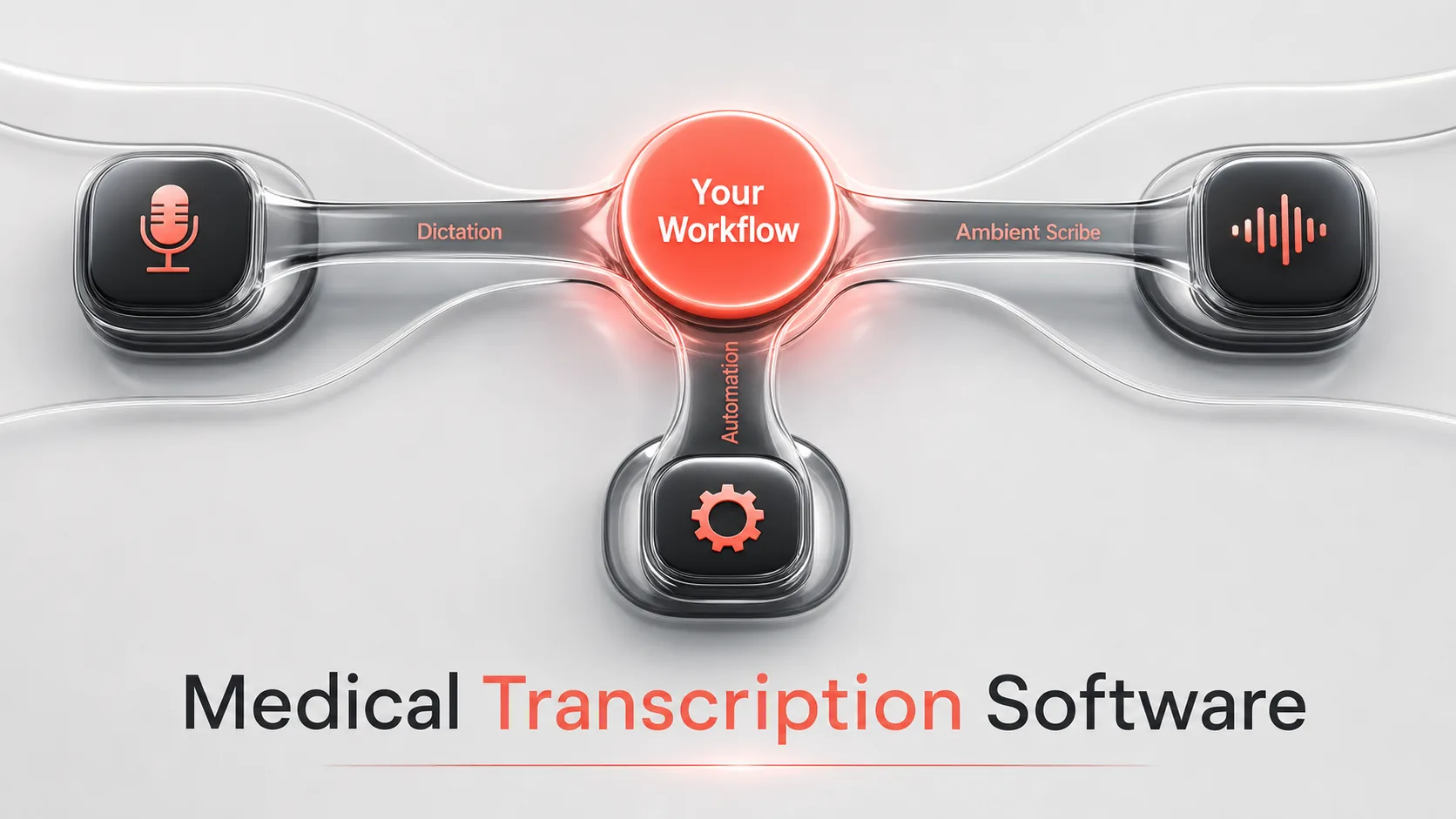
Choosing medical transcription software is really about choosing the workflow your clinic can trust. The fastest way to waste money here is comparing tools that do not solve the same problem, so before any price tag matters, you need to know what you actually want: a note drafted for you, a dictation engine you control by voice, or a system that finishes downstream tasks after the transcript exists. The best medical transcription software for most clinics in 2026 falls into three buckets: ambient AI scribes like Freed and Heidi for fast note drafting, classic dictation engines like Nuance Dragon Medical One for hospital-scale voice control, and transcription APIs like Amazon Transcribe Medical for teams building their own tools. This roundup ranks six options on the merits, names the use case each one wins, and flags the honest tradeoffs so you can shortlist one or two finalists by the end.
Why This Medical Transcription Roundup Matters
Most “best transcription software” lists treat the category as one thing. It is not. A developer API, an ambient scribe, and a workflow agent all show up under the same search, and they do completely different jobs.
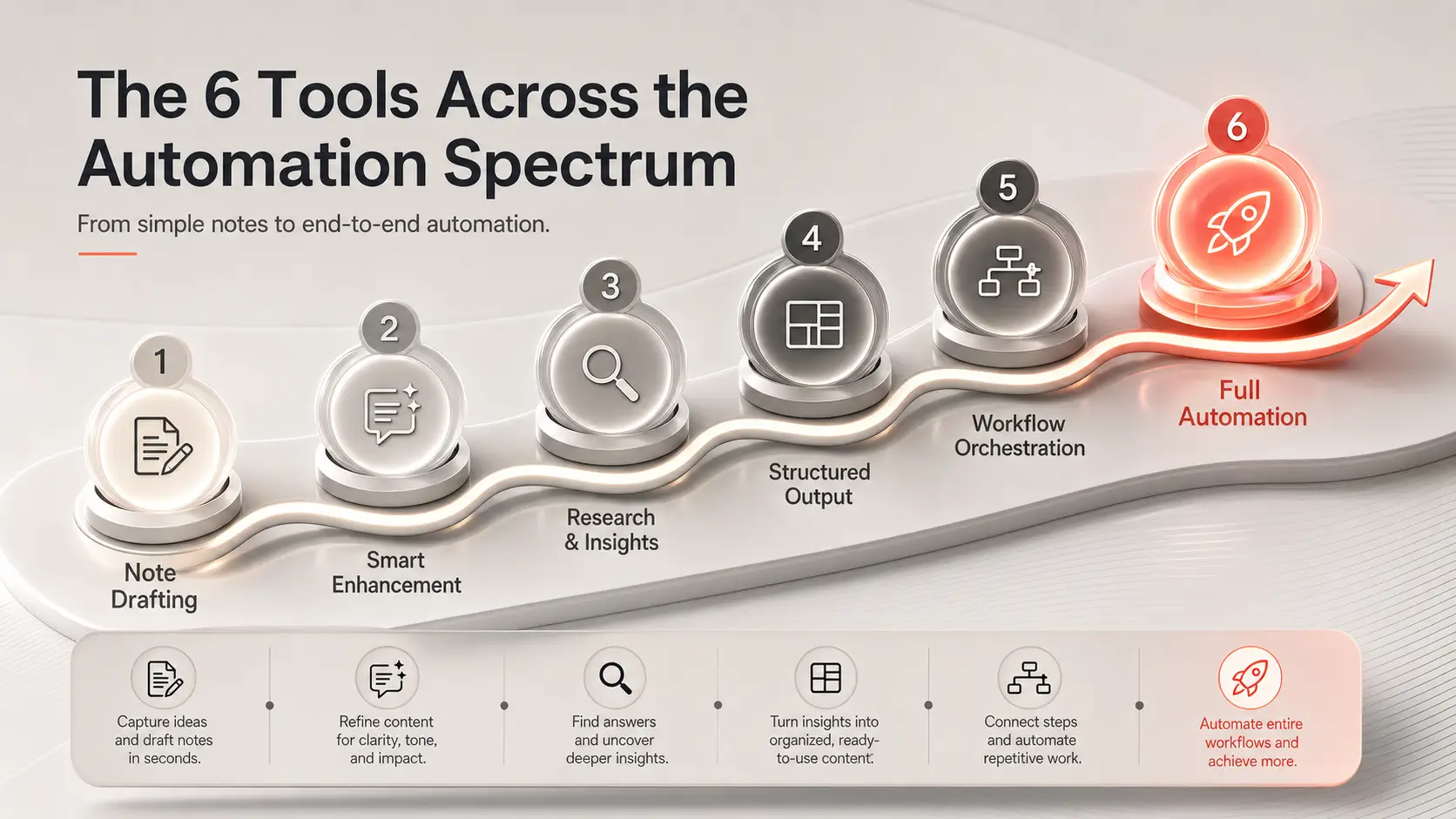
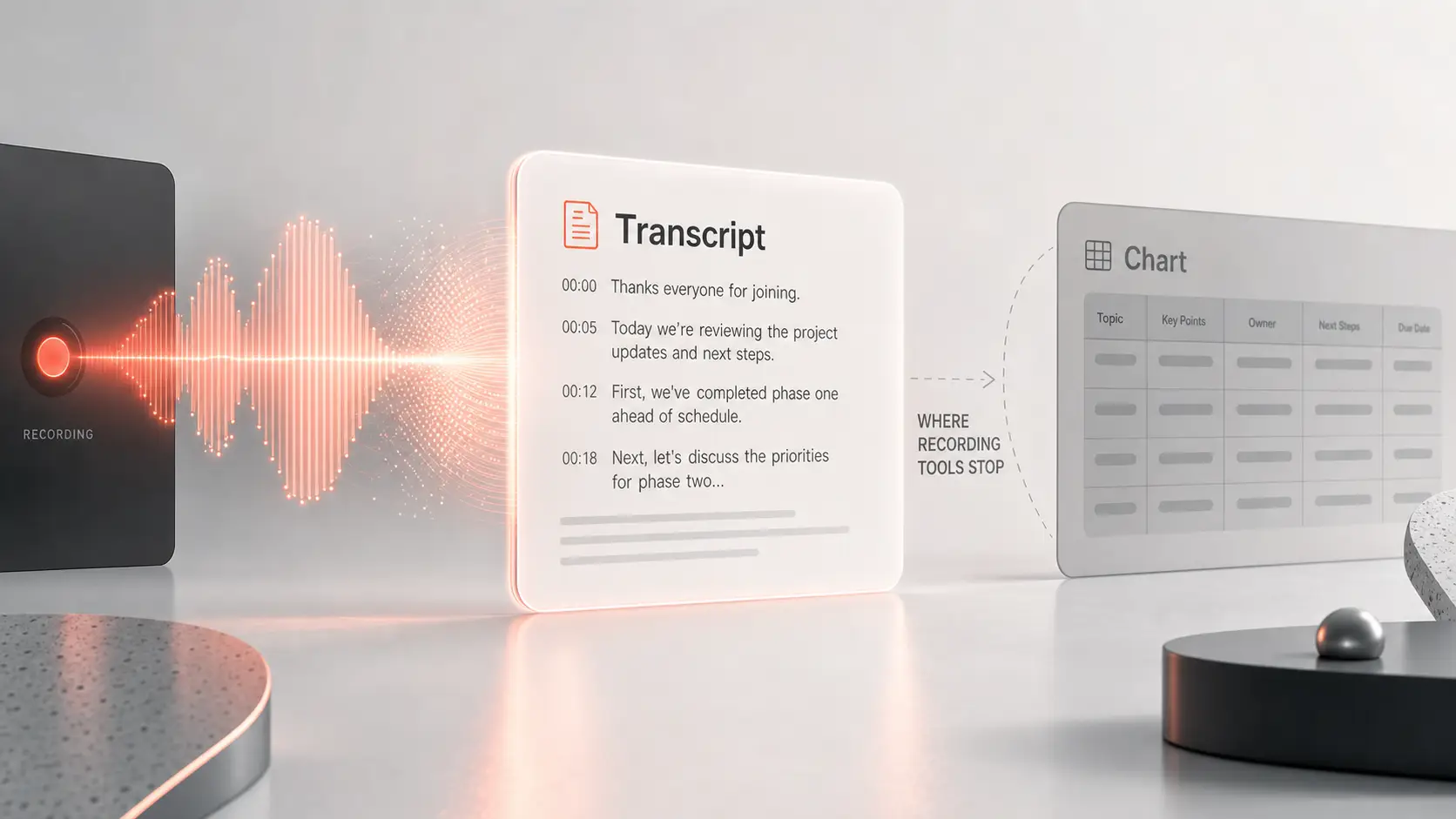
Classic transcription turns recorded speech into text. Dictation tools convert your live spoken words into a document while you talk, usually with medical vocabulary built in. Ambient AI scribes listen to the whole patient conversation and draft a structured note you review. Workflow orchestration tools go further, carrying the documentation through downstream steps across multiple apps.
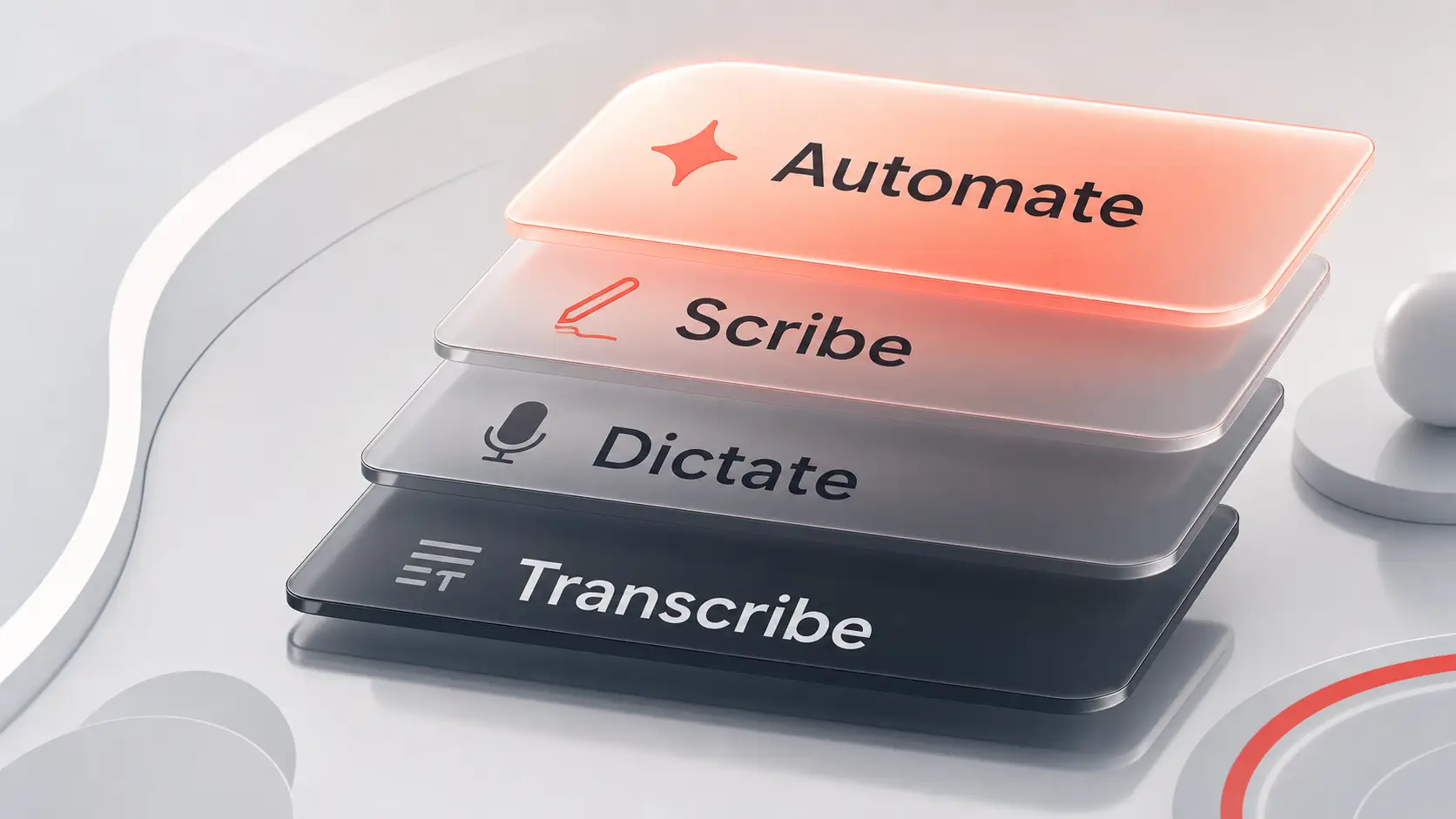
Why does the distinction decide your purchase? Because the word “best” only makes sense once you know whether you want a note, a dictation engine, or end-to-end task completion. A solo family doctor and a hospital radiology department are shopping in different aisles, even though they typed the same search. The rest of this article keeps those aisles separate on purpose.
How We Picked These 6 Tools
We kept the list to six because the dominant range across the ranking pages spans five to seven tools, and the lead result is a six-tool roundup. The goal was coverage of the full spectrum, from autonomous workflow orchestration down to classic dictation and ambient scribing, not a padded round number.
Each tool earned its place against criteria named directly in the source material: accuracy and safety, compliance posture, EHR or EMR integration depth, pricing transparency, ease of adoption, specialty fit, and whether the product is a transcription engine, a dictation tool, or an ambient AI scribe.
Two things mattered as much as raw transcription quality. Pricing visibility, because a tool you cannot price is a tool you cannot compare, and workflow depth, because the strongest pages do not treat note drafting and task completion as the same feature. Where pricing was sales-led or unconfirmed, we say so rather than guess.
Quick Comparison Table
Here is the shortlist in one glance. Read the “best for” and starting price first, then confirm integration and compliance details in the full reviews below.
| Name | Best For | Starting Price |
|---|---|---|
| Simular Pro (Sai) | End-to-end documentation ops automation across tools | Sales-led |
| Freed AI | Fast clinician-friendly note drafting | From $39/mo |
| Nuance Dragon Medical One | Hospital and enterprise dictation standardization | Custom pricing |
| Amazon Transcribe Medical | Developers building custom transcription workflows | Usage-based |
| Sonix | Multilingual, recording-heavy teams | From ~$10/hour |
| Heidi | Structured notes with fast adoption | Free start |
The 6 Best Medical Transcription Software Tools
Each review opens with one sentence on what the tool is and who it suits, then names the standout feature and one honest limitation. Buyers usually choose by workflow type first, then narrow by price and integration depth, so the entries are written to support that order.
1. Simular Pro (Sai): Best for End-to-End Workflow Automation
Simular Pro (Sai) is an autonomous computer-use agent for clinic operations teams that want the documentation workflow itself completed, not just the transcript produced. It sits at the far end of the spectrum from a simple scribe.
What makes it different is execution across tools. Rather than stopping at a note, it can move encounter data between systems, route follow-up tasks, and complete documentation steps across desktop and browser apps. That is also why it is not a standalone transcription engine. It orchestrates the work and can lean on transcription providers underneath. The honest catch is setup: you have to define guardrails for protected health information and critical actions before you trust it with anything sensitive, and that is real work.
- Best for: Teams that want end-to-end documentation ops automation across multiple tools
- Standout feature: Autonomous execution across tools, not limited to a single app
2. Freed AI: Best for Fast Clinician Notes
Freed AI Is an ambient AI scribe for clinicians and small clinics that want speed and simplicity in note drafting. You turn it on, it listens, and it gives you a SOAP note to review.
The appeal is how little friction it adds. There is no training ritual and no long onboarding before you get a usable draft, which is why it suits solo primary care doctors well. It still requires clinician review before you sign off, and it should. If your work spans several desktop apps or needs heavy downstream automation, Freed alone will hit its limits, since its EHR push works through browser tooling rather than deep native integration.
- Best for: Clinicians and clinics that want quick, low-setup note drafting
- Standout feature: Turn-it-on-and-get-a-note simplicity for clinical documentation
- Starting price: From $39/mo
- Free tier or trial: Yes
3. Nuance Dragon Medical One: Best for Enterprise Dictation
Nuance Dragon Medical One is a medical dictation engine for hospitals and larger organizations standardizing voice documentation at scale. It is a classic dictation tool, not an ambient note-drafting system.
Its strength is maturity. The medical vocabulary support and dictation ergonomics are built for clinicians who dictate all day, which is why radiologists and surgeons reach for it. It will not chase your downstream tasks, though, and it can require training and personalization before it hits peak accuracy for your voice and specialty. Think of it as a precise instrument you tune, not a hands-off assistant.
- Best for: Hospitals and larger organizations standardizing dictation at scale
- Standout feature: Mature medical vocabulary support and dictation ergonomics
4. Amazon Transcribe Medical: Best for Developers
Amazon Transcribe Medical Is a transcription API for product teams and agencies building custom healthcare documentation tools. It converts medical speech into text in real time or in batch, inside whatever app you are building.
It scales well for large volumes and already knows clinical terms, drug names, and abbreviations, which saves a lot of cleanup. The tradeoff is that transcription here is a component, not a finished product. You build the formatting, the templates, the review workflow, and the EHR handoff yourself, so a clinic wanting something ready out of the box should look elsewhere. It connects cleanly with tools like Amazon Comprehend Medical and the broader AWS ecosystem.
- Best for: Product teams and agencies building custom healthcare documentation tools
- Standout feature: Scales for large volumes with real-time and batch transcription
- Starting price: Usage-based, pay-as-you-go
- Free tier or trial: 60 minutes per month for the first 12 months after signup
5. Sonix: Best for Multilingual Recording-Heavy Teams
Sonix Is a finished transcription product for clinical research teams and organizations processing many recordings. You upload or record audio, and it returns editable transcripts.
Its edge is multilingual support and scale for global programs, which makes it a fit when your work starts as recordings and ends as transcripts. It is not a clinician-first EHR note workflow by default, and it will not push content into your chart or billing system for you. If you need structured progress notes written into an EHR, Sonix is the wrong shape, but for cleaning up and sharing large volumes of recorded speech across languages, it is purpose-built.
- Best for: Clinical research teams and organizations processing many recordings
- Standout feature: Multilingual support and scale for global programs
- Starting price: From about $10/hour
6. Heidi: Best for Template-Driven Notes
Heidi Is an ambient AI scribe for clinicians and groups that want structured notes quickly using templates. It captures the patient conversation and turns it into a consistent, template-shaped note.
The draw is standardization with a low barrier to entry. Template-driven workflows keep output consistent across visits, and a free start lets a small clinic validate the workflow before committing to paid seats. Like every scribe on this list, it still needs clinician review and oversight, and it is not a full operations layer that automates unrelated desktop apps. For a practice that wants templated notes fast and a no-risk way to test them, that is a fair trade.
- Best for: Clinicians and groups that want structured notes quickly with templates
- Standout feature: Template-driven workflows that keep note output consistent
- Free tier or trial: Yes, free start
Who Should Choose Which Tool?
The most useful recommendation is which workflow style matches your clinic, not which vendor has the most features. Here is how the six map to common buyer profiles.
Solo clinicians Get the most from Freed or Heidi, where fast adoption and low friction matter more than deep integration. Both let you start drafting notes the same day.
Group practices Can go with Freed, Heidi, or Dragon depending on note volume and IT support. Lighter teams lean toward the scribes; teams with dictation-heavy specialists and IT backing lean toward Dragon.
Hospitals and enterprise teams Usually want Dragon for dictation standardization across many workstations, or Simular when the real goal is completing the workflow, not just capturing speech.
Developers and agencies Should build on Amazon Transcribe Medical, the most flexible foundation when transcription is a feature inside a larger product you control.
Multilingual and recording-heavy teams Are best served by Sonix, where processing volumes of recorded, multilingual audio matters more than native clinical note workflows.
Narrowing to Your Finalist
If you want the documentation workflow automated rather than just drafted, Simular is the most different option here, and the one to pilot if downstream task completion is your bottleneck. If you want a straightforward clinician note tool, Freed or Heidi is the most practical starting point, and both have a free way in. Enterprise dictation still belongs to Dragon, while teams building their own software should start with Amazon Transcribe Medical, and multilingual or recording-heavy work points to Sonix. Decide by workflow, budget, and integration needs, not by which name you have heard most.
Frequently Asked Questions
What is a good cost-effective dictation or transcription software program?
For cost-conscious buyers, Freed (from $39/mo) and Heidi (free start) are the most accessible entry points among clinician-facing tools. A solo nurse practitioner who only needs SOAP notes drafted can start on Heidi’s free tier, validate the workflow on real visits, and only move to a paid seat once the time savings are obvious. Teams building custom software get the lowest entry cost from Amazon Transcribe Medical’s usage-based pricing, which includes 60 free minutes per month for the first 12 months.
Which transcription software is best for doctors?
It depends on whether the doctor wants a note drafted, dictated, or a workflow completed. Doctors who want hands-free dictation at scale lean toward Nuance Dragon Medical One, while those who want a conversation turned into a structured note favor ambient scribes like Freed or Heidi. There is no single winner, only the best fit for your documentation style and EHR setup.
What is the difference between classic transcription and ambient AI scribing?
Classic transcription converts speech into text more or less word for word, while ambient AI scribing listens to the patient encounter and drafts a structured clinical note from it. Transcription gives you a raw transcript you then shape into documentation. An ambient scribe skips ahead and produces something closer to a finished SOAP note, which you review and approve.
Is medical transcription software HIPAA compliant?
Compliance depends on the specific vendor and whether they sign a Business Associate Agreement, so it is not safe to assume. Healthcare-grade tools are typically built around protected health information handling and BAA-backed agreements, but general consumer dictation tools usually are not. Always confirm the BAA and data handling terms directly with the vendor before putting any patient data through a tool.
Can medical transcription software integrate with Epic or Cerner?
Some can, but integration depth varies sharply by tool. Dragon Medical One is commonly used with Epic and Cerner workflows, while ambient scribes often push notes through browser-based methods rather than deep native connections. Verify the exact EHR integration path for your system with the vendor, because “works with major EHRs” can mean anything from native write-back to copy and paste.
The honest reality is that no tool on this list is the right answer for every clinic, and the worst purchases happen when buyers compare an API, a dictation engine, and a workflow agent as if they were interchangeable. Start by naming your workflow, then your budget, then your EHR, in that order. Open the free tier or book the demo for your top one or two finalists and run a real encounter through each before you commit. To go wider on the underlying technology, compare the rest of our picks in our guide to the Best transcription software in 2026, or see how these tools fit alongside AI tools for telemedicine and virtual healthcare.