In software development, artificial intelligence (AI) has emerged as a powerful tool, changing various aspects of the development process. One such innovation is AI code generators, which use the power of machine learning to automate code generation tasks. These tools have the potential to significantly boost developer productivity, improve code quality, and accelerate software development cycles. By using Project management tools In conjunction with AI code generators, development teams can simplify their workflows, track progress effectively, and make sure that AI-generated code smoothly integrates into their overall project objectives.
What are AI Code Generators for Developers and Engineers?
AI code generators are sophisticated software applications that use advanced algorithms and machine learning models to automatically generate code snippets or entire functions based on natural language prompts or code context. These tools learn to identify patterns, understand programming languages, and generate relevant code suggestions by analyzing vast amounts of code data.
Why Use AI Code Generators for Developers and Engineers?
AI code generators have changed how developers and engineers work, offering benefits that can sharply enhance productivity, code quality, and overall efficiency.
Increased Productivity
Automation of Repetitive Tasks:
AI code generators can automate boilerplate code generation, such as repetitive loops, conditional statements, or basic function implementations. This frees up developers to focus on higher-level problem-solving and strategic thinking.
Rapid Prototyping:
AI tools accelerate the prototyping process by quickly generating initial code structures and functionalities, allowing developers to iterate faster and experiment with different approaches.
Improved Code Quality
Adherence to Coding Standards:
AI code generators can be trained on specific coding standards and style guides, making sure that generated code is consistent and maintainable.
Reduced Bugs and Errors:
These tools can identify and correct common coding mistakes, such as syntax errors, logical errors, and potential vulnerabilities.
Enhanced Code Readability:
AI-generated code can be formatted and structured in a way that is easy to understand and maintain, improving overall code quality.
Accelerated Learning
Exposure to Different Programming Styles:
AI code generators can suggest alternative approaches and programming paradigms by analyzing and learning from vast amounts of code, helping developers expand their skill sets.
Hands-on Learning Experience:
AI tools can provide interactive learning experiences, allowing developers to experiment with different code snippets and observe the results in real time.
Enhanced Collaboration
Shared Code Generation Platform:
AI code generators can be integrated into collaborative development environments, enabling team members to share code snippets, discuss potential improvements, and work together more efficiently.
Knowledge Sharing:
AI tools can uncover hidden insights and best practices by analyzing the codebase and identifying patterns, encouraging knowledge sharing within development teams.
Benefits of AI Code Generators for Developers and Engineers
Accelerated Development Cycles
Rapid Prototyping:
AI tools can quickly generate basic code structures, allowing developers to iterate faster and experiment with different approaches.
Repetitive Task Automation:
Automating boilerplate code generation and unit tests saves significant time and effort.
Enhanced Code Quality
Bug Reduction:
AI-powered tools can identify and fix potential bugs early in development, leading to more reliable software.
Improved Code Consistency:
AI generators make sure consistent code quality across projects by adhering to coding standards and style guides.
Security Enhancement:
AI can help identify and address security vulnerabilities, making applications more secure.
Increased Productivity
Focused Problem-Solving:
Developers can concentrate on complex problem-solving and strategic thinking by automating routine tasks.
Learning Acceleration:
AI tools can provide learning opportunities by suggesting code improvements and explaining complex concepts.
Encouraged Innovation
Novel Approaches:
AI can generate creative code solutions by exploring diverse programming techniques and algorithms.
Experimentation Encouragement:
AI-powered tools can help developers experiment with different ideas without fear of making mistakes.
Improved Collaboration
Shared Code Generation Platform:
AI code generators can facilitate collaboration among team members by providing a shared platform for code generation and review.
Knowledge Sharing:
By analyzing code patterns and best practices, AI tools can help teams learn from each other and improve their skills.
Drawbacks of AI Code Generators for Developers and Engineers
While AI code generators offer large benefits, it’s essential to recognize their limitations:
Dependency on Data Quality:
Garbage In, Garbage Out:
The quality of AI-generated code is directly tied to the quality of the training data. Poor or biased data can lead to suboptimal or incorrect code suggestions.
Data Privacy and Security:
Using proprietary or sensitive data for training AI models raises concerns about data privacy and security.
Overreliance Risk:
Reduced Critical Thinking:
Excessive reliance on AI tools can diminish a developer’s critical thinking and problem-solving abilities.
Loss of Creativity:
Overreliance can stifle creativity and innovation as developers may become too dependent on automated solutions.
Security Vulnerabilities:
Unintended Consequences:
AI-generated code may inadvertently introduce security vulnerabilities if not carefully reviewed and tested.
Malicious Use:
AI tools could be misused to generate malicious code or launch attacks.
Limited Complexity Handling:
Complex Algorithms:
AI code generators may need help with highly complex algorithms or specialized domains that require deep domain expertise.
Edge Cases:
AI models may be unable to handle edge cases or unexpected input scenarios.
Intellectual Property Concerns:
Copyright and Licensing:
The ownership and licensing of AI-generated code can be complex, especially when using proprietary data or models.
Key Features to Look for in an AI Code Generator
Language Support:
Versatility:
A strong AI code generator should support various programming languages, including popular ones like Python, JavaScript, Java, and C++.
Domain-Specific Languages:
Support for domain-specific languages (DSLs) can be valuable for developers working in specialized fields.
Code Completion:
Contextual Awareness:
The tool should be able to understand the context of your code and suggest relevant completions, including variable names, function arguments, and code snippets.
Intelligent Suggestions:
The suggestions should be accurate, efficient, and tailored to your coding style.
Code Generation:
Natural Language Understanding:
Generating code from natural language descriptions can sharply speed up development.
Complex Code Generation:
The tool should be capable of generating complex code structures, such as algorithms, data structures, and API integrations.
Code Refactoring:
Performance Optimization:
The tool should be able to suggest improvements to code performance, such as identifying bottlenecks and optimizing algorithms.
Readability Enhancement:
The tool can help improve code readability by suggesting better variable names, function names, and code formatting.
IDE Integration:
Smooth Workflow:
Integration with popular IDEs like Visual Studio Code, IntelliJ IDEA, and PyCharm allows developers to use the tool directly within their preferred development environment.
Contextual Assistance:
The tool can provide context-specific suggestions and recommendations based on the current project.
Customization Options:
Personalization:
Developers should be able to customize the tool’s behavior to match their coding style and preferences.
Project-Specific Configuration:
The tool should be able to adapt to different project requirements, such as code standards, frameworks, and libraries.
Top AI Tools for AI Code Generation
GitHub Copilot
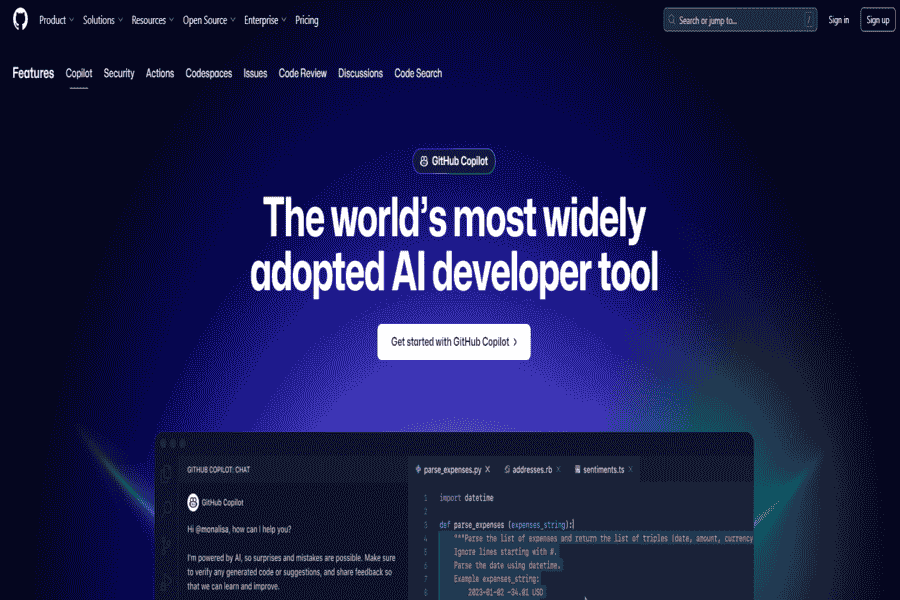
GitHub Copilot, developed by OpenAI and GitHub, is an AI-powered code generation tool that integrates with IDEs like Visual Studio Code. It suggests complete lines or blocks of code based on context.
Pros:
- Smooth integration with popular IDEs.
- Supports multiple programming languages.
- Improves coding efficiency and reduces repetitive tasks.
Cons:
- Limited contextual understanding in complex scenarios.
- Dependent on internet connectivity.
- Requires a GitHub account for usage.
Pricing Package:
- Individual: $10/month or $100/year.
- Business: Custom pricing.
Tabnine
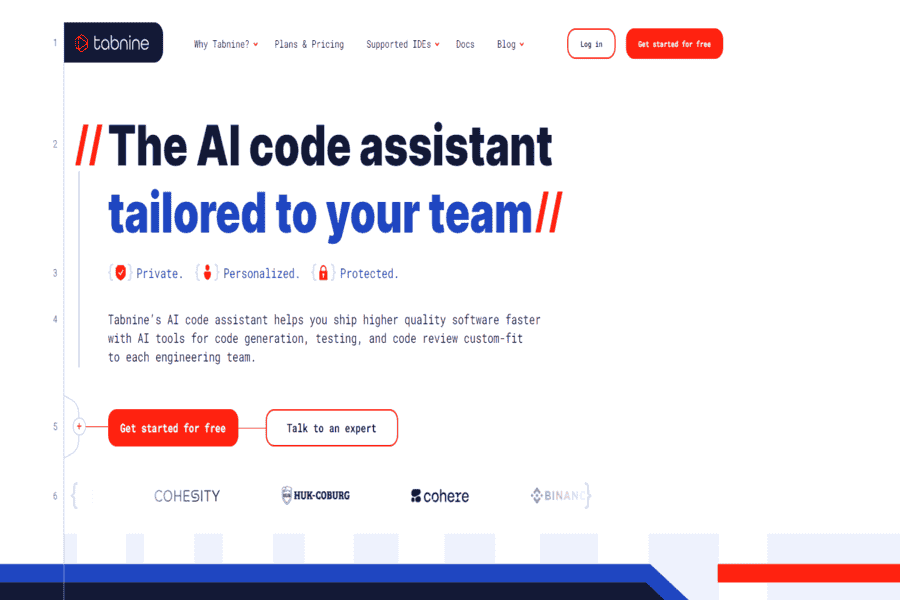
Tabnine Is an AI-powered coding assistant that enhances software development productivity by offering accurate, context-aware code completions.
Pros:
- Supports over 20 programming languages.
- Local and cloud-based options.
- Custom model training for enterprises.
Cons:
- Performance depends on IDE compatibility.
- Premium features can be expensive for individuals.
Pricing Package:
- Free: Limited features.
- Pro: $12/month per user.
- Team: $40/month for 3 users.
Replit Ghostwriter
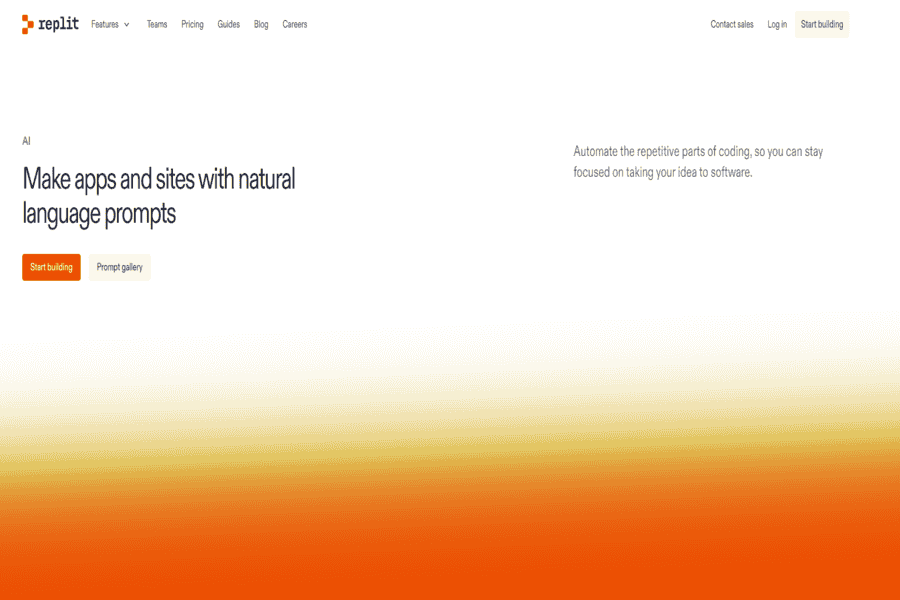
Replit Ghostwriter is a built-in AI coding assistant designed for Replit’s collaborative programming environment. It provides intelligent code completions and debugging tips.
Pros:
- It is fully integrated with Replit’s collaborative platform.
- Offers debugging insights.
- Easy for beginner developers.
Cons:
- Limited to Replit’s environment.
- It is not as feature-rich as standalone tools like Copilot.
Pricing Package:
- Included in Replit Pro plan ($20/month).
Amazon CodeWhisperer

Amazon CodeWhisperer is an AI-powered coding assistant designed for cloud-based application development. It integrates with AWS tools to help developers write secure and efficient code.
Pros:
- Built-in support for AWS-specific APIs.
- Focus on security with recommendations for fixing vulnerabilities.
- Free tier available.
Cons:
- Best suited for AWS users; limited outside of that.
- Requires familiarity with the AWS ecosystem.
Pricing Package:
- Free Tier: Limited functionality.
- Professional: $19/user/month.
Kite
Kite is an AI-powered autocomplete tool that helps developers write code faster and with fewer errors by offering intelligent code suggestions in real-time.
Pros:
- Works offline for privacy-conscious users.
- Supports over 16 programming languages.
- Lightweight and easy to install.
Cons:
- Limited to code completion; no debugging features.
- It was discontinued in 2022 (but still used by some legacy users).
Pricing Package:
- Free (discontinued).
Codex by OpenAI
Codex is the AI model behind GitHub Copilot, capable of writing code, answering coding questions, and converting natural language into code across multiple programming languages.
Pros:
- Excellent natural language understanding.
- Extensive language and framework support.
- Available through OpenAI API.
Cons:
- Requires API integration for full functionality.
- Pricing is usage-based and can be costly for high demand.
Pricing Package:
- Usage-based pricing via OpenAI API.
DeepCode (now part of Snyk)
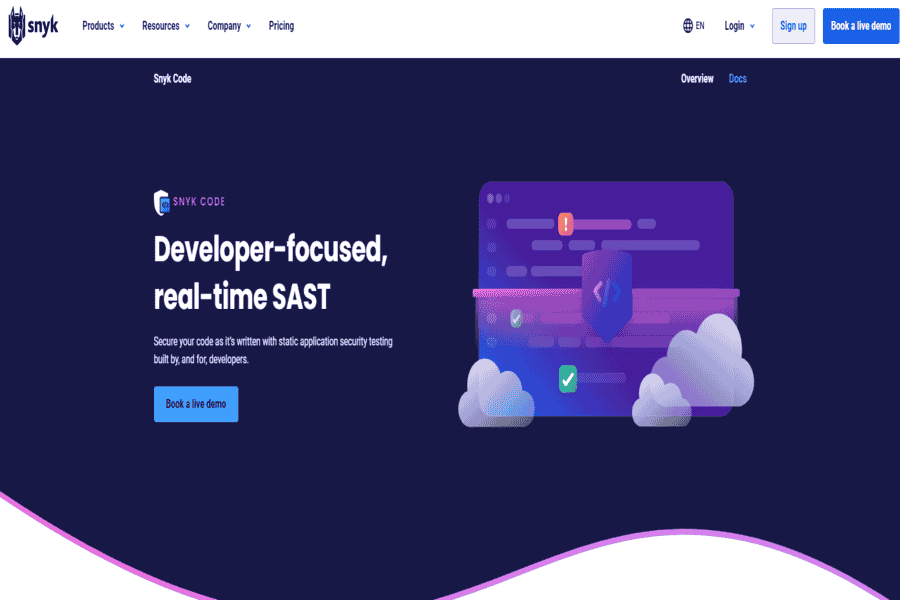
DeepCode uses AI to analyze codebases for bugs, vulnerabilities, and potential improvements. It is now integrated into Snyk’s product suite for secure development.
Pros:
- Security-focused code analysis.
- Scans multiple languages and frameworks.
- Easy integration with CI/CD pipelines.
Cons:
- Limited to code scanning rather than generation.
- Requires a Snyk account.
Pricing Package:
- Free Tier: Available.
- Premium: Custom pricing.
PolyCoder
PolyCoder is an AI-based code-completion and generation model designed to work across multiple languages and frameworks, focusing on open-source development.
Pros:
- Open-source and highly customizable.
- Supports various programming languages.
Cons:
- Limited support compared to commercial tools.
- Requires technical knowledge for setup.
Pricing Package:
- Free (open-source).
Ponicode
Ponicode is an AI-powered unit testing tool that helps developers generate unit tests with minimal effort, making sure higher code quality and reliability.
Pros:
- Focuses on automated unit test generation.
- Easy integration with IDEs like VS Code.
Cons:
- I focused primarily on unit testing; there was no code completion.
- Limited language support.
Pricing Package:
- Free trial available; contact for pricing.
Codiga
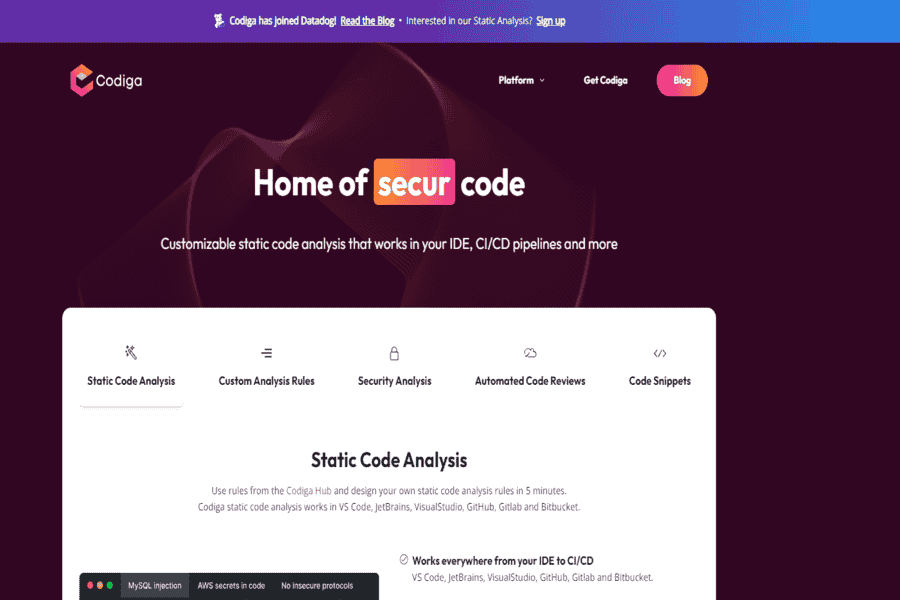
Codiga is an AI-assisted code review tool that analyzes code for quality, security, and performance issues, providing actionable suggestions to developers.
Pros:
- Automated code review for multiple languages.
- Integration with IDEs and Git platforms.
Cons:
- Requires configuration for optimal use.
- Limited free tier.
Pricing Package:
- Free Tier: Available.
- Premium: $14/month per user.
CodeT5
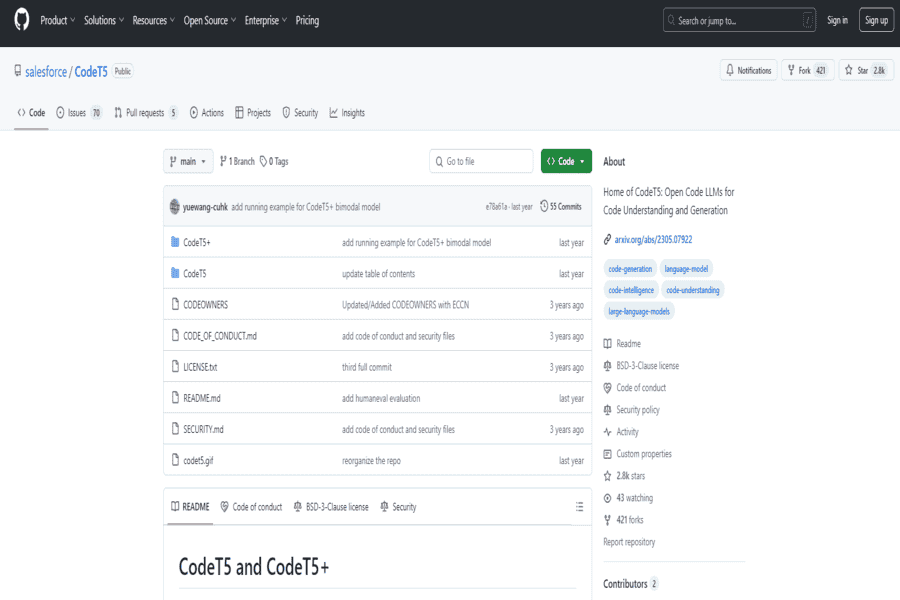
CodeT5 is a transformer-based AI model for code generation and understanding. It supports multiple programming languages developed by Salesforce, making it versatile for various coding tasks such as code completion, summarization, and refactoring.
Pros:
- Supports multiple languages like Python, Java, and JavaScript.
- Open-source, allowing for customization.
- Good for both code generation and understanding.
Cons:
- Requires technical knowledge to deploy and fine-tune.
- Commercial products are more user-friendly.
Pricing Package:
- Free (open-source).
Sourcery
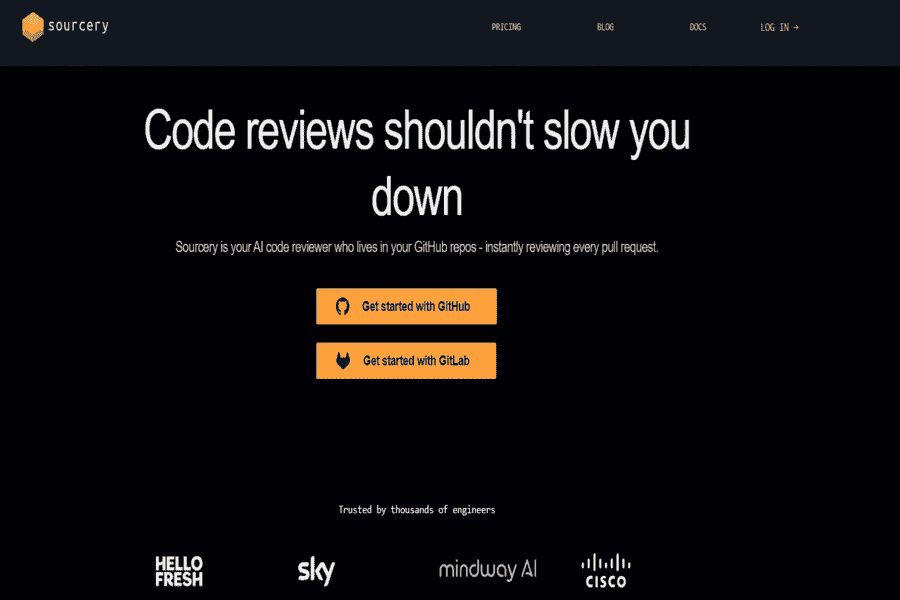
Sourcery is an AI-powered Python code refactoring tool that automatically suggests improvements and optimizations for your code. It works within your IDE and helps developers keep code clean and efficient.
Pros:
- Automatically suggests refactorings to improve code quality.
- Integrates smoothly with Python IDEs.
- It can be customized to focus on specific code patterns.
Cons:
- Limited to Python code.
- The free version has limited features.
Pricing Package:
- Free: Limited features.
- Pro: $10/month per user.
Intellibot
Intellibot is an AI-powered test automation platform that assists developers by generating automated test scripts. It focuses on improving quality assurance by automating testing across different platforms and programming languages.
Pros:
- Automates repetitive testing tasks.
- Supports a wide range of languages and tools.
- Provides continuous integration and delivery support.
Cons:
- Requires setup for integration with existing testing tools.
- It was primarily focused on testing, not code generation.
Pricing Package:
- Free Trial: Available.
- Enterprise Pricing: Contact for details.
WriteSonic Code Generator

WriteSonic offers a code generation tool that allows developers to generate code snippets using natural language descriptions. It’s geared toward those who want quick solutions or templates for basic coding tasks.
Pros:
- Converts natural language into working code snippets.
- Works with multiple languages and frameworks.
- User-friendly interface for non-developers.
Cons:
- It is less powerful for complex code-generation tasks.
- Limited functionality compared to specialized coding tools.
Pricing Package:
- Free Plan: Limited access.
- Pro Plan: $19/month.
Codeium

Codeium is an AI-powered code assistant focused on providing auto-completion, suggestions, and error detection for developers. It works with popular IDEs like VS Code and supports numerous programming languages.
Pros:
- Offers code suggestions and completions.
- Integrates well with major IDEs.
- Supports various languages like Python, Java, JavaScript, and more.
Cons:
- Requires a premium subscription for advanced features.
- It is still developing its support for certain languages and frameworks.
Pricing Package:
- Free: Basic features.
- Pro: $10/month per user.
Codeassist
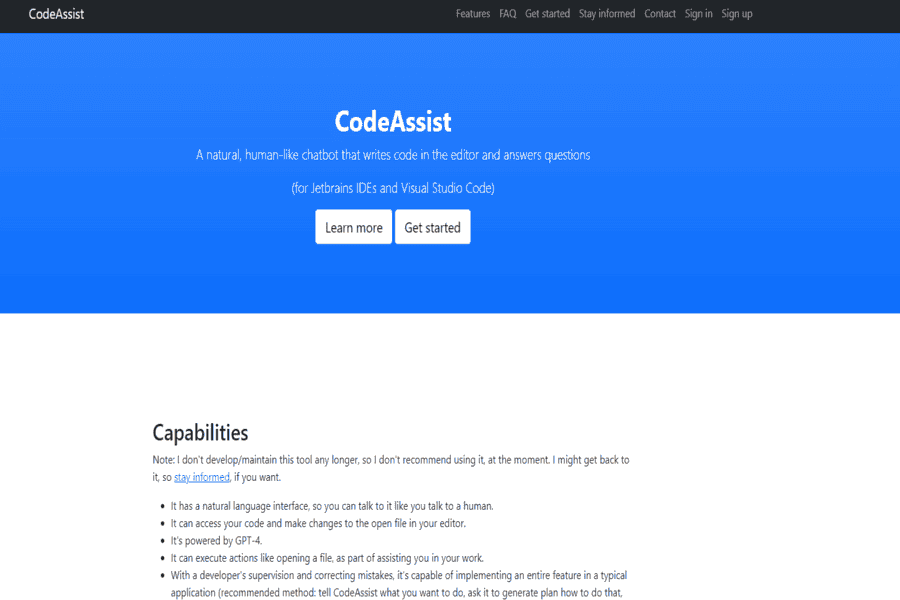
Codeassist is an AI-powered tool designed to help developers generate code snippets, provide code suggestions, and offer refactoring tips. It focuses on improving development speed and productivity.
Pros:
- Quick and efficient code generation.
- Offers refactoring suggestions to improve code quality.
- Compatible with various programming languages.
Cons:
- Limited functionality in more complex projects.
- Primarily designed for code completion rather than full-scale development.
Pricing Package:
- Free: Basic features.
- Pro: $15/month per user.
CodexAI
CodexAI provides AI-driven code generation for developers, transforming natural language prompts into code. It’s designed to speed up the development process by interpreting the developer’s intentions.
Pros:
- Converts natural language directly into code.
- Supports multiple languages, including Python, JavaScript, and Go.
- Provides error detection and debugging features.
Cons:
- Needs refinement in complex and context-heavy code generation.
- Limited documentation compared to some other tools.
Pricing Package:
- Free Trial: Available.
- Premium: $30/month per user.
AI Code Reviewer
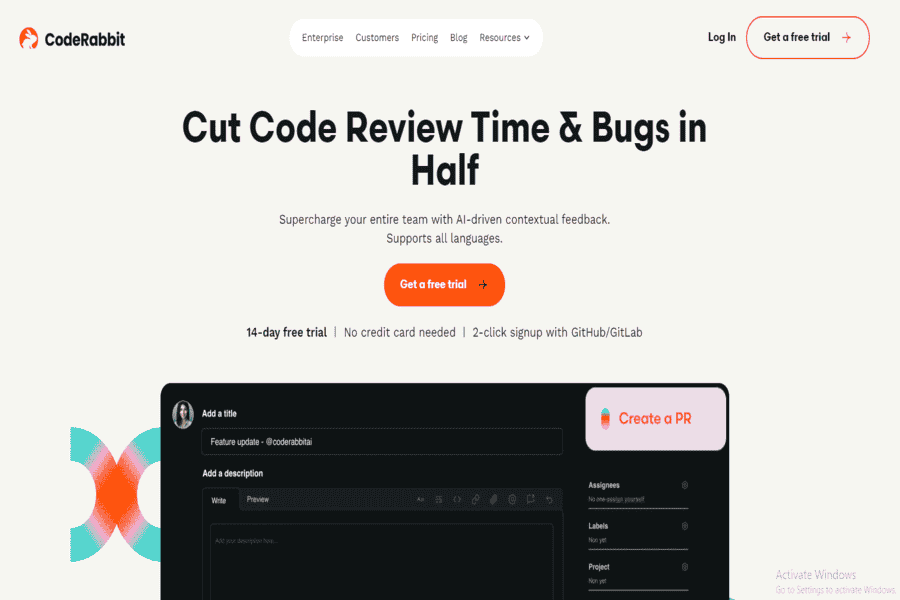
AI Code Reviewer assists developers by analyzing their code and suggesting improvements based on best practices and industry standards. It helps make sure code quality and identifies areas of potential vulnerability.
Pros:
- Focuses on code review and optimization.
- Detects potential security flaws and performance bottlenecks.
- Supports multiple programming languages.
Cons:
- Limited to code review and lacks full generation capabilities.
- Works best with large codebases but can be slower on smaller projects.
Pricing Package:
- Free Tier: Limited access.
- Pro Plan: $25/month per user.
QuillBot for Code
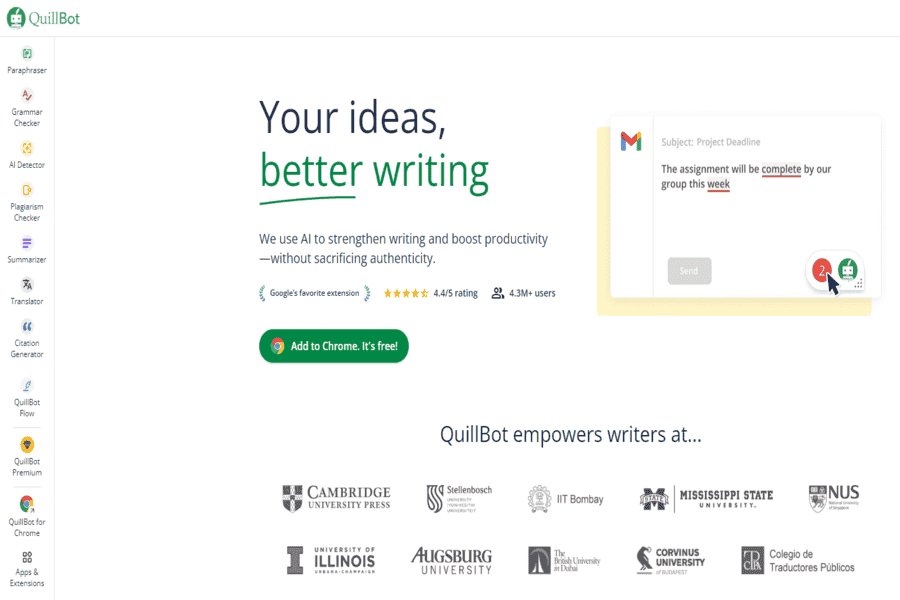
QuillBot, a popular paraphrasing tool, has expanded into code generation. It helps developers generate and optimize code through natural language input, making it easier to turn ideas into functional code quickly.
Pros:
- Simplifies code generation using natural language processing.
- Great for beginners looking to learn and improve coding practices.
- Offers a user-friendly interface.
Cons:
- It is more suitable for simple code tasks, not complex algorithms.
- Limited customization and flexibility for advanced developers.
Pricing Package:
- Free Plan: Basic access.
- Premium: $14.95/month.
Autocode
Autocode is an AI-powered code generation platform designed to assist developers in building serverless applications. It lets developers quickly create APIs, automation, and webhooks without writing extensive backend code.
Pros:
- Focuses on serverless applications and webhooks.
- Integrates well with multiple cloud services and APIs.
- Offers pre-built templates to simplify development.
Cons:
- Primarily focused on serverless apps and APIs, not general-purpose code generation.
- Requires an understanding of serverless architecture.
Pricing Package:
- Free Plan: Limited API calls.
- Pro Plan: $10/month per user.
Best Practices for Using AI Code Generators
Human Oversight:
Critical Thinking:
Always evaluate the generated code, making sure it aligns with your requirements and coding standards.
Error Detection:
Review the code for errors, logical inconsistencies, and security vulnerabilities.
Continuous Learning:
Stay Updated:
Keep abreast of the latest advancements in AI code generation and explore new tools and techniques.
Experimentation:
Experiment with different AI code generators to find the best fit for your needs.
Ethical Considerations:
Intellectual Property:
Respect intellectual property rights and avoid using AI tools to plagiarize or create derivative works.
Fair Use:
Use AI tools responsibly and ethically, avoiding misuse or harmful applications.
Security Awareness:
Vulnerability Assessment:
Regularly assess the security implications of using AI-generated code.
Secure Coding Practices:
Adhere to secure coding practices, even when using AI tools.
Input Validation:
Validate user input to prevent injection attacks and other security vulnerabilities.
Effective Collaboration:
Teamwork:
Encourage collaboration between developers and AI tools to encourage creativity and innovation.
Knowledge Sharing:
Share insights and best practices related to AI code generation within your team.
Future of AI Code Generation
The future of AI code generation is undeniably bright, with rapid advancements in machine learning and natural language processing driving the evolution of these tools. As we move forward, we expect to see even more sophisticated and powerful AI code generators that will change software development.
Key Trends Shaping the Future:
Enhanced Natural Language Understanding:
More Intuitive Interaction:
AI code generators will become increasingly adept at understanding complex natural language queries, enabling developers to provide more nuanced instructions.
Contextual Awareness:
These tools will better grasp the context of a specific coding task, leading to more accurate and relevant code suggestions.
Advanced Code Generation Capabilities:
Complex Algorithm Generation:
AI code generators will be capable of generating complex algorithms and data structures, automating tasks that currently require large human effort.
Automated Testing and Debugging:
These tools will be able to automatically generate test cases and identify potential bugs in the code, improving software quality and reliability.
Increased Integration with Development Tools:
Smooth Workflow:
AI code generators will be tightly integrated with popular IDEs and development workflows, providing real-time assistance and suggestions.
Collaborative Development:
AI tools will facilitate collaboration among developers by suggesting code improvements, identifying potential conflicts, and automating code reviews.
Ethical Considerations and Responsible AI:
Bias Mitigation:
Developers must be mindful of potential biases in AI code generators and take steps to mitigate them.
Transparency and Explainability:
AI models will be designed to be more transparent, allowing developers to understand the rationale behind their suggestions.
AI code generators have the potential to change the way software is developed, offering large benefits in terms of productivity, code quality, and innovation. By understanding their capabilities, limitations, and best practices, developers and engineers can use the power of AI to accelerate their development efforts and create exceptional software.