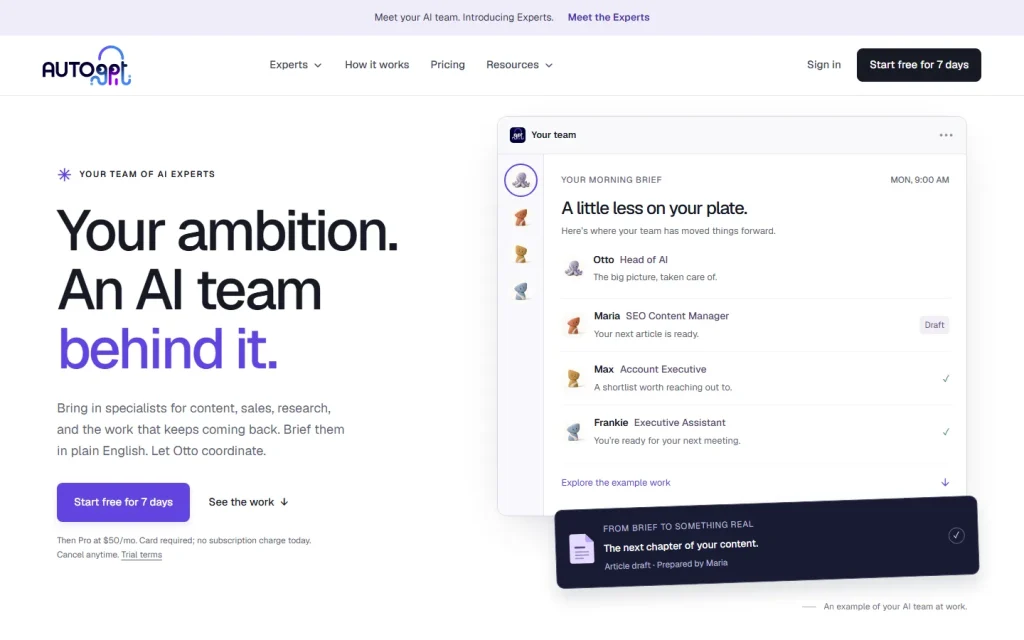
AutoGPT is an open-source platform for building AI agents that pursue a goal on their own. You state an objective, and the agent plans steps, uses tools and checks its results, originally with GPT-4 as the reasoning engine. It suits developers and automation builders more than casual chatbot users.
What AutoGPT Does
AutoGPT turns a language model into an agent that works through a multi-step task without a prompt for every step. Where ChatGPT answers one message at a time, AutoGPT keeps going: it researches, drafts, saves files and revises until it decides the goal is met or you stop it.
The project started as an experiment built on GPT-4 and grew into a broader platform from Significant Gravitas.
How the Agent Loop Works
An AutoGPT agent runs a loop of planning, acting and reviewing. It reads your goal, lists the steps it thinks it needs, calls a tool such as web search or file writing, then judges the output and picks the next step.
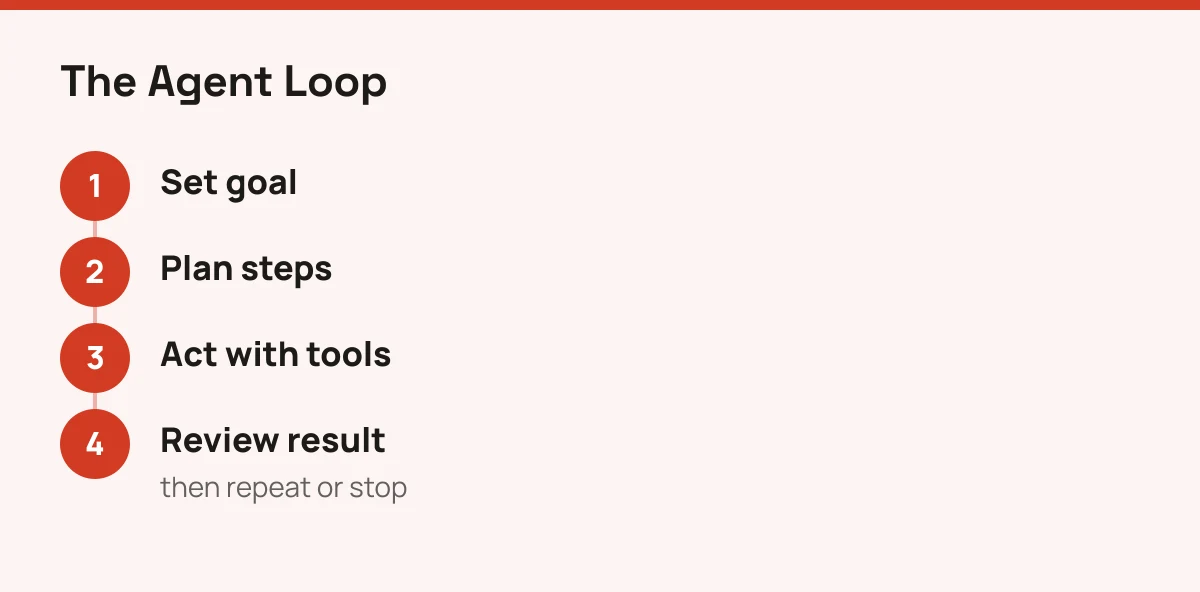
That loop is the strength and the risk. A clear goal with a defined finish line produces useful work. A vague goal produces repetition and a larger API bill. Write goals like a brief: the outcome, the format, the limit.
Who Should Use AutoGPT
AutoGPT fits people who are comfortable with APIs and want repeatable automation. If you can read a Docker setup guide and manage an API key, you're the target reader.
Skip it if you only need a quick answer, a rewrite or a one-off draft. A normal chatbot is faster and cheaper there. The decision rule is simple: reach for an agent when the task has five or more dependent steps and you'd otherwise copy results between tools by hand.
Situations Where AutoGPT Fits
AutoGPT works best on tasks with a checkable outcome. Four situations stand out:
- Market or competitor research that ends in a written summary file.
- Drafting and revising content against a fixed outline.
- Code scaffolding, where the agent writes, runs and fixes small scripts.
- Recurring workflows built in the visual builder.
For spreadsheet and document work, GPT for Sheets and Docs keeps the model inside the app you already use. For a lighter agent-style helper inside a workspace, see GPT Workspace.
Where AutoGPT Falls Short
AutoGPT still needs a human reviewer. Agents can loop, misread a source or produce confident errors, so check anything that matters before you publish or run it.
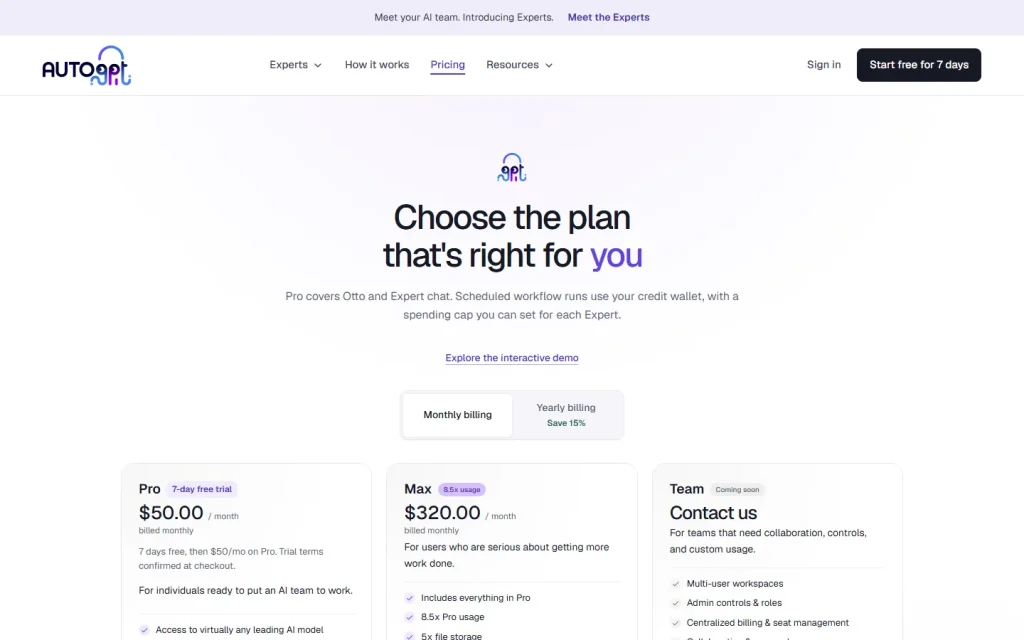
Cost is the other limit. The software is free to self-host, but every loop calls a paid model API. Set a spending cap on your API account before the first run. The hosted platform is paid, with Pro at $50/mo after a 7-day trial.
If you want a hands-off assistant for a single job, a focused tool such as SEO GPT will be steadier than a general agent.
Browse the wider AI Infrastructure and Agent Tooling category to compare other agent platforms before you commit.