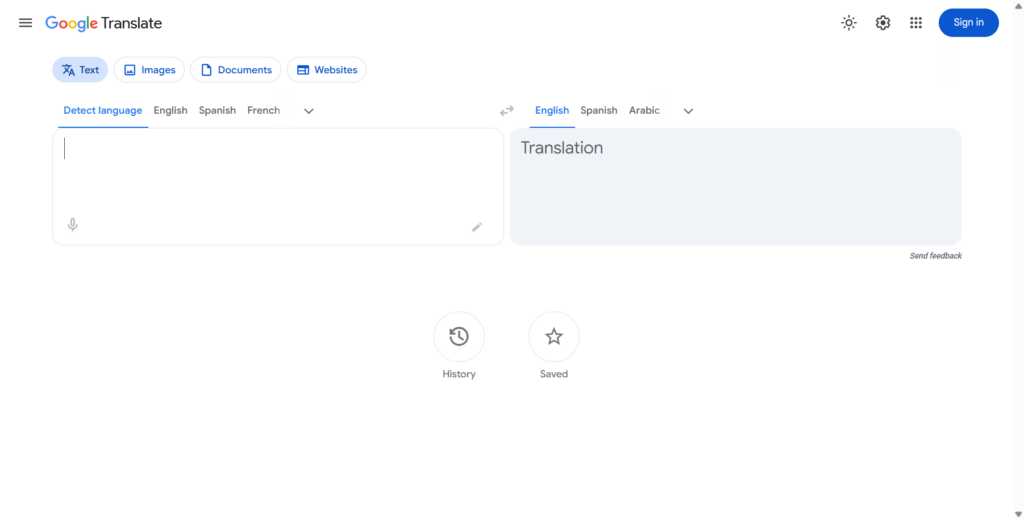
Google Translate has been Google's free translation service since 2006, and its underlying engine has moved from statistical machine translation to neural models to, most recently, Gemini. That shift shows up most in how the tool handles language that doesn't translate literally: idioms, slang, and local expressions now get translations that carry the intended meaning instead of a word-for-word rendering, because Gemini parses surrounding context before producing a result.
The 2026 rollout of Gemini 3.5 Live Translate added near real-time speech-to-speech translation across more than 70 languages, automatically detecting the spoken language and generating natural-sounding translated speech that preserves the original speaker's intonation and pacing. The feature is rolling out through the Translate app on Android and, per Google, through any pair of headphones, with iOS and additional countries following through 2026.
Beyond translation itself, Google has expanded the app's language-learning tools, generating tailored listening and speaking practice sessions on the fly and adapting them to a learner's skill level, with streak tracking to encourage daily practice. Text, camera, and conversation translation remain free and unlimited, and the same engine is available to developers through the paid Cloud Translation API for app and website integrations.