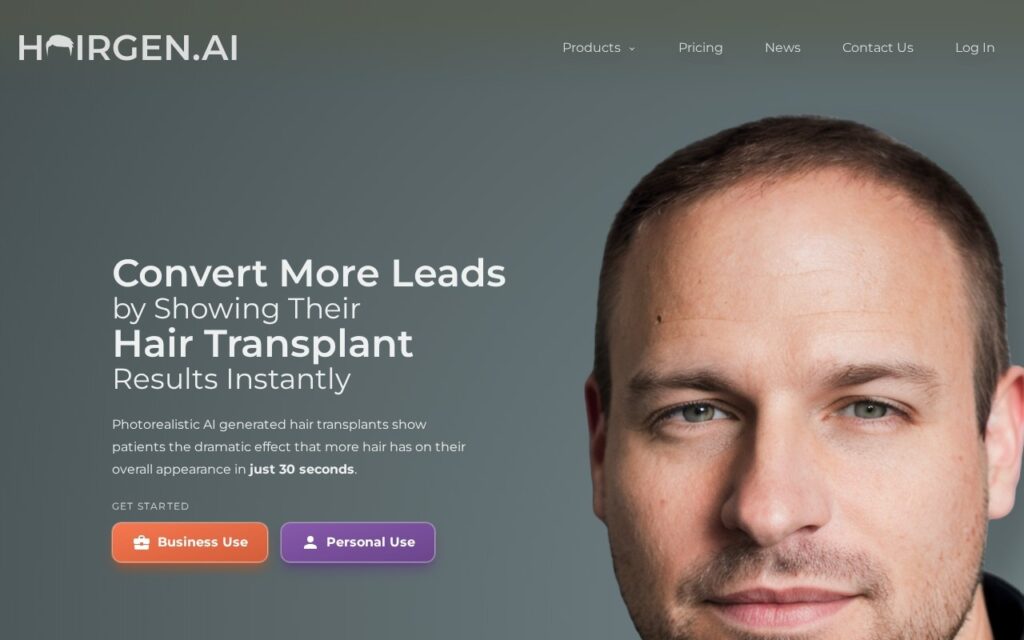
Hairgen.ai generates photorealistic previews of hair restoration outcomes, sold to clinics rather than to individuals. Three products sit under it: a Hair Restoration Simulator, a Hair Loss Simulator showing progression, and a Face Anonymizer for using patient imagery in marketing.
Be clear about what it is sold as. The vendor’s own framing is “convert more leads by showing their hair transplant results instantly” – this is a sales-conversion tool for clinics, not a clinical planning instrument. Aesthetic simulation is an established and legal category, and helping someone visualise an outcome before an irreversible procedure has genuine value.
The responsibility that comes with it sits with the clinic. A photorealistic render is not a prediction of a surgical result: real outcomes depend on donor supply, scalp laxity, healing and the surgeon, and none of that is in the image. Presenting a simulation during a sales conversation without stating plainly that it is illustrative risks forming expectations a procedure cannot meet – which is a consent problem, not just a marketing one. Advertising rules for cosmetic procedures also restrict before-and-after imagery in several jurisdictions.