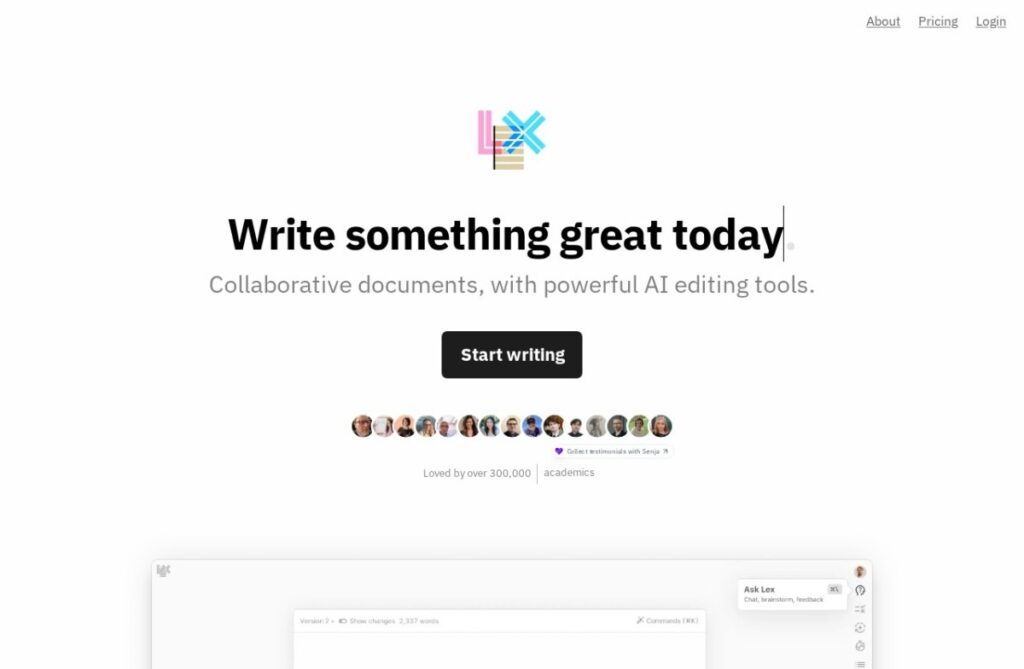
Lex looks and feels like a plain document editor at first glance, deliberately so. The interface strips away most of what a typical AI writing tool leads with (no big prompt box, no gallery of templates) and instead keeps a document at the center, with an AI sidebar available when a writer actually wants it rather than constantly on display.
That restraint is the point. Lex is built for people doing longer, more considered writing, essays, newsletters, book chapters, who find most AI writing tools too eager to generate whole paragraphs unprompted. Its assistant can still draft, continue, or critique a passage on request, but the default state of the editor is just you and the page.
At $18 a month above a limited free tier, Lex sits closer to a premium writing app than a mass-market copy generator, and its audience reflects that: independent writers and newsletter authors who already have opinions about their tools, rather than teams looking for a content-production platform.