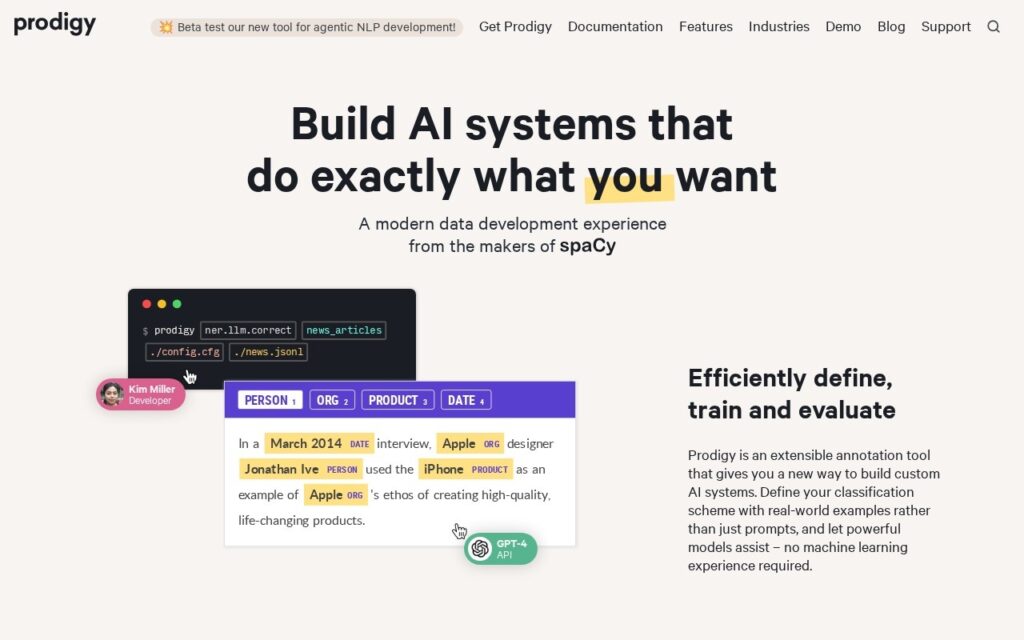
Prodigy is a self-hosted annotation tool that lets a data scientist or developer label text, images, audio and video for machine learning, using built-in recipes for tasks like named entity recognition, text classification, part-of-speech tagging and computer vision, or fully custom Python recipes for a bespoke workflow. Active-learning models assist the annotator by prioritizing the most useful examples to label next, and 23 customizable annotation interfaces cover everything from plain text to multiple-choice and conflict resolution. Built by Explosion (ExplosionAI GmbH), the Berlin company behind the widely used open-source spaCy NLP library, founded in October 2016 by Matthew Honnibal and Ines Montani, Prodigy is used by more than 10,000 developers and researchers, with named case studies including S&P Global, The Guardian and UK innovation foundation Nesta.
Prodigy runs entirely on a user’s own machines with no cloud dependency, which suits strict privacy requirements but also means a team is responsible for its own hosting, backups and infrastructure rather than relying on a managed service. As a professional annotation and machine-teaching tool, it expects some comfort with Python and command-line workflows rather than being a no-code product for non-technical users.
There is no free tier; Prodigy is sold as a lifetime license. A Personal license for freelancers, indie developers and hobbyists is $390 USD (excluding tax) with 12 months of free upgrades and unlimited personal and professional use. A Company license is $490 USD per seat, sold in packs of 5 seats, with HTTP auth and SSO, priority support, and seats transferrable within the company.