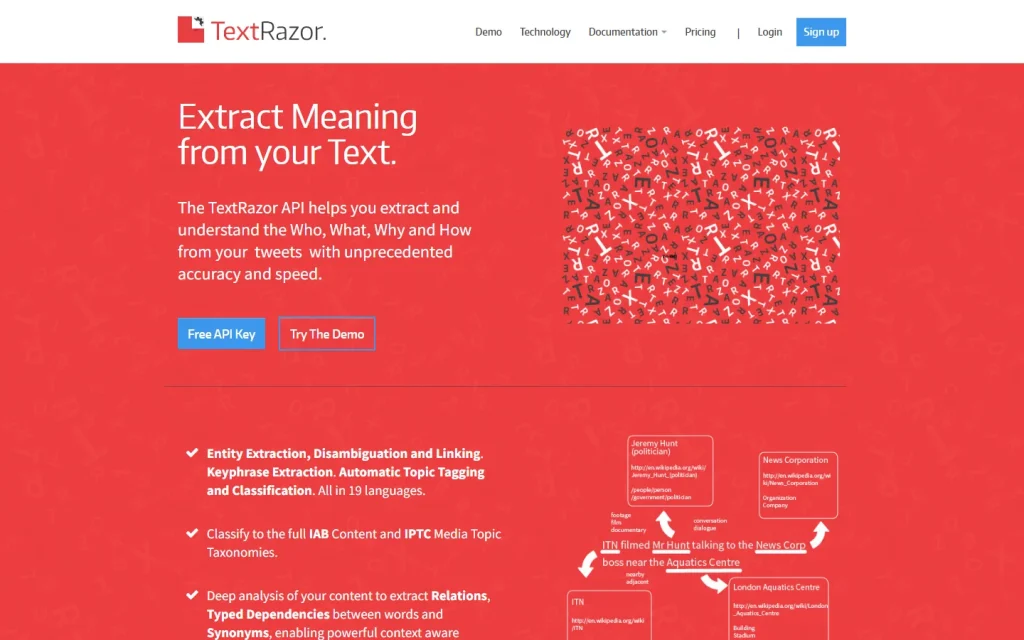
TextRazor is a text analysis API that reads unstructured text and returns entities, topics, keywords and relations as structured data. It suits developers and analysts who need to tag documents at scale without training their own language models.
What TextRazor Does
TextRazor is a hosted natural language processing (NLP) service. You send it text or a URL, and it returns the people, companies, places and concepts it finds, plus the topics the document covers.
Its signature move is linking. Each entity can point to a Wikipedia or Wikidata record, so "Apple" the company doesn't get confused with the fruit. That disambiguation is the reason to pick it over a simple keyword extractor.
It's an analysis tool, not a generative one. It won't write, summarize or answer questions about your text.
How the Analysis Pipeline Works
A TextRazor request names the extractors you want, such as entities, topics, relations or phrases, and the API runs them in one pass. The response bundles the results with the sentence and word positions they came from.
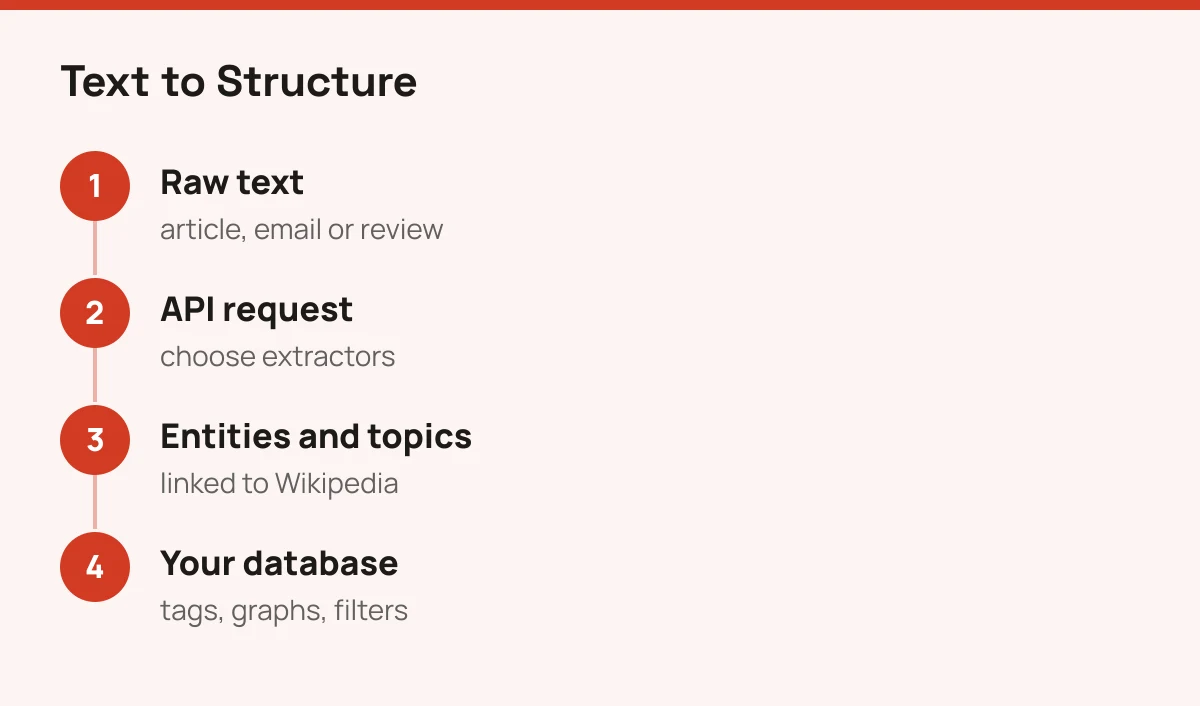
That bundling matters for cost and code. You make one call instead of stitching together separate services, and every tag stays traceable to its place in the source text.
You can also supply custom dictionaries and classifiers. If your industry has product names or jargon the default knowledge base misses, you add them yourself rather than retraining anything.
Who TextRazor Suits
TextRazor fits teams that already have a pipeline and need a reliable tagging step inside it. Three situations stand out:
- Publishers and SEO teams tagging articles with entities and topics for internal linking or content audits.
- Analysts mining reviews, news or support tickets for the companies and themes they mention.
- Developers building knowledge graphs or search filters from messy text.
Skip it if you need text generation, chat or image work. And if your documents are confidential, check the vendor's deployment options before sending anything, since the standard service is hosted. TextRazor also offers an on-premises deployment through its enterprise plans.
Where It Fits Against Other NLP Options
TextRazor sits between a do-it-yourself library and a full cloud AI suite. spaCy gives you control and runs on your own machines, but you manage models, hosting and tuning. A big cloud platform such as IBM Watson AI Platform bundles many services, with more setup to match.
The decision rule is simple. Want control and zero data leaving your servers: use a library. Want entity linking working in an afternoon through a single API: TextRazor is the shorter path. For volume limits and prices, check the plans on the TextRazor pricing page before you commit.
Browse more options in the data and analytics category hub at AI data tools if you're still comparing.