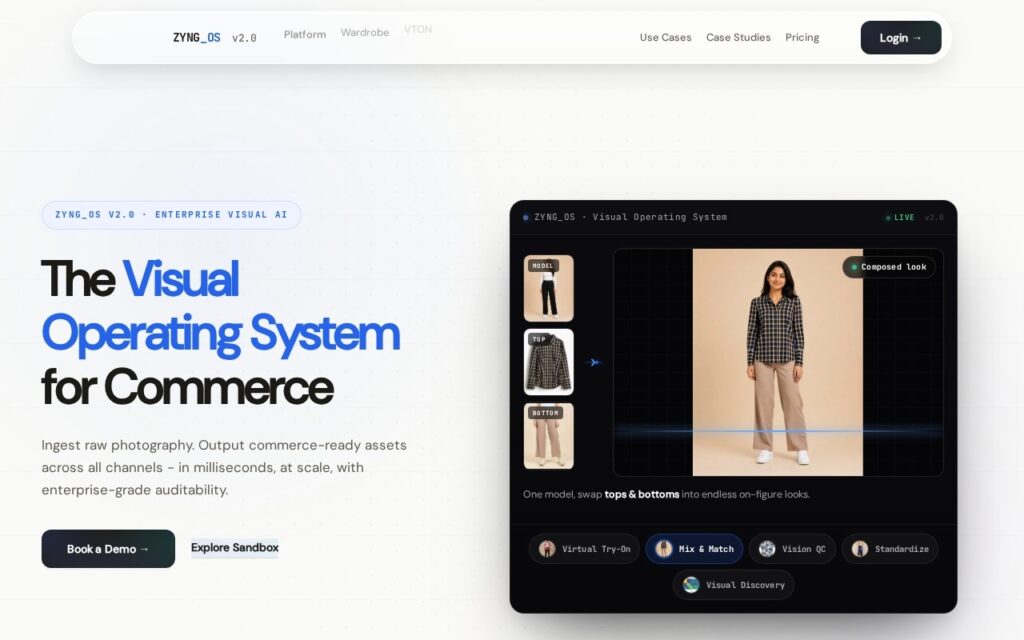
ZYNG AI runs a visual pipeline for ecommerce: raw photography goes in, commerce-ready assets come out across every channel, through stages covering mix-and-match, virtual try-on, standardisation, vision QC and similarity matching. The vendor cites 4,800 assets a minute and enterprise-grade auditability.
Vision QC is the stage that distinguishes this from an image tool, and it is the one worth examining. The site’s own example shows a try-on result rejected with “no human detected” – an automated check catching a failed generation before it reaches a product page. At catalogue scale that matters enormously, because the failure mode of generative imagery is not that most outputs are bad, it is that a small fraction are wrong in ways nobody notices until a customer does.
Auditability is the other enterprise requirement being addressed, since a retailer needs to know which pipeline version produced a given asset. Virtual try-on carries the obligation the technique always does: a composite must represent how the garment actually fits and falls, and imagery that flatters beyond the product returns as a returns rate and, in several jurisdictions, as a misleading advertising problem.