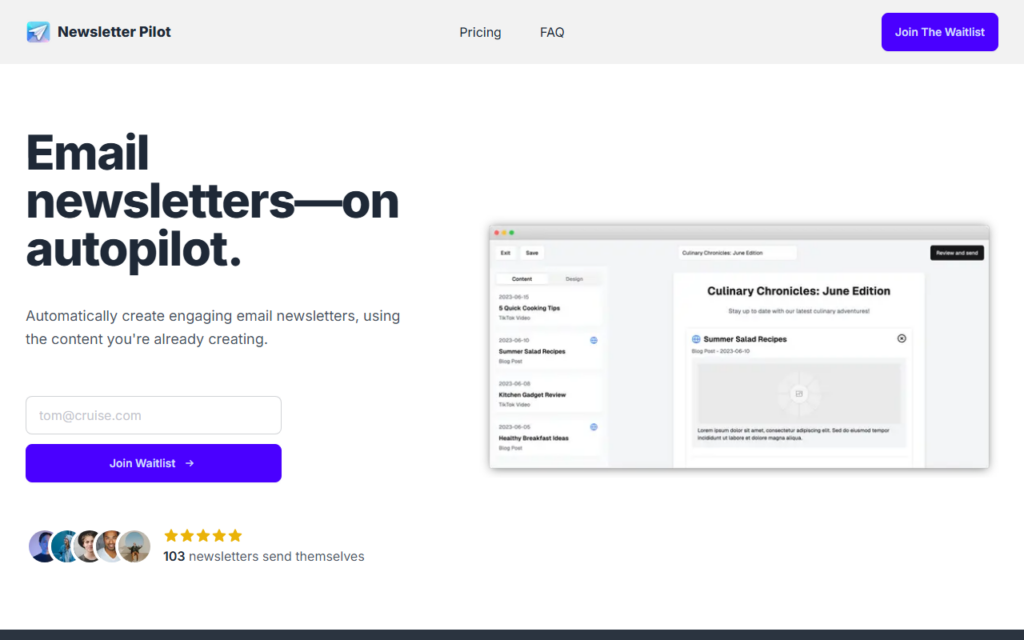
Newsletter Pilot addresses the attrition problem it names on its own homepage: most newsletter creators stop after a handful of issues. The cause is production load, not audience, so the product builds each issue from content the publisher already produces — blog posts, articles, updates — rather than asking for fresh writing every week.
That reuse is what makes the cadence sustainable. A publisher with a working blog has enough raw material for a weekly issue, and the assembly work is what they were skipping.
Editorial judgement still belongs to the publisher. Automated selection can misjudge which items deserve the lead slot, so the sensible workflow is generated draft, human edit, send. The product works with a growing set of creators and has a free entry tier.
Key features
Issue generation from existing published content
Automated selection and summarising of recent items
Consistent send cadence without fresh writing
Draft output for editing before send
Support for creators publishing across formats
Free tier for early-stage newsletters
Screenshots & demo
Pricing
Newsletter Pilot offers a free plan, with paid upgrades for higher limits and more features.
Pricing is provided as a guide. Check the official site for the latest plans.
Is Newsletter Pilot expensive?
Newsletter Pilot has no advertised paid tier. Among the 83 priced tools we list in Marketing, the median entry price is $39 a month.
29% of Marketing tools in the directory offer a free tier, and this is one of them.
Compared against every priced listing in Marketing, recalculated as the catalogue changes. Method and the full market breakdown are in our AI tool pricing study.
Pros & cons
Pros
Attacks the production load that kills most newsletters
Reuses content the publisher already paid to create
Draft-then-edit workflow keeps editorial control
Cons
Automated item selection needs a human check before sending
Little use for publishers without an existing content stream