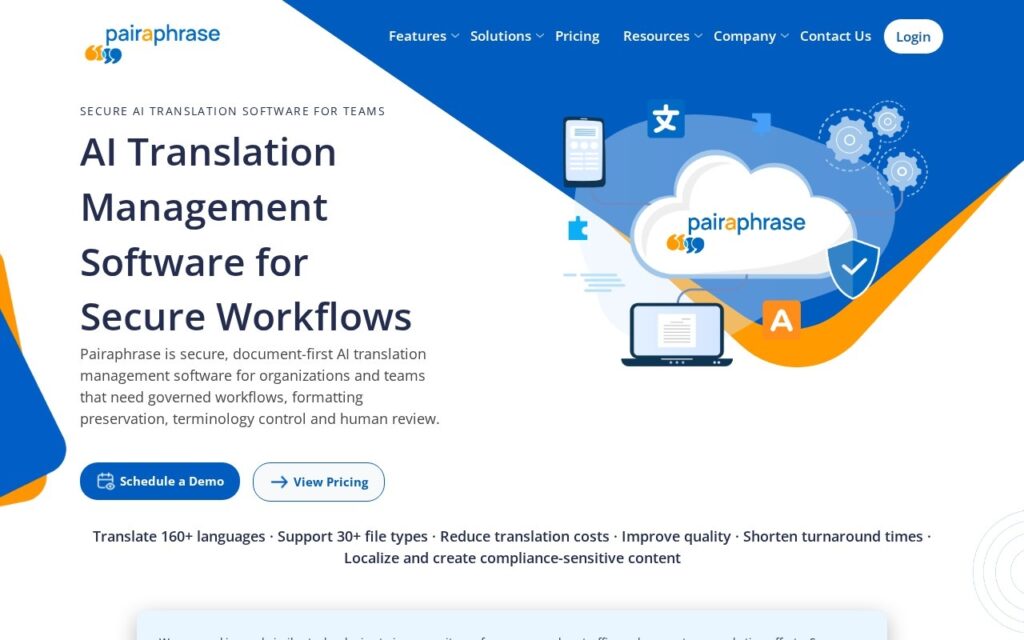
Pairaphrase is document-first translation management for organisations. It handles more than 30 file types across 160-plus languages — Word, PDF, spreadsheets, presentations, scanned files through OCR — preserving formatting automatically rather than returning a wall of translated strings. Behind that sit the pieces that make translation governable: translation memory, glossaries and terminology control, a centralised review editor for human checking, security controls and an API. Multiple engines are available, including its own, DeepL, Microsoft and Google.
The document-first framing is the whole product. Machine translation of a sentence has been a solved commodity for years; translating a 40-page contract and getting back something with the tables, numbering and styles intact is a different problem, and it is the one that actually consumes staff time. Translation memory and glossaries matter for the same practical reason — an organisation needs its product names and legal terms rendered the same way every time, and a fresh generic translation each run is how inconsistency gets into regulated documents.
Two things to weigh. Human review is built into the workflow and should be used: engine output is good enough that errors read fluently, which makes them harder to catch than clumsy ones, and anything with legal or safety consequences needs a qualified reader regardless of what the software costs. And no rates appear on the landing page — the claim that one translation covers an annual subscription is a framing rather than a figure, and organisations comparing this against a translation agency need the actual number.