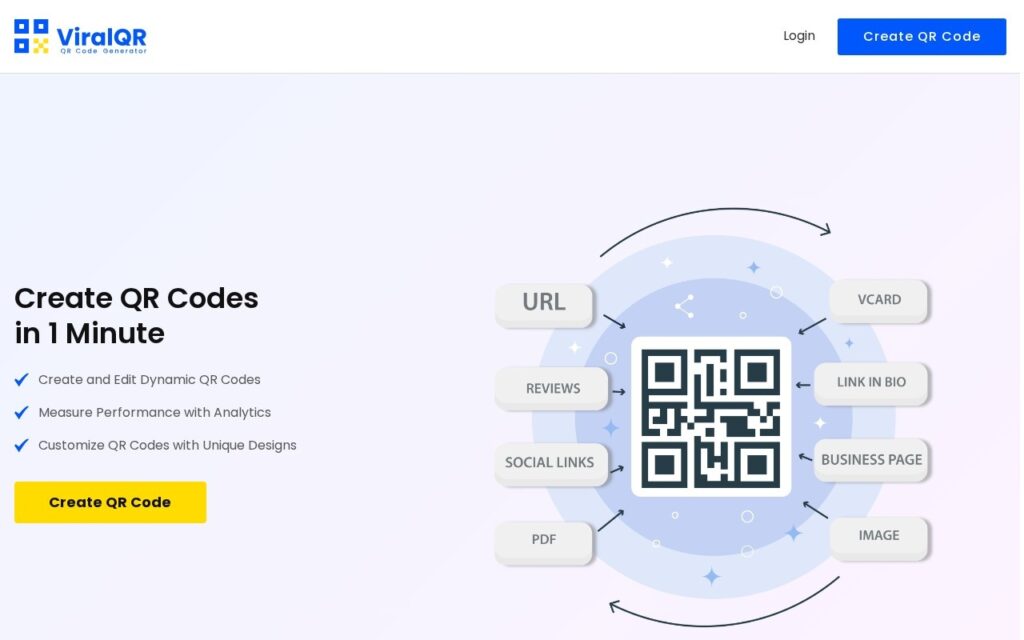
ViralQR generates and manages QR codes. Static codes are free with basic customisation; dynamic codes are editable after printing and carry full analytics on scans by location, device and time, plus bulk generation and custom domains. Design covers logos, brand colours, frames, patterns and shapes, and it supports more than 50 code types including URLs, vCards, PDFs, Wi-Fi, payments and crypto. SOC 2 Type 2 and GDPR compliance are stated.
Editable destinations are the reason dynamic codes exist and they solve a real problem: a code printed on 5,000 flyers pointing at a campaign page you later want to move is otherwise 5,000 pieces of dead paper. Scan analytics turn print into something measurable, which it has never been. Both are genuinely useful and the free static tier is a fair way to handle the case that needs neither.
**The thing to understand before printing anything is what a dynamic code actually is.** It does not encode your destination — it encodes the vendor’s redirect URL, and every scan forever depends on that service still resolving it. If the company folds, changes terms or you stop paying, the codes on your packaging stop working and cannot be edited, only reprinted. That is inherent to the category rather than specific to this vendor, and it is why static codes remain the right answer for anything with a long physical life. Note also that ‘McAfee Total Protection’ is listed among the certifications: that is consumer antivirus software, not a security certification, and its presence beside a real SOC 2 claim is padding. No rates are published.