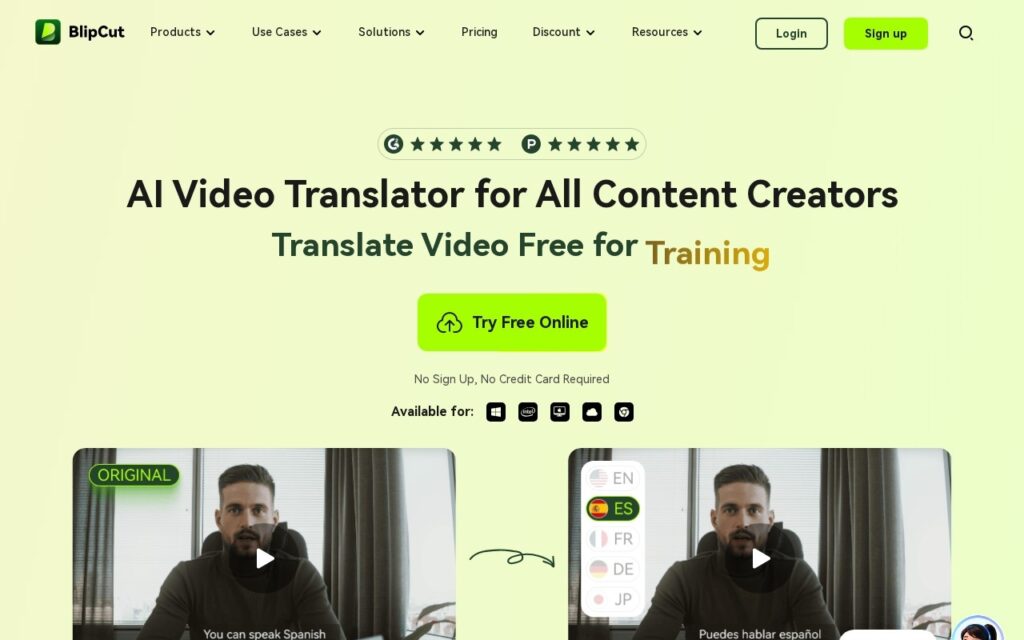
BlipCut translates video into more than 140 languages using automatic speech recognition, AI voice cloning that preserves the original speaker’s voice, and lip-syncing for the dubbed result, with multi-speaker recognition, batch translation across multiple videos at once, and a library of 300-plus built-in AI voices as an alternative to cloning.
Voice cloning combined with lip-sync, rather than either alone, is what makes translated video feel genuinely watchable instead of obviously dubbed – a cloned voice with mismatched lip movement or accurate lip-sync with a generic replacement voice both break the illusion in different ways, and doing both together is the harder, more valuable combination. A stated 4.1 million-plus files processed and nearly a million hours translated is a specific, checkable usage figure reflecting real sustained scale, not an early-stage claim.
Student, teacher and healthcare discounts are a genuinely useful accessibility feature worth checking eligibility for. As with any dubbing tool, lip-sync and voice-clone quality still varies with source video quality and speech clarity – worth spot-checking output before relying on it for anything high-stakes.