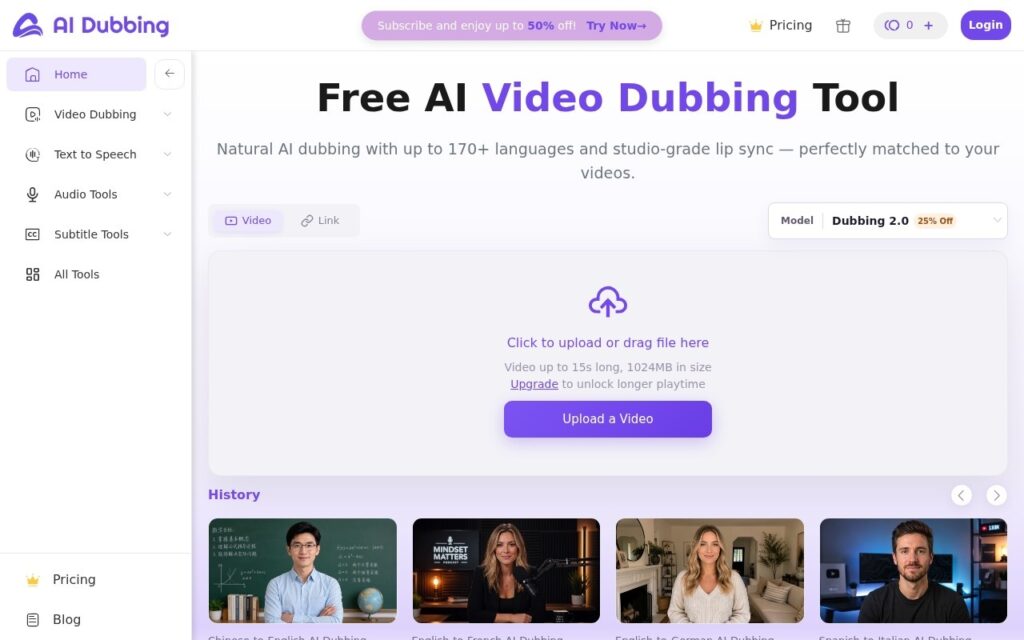
AI Dubbing translates and dubs video into other languages automatically: it detects speech, transcribes it, translates the transcript, and applies lip-sync technology to match the dubbed audio to the speaker’s mouth movements, across 170-plus languages through three different dubbing models. Voice cloning preserves the original speaker’s vocal characteristics in the translated version rather than replacing them with a generic voice, and it also generates multilingual subtitles alongside the dubbed audio.
Lip-sync plus voice cloning together is the combination that actually makes dubbed content watchable rather than obviously dubbed – mismatched mouth movement is the single biggest tell in machine dubbing, and preserving the original voice keeps a creator’s or brand’s identity intact across languages instead of flattening every video into the same handful of stock AI voices. 170-plus language coverage across multiple models also means real choice in accuracy-versus-speed trade-offs per project.
Lip-sync accuracy still degrades on fast speech, unusual camera angles, or partially obscured faces, so results are worth spot-checking before publishing anything high-stakes. A free tier exists to test quality on a real clip before subscribing.