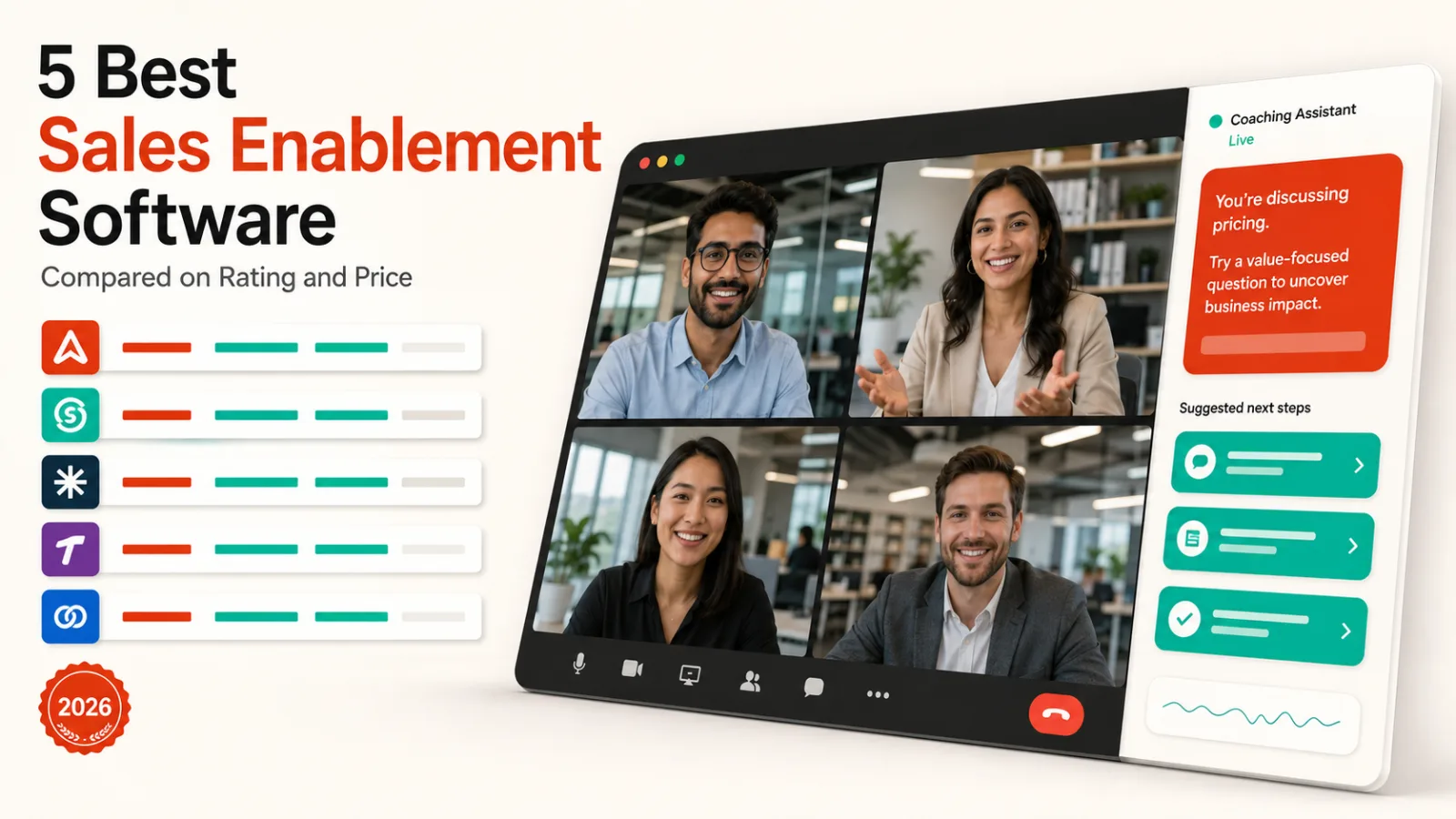
If you want sales enablement software today, Coach by Wonderway is the highest-rated tool in our catalogue with a genuinely free plan. Journey.io is the pick instead if a buyer-facing pitch page matters more than call coaching.
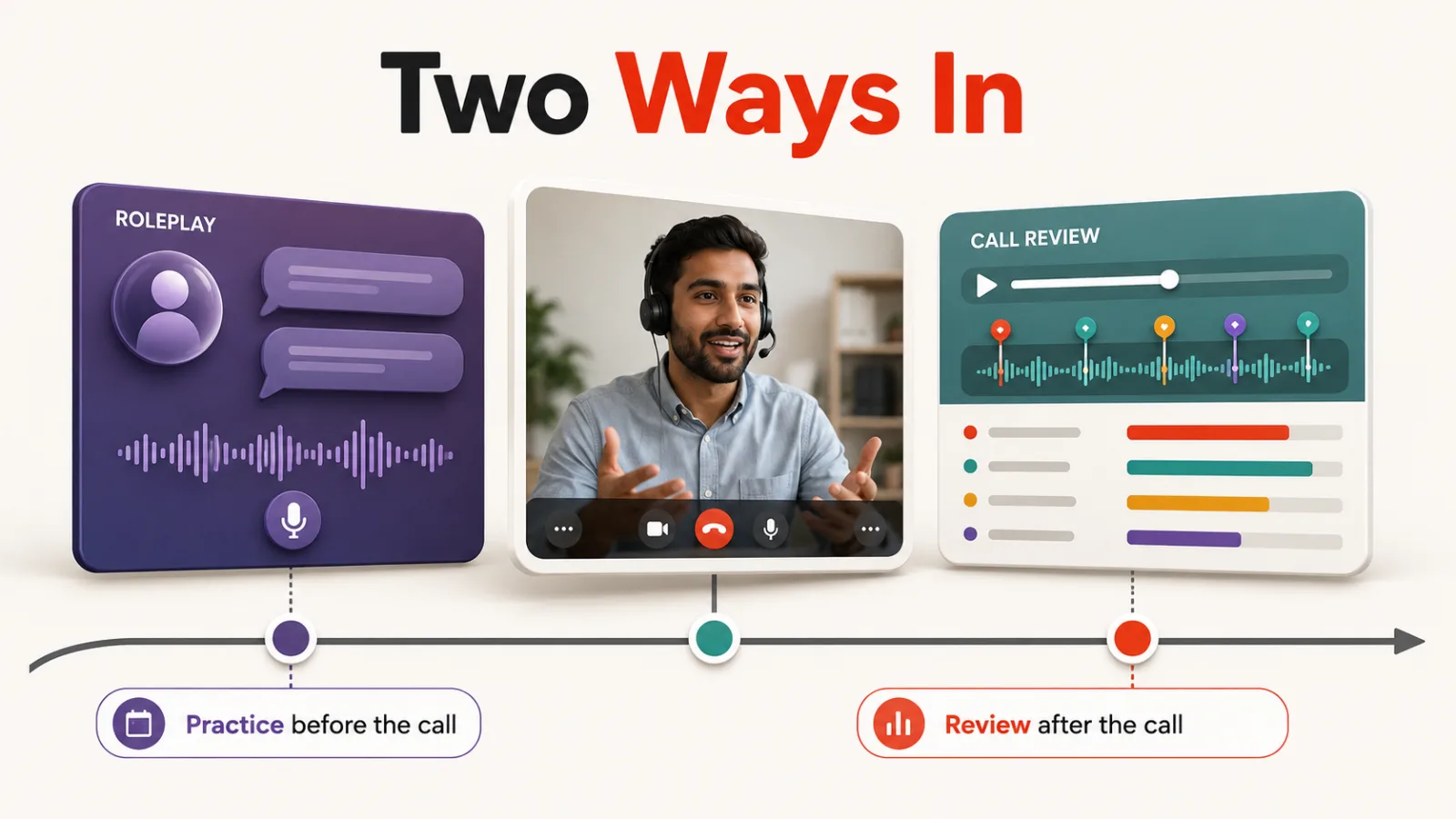
The five below split into two different jobs. Three train a rep before a call happens. The other two work on what already happened: scoring a real conversation, or turning a pitch into a page a buyer can revisit alone.
How this list is ordered, and what it leaves out
These five are ordered by our editorial rating, then by whether a free plan exists, then by starting price. That rating comes from comparing each product’s features, pricing, and positioning against the rest of our Sales & Revenue AI catalogue.
We don’t run these tools against a shared group of reps, so you won’t find a close-rate or win-rate figure from us. Every price and limitation below comes from that product’s own listing, and each listing carries its own last-reviewed date.
Our Sales & Revenue AI category holds ninety listings, and most of them do something else entirely: outbound prospecting, call transcription, or pipeline forecasting. Only five match sales enablement specifically, which is why this list is five deep instead of fifteen.
| Tool | Rating | Free plan | From | Best for |
|---|---|---|---|---|
| Coach by Wonderway | 4.1 | Yes | Free | Automatic call scoring |
| Journey.io | 4.1 | Yes | $29 | Buyer-facing pitch pages |
| Second Nature | 4.1 | No | On request | Enterprise roleplay practice |
| PitchMonster | 4.0 | No | On request | Multilingual call rehearsal |
| Hyperbound | 4.0 | No | On request | Persona-based cold-call drills |
1. Coach by Wonderway
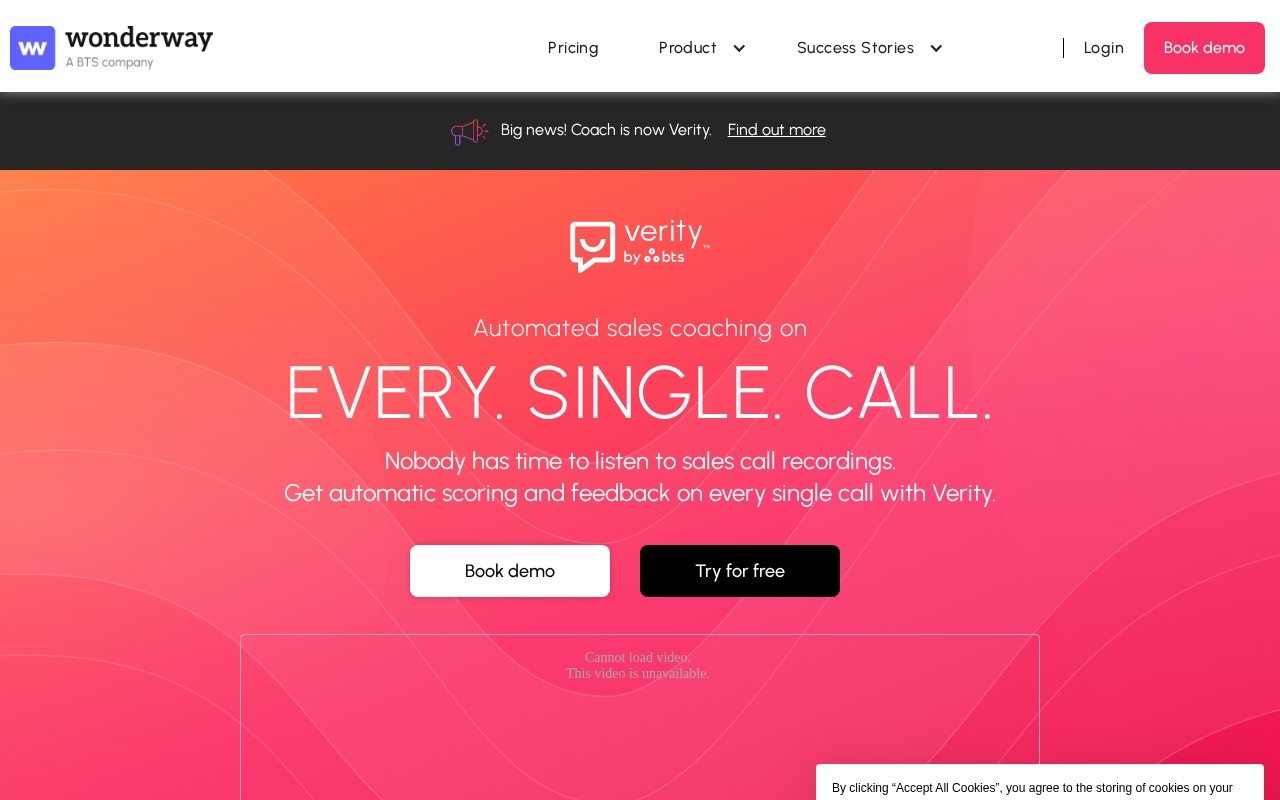
Coach scores every sales call automatically against a scorecard your team builds, then turns the transcript into a coaching plan for each rep. Stefano Zorzi and Till Leinen founded Wonderway in Berlin in 2018.
The scorecard adapts to how your team sells, rather than a generic framework. Managers get a dashboard instead of a stack of calls to review by hand. A free tier covers unlimited call scoring, the only one of these five that does.
BTS Group, an enterprise training firm, acquired Wonderway in 2024. The product is now mid-rebrand: its own site leads with “Coach is now Verity,” even though our listing and this entry still track it as Coach. Premium tiers aren’t priced publicly and need a sales call.
Coach connects to the call and video tools a team already uses, and how well it coaches depends entirely on the scorecard someone configures for it. It’s built for outbound and inside-sales calls specifically, so a team selling mostly face to face or over email will get little from it.
2. Journey.io
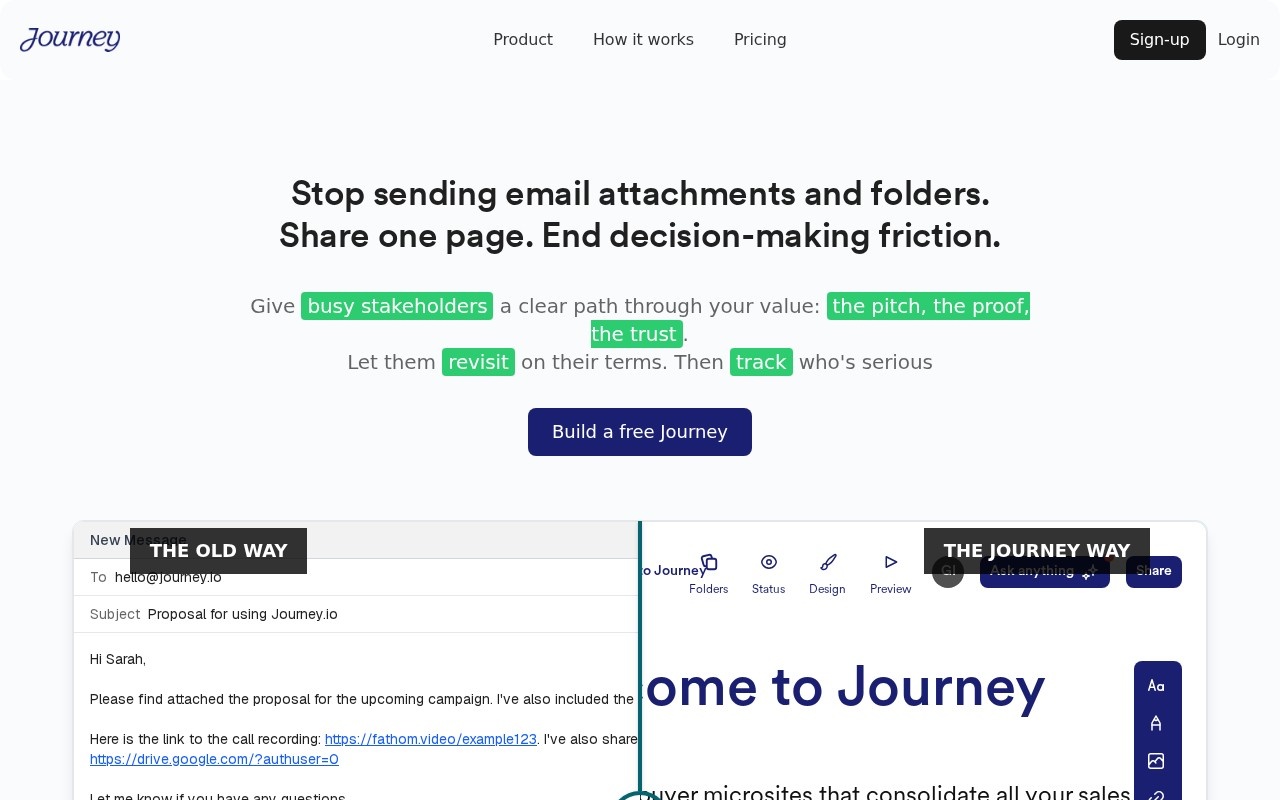
Journey turns a sales pitch into a single branded webpage instead of an email thread with scattered attachments. It mixes slides, video, and a booking link into one page a buyer can revisit. Peter Clark, Anil Sevim, and Brendan Weitz founded it through Y Combinator’s Winter 2021 batch.
Viewer analytics show opens, scroll depth, and where someone stops reading, giving reps a read on real interest that an email open never provides. The same builder also works as an onboarding and support hub once a deal closes.
Its free plan is usable for a real deal rather than one throwaway test page, and paid plans start at $29 a month. That free tier caps out at two active pages, which pushes an engaged user toward upgrading almost immediately.
Its HubSpot and Gong connections sit behind the top Enterprise plan. A team wanting those integrations pays for the highest tier regardless of seat count. Someone still has to design the slides and record the video elsewhere; Journey assembles the pieces, it doesn’t create them.
3. Second Nature
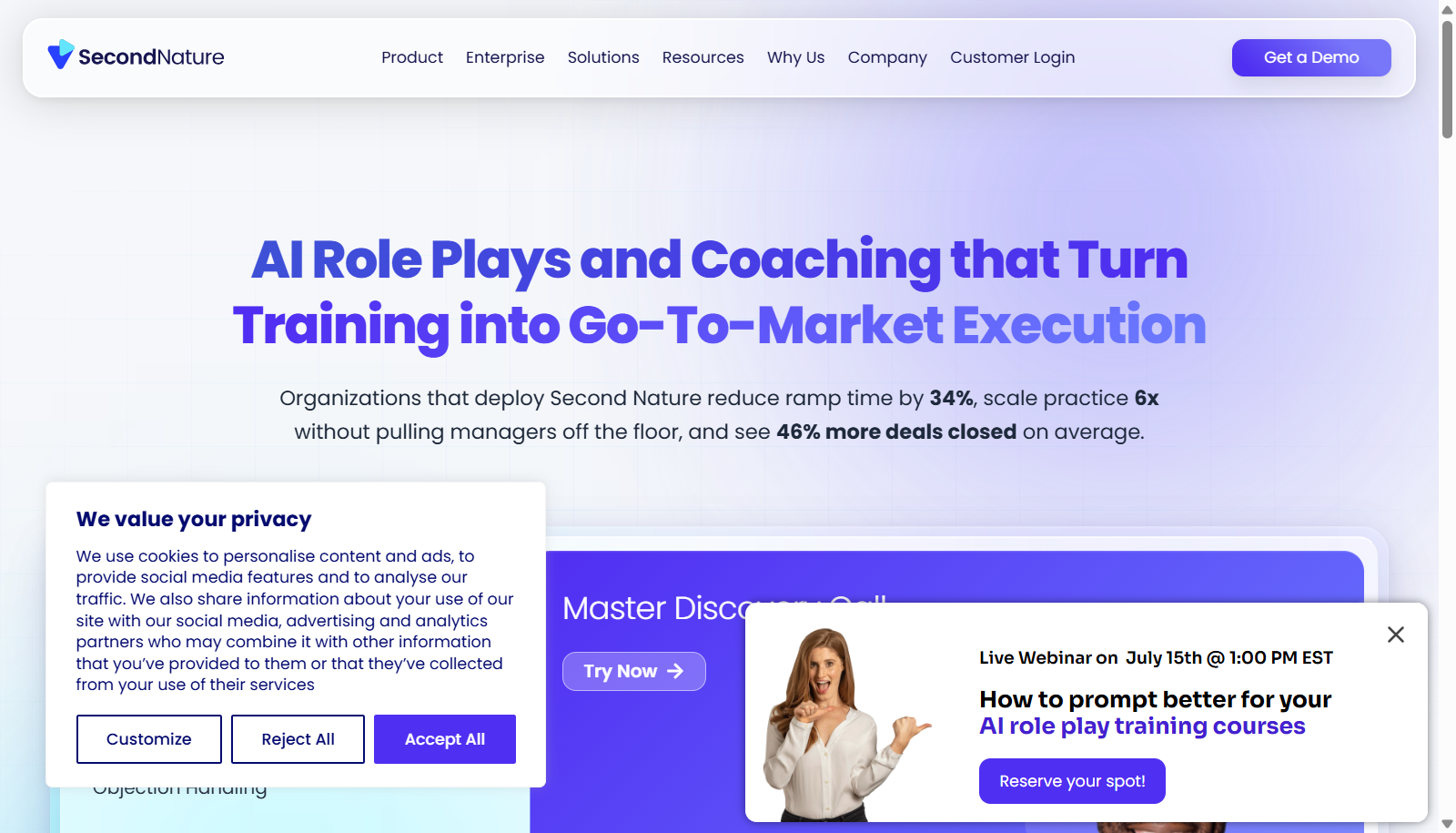
Second Nature runs roleplay conversations where reps handle objections and pitch delivery against a conversational AI buyer. Reps practice before a real deal is on the line, rather than reviewing a call after it happened. Alon Shalita and Ariel Hitron founded it in Israel in 2018, and the product launched in 2022.
Zoom, Oracle, Adobe, and Check Point all use it. Zoom is both a customer and an investor, an unusual overlap that suggests the practice mechanic holds up at enterprise scale. The same roleplay engine also trains customer-service teams, not sales reps alone.
Pricing isn’t published. Second Nature sells as a custom enterprise product through a sales conversation, backed by $38 million raised across rounds, including a $22 million round in October 2025. There’s no self-serve plan, so a small team can’t start without a sales conversation first.
It’s built for rehearsal, not pipeline visibility. Nothing here forecasts a deal or flags which opportunities are stalling. That’s a different job, and a team needs a separate tool for it alongside Second Nature.
4. PitchMonster
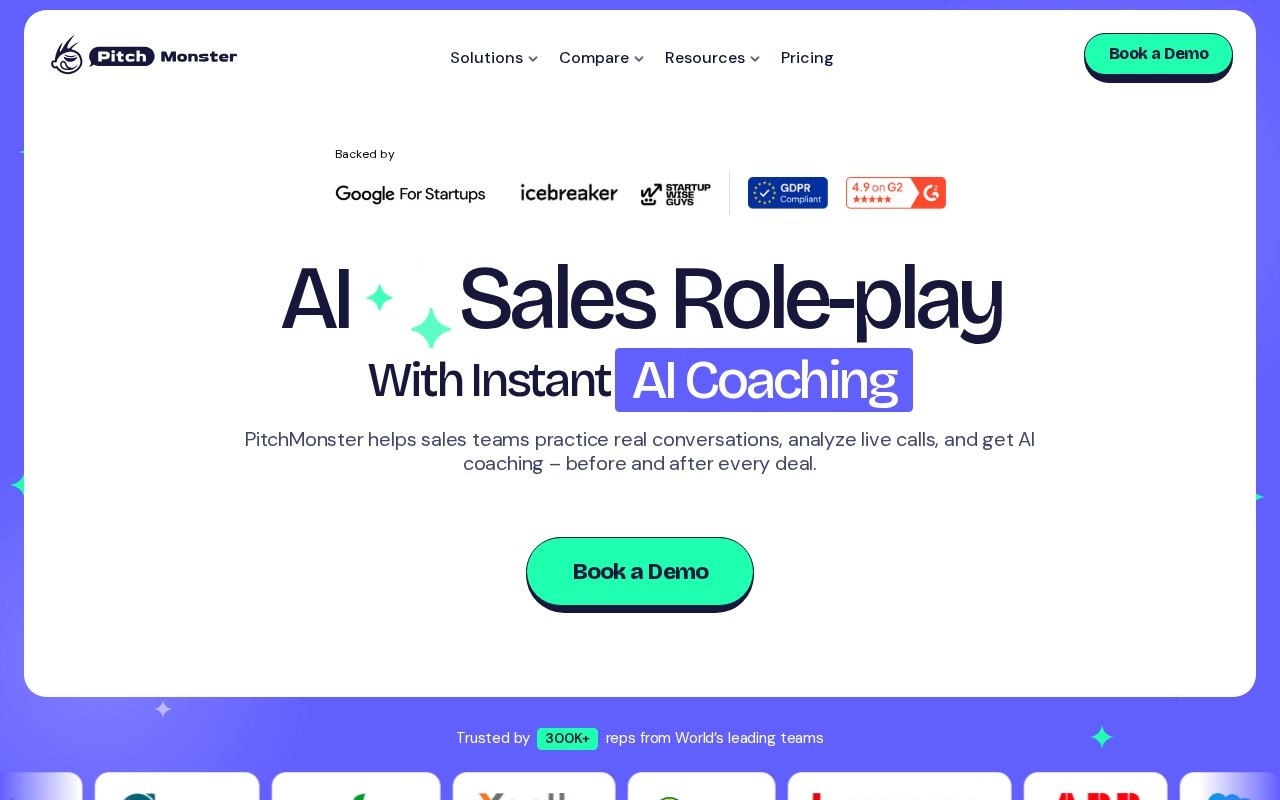
PitchMonster puts a rep on a call with an AI buyer built from the company’s own ideal customer. That buyer raises objections and behaves the way a real prospect would, across 29 languages and phone, screen-share, or face-to-face modes.
Call analysis and an AI coach review the session afterward, so the same platform covers rehearsal and the debrief instead of splitting the two across separate tools. European data residency and privacy compliance are built in, worth checking if a team sells into the European Union specifically.
Pricing isn’t published. PitchMonster quotes per-seat annual contracts only after a demo, and there’s no free tier, unusual among tools this size.
A simulated buyer is more patient than a real one, so scoring well in rehearsal and closing well on a live call are related skills, not identical ones. Its own listing names that gap directly rather than treating rehearsal as a stand-in for the real thing.
5. Hyperbound
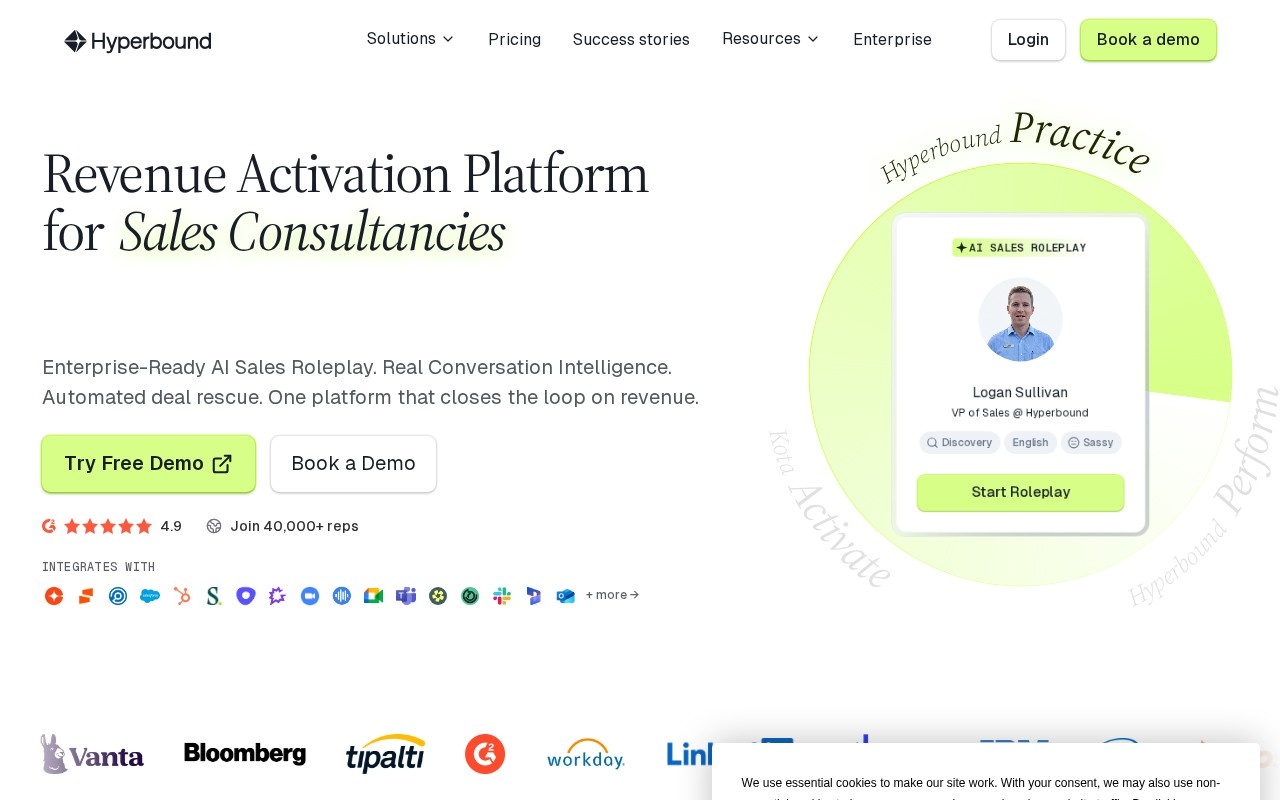
Hyperbound builds AI buyer-persona bots from a company’s own ideal customer, and reps roleplay against them instead of cold-calling strangers to practice. Sriharsha Guduguntla and Atul Raghunathan founded it in 2024, after Guduguntla’s work on Salesforce’s Einstein conversational AI and Raghunathan’s work on ad-targeting models at Meta.
A first bot and scorecard take under ten minutes to set up. A full library of personas and modules for a whole team takes closer to two weeks. Scenarios are grounded in a team’s own recorded calls, not generic scripts.
Pricing runs through enterprise sales, with an average deal size around $40,000 a year and no self-serve plan. The company has raised $18.3 million across its funding rounds.
Annual contracts are the standard here, a bigger commitment than a monthly sales-enablement subscription. The roleplay only helps if reps use it: adoption is a change-management problem as much as a product one, and Hyperbound’s own listing says so directly.
How we rate these
Our rating for each tool comes from comparing published features, pricing, and positioning against the rest of the Sales & Revenue AI catalogue. It isn’t a lab score, and we don’t run a shared group of reps through every platform to produce it.
What would be worth measuring here is how much practice moves a real close rate over a full quarter, not whether reps enjoy a demo. None of these five publish that. Until one does, treat the order below as a shortlist for a trial, not a verdict.
We verified each of these five was live within the last six weeks. PitchMonster’s listing is the most recent of the group, checked August 14, 2026.
What to check before you buy
- Price: published for Coach and Journey.io; the other three quote after a sales call.
- Free plan: real and usable on two of five, not a demo booking form.
- Contract length: month-to-month on the free-tier tools, annual on the three enterprise ones.
- Data handling: call-scoring tools record real conversations; roleplay tools practice against a simulated buyer instead.
- Setup time: Hyperbound’s first bot takes under ten minutes; a full team library takes closer to two weeks.
- Adoption: value depends on reps using it, not on a manager buying it.
How to choose between them
Start with whether you want reps trained before a call or coached after one, since that split covers all five. If your reps are new or ramping, Hyperbound and Second Nature both build practice from your own recorded calls. Hyperbound is the faster of the two to stand up a first scenario.
If the call has already happened, Coach is the only free option here for scoring it automatically. If a pitch needs to keep working after the call ends, a single Journey page replaces the follow-up email thread. It shows you whether the buyer even opened it. For teams that want to engage and qualify prospects before or after a sales conversation, interactive content can add another layer to the sales process. These experiences can help prospects understand their needs, answer qualifying questions, and receive personalized results before speaking with a sales rep.
Watch contract terms as closely as the product itself. Three of these five route pricing through a sales call with no published number, so budget for a negotiation, not a checkout page.
Our full Sales & Revenue AI catalogue holds ninety more tools across outbound, forecasting, and conversation intelligence. If call recording and coaching after the fact is closer to what you need, our Avoma vs Gong comparison covers that ground directly. Our AI outbound sales tools roundup covers the prospecting side these five don’t touch.
Questions buyers ask
What is sales enablement software?
Sales enablement software gives sales teams a repeatable way to train, pitch, or coach without leaning on one senior rep’s memory. That covers roleplay practice, call coaching, and buyer-facing content, the three jobs these five tools split between them.
Which of these have a free plan?
Two: Coach, free for unlimited call scoring, and Journey, free for up to two active pages. Second Nature, PitchMonster, and Hyperbound all sell through a sales conversation with no self-serve tier.
Do these replace a sales manager?
No, and none of the listings claim it. They remove repeated work: scoring a call, building a pitch page, running a practice scenario. Deciding who’s ready for a real call, or which deal needs a manager’s help, stays with a person.
How much does sales enablement software cost?
Published pricing here runs from free to $29 a month. The other three don’t publish a number at all. Second Nature, PitchMonster, and Hyperbound each quote a custom figure after a sales call, and Hyperbound’s own listing puts its average deal near $40,000 a year.
What should reps be told before one of these listens to a call?
Anything that scores a real call, Coach here, needs staff told what’s recorded and who sees the output before it’s switched on. The roleplay tools are different: Second Nature, PitchMonster, and Hyperbound practice against a simulated buyer, so there’s no real prospect on the other end of that call.
Can a small sales team use any of these?
Journey and Coach both work at small scale, with a usable free tier and no minimum contract. Second Nature, PitchMonster, and Hyperbound are priced and sold as enterprise deals, and a small team will find the sales process itself heavier than the product.