AI music generators use machine learning — often deep learning models trained on large catalogs of existing music, sometimes generative adversarial networks — to compose original melodies, chord progressions, and full tracks from a prompt or a few parameters. For musicians and composers this means faster sketching, royalty-free background tracks without licensing headaches, and a way to experiment with styles outside your usual range. Pairing this with voice cloning tools opens up things like AI-assisted vocal duets or genre-shifted covers, though as with any AI voice work, only with rights or consent to the voice being used.
Top Tools for AI Music Generators for Musicians and Composers
AIVA (Artificial Intelligence Virtual Artist)
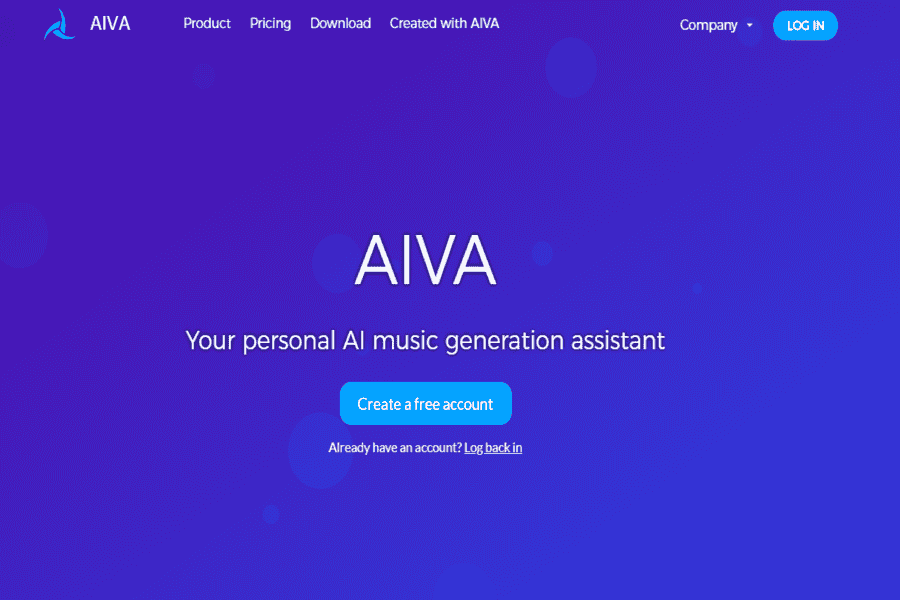
AIVA is a creative AI tool designed to compose music in various styles. It is used by musicians, composers, and content creators to generate original compositions or assist in musical arrangements.
Pros:
- Easy to use for beginners and professionals.
- Supports multiple musical styles and genres.
- Provides MIDI and audio export options for integration with other tools.
Cons:
- There is limited customization in the free version.
- Advanced features require a subscription.
Pricing package:
Free version available; Pro plans start at $15/month.
Social media links:
- Facebook: AIVA Facebook
- LinkedIn: AIVA LinkedIn
- Twitter: AIVA Twitter
- YouTube: AIVA YouTube
Contact Information:
- Mail: [email protected]
Suno
Generates full songs, including vocals and lyrics, from a text prompt, one of the most capable generative AI music platforms available today. Replaces Amper Music: Shutterstock acquired it in November 2020, but its generative capability was folded into a static Shutterstock stock-music library rather than continuing as a generation tool, and ampermusic.com no longer resolves.
Pros:
- Generates complete songs with vocals, not just instrumentals.
- Fast, high-quality results across a wide range of genres.
Cons:
- Ongoing copyright and training-data litigation in the AI music space affects the whole category, Suno included.
Pricing package:
Free tier available; paid plans for more generations and commercial use.
Ecrett Music
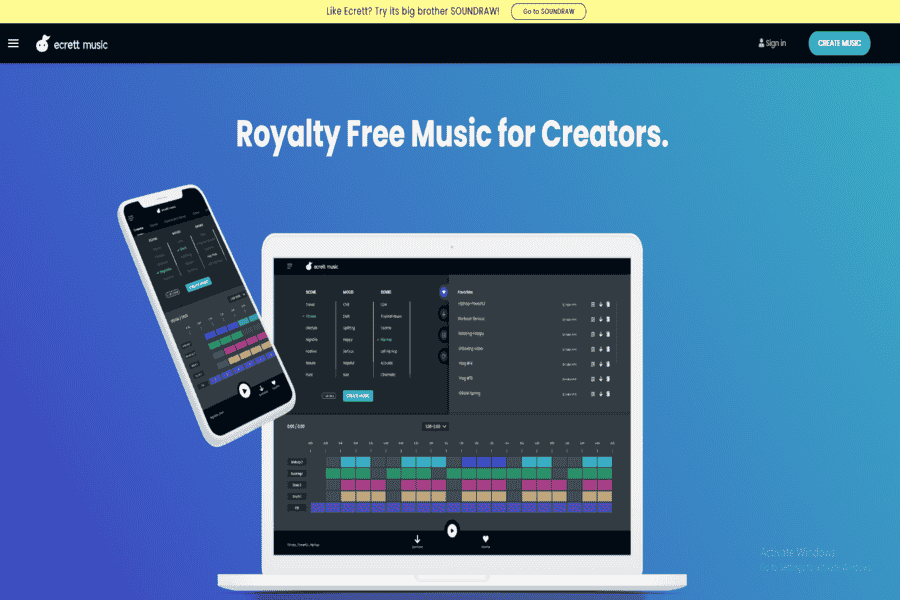
Ecrett Music allows users to create unique soundtracks by selecting a mood, theme, and instruments. Its simple workflow is designed for content creators and hobbyist musicians.
Pros:
- Easy to use, even for non-musicians.
- Royalty-free music generation.
- Supports a wide variety of themes and moods.
Cons:
- Limited for professional music production.
- Lack of advanced editing features.
Pricing package:
Free trial available; Pro plans start at $4.99/month.
Social media links:
- Facebook: Ecrett Music Facebook
Soundraw

Soundraw is an AI music generator focusing on customizable music creation, allowing users to tweak elements like tempo, mood, and instrumentation.
Pros:
- High-quality music outputs.
- User-friendly customization tools.
- Ideal for background music in videos or presentations.
Cons:
- Requires subscription for downloading music.
- Limited variety in some genres.
Pricing package:
$19.99/month or $16.99/month for annual plans.
Boomy
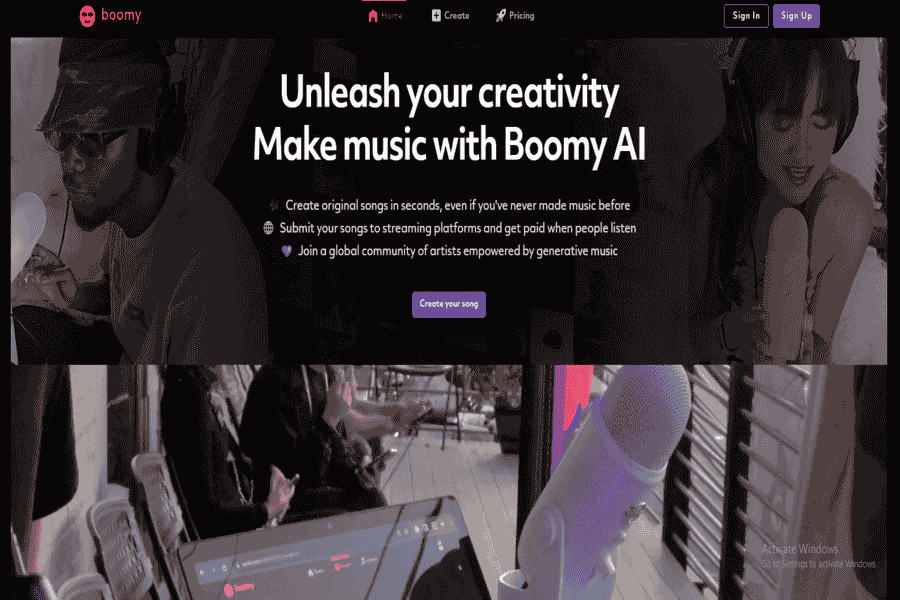
Boomy allows users to create original songs and publish them to streaming platforms, providing opportunities for musicians to earn royalties.
Pros:
- Quick song generation process.
- Easy publishing to streaming platforms.
- Supports revenue generation from music.
Cons:
- Limited creative control over compositions.
- Subscription is required for advanced features.
Pricing package:
Free version available; Premium plans start at $9.99/month.
Social media links:
- Facebook: Boomy Facebook
- Instagram: Boomy Instagram
- LinkedIn: Boomy LinkedIn
- Twitter: Boomy Twitter
Contact Information:
- Mail: [email protected]
Udio
Text-to-song generator producing full tracks with vocals and instrumentation across a wide range of styles, a leading alternative to Suno in the same generative-music space. Replaces Jukedeck: ByteDance acquired it in 2019 and shut down its public-facing service almost immediately, absorbing the team and technology into ByteDance’s internal AI Lab rather than continuing it as a standalone product; jukedeck.com now returns a 404.
Pros:
- Strong vocal and lyric generation quality.
- Wide genre range from a single prompt.
Cons:
- Same industry-wide copyright/training-data litigation risk as other full-song generators.
Pricing package:
Free tier available; paid plans for more generations and higher quality.
Amadeus Code
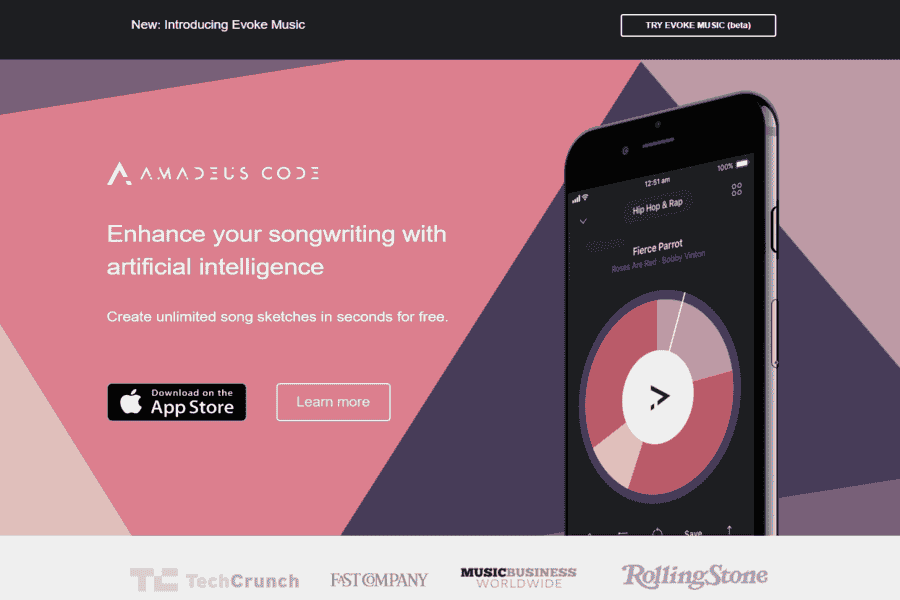
Amadeus Code uses AI to assist musicians in creating melodies and chord progressions. It’s an excellent tool for inspiration and creativity in songwriting.
Pros:
- Focuses on melody generation.
- Designed for professional musicians and songwriters.
- Integrates with DAWs like Logic Pro and GarageBand.
Cons:
- Limited for full-track production.
- Requires a subscription for advanced features.
Pricing package:
Free trial available; Pro plans start at $9.99/month.
Contact Information:
- Mail: [email protected]
Alysia AI
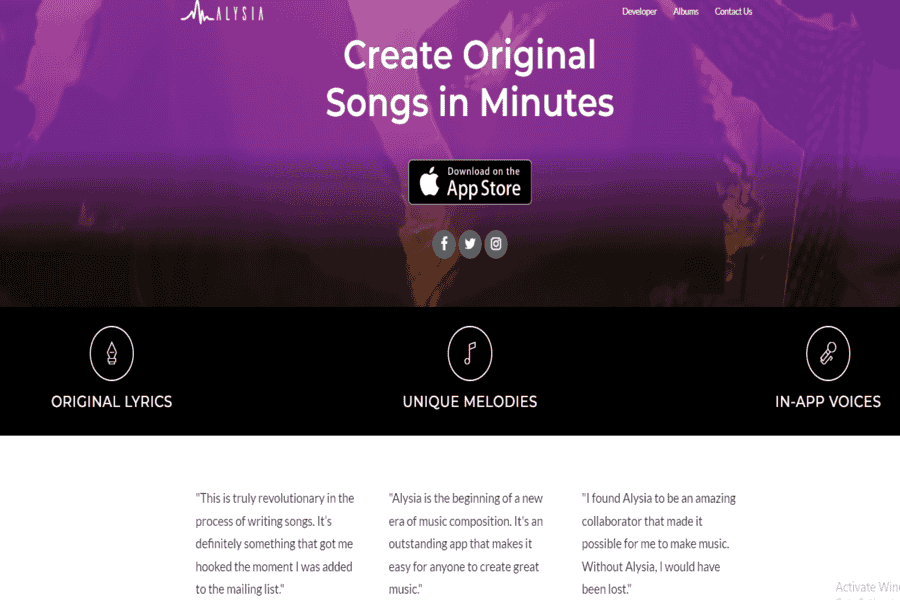
Alysia AI is an advanced tool that helps musicians and lyricists compose original songs. The platform provides melody and lyric suggestions, aiding creators in producing high-quality music quickly.
Pros:
- Supports both lyrics and melody creation.
- Great for songwriters looking for inspiration.
- User-friendly interface for beginners and professionals.
Cons:
- Limited instrument support.
- Advanced features require a subscription.
Pricing package:
Free trial available; Premium plans start at $9.99/month.
Melodrive
Melodrive is an AI tool designed to create adaptive music for video games and virtual environments. It dynamically generates music that changes based on user interaction.
Pros:
- Real-time adaptive music generation.
- Ideal for game developers and VR experiences.
- Supports various musical genres.
Cons:
- Not suited for standalone music production.
- Requires technical knowledge to integrate.
Pricing package:
Custom pricing based on project needs.
Contact Information:
- Mail: [email protected]
Beatoven.ai
Generates mood-based background music for videos and podcasts, letting creators shape the track’s emotional arc (tense, uplifting, sad) rather than picking from a fixed library. Replaces MuseNet: OpenAI discontinued it on December 12, 2022, and while its demo page technically remains online, its API access and advanced features were disabled, leaving it unable to generate new compositions.
Pros:
- Mood-driven controls make scoring video/podcast content straightforward.
- Royalty-free output built for content creators.
Cons:
- Geared toward background/scoring use, not standalone songs with vocals.
Pricing package:
Free tier available; paid plans for commercial licensing and more downloads.
Endlesss

Endlesss is an AI-powered music collaboration platform where musicians can jam together live and remix ideas in real-time.
Pros:
- Collaborative features for live sessions.
- Great for remote music creation.
- Easy integration with DAWs.
Cons:
- We are focused on loops and jams rather than full tracks.
- Requires active participation for best results.
Pricing package:
Free trial available; Premium plans start at $8/month.
Social media links:
- Facebook: Endlesss Facebook
- Instagram: Endlesss Instagram
- Twitter: Endlesss Twitter
Contact Information:
- Mail: [email protected]
LANDR Chromatic
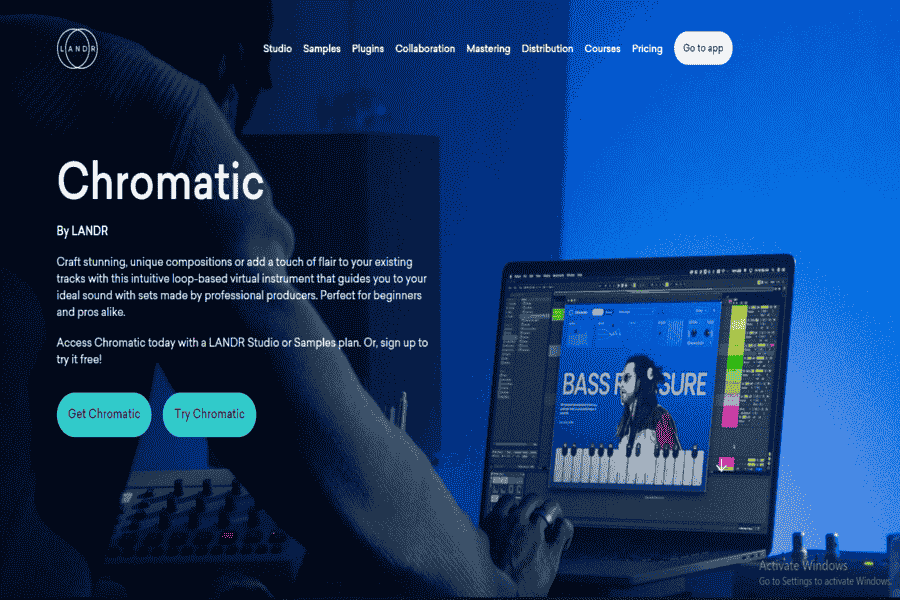
LANDR Chromatic is an AI-powered music tool designed to create melodies and loops. It focuses on simplicity and is tailored for beginner musicians.
Pros:
- Intuitive drag-and-drop interface.
- Integrates seamlessly with LANDR’s mastering services.
- Offers high-quality samples and loops.
Cons:
- Limited advanced features for professionals.
- Subscription is required for full access.
Pricing package:
Included in LANDR subscriptions starting at $4.99/month.
Social media links:
- Facebook: LANDR Facebook
- Instagram: LANDR Instagram
- LinkedIn: LANDR LinkedIn
- Twitter: LANDR Twitter
- YouTube: LANDR YouTube
Contact Information:
- Mail: [email protected]
Orb Composer
Orb Composer is a professional-grade AI tool for composing music, catering to film score composers, game developers, and advanced musicians.
Pros:
- Comprehensive features for advanced compositions.
- Works seamlessly with DAWs.
- Highly customizable music styles.
Cons:
- Steep learning curve for beginners.
- Expensive compared to other tools.
Pricing package:
The pro version starts at $99.
Contact Information:
- Mail: [email protected]
Mubert
Real-time generative music engine producing royalty-free tracks and endless background music streams for apps, streams, and content, with an API for developers who want to build music generation into their own products. Replaces Humtap, which is confirmed dead (humtap.com returns a 404).
Pros:
- Real-time/endless generation, good for live streams and apps.
- Developer API for building music generation into other products.
Cons:
- Less suited to crafting a single, specific finished track than prompt-based generators.
Pricing package:
Free tier available; paid plans for commercial use and API access.
Loudly
AI music generator built for social content, producing full tracks from a text prompt with stem separation and remix tools. Replaces “Audeonic Music AI,” an entry with no verifiable company footprint (no social presence unlike every other entry in this list, and audeonic.com fails to resolve) — likely a fabricated or unverifiable listing.
Pros:
- Stem separation lets you isolate and remix individual parts of a generated track.
- Built with short-form/social content workflows in mind.
Cons:
- Less suited to long-form composition than dedicated DAW-integrated tools.
Pricing package:
Free tier available; paid plans for commercial licensing.
Benefits of AI Music Generators for Musicians and Composers
AI music generators offer a multitude of benefits for musicians and composers:
AI music generators have revolutionized the music industry, providing a range of benefits for musicians and composers:
Enhanced Creativity:
Inspiration and Ideation:
AI can generate unique melodies, harmonies, and rhythms, stimulating creative thinking and sparking new ideas.
Style Experimentation:
AI can help explore various musical styles, from classical to electronic, enabling artists to experiment with unconventional sounds and techniques.
Increased Productivity:
Automation of Routine Tasks:
AI can automate repetitive tasks such as chord progression generation, rhythm creation, and arrangement, saving time and effort.
Rapid Prototyping:
AI can quickly generate multiple musical variations, allowing artists to iterate and refine their ideas efficiently.
Accessibility to Music Production:
Democratization of Music Creation:
AI-powered tools can make music production accessible to individuals with limited technical knowledge, empowering a wider range of people to create music.
Lower Barriers to Entry:
AI can simplify complex music production processes, making it easier for beginners to start creating music.
Experimentation with New Sounds and Styles:
Breaking Creative Boundaries:
AI can generate unconventional and innovative musical ideas, pushing the limits of traditional music composition.
Fusing Different Genres:
AI can combine elements from diverse musical genres, creating unique and hybrid styles.
Challenges and Practical Applications
AI-generated music still varies a lot in quality and can sound generic without a musician shaping the output further. Copyright is the biggest open question in the space right now: full-song generators like Suno and Udio are the subject of active industry litigation over what they were trained on, and ownership of AI-assisted compositions remains legally unsettled in most jurisdictions — know the terms of service and licensing of whichever tool you use, especially for commercial work. In practice, these tools show up most as composition assistance (breaking through writer’s block, generating starting points), sound design and sample creation, music education, and increasingly, real-time backing tracks for live performance and improvisation.
Conclusion
The tools above split roughly into full-song generators (Suno, Udio, Boomy), composition and melody assistants for working musicians (AIVA, Amadeus Code, Alysia AI, Orb Composer, Melodrive), background/scoring music for content creators (Ecrett Music, Soundraw, Beatoven.ai, Mubert, Loudly, LANDR Chromatic), and collaborative/experimental platforms (Endlesss). None of them replace a musician’s judgment or taste — they’re fastest at generating raw material and slowest at knowing when something’s actually good, which is still where the human stays essential.