AI text generators produce human-quality writing by predicting the next word in a sequence, trained on massive amounts of text. They power everything from chatbots and blog drafts to code completion and translation. Businesses increasingly pair them with text-to-video AI generators to turn a script straight into a finished video.
What Are AI Text Generators, and How Do They Work?
AI text generators (also called large language models, or LLMs) are trained on huge datasets of text and code, learning the patterns, grammar, and style within it. Once trained, a model generates text one word at a time, predicting the most likely next word based on what came before and the prompt you gave it — the same core mechanism whether it’s drafting an email or writing a function.
Older rule-based and statistical models could produce simple, templated text but struggled with nuance. Today’s LLMs (GPT, Claude, Gemini, and similar architectures) use neural networks trained on far larger datasets, which is why their output reads as coherent and context-aware rather than mechanical.
What They’re Used For
The most common uses fall into a few buckets: content creation (blog drafts, social captions, product descriptions, email copy), code (autocompletion, generating functions from a description, spotting bugs), translation and localization, summarization (condensing documents or meeting notes), and creative writing (fiction, poetry, brainstorming story ideas). Most of the tools below specialize in one or two of these rather than trying to do all of them well.
Top AI Text Generator Tools
ChatGPT
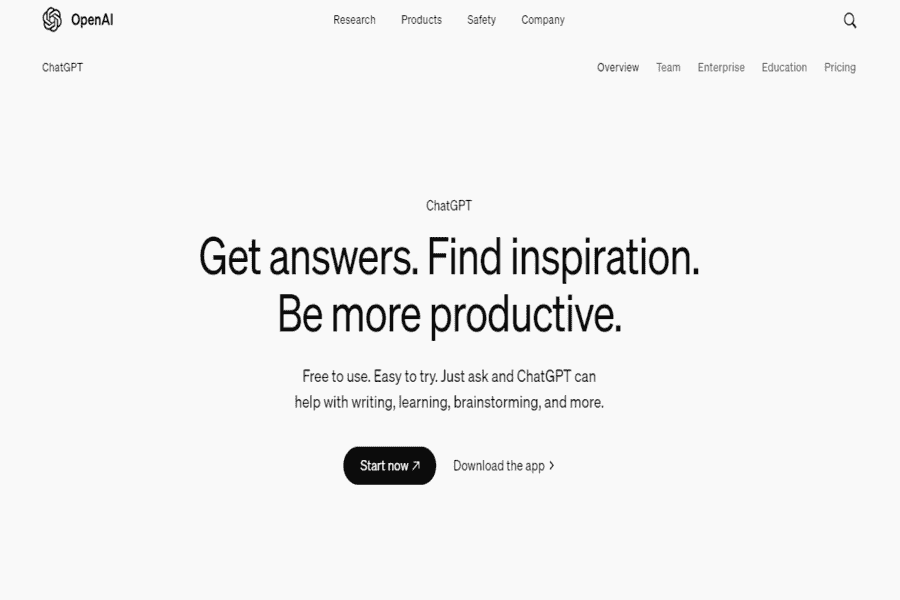
The most widely used general-purpose text generator, suitable for creative writing, coding, and conversational tasks. Full details in our ChatGPT review.
Pros:
- High-quality, versatile output across writing, code, and analysis
- No rigid template — works as an open-ended conversation
Cons:
- Free tier has a message cap and now shows ads to US users (since February 2026)
Pricing:
Free tier available. Go $8/month, Plus $20/month, Pro $100–200/month.
Jasper

Specializes in on-brand content generation for marketing teams — blogs, ads, and campaign copy with brand-voice controls. See our Jasper review.
Pros:
- Brand-voice templates built for marketing teams
- Team collaboration features
Cons:
- No permanent free plan — trial only, then paid
Pricing:
7-day trial, then Pro from around $59–69/month; custom pricing for the Business tier.
Writesonic

Started as an SEO-content generator, and has since expanded into an “AI Search Visibility” platform that also tracks how a brand shows up in ChatGPT, Gemini, and Google AI Overviews. See our Writesonic review.
Pros:
- SEO optimization tools built in
- Now tracks AI-search visibility alongside content generation
Cons:
- Entry-level paid plans cost more than most competitors here
Pricing:
Free plan, no card required. Paid plans start around $39/month billed annually ($49/month billed monthly).
Copy.ai
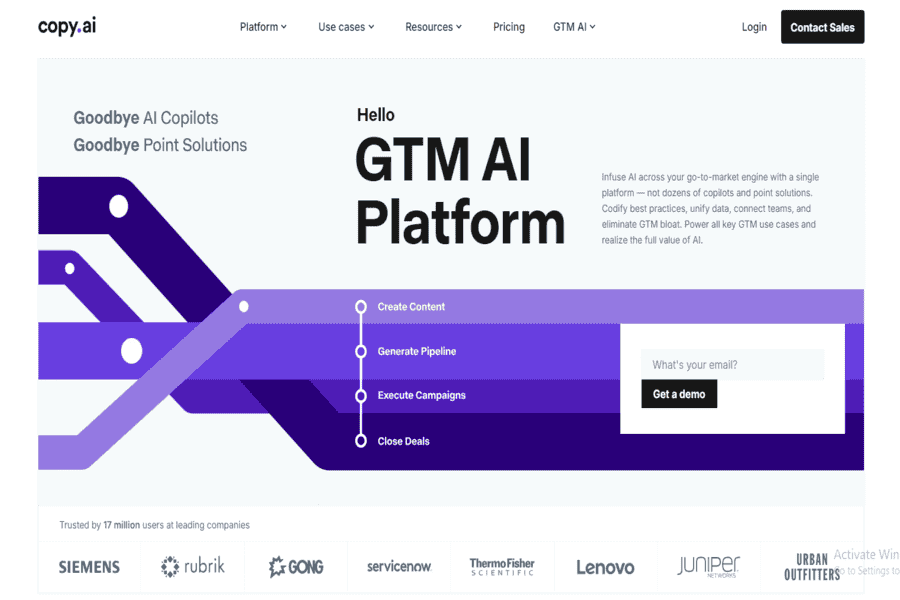
Copy.ai has repositioned itself from a marketing-copy generator into a full go-to-market automation platform — it still writes copy, but that’s now one piece of a larger workflow tool. See our Copy.ai review.
Pros:
- Time-saving templates for common copy formats
- Now bundles broader GTM workflow automation, not just copy
Cons:
- No longer has a free tier — dropped as part of the GTM repositioning
Pricing:
Chat plan from $29/month; Growth plans from roughly $1,000+/month.
Rytr
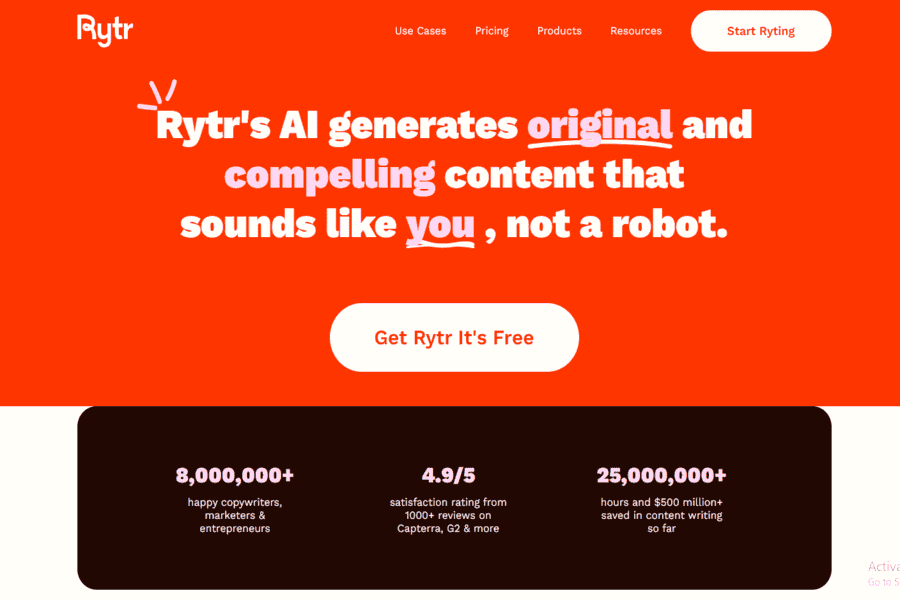
Template-driven generator for short-form content: blog ideas, ads, product descriptions, and social posts. See our Rytr review.
Pros:
- Budget-friendly compared to most competitors on this list
- Wide range of use-case templates
Cons:
- Free plan capped around 10,000 characters/month
Pricing:
Free plan (~10K characters/month). Paid plans start around $9/month.
Grammarly

Pairs grammar/style checking with generative AI prompts for rewriting and drafting, right inside your browser or word processor. (Grammarly‘s parent company rebranded to Superhuman in late 2025, but the Grammarly product itself is unchanged.) See our Grammarly review.
Pros:
- Works inline across almost any site or app
- Best-in-class grammar and style checking
Cons:
- Free tier capped around 100 AI prompts/month
Pricing:
Free plan available. Pro is $12/month billed annually ($30/month billed monthly), raising the limit to 2,000 AI prompts/month.
Hypotenuse AI

Built for ecommerce: product descriptions at scale, blog articles, and ad copy from a catalog feed. See our Hypotenuse AI review.
Pros:
- Specialized for ecommerce catalogs specifically
- Fast, bulk-friendly output
Cons:
- Narrow focus — not built for general-purpose writing
Pricing:
Starter from $29/month, Growth from $59/month.
Sudowrite
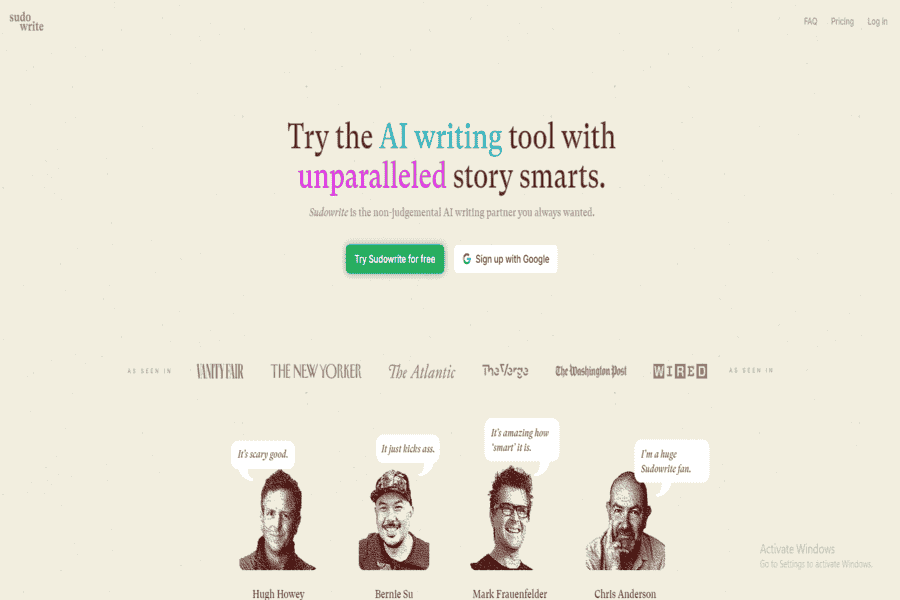
A creative-writing assistant built specifically for novelists and fiction writers, not general content. See our Sudowrite review.
Pros:
- Purpose-built for long-form fiction
- All plans get full feature access — tiers differ only by credit volume
Cons:
- Not built for non-fiction or technical writing
Pricing:
Hobby & Student from $10/month billed annually ($19/month monthly) up to Max at $44/month billed annually ($59/month monthly).
Simplified

Combines AI writing, design, and video creation into one workspace for teams and content creators. See our Simplified review.
Pros:
- All-in-one: writing, design, and video in one place
- Collaborative features suited to small teams
Cons:
- Overkill if you only need text generation
Pricing:
Limited free plan. Paid plans scale by AI-word volume and team size — check simplified.com/pricing for current tiers.
Wordtune

An AI21 Labs tool focused on sentence-level rewriting rather than generating new content from scratch — paste a sentence and it offers alternate phrasings and tones. See our Wordtune review.
Pros:
- Strong sentence-level rewrite quality
- Browser extension works across most writing surfaces
Cons:
- Not built for generating original long-form content
Pricing:
Free plan (10 rewrites/day, 3 summaries/month). Paid plans from roughly $5–10/month depending on tier and billing cycle.
INK Editor
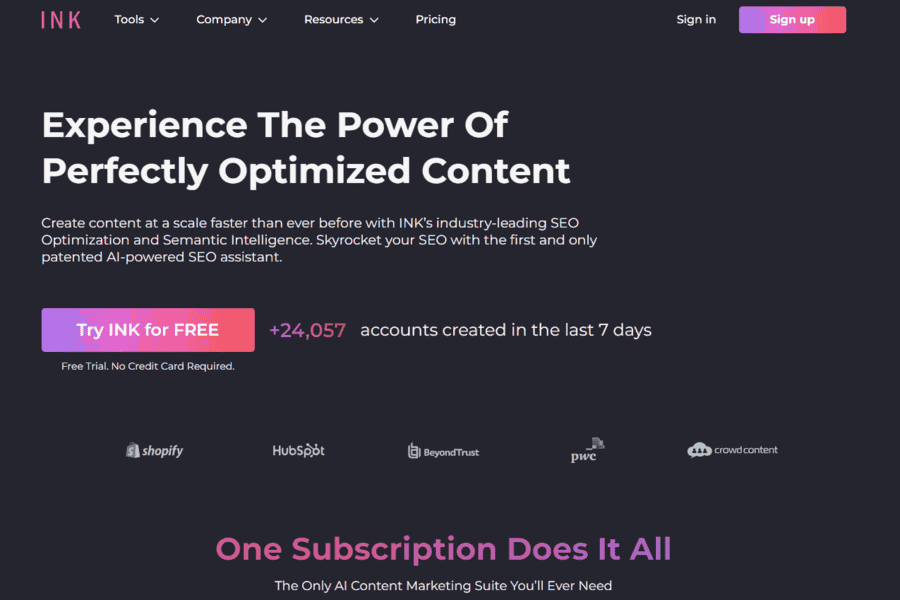
An AI writing and SEO-optimization tool. Its update cadence and public activity have slowed compared to other tools on this list, so confirm current features directly before committing to a paid plan.
Pros:
- SEO-focused content scoring
- Grammar and readability checks built in
Cons:
- Less actively updated than most tools on this list — verify current status before subscribing
Pricing:
Previously free plan plus paid plans from $8/month — confirm on inkforall.com before subscribing, since pricing pages for this tool change without much public notice.
Frase
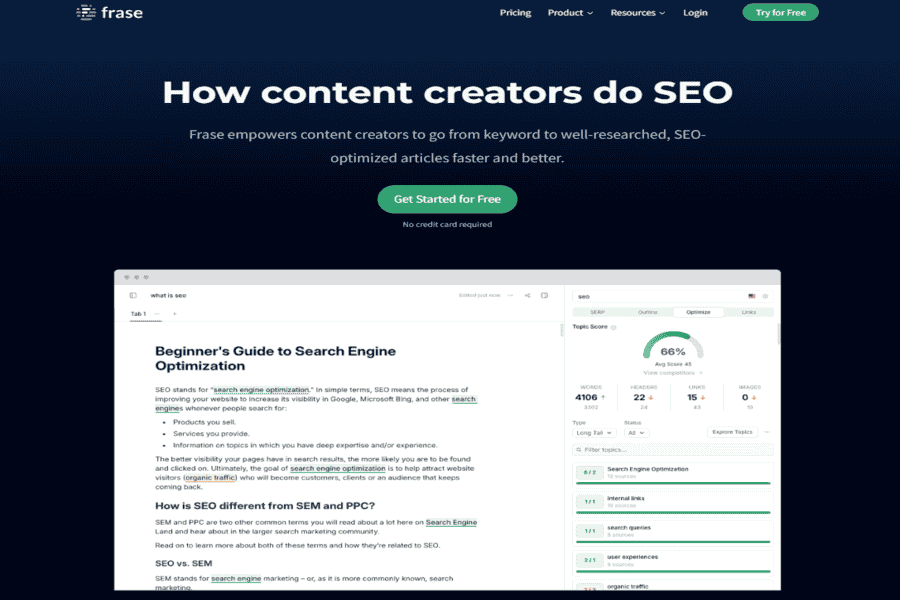
Builds content briefs from real SERP research, then helps you write the SEO-optimized article against that brief. See our Frase review.
Pros:
- SERP-based content briefs, not just generic templates
- Strong fit for content strategists and SEO teams
Cons:
- Entry price rose substantially in recent plan changes
Pricing:
- 7-day trial (no card required, capped at 5 articles). Starter from $39/month billed annually ($49/month monthly), Professional around $45/month.
Article Forge
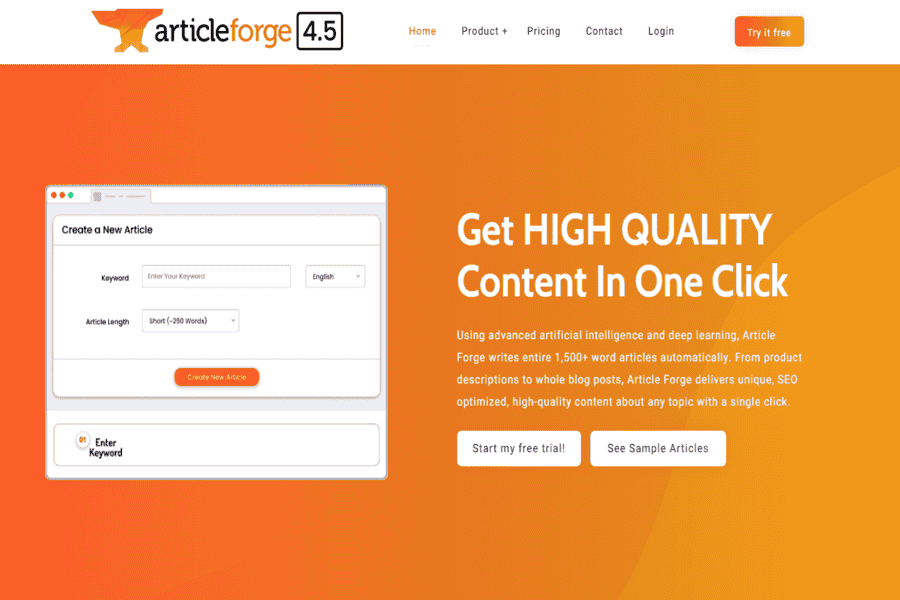
Fully automated long-form article generation from just a topic and keywords, with a direct WordPress publishing integration. See our Article Forge review.
Pros:
- Minimal input needed for full-length articles
- Direct WordPress integration
Cons:
- Fully automated output needs a fact and accuracy pass before publishing
Pricing:
Starts around $13–15/month — check articleforge.com for the current entry tier.
AI Writer
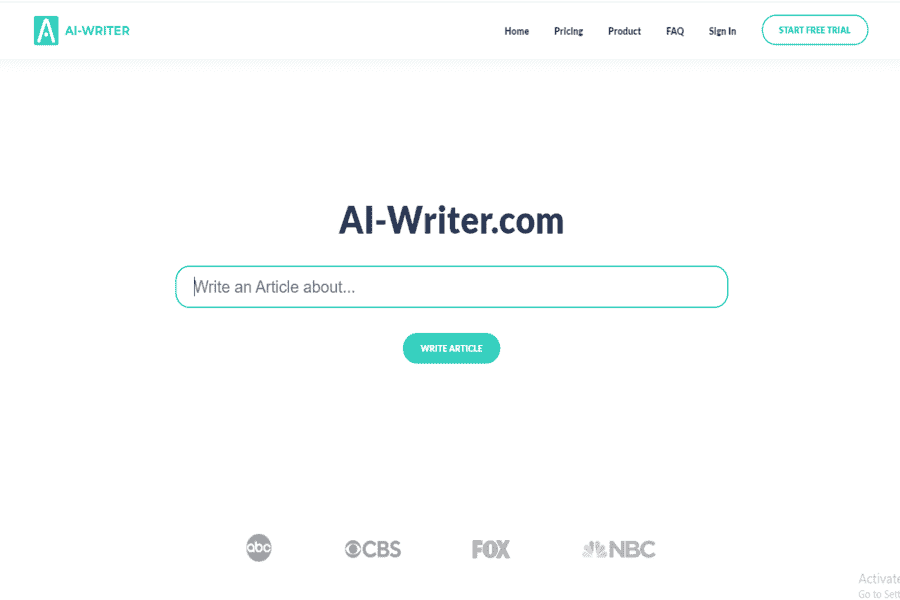
Focuses on SEO-friendly articles that cite real sources, aimed at reducing the fact-checking burden compared to fully generic generators.
Pros:
- Cites sources alongside generated claims
- Built-in plagiarism checking
Cons:
- Output leans factual over creative
Pricing:
Starts around $29/month — check ai-writer.com for current tiers.
Benefits and Limitations
The upside is speed and consistency: AI text generators produce large volumes of on-brand content fast, help with brainstorming and writer’s block, and cut the cost of routine writing tasks like product descriptions or first-draft emails. Many can now access real-time information, improving factual grounding over older, static models.
The limitations are consistent across tools: output can be generic or repetitive without editing, models can perpetuate biases from training data, and their knowledge of niche or highly technical subjects is uneven. None of the tools above are a substitute for a human review pass — that matters most for anything published as factual (news, medical, legal, or financial content), where AI-generated claims need verification before they go out under your name.
Which One Should You Use?
For general-purpose writing, ChatGPT covers the most ground. For on-brand marketing content at team scale, Jasper or Copy.ai. For SEO-driven articles specifically, Frase or Writesonic. For fiction, Sudowrite. For sentence-level polish rather than fresh generation, Wordtune or Grammarly. The rest are worth a look if your use case is narrower — ecommerce catalogs (Hypotenuse AI), fully automated long-form drafts (Article Forge, AI Writer), or an all-in-one content workspace (Simplified).