Natural language processing gives businesses a way to turn unstructured customer feedback — reviews, survey responses, support tickets, social comments — into structured, analyzable data. Instead of manually reading through thousands of comments, NLP tools extract sentiment, topics, and intent at scale, surfacing patterns a team would otherwise miss. This guide covers the core techniques and the platforms actually delivering this today, from developer-focused APIs to full customer-experience platforms.
Core Techniques
Most tools combine a few core techniques: text preprocessing to clean and normalize raw input, sentiment analysis to score feedback as positive, negative, or neutral, and topic modeling to cluster feedback into themes automatically. More advanced platforms add aspect-based sentiment analysis (what specifically is the customer positive or negative about), intent recognition, and dialogue analysis for conversational data. AI-powered language learning tools use related NLP techniques, and training feedback models on your own industry jargon and communication patterns tends to improve accuracy well beyond generic out-of-the-box models.
Top NLP Tools for Analyzing Customer Feedback
Chattermill
Customer feedback analytics platform that unifies reviews, support tickets, surveys, and social data into a single sentiment and theme analysis view. Replaces MonkeyLearn, acquired by Medallia in February 2022; monkeylearn.com now redirects entirely to Medallia’s corporate homepage, with no MonkeyLearn product page remaining.
Pros:
- Purpose-built for unifying multi-source customer feedback.
- Automated theme detection without manual tagging.
Cons:
- Geared toward teams with steady feedback volume, less suited to occasional/one-off analysis.
Pricing Package:
Custom pricing based on feedback volume.
Lexalytics
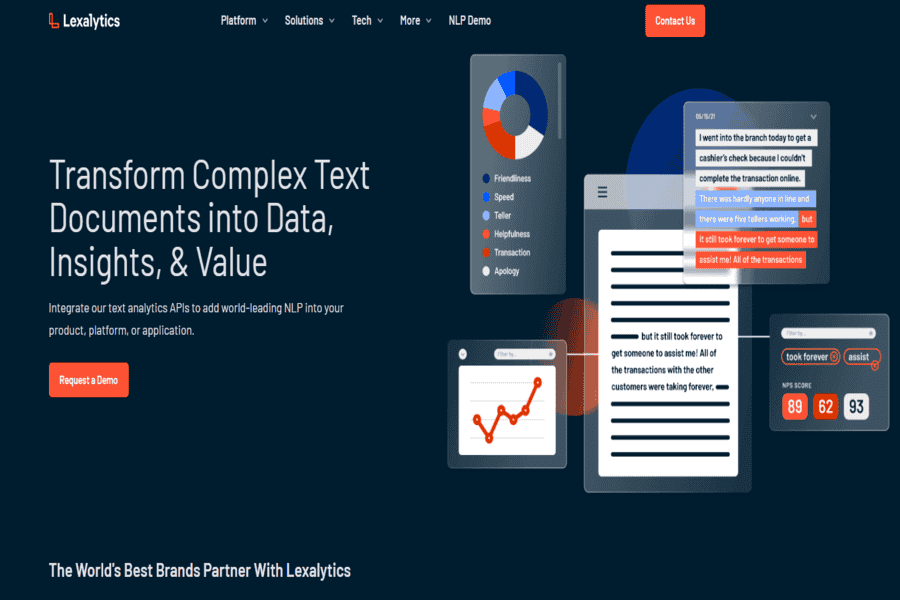
Offers text analytics and NLP solutions for sentiment analysis and intent detection. Acquired by InMoment in September 2021; continues to operate under the Lexalytics name and its own product lines (Salience, Semantria, Spotlight) as an InMoment company.
Pros:
- Robust APIs for integration
- Industry-specific solutions
Cons:
- Requires technical expertise
Pricing Package:
Custom pricing.
Social Media Links:
- Facebook: Lexalytics
- LinkedIn: Lexalytics
- Twitter: @lexalytics
- YouTube: Lexalytics
Contact Information:
- Mail: [email protected]
Repustate
Sentiment analysis and text analytics API supporting deep aspect-based sentiment detection across more than 20 languages. Replaces Aylien, acquired by decision-intelligence firm Quantexa in February 2023; the standalone Aylien product was retired and its technology folded into Quantexa’s broader platform, and aylien.com no longer resolves.
Pros:
- Strong multi-language sentiment coverage.
- Aspect-based sentiment, not just overall polarity.
Cons:
- API-first, requires development work to integrate into a feedback workflow.
Pricing Package:
Custom pricing based on usage volume.
Google Cloud Natural Language API
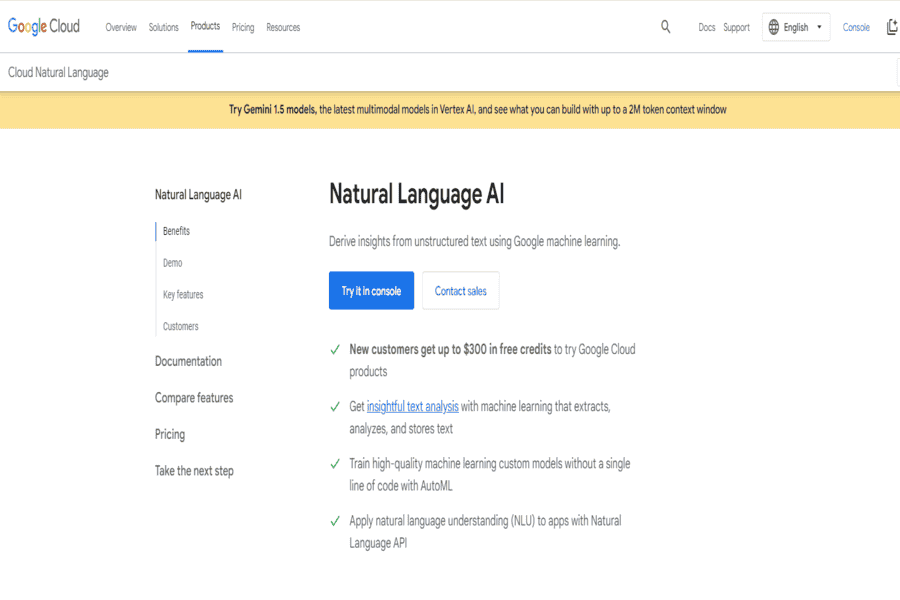
Provides pre-trained machine learning models for sentiment analysis, entity recognition, and more.
Pros:
- Scalable and fast
- Extensive documentation
Cons:
- Requires Google Cloud knowledge
Pricing Package:
Pay-as-you-go model; free tier available.
Social Media Links:
- Facebook: Google Cloud
- Instagram: Google Cloud
- LinkedIn: Google Cloud
- Twitter: @googlecloud
- YouTube: Google Cloud
Contact Information:
- Mail: [email protected]
- Contact Number: +1-866-331-5731
IBM Watson Natural Language Understanding
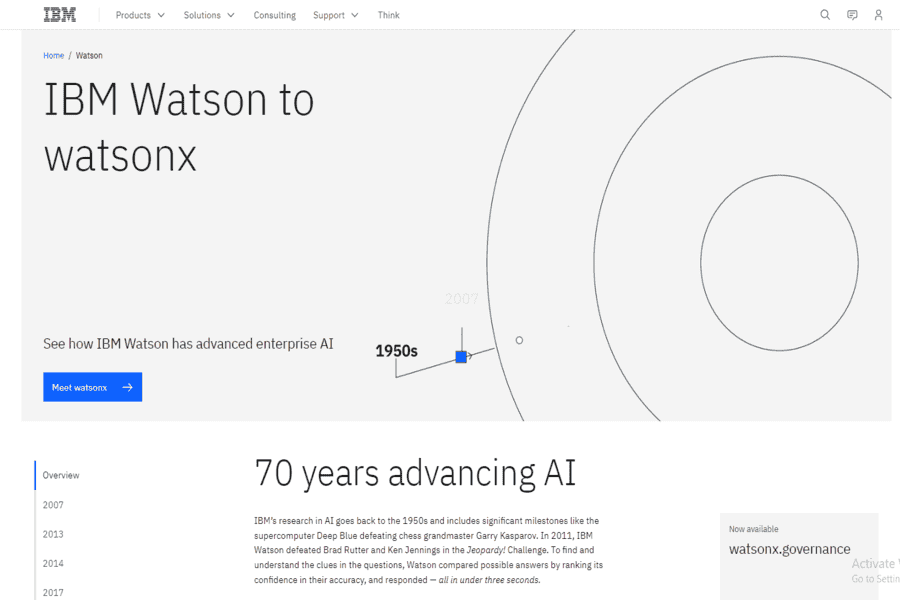
A robust NLP platform offering sentiment analysis, keyword extraction, and entity recognition.
Pros:
- Highly customizable
- Wide integration options
Cons:
- Steeper learning curve
Pricing Package:
Free tier available; paid plans start at $0.0035 per API call.
Social Media Links:
- Facebook: IBM Watson
- Instagram: IBM
- LinkedIn: IBM Watson
- Twitter: @IBMWatson
- YouTube: IBM Watson
Contact Information:
- Mail: [email protected]
- Contact Number: +1-800-426-4968
TextBlob
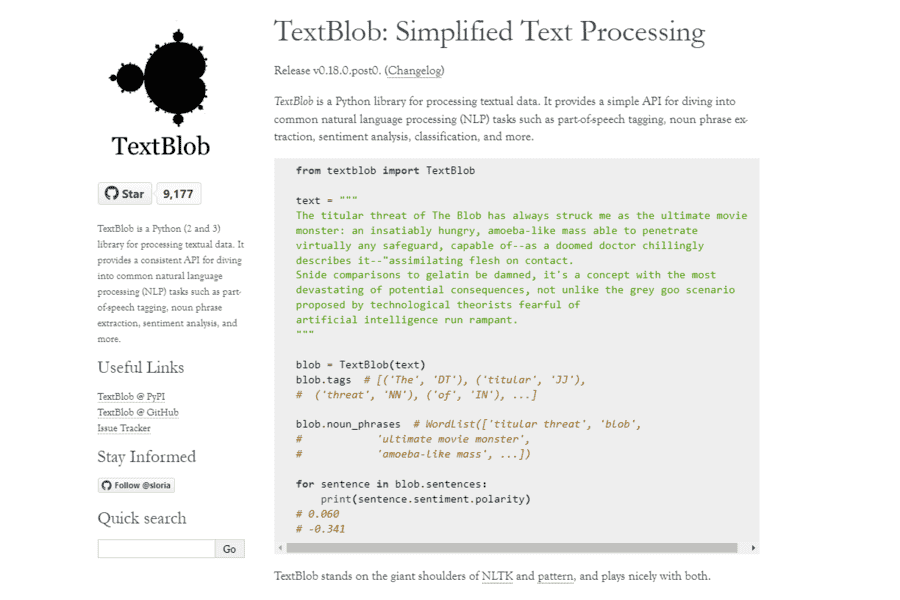
A Python library for processing textual data, supporting sentiment analysis, translation, and more.
Pros:
- Open-source and free
- Easy to use for developers
Cons:
- Limited to small-scale projects
Pricing Package:
Free.
Amazon Comprehend
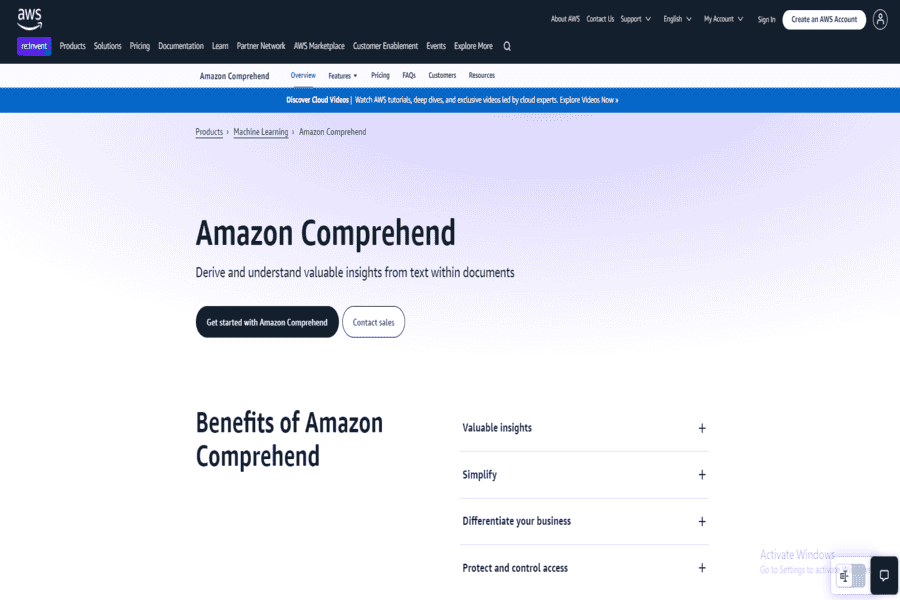
A natural language processing service that uses machine learning to uncover insights from text.
Pros:
- Fully managed service
- Scalable for enterprise use
Cons:
- Requires AWS expertise
Pricing Package:
Pay-as-you-go; free tier available.
Social Media Links:
Contact Information:
- Mail: [email protected]
- Contact Number: +1-866-216-1072
SpaCy
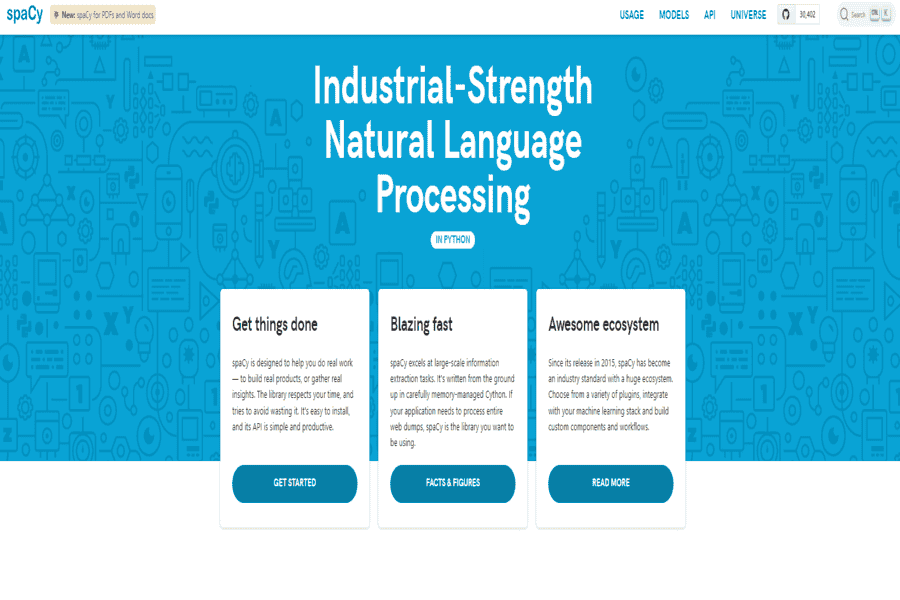
A leading open-source library for advanced NLP tasks such as named entity recognition and sentiment analysis.
Pros:
- Fast and lightweight
- Active developer community
Cons:
- Requires Python programming knowledge
Pricing Package:
Free (open-source).
Social Media Links:
- LinkedIn: SpaCy
- Twitter: @spacy_io
- YouTube: SpaCy Tutorials
Contact Information:
- Mail: [email protected]
RapidMiner
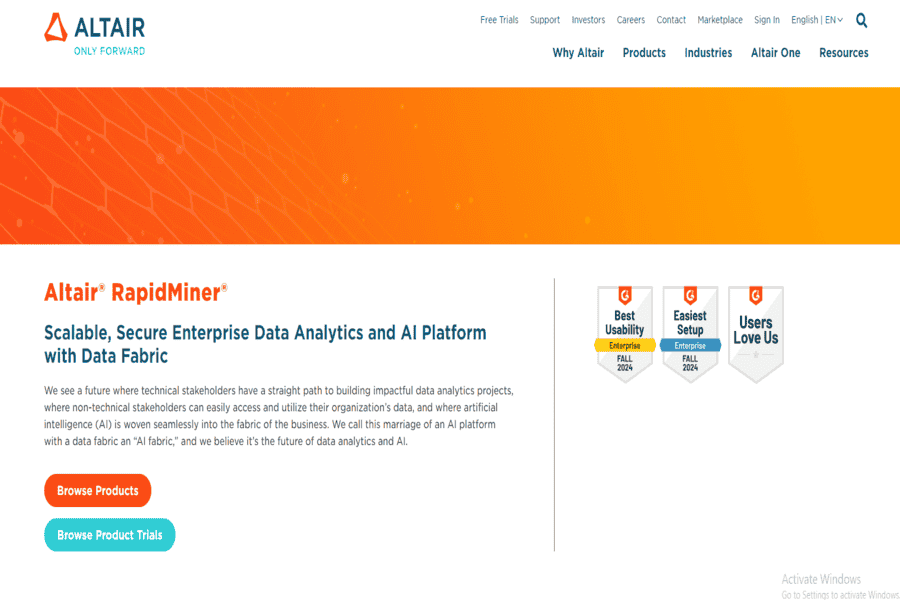
Provides advanced text and sentiment analysis solutions for businesses using AI-driven insights.
Pros:
- Intuitive drag-and-drop interface
- Extensive machine learning capabilities
Cons:
- Expensive for smaller businesses
Pricing Package:
Free version available; paid plans start at $2500/year.
Social Media Links:
- Facebook: RapidMiner
- LinkedIn: RapidMiner
- Twitter: @rapidminer
- YouTube: RapidMiner
Contact Information:
- Mail: [email protected]
- Contact Number: +1-617-800-0965
Qualtrics XM Discover (formerly Clarabridge)
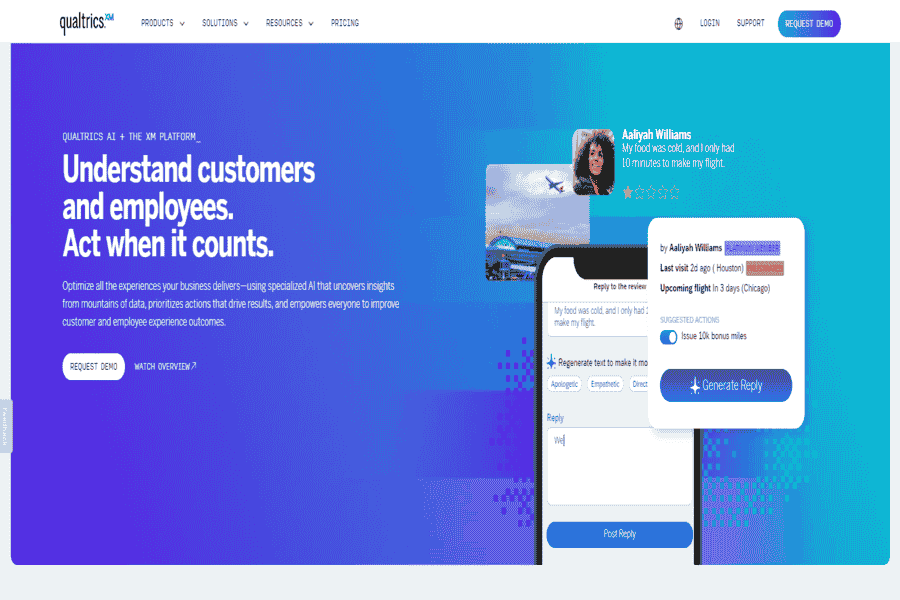
A customer experience management platform using NLP to analyze feedback from multiple channels. Qualtrics acquired Clarabridge in 2021 ($1.125 billion) and it now operates as Qualtrics XM Discover; the original clarabridge.com domain no longer serves a valid site.
Pros:
- Industry-specific insights
- Multi-language support
Cons:
- High pricing for small businesses
Pricing Package:
Custom pricing.
Social Media Links:
- Facebook: Clarabridge
- LinkedIn: Clarabridge
- Twitter: @clarabridge
- YouTube: Clarabridge
Contact Information:
- Mail: [email protected]
- Contact Number: +1-571-299-1800
Prodigy
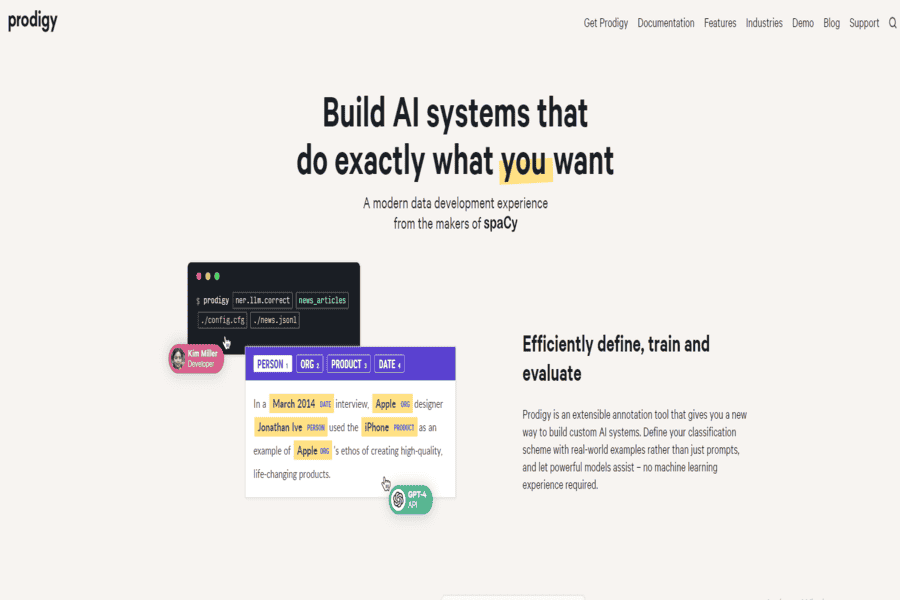
A machine teaching tool designed for creating and refining NLP models using labeled data.
Pros:
- Easy annotation process
- Compatible with SpaCy models
Cons:
- Requires initial setup knowledge
Pricing Package:
One-time payment starting at $390.
Social Media Links:
- LinkedIn: Prodigy
- Twitter: @prodigy_ai
- YouTube: Prodigy Tutorials
Contact Information:
- Mail: [email protected]
Verint Digital Feedback (formerly OpinionLab)
A voice-of-the-customer platform focused on collecting and analyzing real-time feedback using NLP tools. Verint Systems acquired OpinionLab in 2016; the product has since been rebranded as Verint Digital Feedback, part of Verint’s broader experience management suite, and opinionlab.com now redirects to Verint’s site.
Pros:
- Real-time customer feedback
- Tailored insights
Cons:
- Limited advanced NLP features
Pricing Package:
Custom pricing.
Social Media Links:
- Facebook: OpinionLab
- LinkedIn: OpinionLab
- Twitter: @opinionlab
Contact Information:
- Mail: [email protected]
Kapiche
Text analytics platform purpose-built for customer feedback, automatically surfacing themes and sentiment from open-ended survey responses and reviews without manual coding. Replaces MeaningCloud, acquired by Reddit in July 2022; its team was absorbed into Reddit’s internal ML and ads organizations, and its public API and site were subsequently abandoned — meaningcloud.com no longer resolves.
Pros:
- No manual coding needed to surface themes from open-text responses.
- Built specifically around survey and review data, not a generic NLP API.
Cons:
- Less flexible than a raw API for custom, non-feedback text-analysis use cases.
Pricing Package:
Custom pricing based on feedback volume.
SAS Visual Text Analytics
An enterprise-grade solution for text mining, NLP, and machine learning for customer feedback analysis.
Pros:
- Powerful analytics capabilities
- Enterprise-friendly scalability
Cons:
- High cost for small businesses
Pricing Package:
Custom pricing.
Social Media Links:
- Facebook: SAS
- Instagram: SAS
- LinkedIn: SAS
- Twitter: @SASsoftware
- YouTube: SAS Software
Contact Information:
- Mail: [email protected]
- Contact Number: +1-919-677-8000
Thematic
AI-native platform that automatically clusters customer feedback into themes and tracks sentiment trends over time across reviews, support tickets, and surveys. Replaces “TAWK.AI,” an entry whose own social media links pointed to Tawk.to’s real accounts (the unrelated live-chat widget company) rather than any distinct NLP product — no evidence this was ever a real, separate company, and tawk.ai does not resolve.
Pros:
- Automatic theme clustering without predefined tags.
- Trend tracking shows how themes and sentiment shift over time.
Cons:
- Best suited to ongoing feedback monitoring rather than one-off analysis.
Pricing Package:
Custom pricing based on feedback volume.
Advanced Techniques, Challenges, and Where This Is Headed
Beyond basic sentiment scoring, more advanced setups add aspect-based sentiment analysis (isolating what specifically drove a positive or negative reaction), intent recognition, and dialogue analysis for multi-turn conversational feedback. The real limitations are less about the technology and more about the data feeding it: biased or unrepresentative training data skews results, sarcasm and industry-specific context still trip up general-purpose models, and true real-time analysis at scale remains genuinely hard to do well. Large language models are pushing accuracy and nuance further, and transfer learning is making it more practical to adapt a general model to a specific industry’s vocabulary without training from scratch — though that also raises fresh questions around data privacy and how these models should be governed as they take on a bigger role in understanding what customers are actually saying.
Conclusion
The tools above cover the full range of how NLP gets applied to customer feedback today: developer-facing APIs (Google Cloud Natural Language, IBM Watson NLU, Amazon Comprehend, SpaCy, TextBlob, Repustate), full customer-experience and feedback-analytics platforms (Qualtrics XM Discover, Verint Digital Feedback, Chattermill, Kapiche, Thematic, Lexalytics), and specialized data-science tooling (RapidMiner, Prodigy, SAS Visual Text Analytics). Which one fits depends on whether you need a plug-and-play platform or a building block for your own pipeline — and either way, the output is only as good as the feedback data going in.