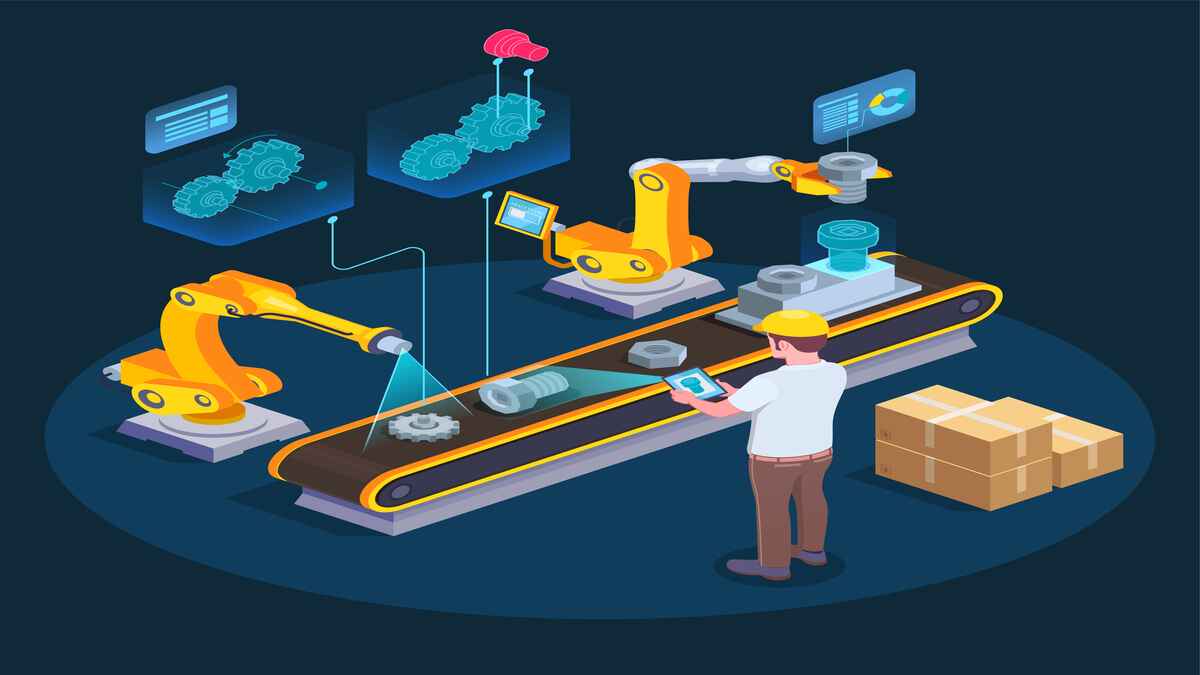
Robotic Process Automation automates repetitive, rules-based digital tasks, and pairing it with AI takes that further. Bots that once just followed fixed scripts can now read unstructured documents, make judgment calls, and adapt when a process changes instead of breaking. The result is automation that handles genuinely complex work, not just simple copy-paste tasks between systems.AI fraud detection tools For banking are a good example of this same AI-plus-automation combination applied to a specific high-stakes use case.
Key Features and Choosing the Right Tool
Most RPA platforms share a core feature set: UI automation for interacting with legacy systems that lack APIs, application integration, data extraction from structured and unstructured sources, exception handling for when a process hits something unexpected, and reporting on what the bots actually did. When comparing tools, weigh scalability (can it handle enterprise-wide deployment or just a handful of bots), security and compliance requirements, total cost including maintenance (not just license price), how much technical skill it takes to build and maintain a bot, and how well it integrates with the systems you already run.
Top Robotic Process Automation (RPA) Tools powered by AI
UiPath
A leading RPA platform that integrates AI and machine learning to automate workflows, tasks, and processes across various industries.
Pros:
- Intuitive interface with drag-and-drop functionality
- Strong AI capabilities, including document understanding
Cons:
- It can be expensive for smaller businesses
Pricing Package:
Free Community Edition; Enterprise pricing is available upon request.
Social Media Links:
Blue Prism
Known for its scalable RPA solutions, Blue Prism combines RPA with AI capabilities to enhance business automation and decision-making.
Pros:
- Scalable and reliable enterprise-grade platform
- Advanced AI integration for better decision-making
Cons:
- Requires technical expertise for setup and maintenance
Pricing Package:
Custom pricing for enterprise solutions.
Social Media Links:
- Facebook: Blue Prism
- LinkedIn: Blue Prism
- Twitter: @BluePrism
- YouTube: Blue Prism
Automation Anywhere
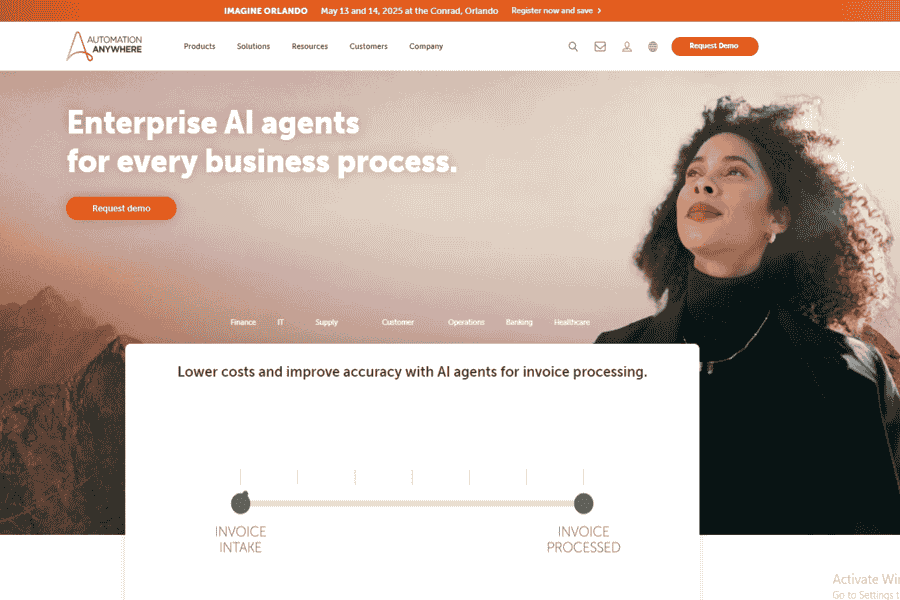
A popular RPA platform that combines AI, machine learning, and cognitive automation to simplify workflows and processes.
Pros:
- Cloud-based and flexible
- Offers AI-powered bots and smart automation
Cons:
- Requires a learning curve for new users
Pricing Package:
A free trial is available; there is custom pricing for enterprises.
Social Media Links:
- Facebook: Automation Anywhere
- Instagram: @automation_anywhere
- LinkedIn: Automation Anywhere
- Twitter: @A_T_Automation
- YouTube: Automation Anywhere
Nintex
Process automation platform combining workflow management, document generation, and RPA (via its 2021 acquisition of Kryon) into a single low-code toolset. Replaces WorkFusion, which pivoted years ago from general RPA to AI-driven financial-crime compliance (AML, sanctions screening) and was itself acquired by UiPathAlready listed above. In February 2026, becoming a compliance-AI unit rather than a standalone RPA product.
Pros:
- Combines workflow, document automation, and RPA in one platform.
- Low-code, accessible to business users, not just developers.
Cons:
- RPA capability is less deep than dedicated pure-play RPA vendors.
Pricing Package:
Custom pricing, quoted per organization.
Pega Systems
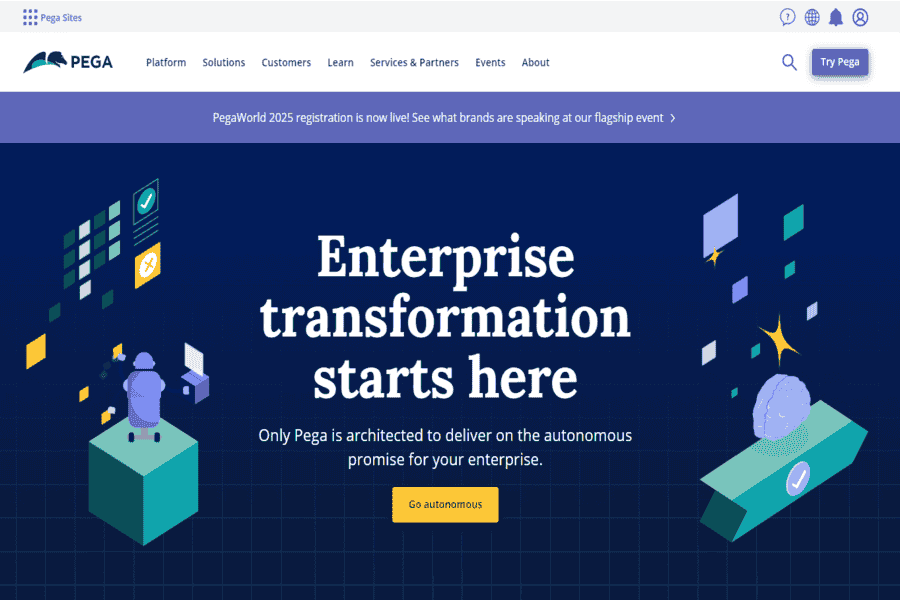
Pega combines RPA with AI to simplify end-to-end workflows, customer service, and decision-making processes across industries.
Pros:
- Offers a unified platform for RPA and CRM
- Advanced AI decisioning capabilities
Cons:
- It may require a significant investment for smaller businesses
Pricing Package:
Custom pricing.
Social Media Links:
- Facebook: Pega Systems
- Instagram: @pegasystems
- LinkedIn: Pega Systems
- Twitter: @pega
- YouTube: Pega Systems
NICE Systems
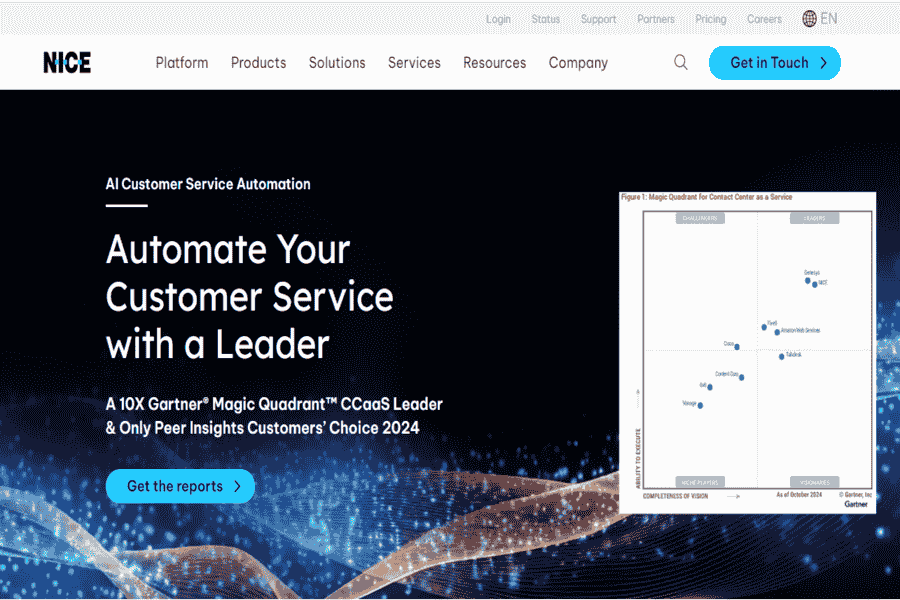
NICE offers AI-powered RPA solutions to optimize customer engagement, back-office automation, and business processes.
Pros:
- AI-powered decision-making and analytics
- Strong customer service automation features
Cons:
- More tailored to customer service applications
Pricing Package:
Custom pricing for enterprise solutions.
Social Media Links:
- Facebook: NICE Systems
- LinkedIn: NICE Systems
- Twitter: @NICE_systems
- YouTube: NICE Systems
Kofax
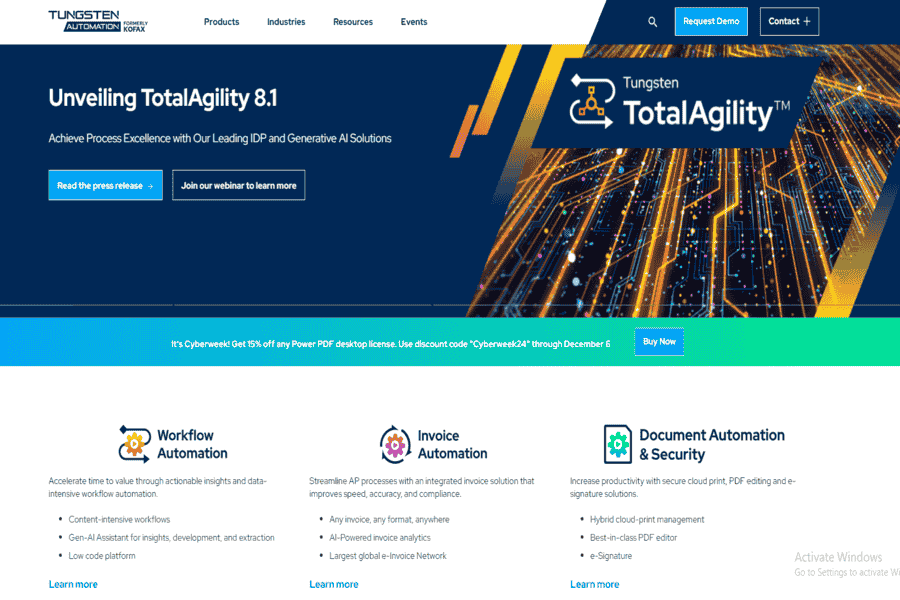
Kofax combines RPA and AI to automate document-heavy processes like invoice processing, customer onboarding, and more.
Pros:
- Strong AI and machine learning integration
- Focus on document automation
Cons:
- Advanced features may be overkill for smaller operations
Pricing Package:
Custom pricing.
Social Media Links:
Nividous
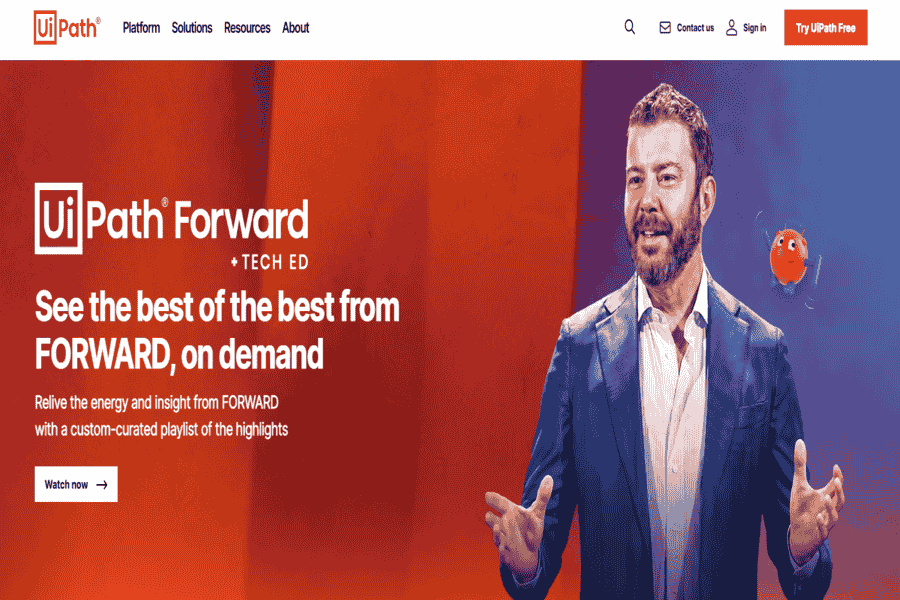
A leading RPA platform that integrates AI and machine learning to automate workflows, tasks, and processes across various industries.
Pros:
- Intuitive interface with drag-and-drop functionality
- Strong AI capabilities, including document understanding
Cons:
- It can be expensive for smaller businesses
Pricing Package:
Free Community Edition; Enterprise pricing is available upon request.
Social Media Links:
ElectroNeek
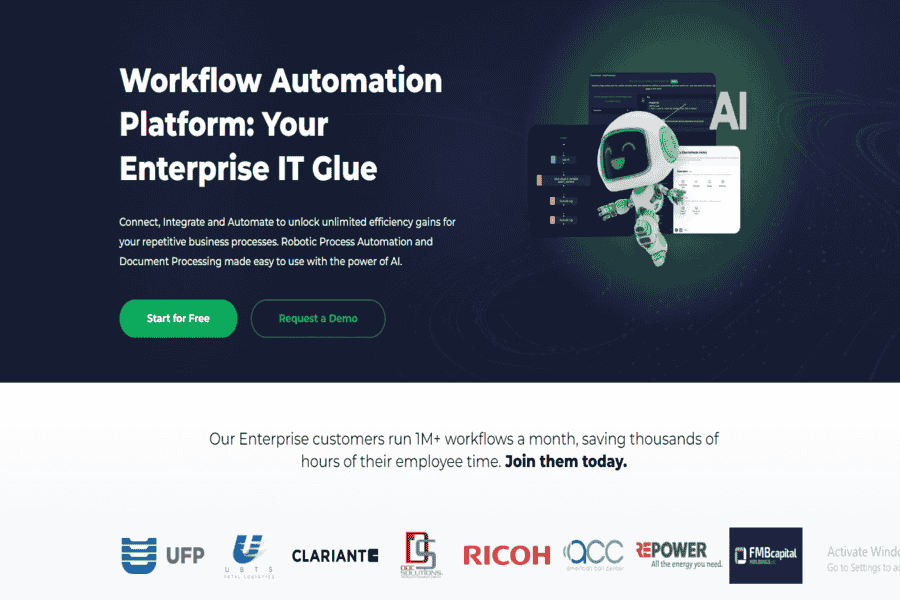
ElectroNeek is an RPA platform for IT and managed service providers (MSPs). It focuses on building scalable automation solutions while supporting advanced workflows through AI capabilities.
Pros:
- Developer-friendly with strong API integrations.
- High ROI for businesses with repetitive IT tasks.
- Offers tools to help MSPs monetize automation services.
Cons:
- Limited focus on non-IT industries.
- Requires technical expertise for complex setups.
Pricing package:
Free community edition available; enterprise pricing depends on user requirements.
Social media links:
- Facebook: ElectroNeek Facebook
- Instagram: ElectroNeek Instagram
- LinkedIn: ElectroNeek LinkedIn
- Twitter: ElectroNeek Twitter
- YouTube: ElectroNeek YouTube
Contact Information:
- Mail: [email protected]
- Contact number: +1-833-463-5366
AntWorks
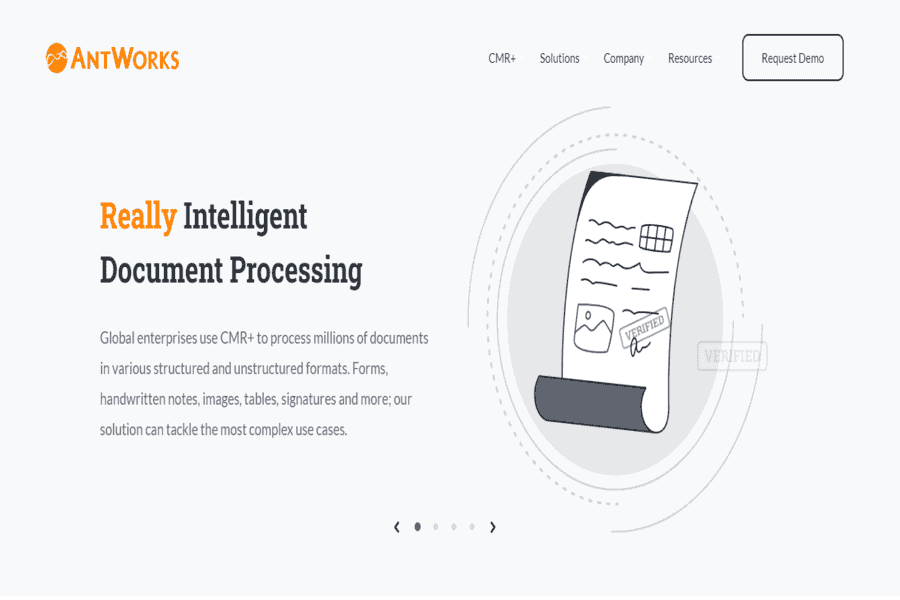
AntWorks offers a unique RPA platform powered by fractal science and AI. It specializes in automating document-heavy processes, making it ideal for the banking, insurance, and healthcare industries.
Pros:
- Strong focus on document-centric automation.
- Advanced cognitive capabilities for unstructured data.
- Scalable and secure architecture.
Cons:
- The niche focus may not suit general automation needs.
- Relatively higher costs for advanced features.
Pricing package:
Contact AntWorks for tailored pricing based on specific requirements.
Social media links:
- Facebook: AntWorks Facebook
- Instagram: AntWorks Instagram
- LinkedIn: AntWorks LinkedIn
- Twitter: AntWorks Twitter
- YouTube: AntWorks YouTube
Contact Information:
- Mail: [email protected]
- Contact number: +65-6911-6633
Rocketbot
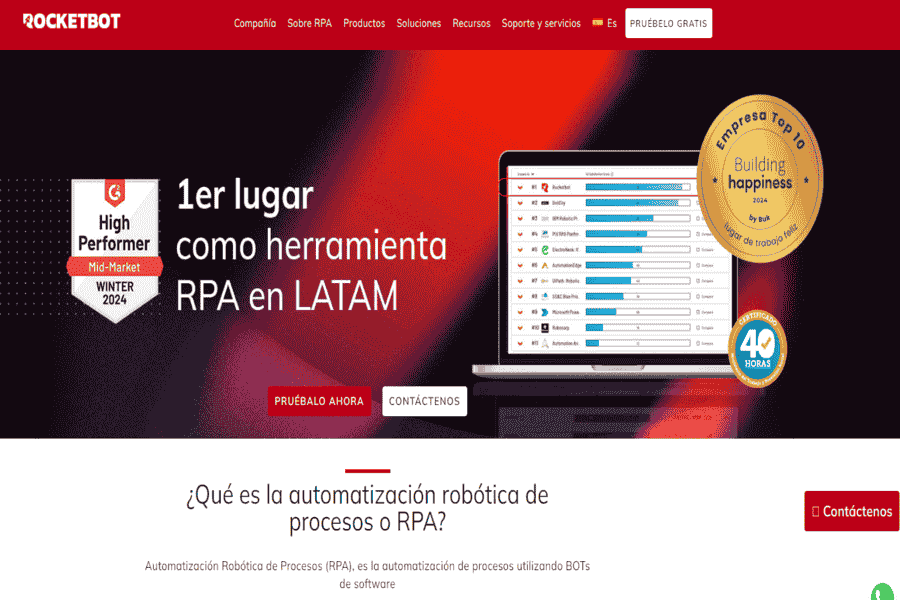
Rocketbot is a flexible RPA platform designed for businesses of all sizes. It simplifies automation with easy-to-use tools and strong support for cross-platform integration, enabling enterprises to simplify repetitive tasks efficiently.
Pros:
- Intuitive interface, ideal for non-technical users.
- Extensive library of reusable components.
- Affordable pricing for small businesses.
Cons:
- Less advanced AI capabilities compared to larger competitors.
- Smaller community for peer support.
Pricing package:
Free community edition available; enterprise pricing starts at $100/month.
Social media links:
- Facebook: Rocketbot Facebook
- Instagram: Rocketbot Instagram
- LinkedIn: Rocketbot LinkedIn
- Twitter: Rocketbot Twitter
- YouTube: Rocketbot YouTube
Contact Information:
- Mail: [email protected]
- Contact number: +1-888-123-4567
Hypatos
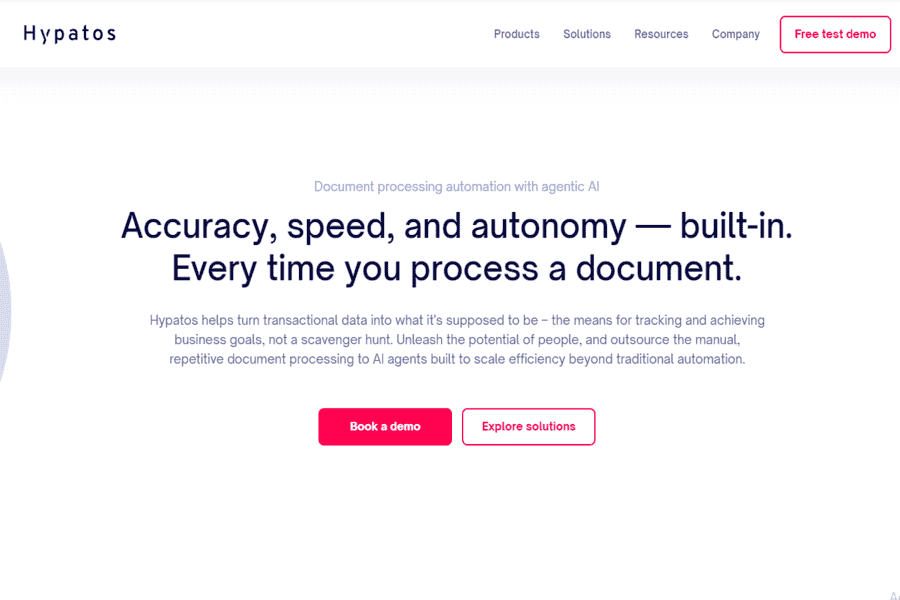
Hypatos specializes in AI-powered process automation for financial and back-office operations. Its platform excels at document understanding and simplifying invoice processing, making it a top choice for finance-heavy organizations.
Pros:
- Strong focus on financial and back-office processes.
- High accuracy in handling unstructured documents.
- Integrates smoothly with popular ERP systems.
Cons:
- Limited to specific industries.
- Expensive for small-scale operations.
Pricing package:
Custom pricing based on usage and deployment scale.
Social media links:
- Facebook: Hypatos Facebook
- Instagram: Hypatos Instagram
- LinkedIn: Hypatos LinkedIn
- Twitter: Hypatos Twitter
- YouTube: Hypatos YouTube
Contact Information:
- Mail: [email protected]
- Contact number: +49-30-567-1234
OpenBots
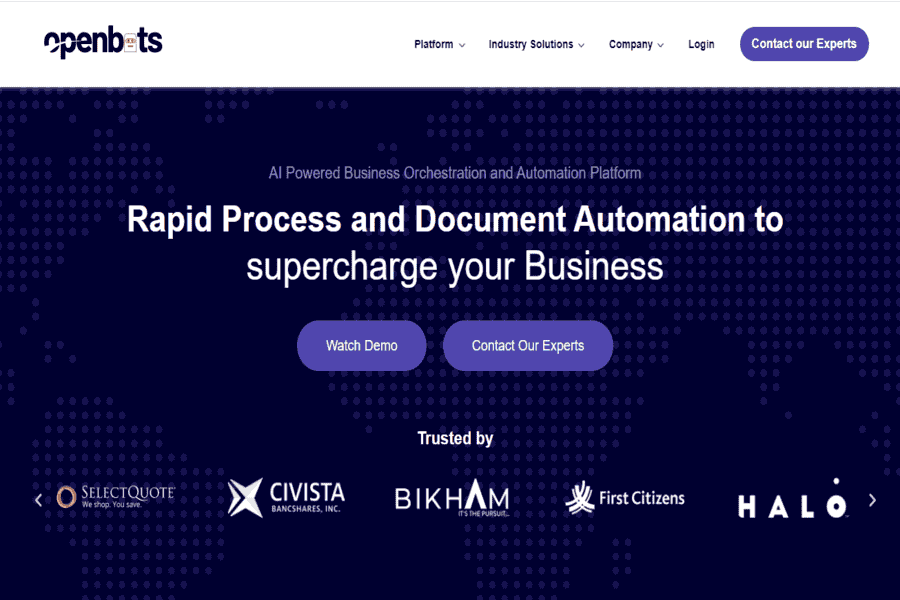
OpenBots is an open-source RPA platform offering automation solutions with zero bot licensing fees. It provides strong features for enterprises looking for cost-effective automation.
Pros:
- There are no licensing fees for bots.
- Community-driven with frequent updates.
- Scalable for enterprise-level use.
Cons:
- Requires technical expertise for setup and maintenance.
- Limited advanced AI features compared to premium tools.
Pricing package:
Free, open-source edition; optional enterprise support plans are $2,500/year.
Social media links:
- Facebook: OpenBots Facebook
- Instagram: OpenBots Instagram
- LinkedIn: OpenBots LinkedIn
- Twitter: OpenBots Twitter
- YouTube: OpenBots YouTube
Contact Information:
- Mail: [email protected]
- Contact number: +1-888-676-8858
Redwood Software
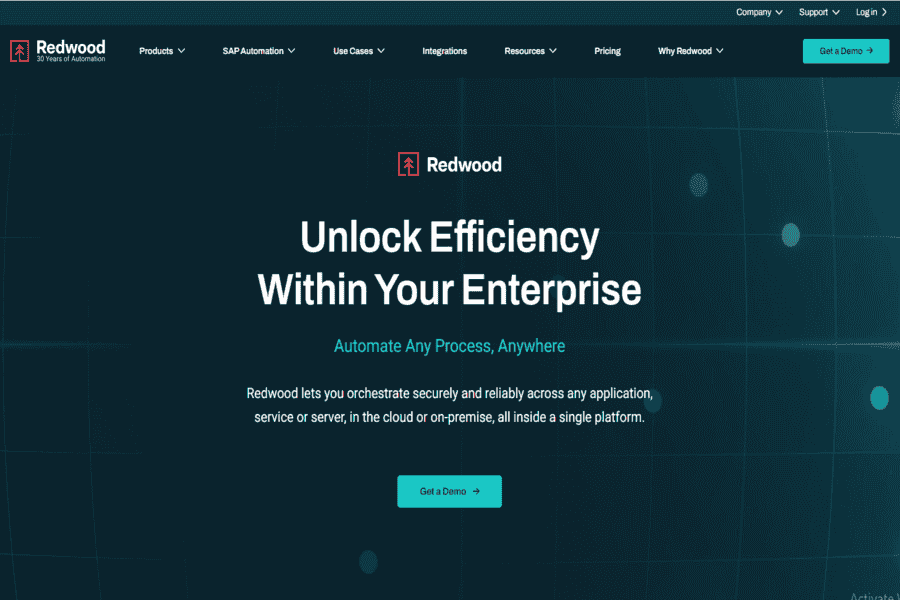
Redwood Software provides a cloud-based automation platform that specializes in simplifying business-critical processes. It integrates with various enterprise systems to deliver scalable and reliable automation solutions.
Pros:
- Cloud-native with excellent scalability.
- Strong focus on compliance and security.
- Extensive integration with ERP and IT systems.
Cons:
- High initial setup costs.
- It may be overly complex for smaller organizations.
Pricing package:
Custom pricing is available upon request.
Social media links:
- Facebook: Redwood Software Facebook
- Instagram: Redwood Software Instagram
- LinkedIn: Redwood Software LinkedIn
- Twitter: Redwood Software Twitter
- YouTube: Redwood Software YouTube
Contact Information:
- Mail: [email protected]
- Contact number: +31-30-635-4800
Datamatics TruBot
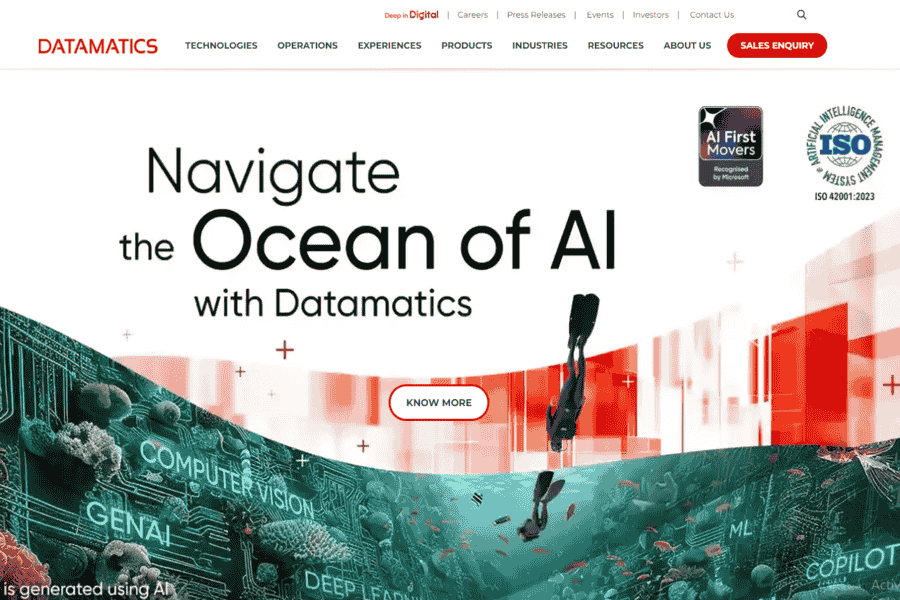
TruBot by Datamatics Is an enterprise-grade RPA tool that uses AI and cognitive automation to deliver process efficiency. It is tailored for industries like BFSI, healthcare, and manufacturing.
Pros:
- Built-in cognitive capabilities.
- Industry-specific automation solutions.
- Strong analytics for performance monitoring.
Cons:
- Higher cost for advanced features.
- Less user-friendly for non-technical users.
Pricing package:
Custom pricing based on deployment scale and features.
Social media links:
- Facebook: Datamatics Facebook
- Instagram: Datamatics Instagram
- LinkedIn: Datamatics LinkedIn
- Twitter: Datamatics Twitter
- YouTube: Datamatics YouTube
Contact Information:
- Mail: [email protected]
- Contact number: +91-22-6102-0000
Implementation, Limitations, and Where This Is Headed
A typical rollout moves through process discovery and design (mapping what actually happens today, not the idealized version), bot development and testing, deployment and orchestration across the bots you’ve built, and ongoing monitoring so a bot doesn’t silently fail when the underlying application changes. RPA still has real limits: it excels at repetitive, rules-based work but struggles with genuinely complex judgment calls, unstructured data remains harder than structured forms, bots stay dependent on the UI they were built against (a redesigned application can break them), and the upfront build plus ongoing maintenance cost is real, not a one-time expense. Where this is headed: deeper AI integration is turning basic RPA into “intelligent automation” that can handle exceptions instead of just failing on them, hyperautomation combines RPA with process mining and AI to automate at the organization level rather than one process at a time, and cloud-based RPA is lowering the infrastructure barrier to getting started.
The tools above span the RPA market from established enterprise leaders (UiPath, Automation Anywhere, Blue Prism, Pega Systems, NICE) to specialists in adjacent areas like document processing (Kofax, Hypatos, Datamatics TruBot), low-code and mid-market platforms (Nividous, ElectroNeek, AntWorks, Rocketbot, OpenBots), and broader automation suites with RPA built in (Nintex, Redwood Software). The right fit depends more on your existing systems and team’s technical depth than on any one platform being universally “best”, and given how fast this market keeps consolidating through acquisition, it’s worth checking a vendor’s current ownership before committing to a long-term deployment.