AI is changing legal research by using natural language processing and machine learning to search case law, review documents, and surface relevant precedent far faster than manual review. Beyond raw speed, this means improved accuracy on repetitive review tasks, deeper pattern insights across large document sets, and lower research costs. Though tools still require lawyer judgment for real conclusions, not blind reliance. This guide covers the platforms actually delivering this today, from full research databases to contract-specific analyzers.
How These Tools Work
Most combine a few core technologies: natural language processing to parse legal language and search intent, machine learning models trained on case outcomes for predictive analytics, and knowledge graphs that map relationships between cases, statutes, and citations. In practice this shows up as automated document review, real-time case law updates, intelligent search that understands legal concepts rather than just keywords, and citation analysis that flags how a case has been treated by later rulings. AI tools for cybersecurity Are worth pairing with any of these, since legal research platforms hold sensitive client data that needs its own protection.
Top Tools of AI Legal Research
Harvey AI
AI platform built for law firms, handling legal research, document review, and drafting with models tuned specifically on legal work. Replaces ROSS Intelligence, which shut down in January 2021 after a Thomson Reuters copyright lawsuit over its training data drained the company’s funding; rossintelligence.com now redirects to a frozen 2021 blog archive rather than a working product.
Pros:
- Built specifically for law firm workflows, not a general-purpose model adapted for legal use.
- Used by major law firms, with strong real-world validation.
Cons:
- Enterprise-focused pricing, less accessible for solo practitioners or small firms.
Pricing Package:
Custom enterprise pricing, quoted per firm.
CoCounsel (formerly Casetext)
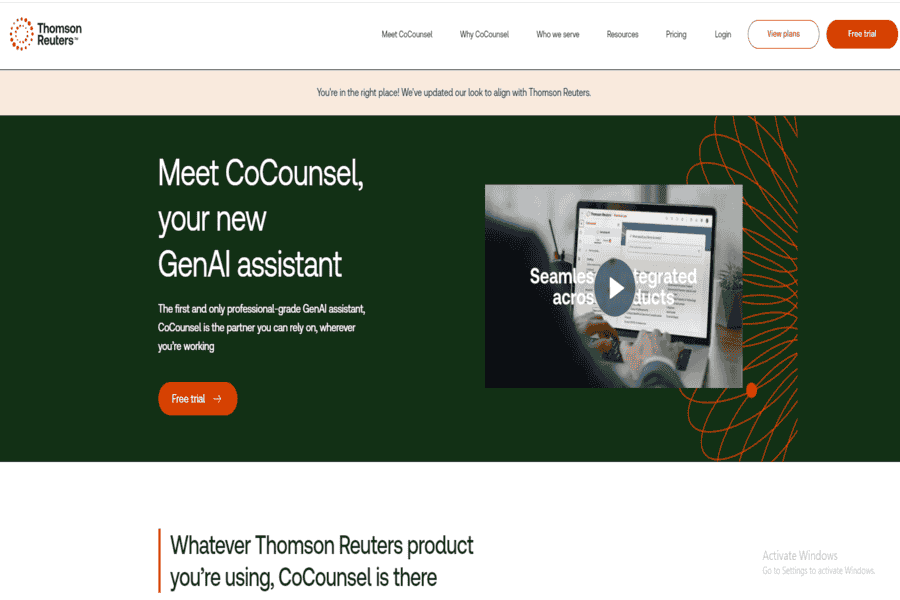
AI legal assistant that helps attorneys find relevant case law, review documents, and draft materials. Thomson Reuters acquired Casetext for $650 million in 2023 and fully retired the standalone Casetext product in April 2025, folding it into CoCounselThe current name for what was Casetext, distinct from Thomson Reuters’ separate Westlaw Edge research platform.
Pros:
- Deep search capabilities with AI-powered analysis.
- Affordable pricing.
Cons:
- Some advanced features are only available in higher tiers.
- It is limited to U.S. jurisdiction.
Pricing Package:
Starts at $65/month.
Social Media:
- Facebook: Casetext Facebook
- Twitter: Casetext Twitter
- LinkedIn: Casetext LinkedIn
Contact Information:
- Mail: [email protected]
LexisNexis
Comprehensive AI-powered legal research platform with access to case law, statutes, legal commentary, and more.
Pros:
- Extensive legal database.
- Advanced analytics and case law recommendations.
Cons:
- High cost, especially for smaller firms.
- It can be overwhelming for beginners.
Pricing Package:
Custom pricing is available.
Social Media:
- Facebook: LexisNexis Facebook
- Twitter: LexisNexis Twitter
- LinkedIn: LexisNexis LinkedIn
- YouTube: LexisNexis YouTube
Contact Information:
- Mail: [email protected]
- Contact Number: 1-800-543-6862
Westlaw Edge
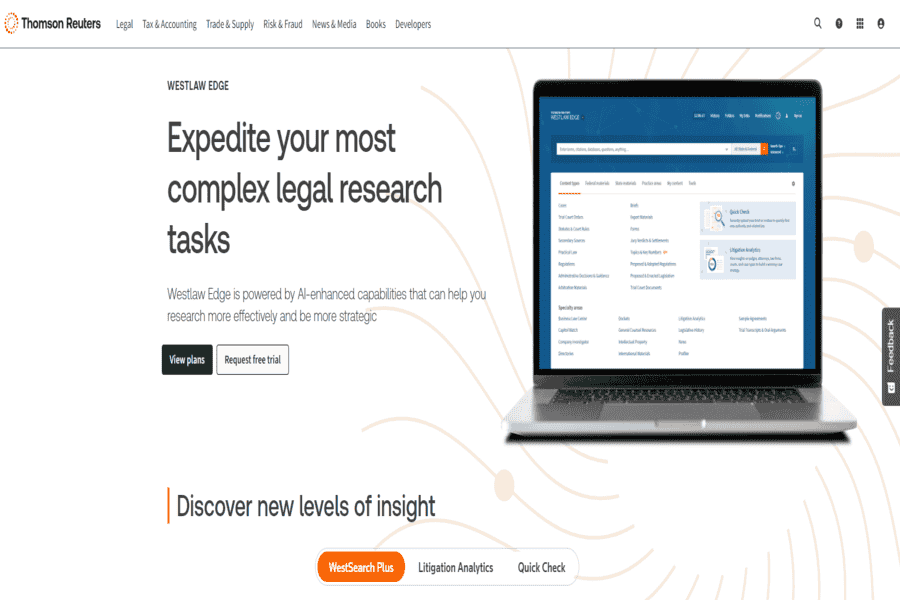
AI-driven legal research platform providing access to case law, legal news, and powerful analytics.
Pros:
- AI-powered legal search engine.
- Advanced legal analytics and case predictions.
Cons:
- Expensive subscription fees.
- It may have a steep learning curve for new users.
Pricing Package:
Custom pricing is available.
Social Media:
- Facebook: Westlaw Facebook
- Twitter: Westlaw Twitter
- LinkedIn: Westlaw LinkedIn
- YouTube: Westlaw YouTube
Contact Information:
- Mail: [email protected]
- Contact Number: 1-800-328-4880
Spellbook
AI contract-drafting copilot that works inside Microsoft Word, suggesting redlines, flagging risky clauses, and drafting new language as you work. Replaces Legal Robot, whose site has been stuck on a “coming soon” placeholder with no working signup or purchase path for an extended period, despite the domain still resolving.
Pros:
- Works directly inside Word, no separate platform to learn.
- Drafts and redlines, not just flags issues.
Cons:
- Focused specifically on contracts, not broader case-law research.
Pricing Package:
Subscription-based, priced per user.
Brainspace
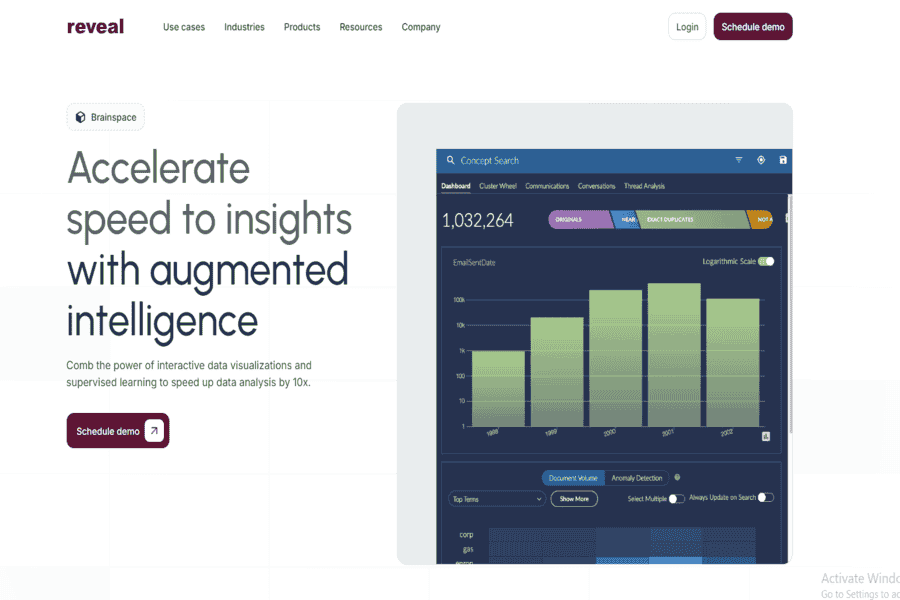
AI-powered platform for data analytics and legal research, specializing in e-discovery and case management.
Pros:
- Advanced machine learning capabilities for document review.
- Ideal for legal professionals working on e-discovery.
Cons:
- High learning curve.
- It is not designed for general legal research.
Pricing Package:
Custom pricing is available.
Social Media:
- LinkedIn: Brainspace LinkedIn
Contact Information:
- Mail: [email protected]
CaseMine
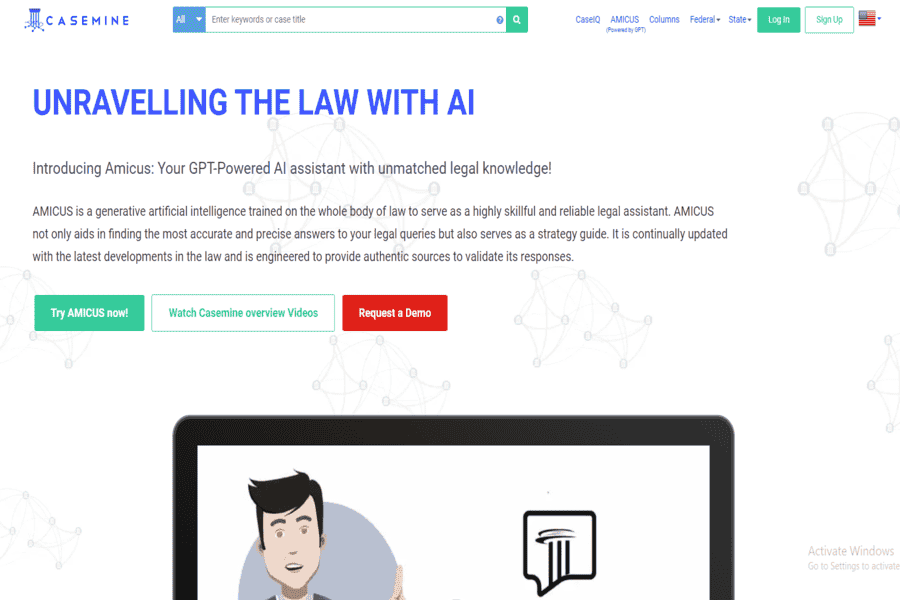
An AI-powered legal research tool that uses machine learning to assist lawyers in discovering relevant case law and insights.
Pros:
- Deep insights and case law recommendations.
- Easy-to-use interface with legal research suggestions.
Cons:
- Limited jurisdiction support (focused mostly on India).
- Some features require a paid subscription.
Pricing Package:
Free plan; premium starts at $60/month.
Social Media:
- Facebook: CaseMine Facebook
- Twitter: CaseMine Twitter
- LinkedIn: CaseMine LinkedIn
Contact Information:
- Mail: [email protected]
Judicata
AI-driven platform for legal research and case prediction, offering automated insights and analysis of court decisions. Acquired by Fastcase in 2020; Fastcase later merged into vLex (2023), which Clio acquired in November 2025. Judicata.com remains live as a legacy product page under that ownership chain rather than an independently run company.
Pros:
- Detailed court case analysis.
- AI-powered case law predictions.
Cons:
- Limited jurisdictional coverage.
- High cost for small law firms.
Pricing Package:
Custom pricing is available.
Social Media:
- Facebook: Judicata Facebook
- Twitter: Judicata Twitter
- LinkedIn: Judicata LinkedIn
Contact Information:
- Mail: [email protected]
Everlaw
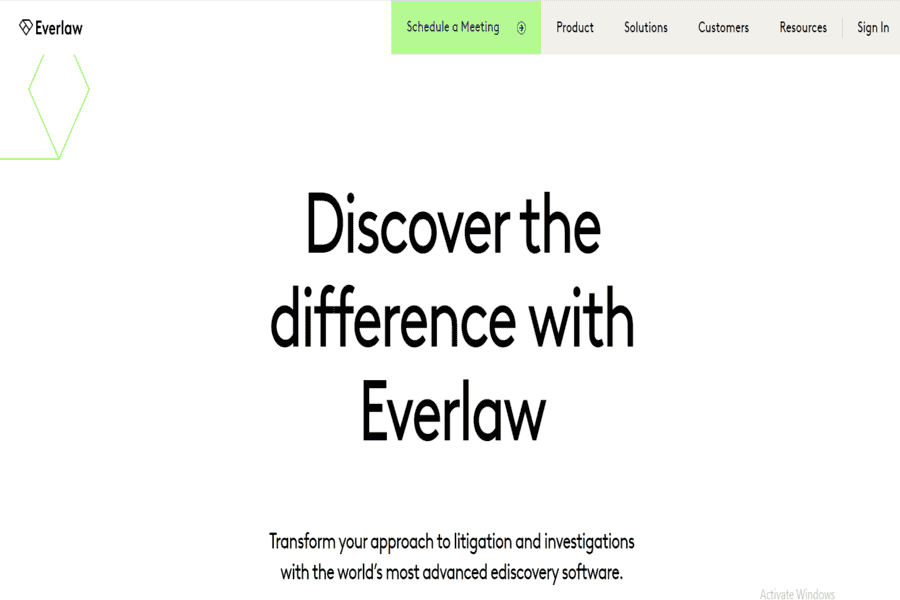
AI-powered legal research and e-discovery platform with advanced case management tools.
Pros:
- Strong e-discovery capabilities.
- Easy collaboration and document review tools.
Cons:
- High learning curve for new users.
- Primarily designed for large law firms.
Pricing Package:
Custom pricing is available.
Social Media:
- Twitter: Everlaw Twitter
- LinkedIn: Everlaw LinkedIn
- YouTube: Everlaw YouTube
Contact Information:
- Mail: [email protected]
LawGeex
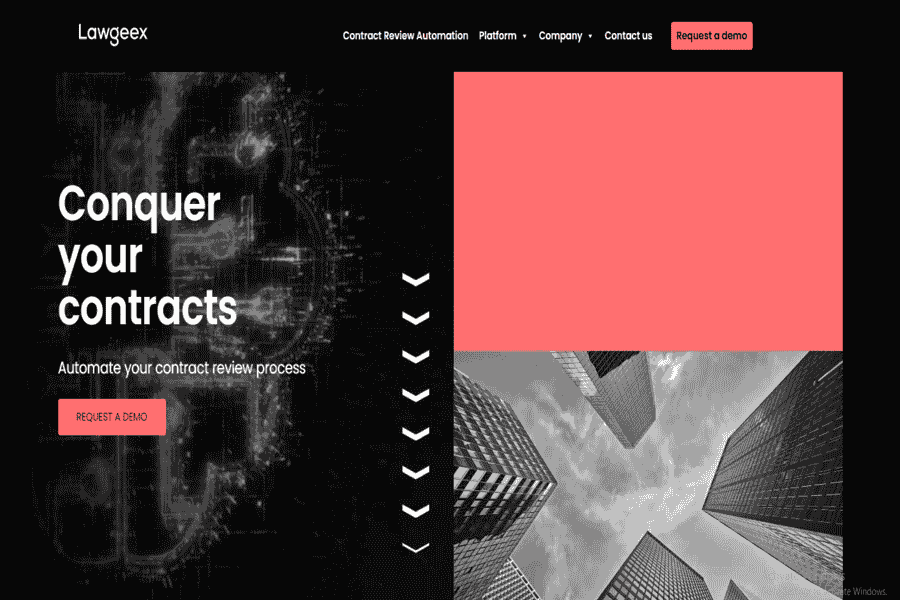
AI-driven contract review and legal research platform that automates contract review and identifies risks.
Pros:
- Fast contract analysis and risk identification.
- Simplifies contract review workflows.
Cons:
- It was primarily focused on contract review, not general legal research.
- She was limited to English language contracts.
Pricing Package:
Custom pricing is available.
Social Media:
- Facebook: LawGeex Facebook
- Twitter: LawGeex Twitter
- LinkedIn: LawGeex LinkedIn
Contact Information:
- Mail: [email protected]
Luminance
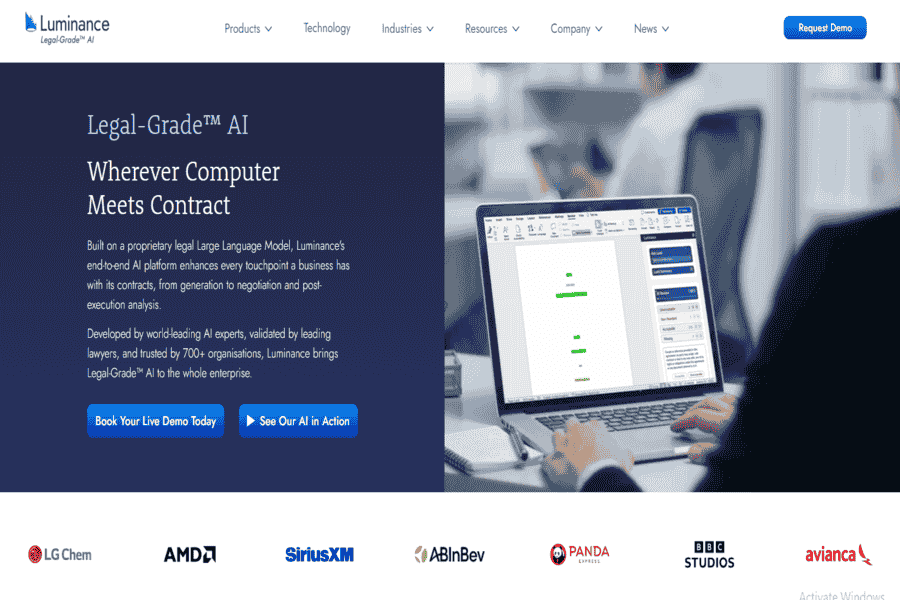
The AI-powered platform for legal document review, analysis, and legal research, using machine learning for smarter insights.
Pros:
- Efficient document review for compliance and risk management.
- Intuitive interface with AI-driven insights.
Cons:
- It is expensive for smaller firms.
- More suited for document-heavy legal work.
Pricing Package:
Custom pricing is available.
Social Media:
- Facebook: Luminance Facebook
- Twitter: Luminance Twitter
- LinkedIn: Luminance LinkedIn
Contact Information:
- Mail: [email protected]
ThoughtRiver
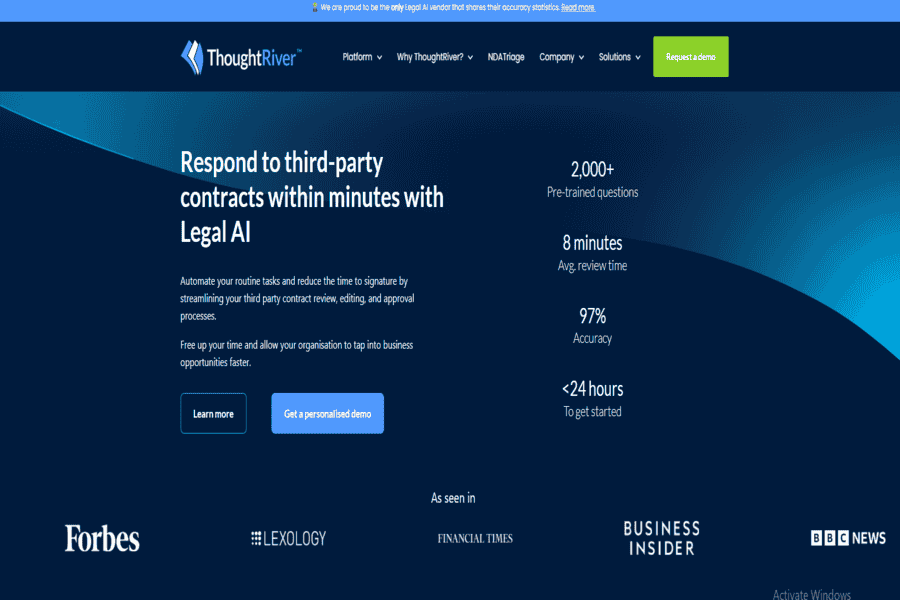
AI-powered contract review and legal research platform designed to simplify contract management.
Pros:
- AI analysis of contract terms for compliance and risks.
- Reduces time spent on manual contract review.
Cons:
- It was primarily focused on contract analysis, not general legal research.
- I am limited to English and European legal contexts.
Pricing Package:
Custom pricing is available.
Social Media:
- Twitter: ThoughtRiver Twitter
- LinkedIn: ThoughtRiver LinkedIn
Contact Information:
- Mail: [email protected]
LegalSifter
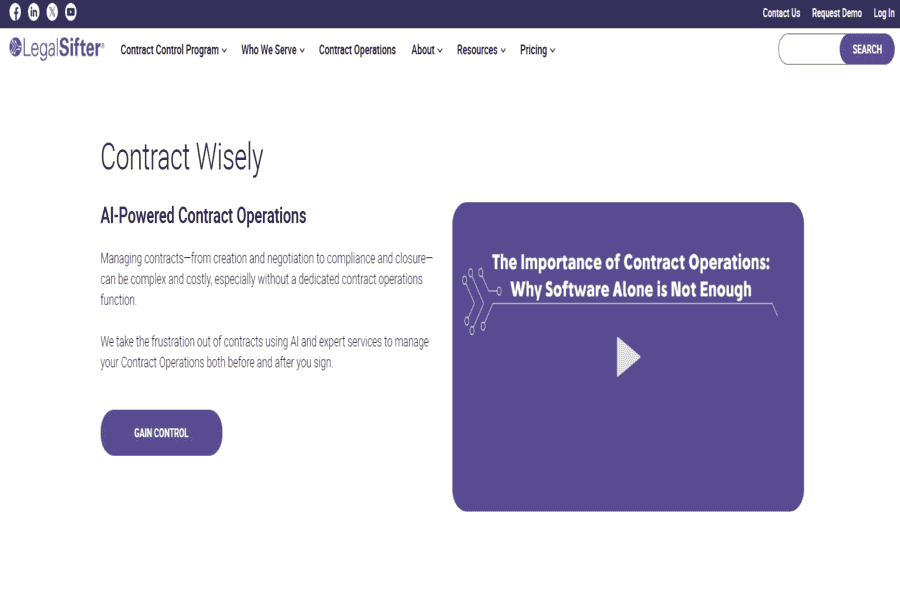
AI-powered contract analysis tool that provides instant feedback on legal documents and contract terms.
Pros:
- Automated contract review with AI-powered suggestions.
- Easy integration with document management tools.
Cons:
- Not suitable for in-depth legal research or case law.
- Limited features in the free plan.
Pricing Package:
Free plan; premium starts at $50/month.
Social Media:
- Facebook: LegalSifter Facebook
- Twitter: LegalSifter Twitter
- LinkedIn: LegalSifter LinkedIn
Contact Information:
- Mail: [email protected]
VLex
Global legal research platform combining case law, statutes, and legal materials across 100+ countries with AI-powered search (Vincent AI). Replaces a duplicate Judicata listing. VLex is, in fact, Judicata’s current parent company via the 2023 Fastcase-vLex merger, but operates as its own much broader research platform rather than a rename of Judicata’s original litigation-analytics product.
Pros:
- Very broad multi-jurisdiction coverage, useful for cross-border work.
- AI search (Vincent AI) built directly into the research database.
Cons:
- Depth of coverage varies by jurisdiction.
Pricing Package:
Subscription-based; custom pricing for firms.
Rossum
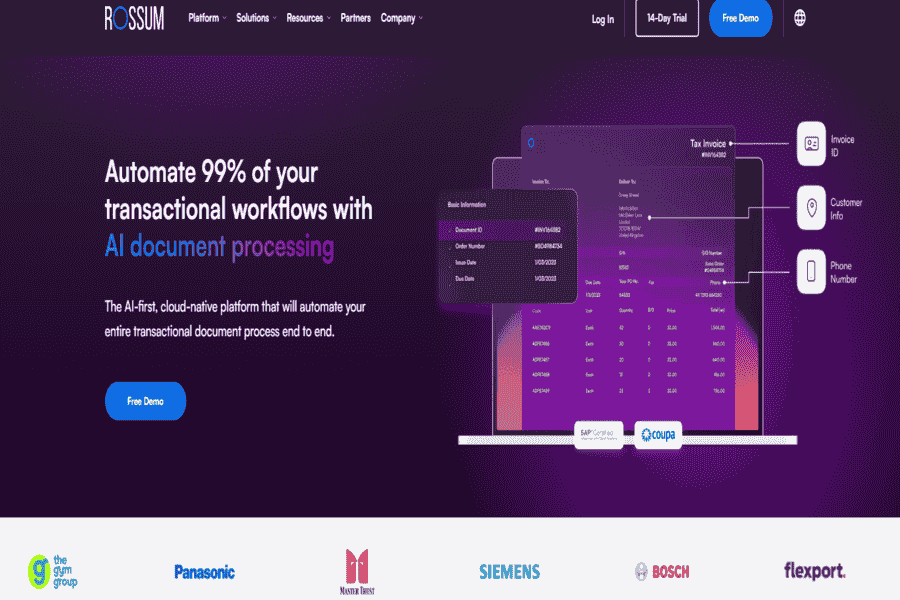
AI-powered tool for automating document processing, particularly helpful in reviewing legal contracts and invoices.
Pros:
- Automated document data extraction.
- AI-based learning improves over time.
Cons:
- It is not a traditional legal research tool (focuses on document automation).
- It may require customization for legal use cases.
Pricing Package:
Custom pricing is available.
Social Media:
- Facebook: Rossum Facebook
- Twitter: Rossum Twitter
- LinkedIn: Rossum LinkedIn
- YouTube: Rossum YouTube
Contact Information:
- Mail: [email protected]
Challenges and Where This Is Headed
These tools still have real limits worth keeping in mind. Training data quality and bias can skew predictive analytics, especially across underrepresented case types or jurisdictions. Cost remains a real barrier. Several of the platforms above are priced for firms, not solo practitioners. And using AI-generated research raises its own ethical questions: attorneys remain responsible for verifying accuracy and can’t outsource professional judgment to a model, a lesson the legal industry learned the hard way from early cases of AI-hallucinated citations making it into court filings. Looking ahead, expect deeper predictive analytics, more automated document review, faster real-time updates as case law is decided, and continued scrutiny over how these tools are trained and how their outputs get verified.
The tools above span the full range of AI legal research today: broad research databases (LexisNexis, Westlaw Edge, vLex), firm-focused research and drafting assistants (Harvey AI, CoCounsel), contract-specific analysis (Spellbook, LawGeex, Luminance, ThoughtRiver, LegalSifter), litigation and e-discovery tools (Judicata, Brainspace, Everlaw, CaseMine), and document-processing infrastructure (Rossum). None of them replace a lawyer’s judgment or professional responsibility. They speed up the research and drafting work that judgment depends on.